
A quick quote request can feel efficient.
For a rough terrain forklift, it often leaves out the information that decides whether the machine will actually fit the job.
I see this often with overseas buyers. The first message may only say, "Please quote a rough terrain forklift." Sometimes it adds a capacity, a destination country, or a photo of a similar machine. That is a start, but it is usually not enough.
A rough terrain forklift quote is not only a price document. It is also a configuration discussion. If the supplier does not understand the load, ground, lifting height, attachment plan, destination, and support situation, the quotation may look fast but still be weak.
That is why I prefer to slow down for a few practical questions before recommending a machine.
The Short Answer
Before asking for a rough terrain forklift quote, send the supplier these details:
- load weight and load dimensions
- pallet type or material shape
- lifting height and working route
- ground condition, including photos or short videos
- slope, mud, gravel, sand, ruts, or narrow turning areas
- daily working hours
- attachment requirements now or later
- destination country, port, and basic import needs
- local service ability and spare parts expectation
This information does not make the buying process complicated.
It makes the recommendation more honest.
For buyers in construction sites, farms, brick yards, plantations, quarries, dealer yards, and remote project sites, a missing detail before order can become a machine problem after arrival. I wrote about this in most forklift problems actually start before the machine arrives, and it is one of the most common lessons in export forklift projects.
Start With The Job, Not Only The Model
Many buyers begin with the model question:
"Which rough terrain forklift should I buy?"
I usually start with the job question:
"What will the forklift actually do every day?"
That sounds simple, but the answer changes many parts of the quote.
For example, moving palletized blocks in a brick yard is different from moving fertilizer on a farm, steel on a construction site, or mixed materials in a dealer warehouse. Even if the load weight looks similar, the ground, load center, travel distance, tire damage risk, and lifting height may be very different.
This is why I do not like giving a recommendation only from rated capacity.
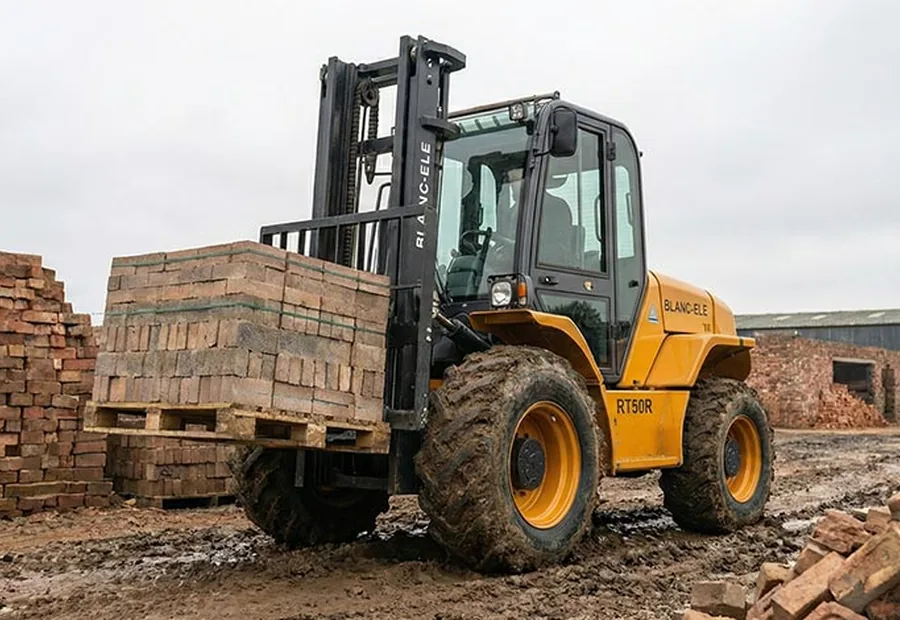
The BLANC-ELE rough terrain forklift range can be discussed for many outdoor applications, but the right configuration still depends on the real working condition. A product page can show the machine category. A proper quote should connect that machine to the buyer's job.
Load Details Suppliers Need
Load weight is important, but it is not the whole story.
For a useful quotation, I want to know:
- What is the maximum load weight?
- What is the normal daily load weight?
- Is the load on pallets, in bags, in bundles, in bales, or loose?
- What are the load dimensions?
- Is the load compact, long, uneven, wet, fragile, or unstable?
- Will the forklift lift high or mostly travel at low height?
- Does the buyer need longer forks, a side shifter, fork positioner, bucket, bale clamp, or other attachment?
Two loads with the same weight can behave very differently.
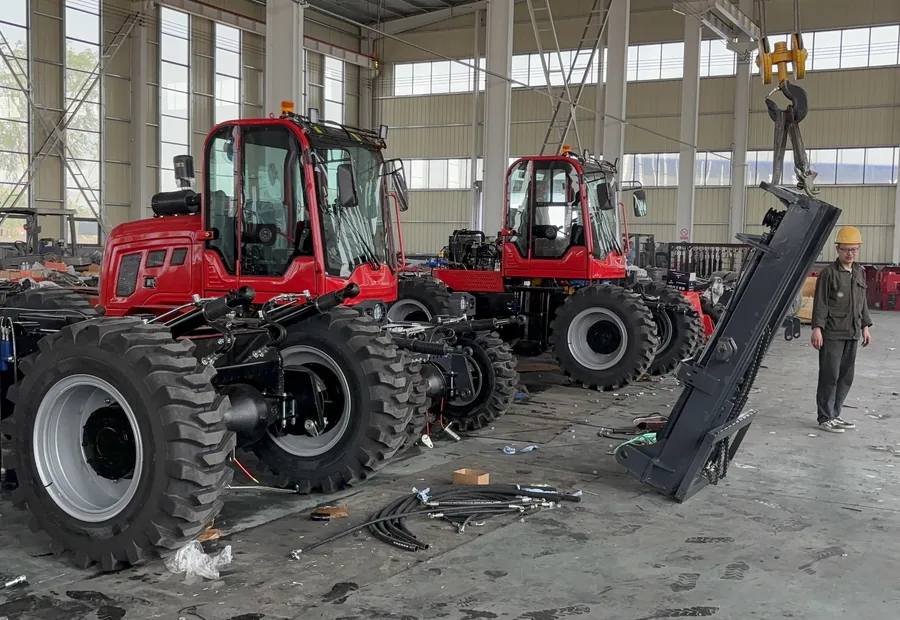
A compact pallet close to the mast is not the same as a long load placed forward on the forks. OSHA's powered industrial truck guidance treats load handling, load center, and stability as important topics, and the same logic matters in supplier selection. The more the load moves forward, becomes uneven, or changes shape, the more carefully the capacity and attachment discussion should be handled.
Ground Condition Changes The Recommendation
Outdoor forklifts are selected from the ground up.
A buyer may say, "The forklift will work on construction ground," but construction ground can mean many things:
- compacted gravel
- dry soil
- muddy access roads
- sand
- broken concrete
- brick debris
- quarry stone
- farm tracks
- temporary roads after rain
- uneven warehouse yards
For a normal warehouse forklift, the floor is usually part of the building. For a rough terrain forklift, the ground is part of the machine selection.
That is why photos and videos are useful. A 20-second video showing the route, turning point, loading area, and ground after rain can be more useful than a long written description.
If the site has slopes, mud, or narrow turns, the recommendation may need to consider drive type, tire pattern, ground clearance, working margin, and operator visibility. The buyer may think the question is only about capacity, but the ground may decide whether the forklift works smoothly or struggles every day.
A Typical Case: The Fast Quote Was Missing The Real Problem
A typical inquiry may begin like this:
"We need a rough terrain forklift for a building-material site. Please send a quote."
At first, the project looks simple. The buyer moves blocks, pallets, and general materials. The load is not unusual. The buyer wants a quick answer.
Then more details arrive.
The unloading area is not paved. Trucks leave ruts after rain. Some materials are placed on uneven ground. The buyer may later handle longer timber and steel. The destination is far from a large service center, and the local team wants basic spare parts ready before the machine arrives.
At that point, the quote is no longer only a machine model.
It becomes a configuration discussion:
- Is the tire suitable for that ground?
- Is the mast and fork setup suitable for the load?
- Is there enough working margin for future attachments?
- Is the route realistic for loaded travel?
- Should spare parts and service access be discussed before shipment?
- Are the assumptions written clearly before order?
This kind of case is common. The buyer is not trying to hide information. They simply do not know which details matter until the supplier asks.
That is the supplier's job.
What To Send Before Asking For A Rough Terrain Forklift Quote
Here is the practical checklist I recommend.
| Information To Send | Why It Matters |
|---|---|
| Load weight and normal load range | Helps avoid choosing from one extreme number only |
| Load dimensions | Affects fork length, load center, and stability discussion |
| Pallet or material photos | Shows whether the load is compact, uneven, or hard to enter |
| Ground photos and route video | Helps judge tire, drive, clearance, and turning needs |
| Lifting height | Affects mast selection and working margin |
| Travel distance | Affects duty cycle, comfort, tire wear, and maintenance planning |
| Slope or ramp details | Important for loaded travel and site planning |
| Attachment plans | Avoids choosing a machine that has too little margin later |
| Destination country and port | Helps plan documentation, shipment, and support discussion |
| Local service ability | Helps prepare maintenance and spare parts expectations |
If you only send one message, send this:
"The forklift will move [load type] weighing about [weight range]. The load size is [dimensions]. The ground is [mud/gravel/sand/concrete/soil], and I attached photos and a short route video. The lift height is [height]. The machine will work about [hours] per day in [country]. We may also need [attachment] later."
That message gives a supplier enough information to start a serious recommendation.
Do Not Hide Future Attachments
Attachment plans should be discussed before choosing the forklift, not after the machine is already ordered.
Long forks, side shifters, fork positioners, buckets, clamps, crane jibs, and other attachments can change the working condition. They may affect load center, hydraulic requirements, visibility, front weight, and the real working margin of the machine.
This does not mean every buyer needs a more complicated machine.
It means the supplier should know the plan early.
If you are comparing attachments, our rough terrain forklift attachments and configurations guide is a useful starting point. If long forks may be used, this article on what buyers should check before adding long forks explains why load center and application details matter.
Export Details Also Belong In The Quote Discussion
For overseas buyers, the quote is not only about the forklift itself.
The supplier also needs to understand the export situation:
- destination country
- nearest port or delivery route
- import documents needed by the buyer
- working climate, such as dust, heat, rain, or humidity
- local mechanic or dealer support
- spare parts expectation
- language needs for manuals or labels
- whether the buyer is an end user, contractor, rental company, dealer, or importer
These details help avoid confusion later.
For example, a dealer may care more about repeatable configuration and after-sales support. A farm buyer may care more about tire damage, ground clearance, and simple maintenance. A construction contractor may care more about site route, lifting height, and daily uptime. A remote project buyer may care more about spare parts planning before shipment.
The machine may still be the same category, but the quote should answer different risks.
What A Better Supplier Should Give Back
After receiving the buyer's information, a serious supplier should not only reply with a short price line.
The supplier should explain:
- recommended configuration
- main assumptions behind the quote
- load and ground details that still need confirmation
- attachment compatibility points
- tire and drive considerations
- spare parts or maintenance suggestions
- documents and shipment details
- final items that must be checked on the specification sheet and data plate before order
A useful quotation should show real experience, explain the reasoning, and avoid pretending that one model fits every site.
If you are checking suppliers, the rough terrain forklift manufacturer checklist for importers can help you ask better questions before placing an order.
Red Flags In A Quote Request
From the supplier side, these are warning signs:
- the buyer asks only for the lowest quote without explaining the job
- there are no load dimensions
- there are no ground photos
- the lift height is unknown
- attachments are mentioned after the machine is selected
- the destination and service situation are unclear
- the buyer compares machines only from photos
- the buyer assumes rated capacity alone is enough
None of these problems are unusual. They simply need to be corrected before the order moves forward.
A rough terrain forklift is a working machine, not a catalog picture. If the quote does not understand the job, the machine may be blamed later for a problem that actually started in the selection process.
My Practical Recommendation
Before asking for a rough terrain forklift quote, prepare a small information package.
You do not need a professional technical report.
You only need clear photos, a short route video, load details, lifting height, attachment plans, destination information, and an honest description of the working ground.
That small effort usually saves time later.
It helps the supplier recommend the right configuration, check risks earlier, and explain the quote in a way that is useful for real work.
If you are preparing an inquiry, you can send your load details, site photos, route video, and destination information through the BLANC-ELE contact page. I would rather ask a few more questions before order than let a buyer discover the missing details after the machine arrives.