
The first supplier reply often looks fine.
A short quotation, a few machine photos, a capacity number, maybe one delivery time.
For a simple warehouse forklift, that may be enough to start a conversation. For an imported rough terrain forklift, I do not think it is enough.
After working with overseas buyers, dealers, and outdoor equipment users, I have seen one pattern many times: the problem usually does not start after the forklift arrives. It starts much earlier, when the buyer and supplier have not confirmed the working condition, configuration, documents, spare parts, and delivery details clearly enough.
That is why I prefer a practical manufacturer checklist before order.
Not because paperwork is exciting. It is not.
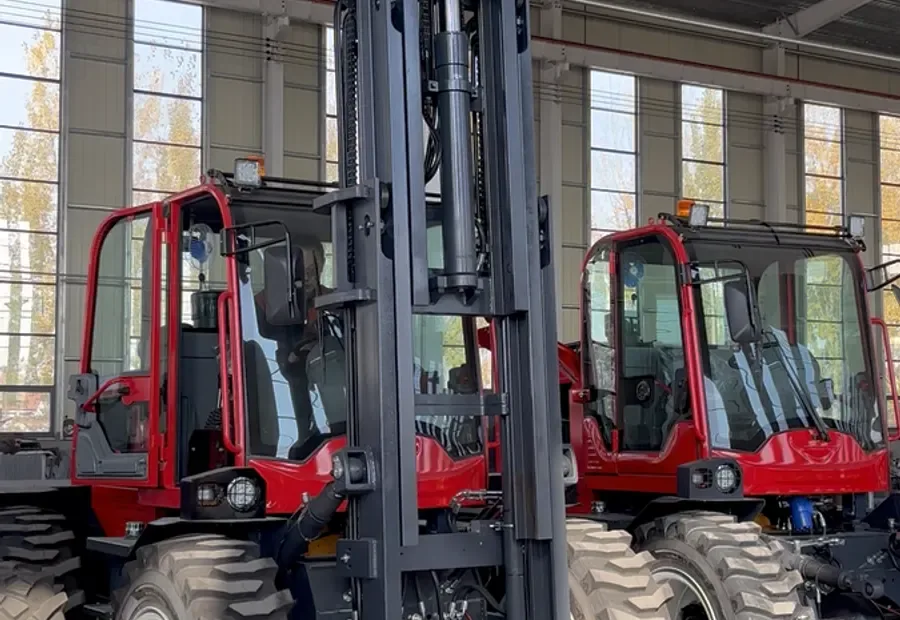
But because a rough terrain forklift is not just a machine in a photo. It has to work on soil, gravel, slopes, farms, construction yards, brick yards, warehouses, ports, and remote sites where service support may not be as convenient as in a local market.
The Short Answer
Before choosing a rough terrain forklift manufacturer, importers should verify more than the model name and rated load.
At minimum, I would check:
- real working condition
- rated load and load center
- mast height and lifting height
- tire type
- drive type and steering structure
- attachment requirements
- engine or power system requirement
- spare parts support
- pre-shipment inspection photos or videos
- user manual and maintenance information
- export documents
- after-sales communication speed
If a supplier cannot discuss these points clearly, the buyer may still receive a forklift, but the risk of wrong configuration becomes much higher.
For buyers still comparing machine types, the BLANC-ELE rough terrain forklift range is a good starting point. For dealers and importers, our related rough terrain forklift buying guide explains the broader purchase logic.
Start With The Job Site, Not The Brochure
Many importers ask suppliers a very simple question first:
"Can you supply a 3 ton, 3.5 ton, or 5 ton rough terrain forklift?"
That question is understandable, but it is incomplete.
As a supplier, I would rather know:
- What material will the forklift lift?
- Is the load on pallets, bags, bricks, steel, stone, timber, or farm goods?
- What is the longest load size?
- How high does it need to lift?
- Will it drive on mud, gravel, concrete, sand, farm soil, or mixed ground?
- Is there slope work?
- How wide is the route?
- Does the operator need to turn in a tight area?
- Is the site near local service support, or far away?
These questions may sound basic, but they prevent many wrong orders.
A rough terrain forklift manufacturer who only replies with capacity and delivery time is not really helping the importer reduce risk. The useful supplier asks enough questions to understand the work.
Rated Load Is Not The Whole Capacity Discussion
Rated load is important, but it should not be treated as the only capacity answer.
In real work, the load center, fork length, mast height, attachment weight, and ground condition can all change how the machine feels. If an importer only compares the rated capacity number, the forklift may look suitable on paper but feel less stable or less efficient on site.
A better manufacturer discussion should include:
| Buyer Question | What The Supplier Should Confirm |
|---|---|
| What capacity do I need? | Load weight, load size, load center, and lifting height |
| Can I use long forks? | Fork length, load center change, and real handling condition |
| Can I add an attachment? | Attachment weight, hydraulic requirement, visibility, and capacity effect |
| Can it work on rough ground? | Tire type, ground clearance, drive system, route, and slope |
| Can it fit my site? | Turning space, mast height, overhead limit, and transport route |
This is also why attachments should be discussed early. A side shifter, fork positioner, clamp, long fork, bucket, or crane jib may change the real configuration. If you are choosing attachments, this article on rough terrain forklift attachments and configurations is useful before final order.
Check Whether The Manufacturer Understands Export Use
Domestic use and export use are not always the same.
An overseas buyer may need more practical support before and after delivery:
- clearer packing and loading photos
- spare parts list
- maintenance points
- simple troubleshooting guidance
- English documents
- nameplate and basic machine information
- customs documents
- communication across time zones
For a local buyer, some missing information can be solved quickly by visiting the supplier or calling a nearby service person.
For an importer in Africa, the Middle East, Southeast Asia, or another developing market, one missing part number or unclear document may delay service for days.
That is why I think export experience is part of product quality. It is not only about welding, engine, tire, or mast. It is also about whether the supplier can support the machine after it leaves the factory.
A Typical Importer Case
A typical case looks like this.
A buyer wants a rough terrain forklift for an outdoor storage yard. The first message is short:
"Send me 3.5 ton model and delivery time."
If the supplier replies only with a quotation, the conversation moves fast, but the risk stays hidden.
Later, the buyer may realize:
- the route is narrower than expected
- the load is longer than a normal pallet
- the rainy season changes the ground
- the mast height does not match the loading work
- local mechanics need clearer maintenance guidance
- the buyer wants an attachment after the order is already confirmed
None of these details is unusual. They are normal outdoor forklift issues.
The better approach is slower at the beginning but safer later:
- Confirm the load and working ground.
- Confirm the machine capacity, mast, tire, and drive type.
- Confirm whether attachments are needed.
- Confirm export documents and shipping plan.
- Confirm spare parts and service support.
In my experience, this kind of checking saves more time than it costs.
Pre-Shipment Inspection Should Be Practical
For importers, pre-shipment inspection does not need to be complicated, but it should be specific.
Useful pre-shipment photos or videos may include:
- full machine view
- data plate or nameplate
- engine or power system area
- mast lifting test
- fork movement
- steering movement
- tire and wheel view
- cab and controls
- attachment operation, if any
- packing or loading process
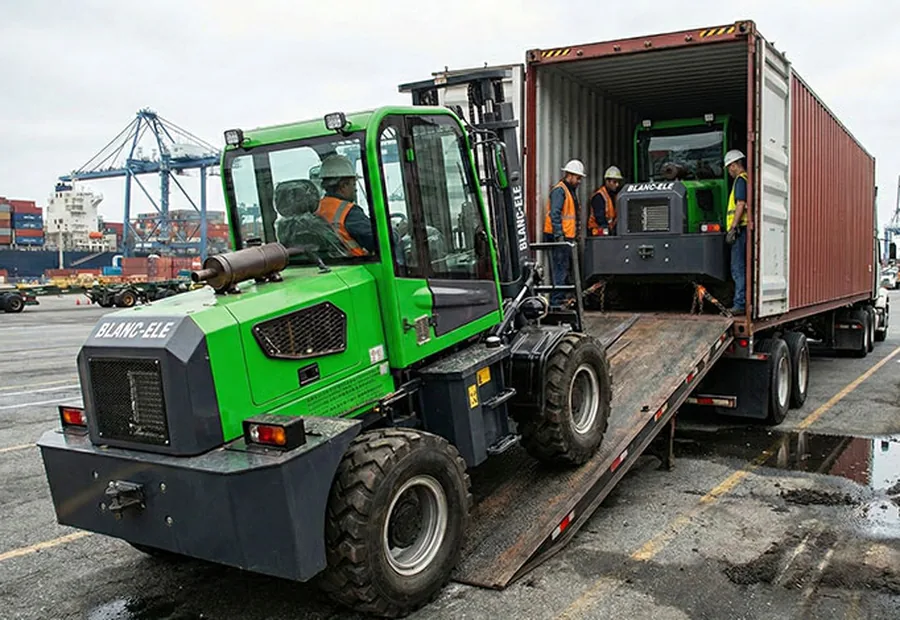
This is not about making the supplier look busy. It is about giving the importer enough information before the machine leaves the factory.
Once the forklift is already in the container or already on the way, solving small misunderstandings becomes harder.
Documents Matter More Than Many Buyers Expect
Some buyers focus almost completely on the machine.
I understand that. The machine is the expensive part. The document folder feels secondary.
But for imported equipment, documents can affect customs clearance, local registration, maintenance, and resale confidence.
Depending on the market and order type, an importer may need to discuss:
- commercial invoice
- packing list
- bill of lading information
- certificate or origin-related documents when applicable
- user manual
- maintenance schedule
- spare parts list
- machine nameplate information
- warranty terms
- attachment information
Different countries and buyers may require different documents, so the supplier should not promise one universal package for every market. The important thing is that the discussion happens before shipment, not after the buyer is already waiting at the port.
After-Sales Support Is Part Of The Buying Decision
A rough terrain forklift may work far away from a major city.
That changes the support question.
Before order, I would ask the manufacturer:
- Which wearing parts should I prepare?
- Which filters, hoses, seals, sensors, and hydraulic parts are common service items?
- Can the supplier identify parts from photos or part numbers?
- How quickly can the supplier answer technical questions?
- Are maintenance points easy for local mechanics to understand?
- Can the supplier provide simple operation and inspection guidance?
This is one reason I often tell buyers not to evaluate the first sale only. A forklift that is easy to buy but difficult to support may become frustrating later.
For more on this problem, see our article on why many forklift problems start before the machine arrives.
What A Serious Manufacturer Conversation Looks Like
Here is a simple way to judge the conversation.
| Weak Supplier Conversation | Better Manufacturer Conversation |
|---|---|
| "This model can do the job." | "Tell me your load, ground, slope, route, and lifting height." |
| "Capacity is enough." | "Let us confirm load center, fork length, and attachment effect." |
| "4WD is strong." | "4WD helps, but tire, ground, operator, and route still matter." |
| "We can ship soon." | "Let us confirm documents, inspection photos, and loading plan." |
| "Spare parts are available." | "Here are common spare parts and how we identify them later." |
This difference matters because importers are not only buying a forklift. They are buying a working result.
Questions To Send Before Asking For A Final Offer
If you want a faster and more accurate supplier reply, send these details first:
- country and working industry
- load material and maximum weight
- load size and pallet condition
- lifting height requirement
- ground condition
- slope or ramp condition
- working hours per day
- indoor, outdoor, or mixed use
- required attachments
- fuel or power preference
- local emission or document requirement
- target delivery schedule
- photos or videos of the site
You do not need a perfect technical document. Even a short video of the route and load can help the supplier make a better recommendation.
My Practical Recommendation
If you are choosing a rough terrain forklift manufacturer, do not rush to compare only capacity, photos, and delivery time.
A good supplier should help you reduce uncertainty before order.
For importers, I would prioritize a manufacturer who can:
- ask clear working-condition questions
- explain configuration choices in plain language
- avoid promising one model for every site
- provide realistic pre-shipment inspection materials
- support spare parts and maintenance after delivery
- communicate clearly when something needs confirmation
This approach may feel less exciting than choosing the fastest offer, but it is usually better for real outdoor work.
If you want BLANC-ELE to review your working condition, you can send us your working condition with your load, ground, lifting height, route, and attachment needs. We can help check whether a rough terrain forklift configuration is suitable before you place an order.