
Mining and quarry sites are not kind to forklifts.
That sounds simple, but it is the part many buyers underestimate.
A normal forklift may look strong in a clean yard. It may lift the load once during a test. It may even have a rated capacity that looks acceptable on paper. But mining support areas, quarry yards, stone processing sites, and aggregate yards create a different kind of daily pressure.
The ground is rough. Dust gets everywhere. Stone chips damage tires. Trucks leave ruts. Operators turn near stockpiles, loading areas, and uneven routes. The forklift may travel farther than expected, and the work rarely happens on a perfect concrete floor.
So for mining and quarry work, I do not start with only one question:
"How many tons do you need?"
I start with a more practical question:
"What is the forklift really driving through every day?"
The Short Answer
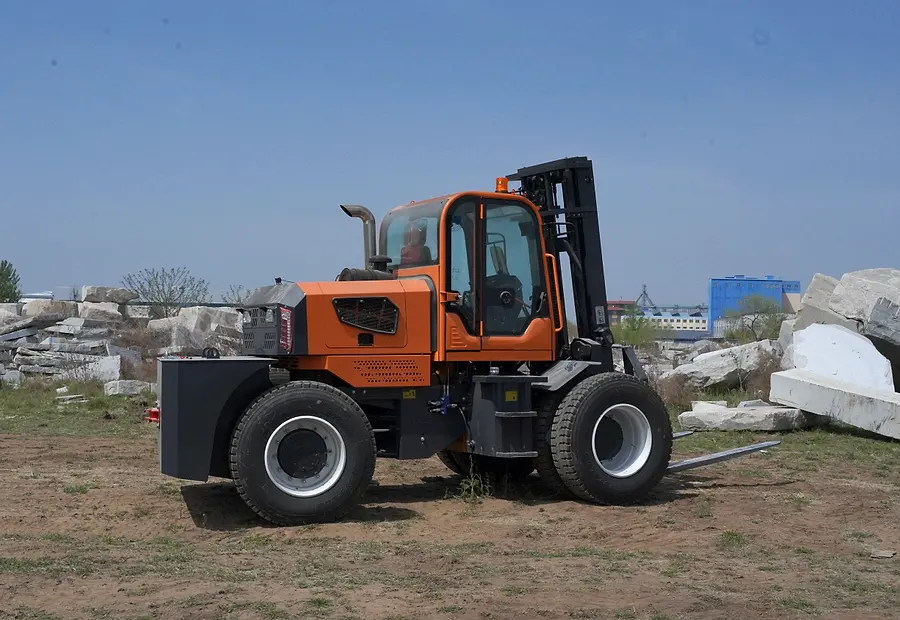
Mining and quarry sites usually need more than a standard warehouse forklift because the work combines rough ground, heavy materials, dust, debris, turning space limits, slope or ramp areas, and higher downtime risk.
For many buyers, a BLANC-ELE rough terrain forklift range is worth considering when the job involves:
- stone blocks
- aggregate bags
- mining support materials
- pallets near crushing or screening areas
- spare parts and tools for site equipment
- outdoor loading beside trucks
- uneven access roads
- dusty or muddy seasonal conditions
The right machine still depends on the load, ground, route, lifting height, attachment plan, maintenance ability, and operator practice. But the key point is clear: a mining forklift selection should be based on the site, not only the rated load.
Why A Standard Forklift Often Struggles
A standard forklift is usually designed around smoother floors and more predictable routes.
That is not a criticism. It is just a different job.
In a warehouse, the floor is usually flat. The route is controlled. Pallets are more predictable. Operators can turn on cleaner surfaces. Maintenance teams often have easier access to parts and service.
In a mining or quarry environment, the forklift may face:
- loose gravel
- sharp stone pieces
- mud after rain
- dust around crushing or cutting areas
- narrow loading corners
- slopes or uneven entrances
- mixed traffic with trucks and loaders
- long travel distance between storage and work zones
This is where a normal forklift can become slow, uncomfortable, or expensive to keep working.
The issue is not always one dramatic failure. More often, it is a collection of small problems that appear every day.
The operator drives slower. Tires wear faster. The forklift needs more correction when turning. Dust makes inspection more important. A small damage point becomes downtime because the job site is far from service support.
For a related site-focused discussion, this article on why rough terrain forklifts are essential for mining sites gives more background.
A Typical Case: The Load Was Not The Only Problem
A typical buyer may send a simple message:
"We need a forklift for quarry work. The load is stone and site materials."
At first, the request sounds like a capacity question.
Then the photos show more:
- the route is not paved
- the forklift must drive near stone stockpiles
- the ground has broken pieces and dust
- the truck loading area is tight
- the forklift sometimes carries long or uneven loads
- the site becomes worse after rain
- spare parts are not easy to get locally
In this situation, a supplier should not only ask for the heaviest load.
I also want to understand the ground, travel distance, tire risk, turning area, lifting height, attachment need, operator visibility, and local maintenance situation.
If we only choose by capacity, the forklift may look correct in the quotation but feel wrong on the site.
Dust Is Not Just A Cleaning Problem
Dust is part of many mining and quarry sites.
For people, dust control is a serious health and safety topic. NIOSH mining resources discuss dust-related risks such as silicosis in mining environments, especially where workers may be exposed to respirable crystalline silica.
For machines, dust also changes daily maintenance.
It can affect:
- radiator cleaning
- air filter inspection
- lubrication points
- electrical connectors
- visibility around the operator area
- brake and steering inspection habits
- how often the machine needs cleaning before service
I do not like promising that any forklift can ignore dust.
The better approach is to plan for dust before the machine ships. Buyers should ask how the machine will be inspected, cleaned, and serviced in the real site environment.
This is one reason maintenance access matters so much in export projects. If a simple inspection takes too long, the team may delay it. If the team delays inspection, small problems become expensive.
Tires Decide More Than Many Buyers Expect
In quarry and mining support work, tires are not just a wear item.
They decide whether the forklift can use its power, turn confidently, and survive the ground.
Sharp stone, loose gravel, broken concrete, and dusty surfaces all create different tire problems. A tire that works well on one outdoor yard may not be the best choice for another quarry.
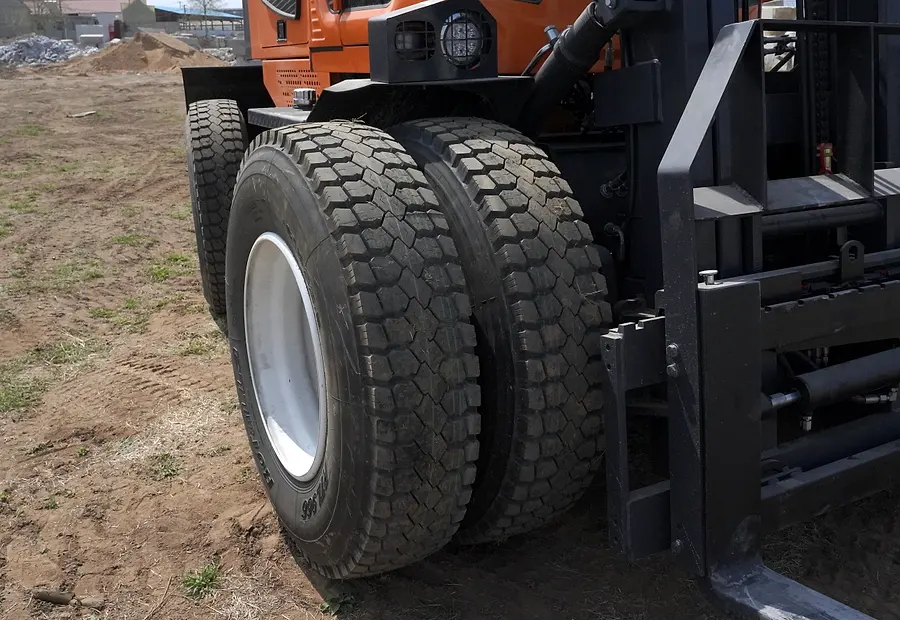
Before choosing the forklift, I usually ask:
- Is the ground mainly gravel, soil, stone, or mixed surface?
- Are there sharp stone edges on the route?
- Does the forklift drive long distances with load?
- Does the ground become muddy after rain?
- Is the machine turning tightly beside stockpiles or trucks?
- Is tire replacement easy to arrange locally?
This is also why I avoid judging tires only by appearance. A deep tread looks strong, but the real question is whether it suits the ground and working pattern.
If the tire is wrong, the forklift may still move, but the buyer pays later through wear, vibration, downtime, and operator hesitation.
Ground Clearance And Underbody Risk Matter
Mining and quarry yards often have ground surprises.
A forklift may pass over ruts, stones, uneven soil, broken slabs, and temporary loading paths. Low clearance can create repeated scraping or impact, especially when the forklift is loaded.
The buyer may first notice this as slow operation.
The operator avoids some routes. The forklift takes a longer path. The team clears stones again and again. The machine works, but the site controls the machine instead of the machine controlling the work.
For rough ground, I prefer to check:
- lowest underbody points
- route condition under load
- entry and exit points near trucks
- slope transitions
- common debris on the route
- whether the site layout changes during production
This is why photos alone are not always enough. A short video of the route can show how the forklift will actually move through the site.
Slope And Loading Areas Need Careful Discussion
Some quarry and mining support areas include ramps, uneven access roads, or loading zones that are not level.
This needs careful wording.
No supplier should say that a forklift is safe on every slope just because it has large tires or 4WD. Slope work depends on machine specification, load condition, tire grip, operator training, travel direction, surface condition, speed, and site rules.
OSHA's powered industrial truck guidance treats operator training, load handling, inspection, and operating conditions as important parts of forklift safety. That matches real export projects: the machine matters, but site management and operator behavior matter too.
If slope work is important, buyers should also read our article on what slope a forklift can handle and confirm the final configuration with the specification sheet, data plate, and site conditions.
Attachments Can Help, But They Also Change The Machine
Mining and quarry support work may involve more than standard pallet handling.
Depending on the site, buyers may ask about:
- longer forks
- fork positioners
- side shift
- buckets
- clamps
- crane jib attachments
- special handling for irregular loads
Attachments can make work easier, but they also change load center, visibility, working width, and stability margin.
This is why I prefer discussing attachments before confirming capacity. A forklift that looks suitable with standard forks may need a different configuration once the buyer adds a bucket, clamp, or long fork requirement.
For a deeper discussion, see our guide to rough terrain forklift attachments and configurations.
Downtime Costs More In Remote Sites
In a city warehouse, downtime is painful.
In a remote mining or quarry site, downtime can become a much bigger problem.
The machine may be far from a dealer. Parts may need to be shipped. Local mechanics may not know the exact model. Work may stop because one small part is missing.
That is why I treat service planning as part of the purchase, not something to think about after delivery.
Before order, buyers should consider:
- who will inspect the forklift daily
- which wear parts should ship with the machine
- which filters, hoses, seals, and small electrical parts are worth preparing
- whether the operator can report problems early
- whether maintenance access is convenient enough for real use
- how fast spare parts can be identified and supplied
This is the same logic behind our article on why some rough terrain forklifts become expensive to maintain. The purchase price is not the whole story. Downtime, wrong configuration, and poor planning usually create the bigger cost.
What I Ask Before Recommending A Mining Or Quarry Forklift
Before recommending a rough terrain forklift for mining or quarry support work, I usually ask for:
| Question | Why it matters |
|---|---|
| What material will the forklift handle? | Stone, aggregate bags, tools, pallets, and irregular loads create different requirements. |
| What is the normal load and heaviest load? | Daily work matters more than one best-case lift. |
| What is the load size and shape? | Long or uneven loads change fork, attachment, and turning needs. |
| What does the ground look like? | Gravel, stone, soil, mud, and dust affect tires and clearance. |
| How far will the forklift travel with load? | Long routes increase wear, heat, fuel use, and operator fatigue. |
| Are there slopes or ramps? | Slope work must be checked carefully with load, surface, and operator practice. |
| How tight is the loading area? | Turning space affects daily efficiency and tire wear. |
| Who will handle maintenance locally? | Export buyers should plan service and spare parts before shipping. |
These questions are simple, but they often reveal whether the buyer needs a different configuration.
What Buyers Should Send Us
If you are choosing a forklift for mining, quarry, stone yard, aggregate, or remote outdoor material handling, send us:
- site photos
- route video
- ground close-up photo
- load photos
- load weight range
- load dimensions
- required lifting height
- travel distance with load
- slope or ramp photos if available
- rainy-season or worst-condition photos
- attachment requirements
- destination country and local maintenance situation
With these details, we can check whether a rough terrain forklift for mining and quarry work is the right direction before the order moves forward.
Final Thought
Mining and quarry work punishes weak assumptions.
If the buyer only checks rated capacity, many real site problems stay hidden until the forklift arrives. Dust, stone, tire wear, route distance, turning space, slopes, load shape, maintenance access, and spare parts planning all matter.
That does not mean every site needs the biggest forklift.
It means every site needs the right conversation before purchase.
If your forklift will work around stone, gravel, mining support materials, aggregate yards, or remote outdoor loading areas, send us your working condition. A few practical photos and a short route video can make the recommendation much more reliable.