
A forklift can have enough power and still lose time at every turn.
I see this often in rough terrain forklift inquiries.
The buyer asks about capacity, 4WD, tire size, mast height, or engine brand. Those are all important. But the machine does not work on a brochure. It works beside trucks, around stacked materials, through narrow site roads, over gravel, mud, ruts, slopes, and temporary loading areas.
That is where steering starts to matter.
On smooth warehouse floors, steering may feel like a normal technical detail. On rough ground, it can decide whether the operator can turn smoothly, whether the tires fight the surface, whether the forklift needs three corrections for one loading position, and whether the daily work feels controlled or stressful.
So before I recommend a rough terrain forklift, I do not only ask:
"How many tons do you need to lift?"
I also ask:
"Where does the forklift need to turn?"
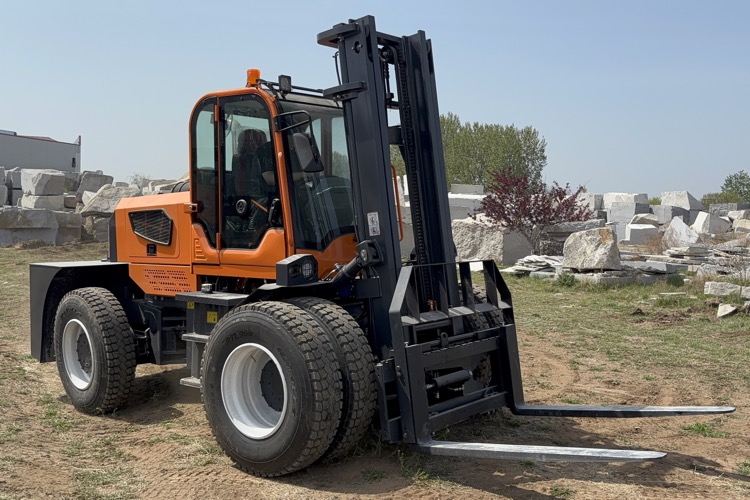
The Short Answer
Forklift steering matters more on rough terrain because outdoor sites are rarely clean, flat, or spacious.
Good steering is not only about making the forklift turn. It affects:
- turning radius
- operator control
- tire wear
- route efficiency
- load positioning
- stability feeling
- space needed around trucks and materials
- how confidently the machine works on uneven ground
For buyers comparing drive systems, our guide to forklift drive types is useful background. But once the forklift works outdoors, drive type and steering should be discussed together.
If the site is a construction yard, farm, brick yard, stone yard, mine support area, plantation, or outdoor warehouse, steering is not a small detail. It is part of whether the whole machine matches the job.
Why Buyers Often Notice Steering Too Late
Many buyers only start thinking about steering after the forklift arrives.
The forklift may have enough rated capacity. It may have rough terrain tires. It may even be 4WD.
But on site, the operator finds a different problem:
- the loading area is narrower than expected
- trucks cannot park in the ideal position
- pallets are stacked too close to the route
- the forklift must turn on loose gravel
- the operator needs to correct the angle several times
- the tires push soil or scrape stone during tight turns
- long loads make the machine harder to position
In that situation, the buyer may say the forklift is slow.
Sometimes the machine is not weak. The steering and route were just not checked carefully enough before order.
A Typical Case: The Forklift Could Lift, But The Yard Was Too Tight
A typical overseas buyer may tell us:
"We need one rough terrain forklift for outdoor loading. The ground is not concrete, but the machine only needs to load trucks and move pallets."
At first, this sounds simple.
Then the site photos show a different story.
The truck loading area is beside a wall. Building materials are stacked on one side. The ground is mixed gravel and soil. After rain, the surface becomes softer near the entrance. The forklift has to pick pallets from one direction and turn close to the truck body.
In this kind of yard, capacity alone does not solve the daily problem.
The forklift must have enough room to approach, turn, correct, and place the load. If the turning space is too tight, the operator spends time moving forward and backward. If the ground is loose, every correction also disturbs the surface and increases tire wear. If the load is long, the problem becomes worse.
This is why I ask for a short route video when the site looks narrow.
A 20-second video can show more than ten product photos.
Front-Wheel Steering, Rear-Wheel Steering, And 4WD Are Different Questions
Some buyers search for questions like:
- Are forklifts front wheel drive?
- Are forklifts rear wheel drive?
- Do forklifts use front-wheel or rear-wheel steering?
- Is 4WD better for outdoor forklifts?
These questions are related, but they are not the same.
Drive type is about how the forklift sends power to the ground.
Steering is about how the forklift changes direction.
For a more detailed explanation, this article on front-wheel and rear-wheel steering in 4WD rough terrain forklifts is a good starting point.
In real selection work, I try to bring the conversation back to the site:
- Does the forklift need traction on soft or uneven ground?
- Does it need to turn in a narrow yard?
- Does it carry long or wide loads?
- Does the operator work beside trucks, walls, containers, or stacked goods?
- Does the route change during the project?
The right answer depends on the working condition, not only the steering label.
Turning Radius Is Only Useful When It Matches The Real Route
Turning radius is important, but I do not like judging it only from a specification table.
A specification can tell you the machine's turning ability under standard conditions. Your site adds many real-world limits:
| What the buyer checks | What I also want to know |
|---|---|
| Turning radius | Narrowest route width on site |
| Overall forklift size | Space beside trucks, walls, containers, and stacked materials |
| Load capacity | Load length, width, and center of gravity |
| Tire size | Ground surface and tire grip during turning |
| Mast height | Whether the operator must turn near overhead obstacles |
| Attachment plan | Whether a clamp, side shift, bucket, or fork extension changes the working width |
This is why a route sketch is useful.
Even a simple hand-drawn layout can help:
- pickup point
- unloading point
- narrowest turn
- truck position
- material stack position
- slope or ramp area
- soft ground or rainy-season problem area
Once we see the route, steering becomes a practical decision instead of a technical word.
Rough Ground Changes How Steering Feels
Steering on gravel, mud, soil, stone, or broken concrete does not feel the same as steering on a warehouse floor.
The tires are working harder. The ground may move under the tire. Small ruts can pull the machine slightly off line. A loaded forklift can feel very different from an empty forklift. If the operator must turn while carrying a heavy or long load, the steering experience becomes even more important.
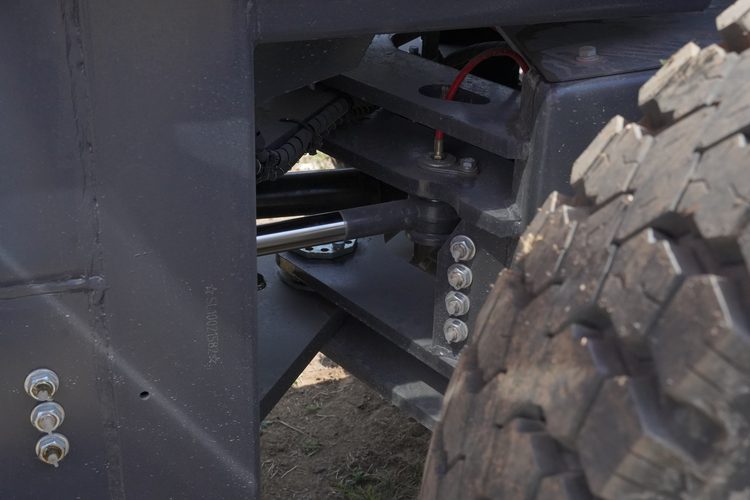
I usually pay attention to:
- whether the tire pattern suits the ground
- whether the steering components are easy to inspect
- whether the operator has enough visibility while turning
- whether the route requires repeated sharp turns
- whether the forklift will work many hours every day outdoors
For rough terrain work, steering and tires should not be separated. A good steering design still needs the right tire contact with the ground.
This is similar to the point we discussed in our article on why 4WD alone does not make a forklift ready for rough terrain. One feature helps, but the whole configuration decides the result.
Long Loads Make Steering More Important
Many forklift problems start because the buyer only talks about load weight.
But the shape of the load can matter just as much.
A compact pallet near the mast is one thing. Long steel, timber, pipe bundles, formwork, stone slabs, wide pallets, or agricultural materials are another.
Long or wide loads change the steering discussion because they affect:
- turning clearance
- operator visibility
- load center
- fork length
- attachment choice
- whether the load swings or shifts during correction
- how close the forklift can work beside trucks or stacks
If the load is not compact, I want to see photos before recommending a configuration.
For some buyers, an attachment such as side shift or a fork positioner can reduce repeated repositioning. For others, the key issue is route width or loading direction, not the attachment itself.
If attachments are part of your work, it is worth reading our guide to rough terrain forklift attachments and configurations before choosing the machine.
Steering Also Affects Maintenance Thinking
Outdoor buyers often focus on engine, transmission, tires, and mast.
That is understandable.
But steering parts also work hard on rough ground, especially when the site is dusty, muddy, narrow, or full of repeated turning.
Before export, I prefer buyers to think about:
- grease points and daily inspection access
- steering linkage visibility
- tire wear caused by tight turning
- whether the operator turns too sharply with heavy loads
- whether spare parts support is planned before the machine ships
This does not mean steering systems are fragile.
It means outdoor work is real work. The machine should be selected, operated, and maintained with that reality in mind.
For export buyers, this is especially important because a small part can create real downtime if it is not planned in advance.
Safety Should Not Be Replaced By A Steering Feature
No steering design makes a forklift safe by itself.
Operator training, route management, load handling, daily inspection, ground condition, visibility, speed control, and manufacturer instructions all matter.
OSHA's powered industrial truck guidance treats training, operating conditions, load handling, and safe operation as important parts of forklift use. That matches what I see in real projects: the forklift configuration matters, but the operator and site rules matter too.
For rough terrain use, I would rather speak carefully than make a simple promise.
If the site has slopes, wet ground, poor visibility, mixed pedestrian traffic, or heavy loads, the buyer should check the machine specification, data plate, site rules, and operator practice together.
What I Ask Before Recommending A Rough Terrain Forklift
Before giving a serious recommendation, I usually ask for these details:
| Question | Why it matters for steering |
|---|---|
| What is the narrowest turning space? | The forklift must fit the real route, not only the product page. |
| Where does the forklift load and unload? | Truck position and material stack position often create the turning problem. |
| What ground does it turn on? | Gravel, soil, mud, stone, and concrete all affect steering feel and tire wear. |
| What is the load size and shape? | Long or wide loads need more turning clearance. |
| Will attachments be used? | Attachments can change the working width and load center. |
| Does the route include slopes or ramps? | Steering, traction, load handling, and safety practice must be checked together. |
| How many hours will it work each day? | Repeated outdoor turning changes tire wear and maintenance planning. |
| Who will handle local maintenance? | Export buyers need spare parts and inspection planning before downtime happens. |
These questions are simple, but they help prevent the wrong forklift from looking right on paper.
What Buyers Should Send Us
If you are choosing a rough terrain forklift for an outdoor site, send us:
- photos of the ground
- a short route video
- load photos
- load weight range
- load length, width, and height
- required lifting height
- narrowest turning space
- truck loading position
- attachment requirement
- expected working hours per day
- rainy-season or worst-condition photos if available
With this information, we can check whether the BLANC-ELE rough terrain forklift range is a good direction for your working condition.
Final Thought
Steering is easy to ignore before order because it does not sound as exciting as capacity, 4WD, or engine power.
But on a real outdoor site, steering shows up every few minutes.
It shows up when the operator turns beside a truck. It shows up when the ground is soft. It shows up when the load is long. It shows up when materials are stacked too close to the route. It shows up when the forklift has to work all day, not just make one demonstration lift.
That is why I treat steering as part of rough terrain forklift selection, not a small technical detail.
If you are not sure whether your site has enough turning space, send us your working condition. A few photos and a short video are often enough for us to give a more practical recommendation.