
Farm work looks simple from a distance.
The forklift does not see it that way.
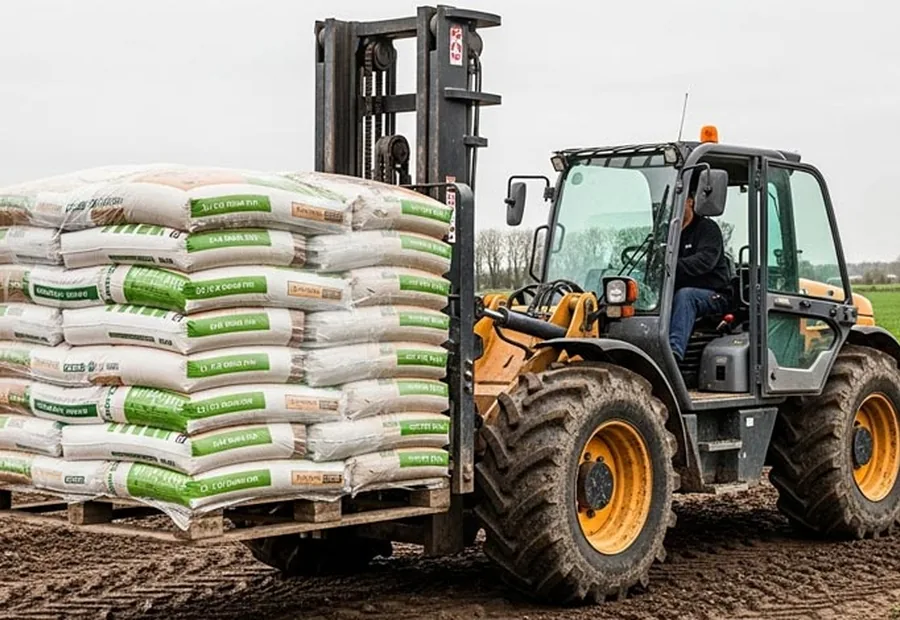
On a farm or plantation, the machine may start the morning on a concrete loading area, then move fertilizer bags, feed, timber, pallets, fruit crates, seed, irrigation parts, or bales across wet soil, gravel, slopes, grass, and narrow shed entrances before lunch.
That is why I do not like choosing a farm forklift by rated capacity alone.
For many overseas buyers, the better first question is:
What kind of ground, route, load, and attachment will this forklift face every day?
If those details are clear, the choice between a compact machine, a 3.5 ton rough terrain forklift, a 5 ton rough terrain forklift, or another configuration becomes much easier.
The Short Answer
A rough terrain forklift for farms and plantations should be selected by working route, ground condition, load shape, attachment, turning space, mast height, tire condition, maintenance access, and spare parts planning.
If the job is mainly light pallets, fruit crates, orchard paths, or narrow farm roads, a smaller or mid-size machine may be enough.
If the job includes heavier fertilizer pallets, feed bags, timber, construction materials for farm buildings, or bale handling with attachments, the buyer should check whether a 3.5 ton rough terrain forklift or a 5 ton rough terrain forklift is a better starting point.
For wider model comparison, buyers can also start from BLANC-ELE's rough terrain forklift range and the agriculture forklift solution page.
Start With The Farm Route, Not Only The Load
In many inquiries, the buyer tells me the load first.
"We need to lift around 2.5 tons."
"We move fertilizer pallets."
"We handle fruit crates and bales."
That information matters, but it is only one part of the decision. On a farm, the same load can feel very different depending on the route.
A 2-ton pallet on flat concrete is one thing. The same pallet on a wet plantation road, with a slope and soft shoulder on one side, is a different problem.
Before recommending a configuration, I normally want to know:
- Is the route concrete, gravel, soil, grass, mud, or mixed?
- Does the forklift work after rain or only in dry weather?
- Are there slopes, ditches, soft shoulders, or uneven tracks?
- How far does the forklift travel with a load?
- Does the machine need to enter sheds, greenhouses, barns, containers, or narrow farm roads?
- Is the work seasonal, such as harvest time, when downtime becomes much more expensive?
These answers often change the recommendation more than the rated capacity printed on the brochure.
What The Forklift Will Carry
Farm and plantation work rarely uses only one type of load.
One buyer may use the same forklift for bagged fertilizer, feed, seed, fruit crates, timber, empty bins, farm equipment parts, and packaged materials. Another buyer may mainly handle bales or irregular agricultural loads.
This is where the discussion should become practical.
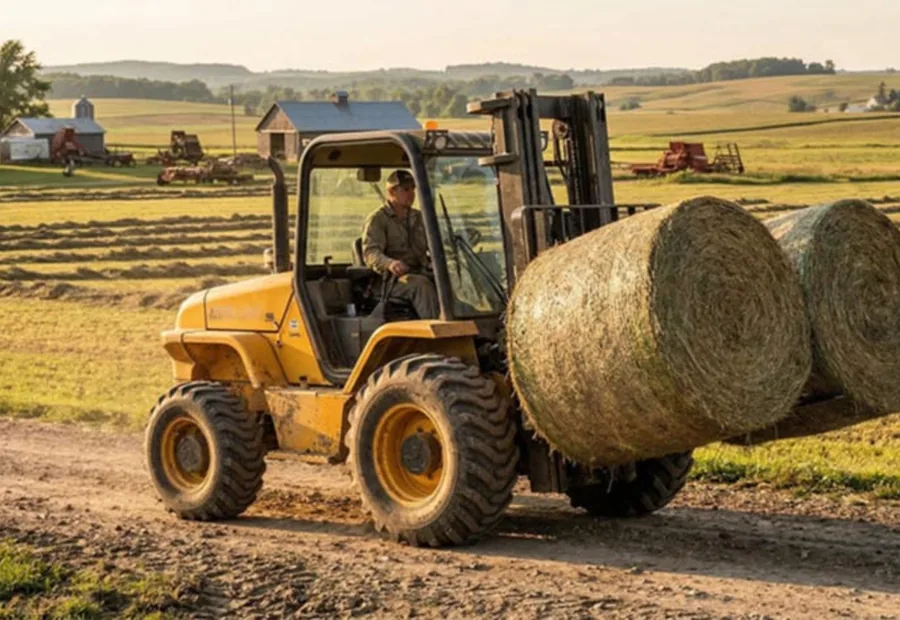
For normal pallets, standard forks may be enough. For longer loads, longer forks may be needed, but the buyer should check load center and stability carefully instead of only asking for longer fork length. For bales, a bale clamp or bale spear may be more suitable. For loose material, a bucket may be discussed, but it changes the machine's real working load and should not be treated like a normal pallet job.
BLANC-ELE's agriculture solution page lists typical farm attachments such as pallet forks, bale clamp or bale spear, bucket, grapple or clamp, and extended forks. I prefer to discuss the attachment early because the attachment changes the load center, visibility, turning space, and sometimes the realistic capacity requirement.
If a buyer leaves the attachment discussion until after the machine is already ordered, the final setup may still work, but it is easier to make a costly mismatch.
Ground Condition Is Usually The Real Farm Problem
On farms, the forklift is often blamed when the real problem was not capacity. It was ground condition.
Soft soil can slow the machine. Wet ground can make normal tires lose traction. Uneven farm tracks can make the load swing more than expected. A small slope near a storage shed may be more important than a long open road.
That is why a 4WD rough terrain forklift is often considered for outdoor agricultural use. It is not because every farm needs the largest model. It is because many farm jobs need better traction, higher ground clearance, and a machine designed for outdoor uneven routes instead of indoor warehouse floors.
For buyers comparing indoor warehouse forklifts with outdoor machines, I normally explain it this way:
An indoor forklift is built for smooth floors and predictable routes. A rough terrain forklift is selected when the route itself becomes part of the job.
This is also why BLANC-ELE separates agriculture forklift solutions from general indoor handling. The working environment is different, so the selection logic should also be different.
A Typical Plantation Case
Here is a common situation I see in export inquiries.
A plantation buyer wants one forklift to move bagged fertilizer from a storage area, carry crates during harvest, and sometimes handle farm materials near a muddy road. The buyer first asks for a simple capacity recommendation.
After a few questions, the real picture becomes clearer.
The warehouse entrance is not wide. The route from storage to the field is partly gravel and partly soil. During rainy season, the forklift does not work in deep mud every day, but it still needs to cross wet ground. The buyer may also add a bale clamp or extended forks later.
In this case, I would not rush to say, "Buy the biggest machine."
I would first check the heaviest real load, the route width, mast height requirement, attachment plan, turning space, and whether the buyer wants one flexible machine or separate machines for different jobs. A larger machine may have more reserve, but it also needs more turning space, a stronger route, and better operator discipline.
The right answer is usually a balanced configuration, not the largest number on paper.
Check Attachments Before Choosing Capacity
Attachments are useful on farms, but they also make forklift selection easier to get wrong.
A bale clamp, fork positioner, longer forks, bucket, or other attachment adds weight and changes the load center. The forklift may still have the same rated capacity on the nameplate, but the real working capacity with that attachment and load shape needs confirmation.
That is why I prefer buyers to send photos or simple measurements before final recommendation.
Useful information includes:
- load size and weight;
- pallet or bale dimensions;
- whether the load is regular or irregular;
- attachment type wanted;
- maximum lift height;
- route photos, especially wet or uneven areas;
- shed entrance height and width;
- turning space near loading and unloading points.
If the buyer is not sure which attachment fits the job, a simple photo of the actual load often helps more than a long description.
3.5 Ton Or 5 Ton: How I Usually Start The Discussion
For many farm and plantation buyers, the discussion often starts around 3.5 ton or 5 ton capacity.
A 3.5 ton 4WD rough terrain forklift is often considered when the buyer wants a balance between outdoor traction, useful lifting capacity, and a machine that is still relatively flexible for farms, yards, and mixed outdoor jobs.
A 5 ton rough terrain forklift becomes more relevant when the work includes heavier pallets, larger farm materials, timber, stone, farm construction materials, or more demanding outdoor yard routes.
But I would still not choose only from the tonnage.
For example:
- A narrow orchard path may favor a more compact machine.
- Heavy bagged fertilizer over uneven ground may need more stability and reserve.
- Bale handling may depend heavily on attachment and load center.
- A farm dealer may prefer a model that covers several common customer jobs, while an end user may need a more specific configuration.
That is why I usually ask buyers to describe the job first and select the machine second.
Shed Access, Mast Height, And Turning Space
Farm buyers sometimes focus on outdoor ground and forget the indoor or semi-indoor part of the job.
The forklift may need to enter a feed storage shed, a packing house, a barn, a workshop, or a container loading area. If the mast, cabin, or overall height does not match the entrance, the machine may be strong enough but still inconvenient every day.
Before order, buyers should confirm:
- minimum entrance height;
- minimum passage width;
- turning area at both loading and unloading points;
- required lift height;
- whether loads are stacked indoors or only moved at ground level;
- whether an open cabin, closed cabin, or other configuration is more suitable for the working environment.
This step is simple, but it prevents many avoidable problems.
Maintenance During Busy Season
Farm work is often seasonal. A forklift that stops during harvest or planting season can become a bigger problem than a machine that stops during a quiet month.
For overseas buyers, I suggest planning basic wear parts before shipment, especially if the site is far from a major city or local parts supply is slow.
This does not mean buying many unnecessary parts. It means checking the parts that are more likely to stop work if they are missing.
Common items to discuss include filters, hoses, seals, tires, forks or attachment wear points, electrical sensors, and routine maintenance parts. The exact list should be confirmed according to the final machine configuration.
For export buyers, remote after-sales support also matters. Clear manuals, parts diagrams, photos, videos, and correct part identification can save a lot of time when the buyer is far from the supplier.
What To Send Before Asking For A Recommendation
If you are planning to buy a rough terrain forklift for farm or plantation work, the fastest way to get a useful recommendation is not to send only one sentence.
Send the supplier a short working-condition summary.
I would include:
- the heaviest load and normal daily load;
- pallet, crate, bale, or material dimensions;
- photos of the ground and route;
- whether the forklift works during rainy season;
- slope or uneven-ground details;
- lift height requirement;
- shed, gate, or container height limits;
- attachment needs;
- destination market;
- whether the buyer is an end user, dealer, importer, rental fleet, or project buyer.
This information helps avoid over-selling and under-selecting.
It also helps the supplier recommend whether the buyer should start with a compact model, a 3.5 ton machine, a 5 ton machine, or a different configuration.
If you are still collecting details, BLANC-ELE's rough terrain forklift quote information checklist can help organize the basic information before asking for a formal recommendation.
My Practical Recommendation
For farm and plantation buyers, I would not treat the forklift as just another warehouse machine with larger tires.
The route is rougher. The load types change more often. Attachments matter earlier. Seasonal downtime can be painful. And overseas buyers need a configuration that can be supported after the machine arrives.
So my practical recommendation is simple:
Choose the forklift around the real farm route, real load, real attachment, and real maintenance situation.
Capacity is important, but it should come after the working condition is understood.
For buyers comparing models, you can review BLANC-ELE's rough terrain forklift products, the 3.5 ton rough terrain forklift, and the 5 ton rough terrain forklift. If the farm job involves mixed terrain, bales, fertilizer, crates, or plantation roads, send the working details first so the recommendation is based on the job, not only on a tonnage number.
References
- BLANC-ELE agriculture forklift solution: 4WD forklifts for agriculture
- BLANC-ELE product page: 3.5 ton 4WD rough terrain forklift
- BLANC-ELE product page: 5 ton 4WD rough terrain forklift