
The most useful time to find a forklift shipment problem is before the machine enters the container.
After loading, every small question becomes harder. Photos are limited. Access is tight. The freight schedule is moving. The buyer may already be preparing import documents, unloading equipment, and customer delivery plans.
For rough terrain forklifts, pre-shipment checks matter even more than they do for ordinary warehouse forklifts. The machine is heavier, the tires are larger, the mast and attachment plan can affect container loading, and overseas buyers often need photos or videos for their own dealer, project, or end-user file.
So before a diesel 4WD rough terrain forklift leaves the factory, I prefer to treat the shipment as a final confirmation stage, not just a logistics step.
The Short Answer
Before a rough terrain forklift is loaded for export, importers and dealers should confirm:
- model and configuration against the signed order
- mast type, lifting height, forks, tires, cabin/canopy, lights, and optional attachments
- visible condition of key areas before container loading
- basic function check photos or videos where possible
- spare parts, manuals, parts diagrams, and accessories included with shipment
- loading method, container fit, blocking, fixing, and protection plan
- shipping marks, documents, consignee details, and destination requirements
- what photos or videos the buyer needs before the container is sealed
This does not replace the final sales contract, technical specification, or professional logistics arrangement.
It gives both sides a practical checklist so the shipment does not become a rushed handover.
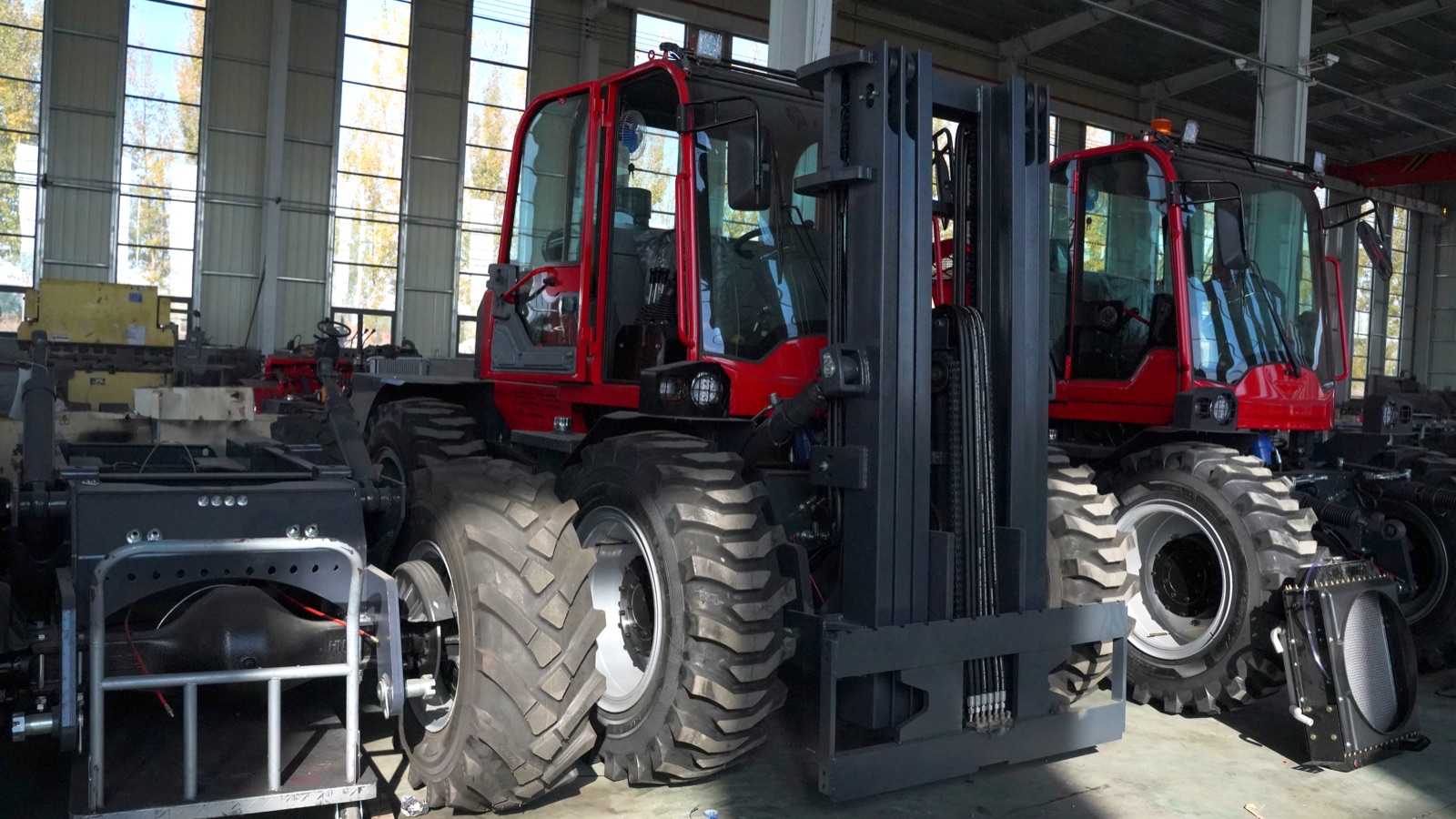
Why Pre-Shipment Checks Are Different For Rough Terrain Forklifts
A rough terrain forklift is not a small boxed product.
It is a working machine with many visible configuration details. A buyer may order a 3 ton, 3.5 ton, 5 ton, or 7 ton class machine, but the final delivery still depends on the specific setup: mast, tire pattern, cabin or canopy, forks, attachment interface, lights, counterweight layout, color, and spare-parts package.
For a dealer or importer, the pre-shipment stage is also part of customer confidence.
Your end customer may not visit the factory. They may rely on your photos, videos, and documents before paying the balance, arranging customs, or preparing the job site. If the shipment record is clear, the dealer looks more organized. If the record is weak, every later question becomes harder to answer.
That is why a good shipment check is not only about finding defects.
It is about confirming that the machine being loaded is the machine the buyer expects to receive.
Start With The Signed Configuration
The first check should be simple:
Does the actual machine match the agreed configuration?
For a rough terrain forklift, this may include:
- rated capacity class
- 4WD configuration
- mast type and lifting height
- fork length
- tire type and visible tread pattern
- cabin or canopy
- color and exterior marking
- lights and basic accessories
- side shifter, fork positioner, long forks, clamp, bucket, or other agreed options
- spare parts and documents included with the machine
The buyer should not rely only on a general product name.
"Rough terrain forklift" is too broad. Even "3.5 ton rough terrain forklift" is not enough if the order includes special tires, a cabin, long forks, or a parts package.
If the shipment is for a compact outdoor model, the 3.5 ton rough terrain forklift page can help buyers understand the public model positioning. For a wider selection path, the BLANC-ELE rough terrain forklift range should be used as the product-family reference before final quotation confirmation.
Ask For Practical Photos, Not Only Beautiful Photos
Marketing photos are useful, but pre-shipment photos should answer practical questions.
For an importer, I would ask for a simple photo set:
- full front view
- full side view
- rear view
- mast and fork view
- tire close-up
- engine or service-access area where appropriate
- cabin or operator area if ordered
- attachment or special option close-up
- nameplate or machine identification photo where appropriate
- spare parts, manuals, and accessories before packing
- loading and fixing photos before the container is sealed
These photos help the buyer confirm the shipment record without asking the factory to write a long report.
They also help after arrival. If the importer needs to compare what was shipped with what was received, the photo set gives both sides a clear reference.
Confirm Attachments Before Loading
Attachments can create late shipment confusion.
A buyer may order a rough terrain forklift with long forks, a side shifter, fork positioner, clamp, bucket, or other option. If the attachment is not checked before loading, the buyer may only discover a mismatch after the machine arrives.
Before shipment, ask:
- Is the attachment already installed or packed separately?
- Is the attachment shown clearly in photos?
- Are hydraulic hoses, pins, brackets, or related parts included where required?
- Does the attachment affect container loading or protection?
- Has the supplier confirmed that the attachment plan matches the final machine configuration?
This is why I prefer to discuss attachments before final capacity selection, not after the purchase is nearly finished. The related guide on rough terrain forklift attachments and configurations explains why an attachment can change the real working discussion.
Check The Spare Parts And Documents Before The Container Is Closed
Many export buyers focus on the machine and forget the smaller package.
That can create problems later.
Before loading, confirm whether the shipment includes:
- operation or maintenance manual
- parts diagram or parts list
- filters or recommended wear parts if included in the order
- tools or accessories included in the signed order
- keys
- loose parts removed for transport
- attachment-related small parts
- invoice, packing list, bill of lading information, and other shipment documents handled by the agreed process
Not every order needs the same spare-parts package. A dealer stocking machines for resale may want a different parts plan from an end user buying one machine for a farm, construction site, or outdoor yard.
But the buyer should confirm the plan before shipment. Once the machine is already on the way, adding one small missing part becomes slower and more expensive.
For a deeper export-support angle, this article on forklift spare parts planning for export buyers is useful before the final purchase decision.
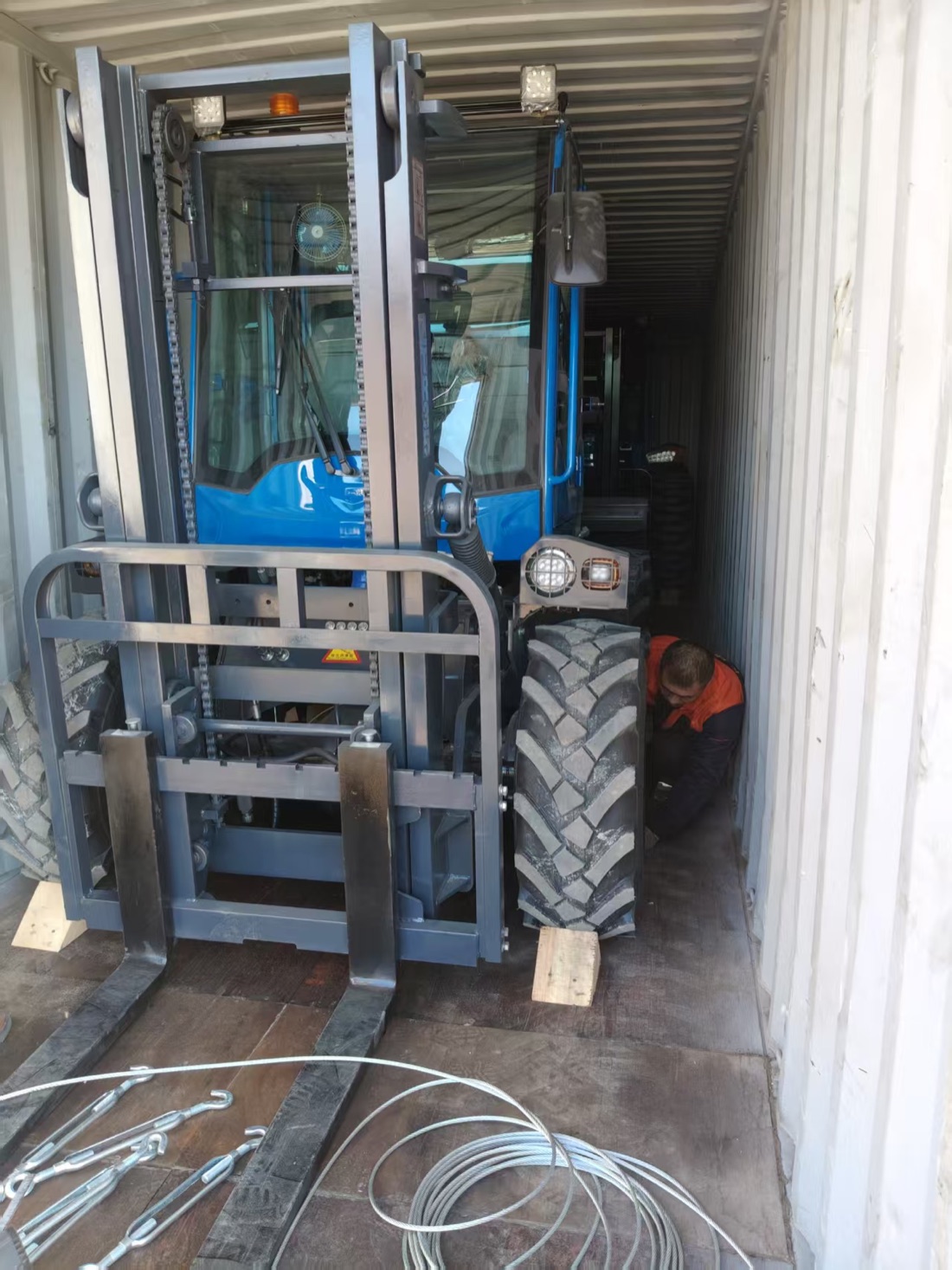
Loading Photos Matter
Container loading is not just a logistics detail.
For rough terrain forklifts, loading photos help confirm:
- the machine entered the container as planned
- forks, mast, tires, and cabin areas were considered during loading
- loose parts were placed and protected
- the machine was blocked or fixed according to the logistics plan
- the buyer has a record before container sealing
The exact loading and fixing method should follow the freight forwarder, shipping requirements, container condition, and the supplier's loading plan. Buyers should not treat one photo from another shipment as a universal rule.
But they should ask for evidence that the actual shipment was handled carefully.
What Importers Should Confirm With The End Customer
If you are importing the machine for resale or for a project customer, do not keep the pre-shipment record only inside your own purchasing file.
Use it to confirm important details with the end customer:
- model and capacity class
- expected working application
- visible configuration
- attachment plan
- delivery schedule expectations
- unloading method at destination
- required local preparation before arrival
- who will receive the machine and inspect it
A dealer may have already sold the machine to a construction company, farm, plantation, building-material yard, or rental fleet. Those customers often care less about factory paperwork and more about whether the machine matches what they expect to see.
Clear pre-shipment photos reduce friction.
They also give the dealer useful material for handover, training, and after-sales communication.
A Typical Pre-Shipment Problem That Can Be Avoided
A common issue is not a dramatic machine failure.
It is a small unchecked detail.
For example, the buyer ordered a machine with a specific fork length and a recommended parts package. The machine is ready. The shipment date is close. Everyone focuses on loading.
If the fork length, loose parts, and documents are not photographed before loading, the buyer may only discover confusion after arrival. The supplier then needs to check warehouse records, shipping photos, and communication history. The dealer may need to answer customer questions without a complete visual record.
This situation is avoidable.
A short pre-shipment checklist and a practical photo set can prevent many of these disputes before they start.
What To Send BLANC-ELE Before Shipment
Before your rough terrain forklift is prepared for export, send BLANC-ELE a clear confirmation request:
- final buyer name or order reference
- destination country and port
- model and configuration agreed in the order
- attachment and fork requirements
- spare parts or accessory list
- preferred pre-shipment photos or videos
- any special unloading or local delivery concern
- consignee and document details through the agreed sales process
If the order is still at the quotation stage, send the working condition first. The guide Before You Ask for a Rough Terrain Forklift Quote explains what load, ground, lift height, attachment, and destination details help us prepare a better recommendation.
Final Recommendation
For importers and dealers, pre-shipment checking is not a formality.
It is the last practical chance to confirm the machine, configuration, documents, spare parts, and loading record before the forklift starts its overseas journey.
The best approach is simple:
Prepare the checklist before the machine is loaded. Ask for practical photos. Confirm the configuration against the signed order. Keep the shipment record organized for your own team and your customer.
If you are preparing a rough terrain forklift order for export, contact BLANC-ELE with your working condition, destination, and configuration needs. We can help you confirm the right model discussion and the shipment details that should be checked before loading.