
A buyer who searches for "rough terrain forklifts for sale" usually wants a fast answer.
Is there a machine available?
Can it be shipped soon?
Will it fit my job?
That sounds simple, but in export forklift sales, "for sale" is only the first layer. A rough terrain forklift may be available, but the real question is whether that machine's capacity, mast, tires, steering, attachment, cabin, service parts, and destination-market configuration match the buyer's actual work.
I have seen buyers become too focused on finding a ready machine. I have also seen buyers spend too much time customizing details that do not really affect their job. Both sides can waste time.
So I normally separate the decision into two questions:
Can a standard or stock configuration do the work safely and efficiently?
Or does the buyer need a configuration review before the order is confirmed?
The Short Answer
A stock rough terrain forklift can be a good choice when the load, ground, mast height, attachment, and destination requirements are normal and already match the available machine.
A custom configuration is better when the buyer works on rough ground, uses attachments, needs special lift height, has tight turning space, works in a hot or dusty site, exports to a market with specific emission requirements, or plans to resell the machine to different customer types.
For BLANC-ELE buyers, the best starting point is the rough terrain forklift product range, then a configuration discussion based on the actual site.
"For Sale" Does Not Always Mean "Ready For Your Site"
In many industries, "for sale" means the buyer can choose from a ready product list.
Forklifts are not always that simple.
For warehouse work, a standard configuration may fit many users because the ground is controlled, routes are predictable, and loads are often palletized. Rough terrain forklifts are different. They work on construction sites, farms, yards, brick plants, stone yards, plantations, and outdoor storage areas where the ground itself becomes part of the job.
That is why I do not treat every available forklift as a suitable forklift.
A machine can look strong in photos and still be the wrong choice if:
- the mast height does not match the buyer's stacking job;
- the forks are too short or too long for the real load;
- the attachment plan was not checked;
- the turning space is tighter than expected;
- the ground is softer or rougher than the buyer first described;
- the buyer needs a different cabin, steering layout, tire choice, or spare-parts plan.
Availability matters, but fit matters more.
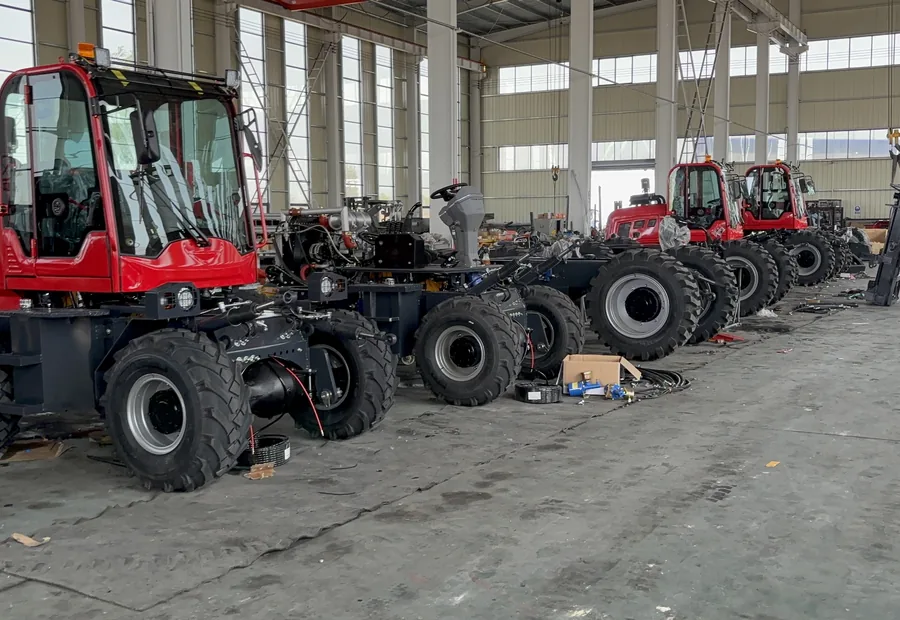
When A Stock Machine Makes Sense
I am not against stock machines.
For many buyers, a standard configuration is the right answer. It can save time, reduce back-and-forth communication, and make the buying process easier.
A stock rough terrain forklift may make sense when:
- the buyer has a common pallet-handling job;
- the ground is outdoor but not extreme;
- the load weight and load dimensions are clear;
- the standard mast height is enough;
- no special attachment is required;
- the buyer can accept the available cabin and tire setup;
- the destination market does not require a special engine or emission configuration;
- the buyer needs one machine quickly for a normal construction, farm, yard, or rental job.
This is common with dealers and importers who already understand their market. If they know their customers usually need a middle-capacity 4WD forklift for mixed outdoor jobs, they may not need a long custom project every time.
But even then, I still prefer a short confirmation before shipment. A few photos of the working site and load can prevent a wrong match.
When Custom Configuration Is Worth The Time
Custom configuration is not about making the forklift complicated.
It is about making sure the machine is not wrong for the job.
For example, a buyer may start by asking for a "5 ton rough terrain forklift for sale." After a short discussion, we may find that the job involves long materials, a high stacking requirement, narrow turning space, and a dusty outdoor route.
In that case, the model is only one part of the decision. The buyer should also confirm mast height, fork length, steering layout, filtration and maintenance access, attachment plan, and spare parts.
On BLANC-ELE's 5 ton rough terrain forklift page, the RT50 Series is positioned for heavier outdoor work such as brick yards, construction sites, stone yards, farms, and uneven material-handling routes. The page also makes one important point: the mast and attachments should be configured around the real load.
That is the part I care about most.
The model name may bring the buyer to the right page. The working details decide the final configuration.
A Typical Dealer Case
A dealer may contact us and say, "I need one rough terrain forklift available soon. My customer wants it for outdoor work."
At first, that sounds like a stock-machine request.
Then we ask a few simple questions:
- What industry is the customer in?
- What is the heaviest load?
- Is the load palletized, long, loose, or irregular?
- Will the forklift use a side shift, clamp, bucket, fork positioner, or long forks?
- What is the route surface?
- Does the forklift need to enter a warehouse, barn, shed, or container area?
- Is the customer buying one machine only, or is the dealer testing a model for future repeat sales?
The answer may still be a stock configuration. But sometimes the dealer realizes the customer needs a different mast, a different attachment preparation, or a more suitable model.
For a dealer, this matters because the first machine often becomes a market example. If the first unit works well, it supports future sales. If the first unit is mismatched, the local customer may blame the brand, even when the real problem was incomplete configuration checking.
3.5 Ton And 5 Ton Are Common Starting Points
Many buyers begin around 3.5 ton or 5 ton capacity.
The 3.5 ton 4WD rough terrain forklift is a useful middle-capacity option when buyers want more reserve than a 3 ton machine but do not need the size class of a 5 ton forklift. BLANC-ELE positions the RT35 for construction sites, farms, yards, and rental fleets.
The 5 ton model is a stronger starting point for heavier pallets, rougher outdoor routes, stone yards, brick plants, farm materials, and project jobs where a heavier chassis and configuration review are more important.
But I would still avoid choosing only from the tonnage.
For example:
- A 3.5 ton machine may be more practical where turning space is limited.
- A 5 ton machine may be more suitable where the buyer needs more capacity reserve.
- A long fork or clamp can change the real load discussion.
- A higher mast may change stability and lowered height.
- A dealer may need a flexible model for several customer groups, while an end user may need one machine for one site.
So the model is the starting point, not the whole answer.
Check The Configuration Before Asking For The Fastest Shipment
Speed is important, especially when a buyer has a project deadline.
But a fast shipment of the wrong configuration is not efficient.
Before asking whether a rough terrain forklift is available, I suggest confirming these points:
- rated load and normal daily load;
- load size, not only load weight;
- pallet, crate, bale, pipe, block, stone, timber, or loose material type;
- required lifting height;
- mast lowered height limit;
- fork length and attachment needs;
- ground condition and route length;
- slope, mud, gravel, broken concrete, or soft soil;
- turning space near the loading point;
- destination country and port;
- whether the buyer needs standard shipment only or extra spare-parts planning.
If the buyer does not know all the details, that is fine. Photos and short videos are often enough to start a better recommendation.
BLANC-ELE's rough terrain forklift quote information checklist can help organize these details before asking for a formal recommendation.
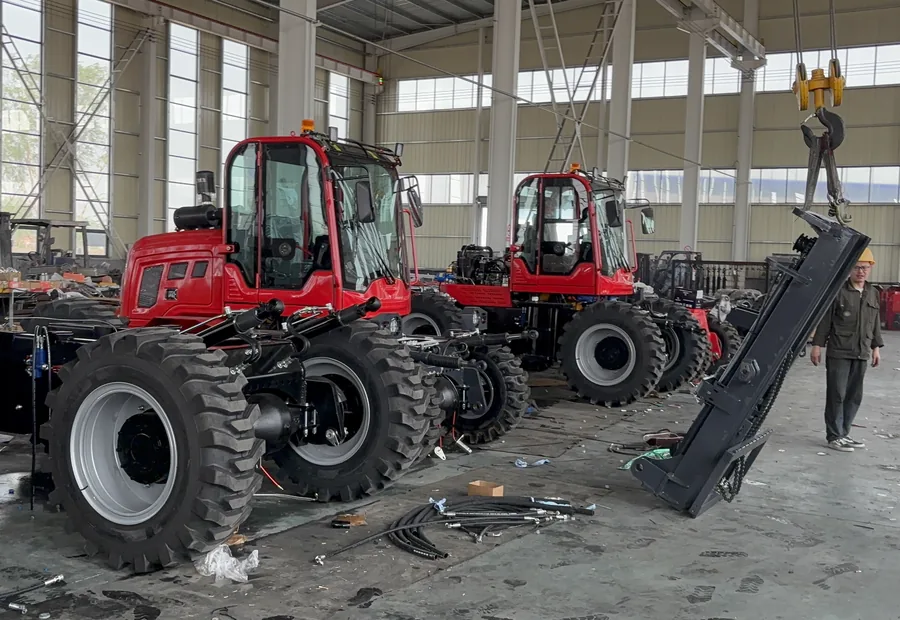
Do Not Customize Everything
There is another mistake on the other side.
Some buyers want to customize every detail before the basic work condition is even clear.
That can also slow the project.
If a standard fork length is enough, do not add long forks only because they look more useful. If the standard mast height works, do not choose a higher mast only because it sounds better. If the customer mainly works in a normal yard, a complicated attachment plan may create more problems than it solves.
Good configuration is not the most complex configuration.
Good configuration is the one that matches the job.
What I Would Ask Before Recommending Stock Or Custom
If a buyer asks me whether to choose a stock machine or custom configuration, I usually ask for a short working summary.
The most useful message includes:
- buyer type: dealer, importer, contractor, farm, rental company, or end user;
- target model if already known;
- load weight and dimensions;
- site photos or videos;
- ground surface and rainy-season condition;
- lift height and entrance height;
- attachment needs;
- destination country and port;
- expected purchase timeline.
With this information, the supplier can usually tell whether an available machine is already suitable, whether small changes are enough, or whether the buyer should wait for a better configuration.
This is also a better way to discuss a rough terrain forklift quote because the quotation becomes connected to the machine the buyer actually needs.
My Practical Recommendation
If you are searching for rough terrain forklifts for sale, do not stop at the word "available."
Ask what configuration is available.
Then compare that configuration with the real job.
For a normal outdoor pallet job, a stock or standard configuration may be the fastest and most practical solution. For a dealer testing market demand, it may also be enough if the target customers are clear.
For rougher ground, special attachments, higher mast work, long loads, destination-specific requirements, or mixed customer applications, a short configuration review is worth the time.
In my experience, the best buying process is not slow. It is structured.
Start with the working condition, choose the model family, confirm the configuration, then ask for the shipment and formal quote.
That sequence protects both sides: the buyer gets a machine that fits the work, and the supplier avoids pushing a forklift that only looked ready on paper.
References
- BLANC-ELE product range: rough terrain forklifts
- BLANC-ELE product page: 3.5 ton 4WD rough terrain forklift
- BLANC-ELE product page: 5 ton 4WD rough terrain forklift