
Over the years of working with rough terrain forklift customers, I’ve noticed something very clearly:
Many machines are not unable to work —
they simply don’t last very long.
And this becomes especially obvious in stone yard environments.
Some forklifts look completely fine at the beginning.
The specifications may even look impressive.
But after entering real heavy-duty work, problems slowly begin to appear:
- Tires wear faster and faster
- Steering becomes heavier
- The chassis starts feeling loose
- Small issues become more frequent
- Operators gradually stop wanting to use the machine
At first, many customers think:
“Maybe it’s just a quality problem.”
But after visiting enough real job sites, I’ve come to believe something different:
Stone yards do not really test whether a forklift can work.
They test whether it can continue working reliably over time.
The First Time I Realized How Hard Stone Yards Are on Machines
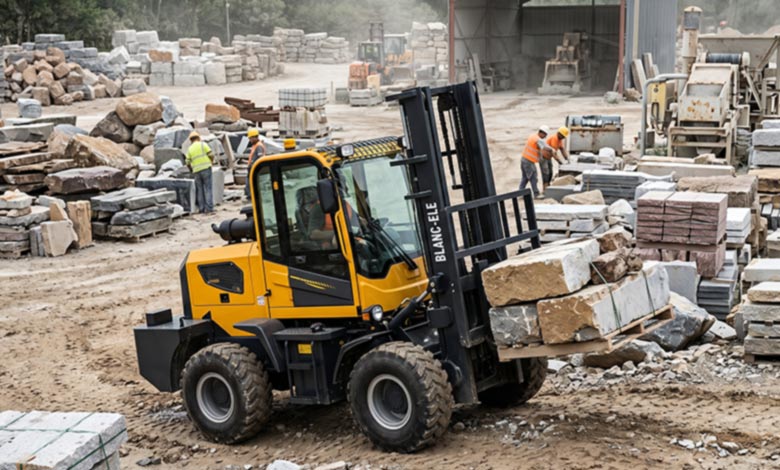
I still remember one granite yard very clearly.
The customer mainly handled granite blocks and stone materials.
When I first arrived on site, the thing that shocked me most was not the number of machines.
It was the ground itself.
Everywhere was covered with:
- Sharp stone edges1
- Broken pieces
- Stone dust2
The forklifts spent almost the entire day:
- Carrying heavy loads3
- Turning repeatedly
- Moving constantly4
And most importantly, the ground was never truly smooth5.
I stood there for less than half an hour and could already feel how intense the vibration was.
Later, the customer told me something I still remember today:
“In stone yards, forklifts usually don’t fail suddenly. They slowly shake themselves apart.”
That sentence was extremely real.
Because the biggest challenge in stone yards is not one major failure.
It is long-term heavy wear.
Why Tires Become One of the First Problems
This is something many customers underestimate at the beginning.
Especially customers entering the stone industry for the first time.
Most buyers initially focus on:
- Capacity
- Engine
- Price
But after some real operation time, they quickly realize:
Tires are often one of the first things to create problems.6
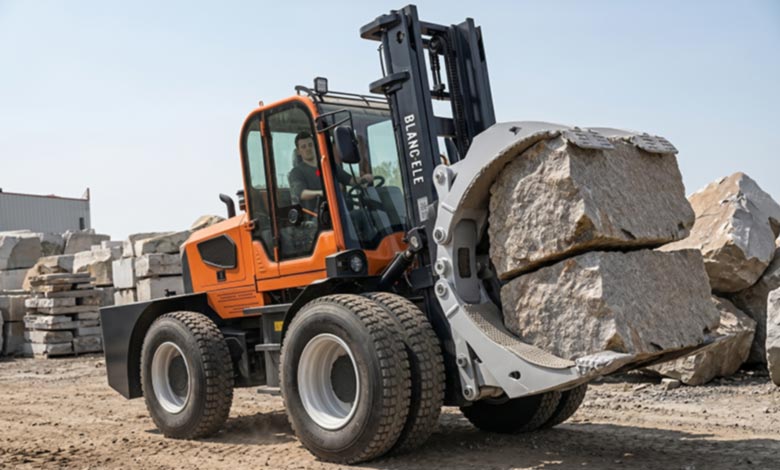
Stone yard surfaces usually include:
- Sharp stone edges
- Rough debris
- Uneven surfaces
- Heavy friction under load7
These conditions are extremely unfriendly to tires.
I once worked with a customer whose pneumatic tires constantly needed repairs after only a short time.
Eventually, he told me:
“The forklift can still work — but we keep stopping because of the tires.”
After seeing situations like this repeatedly, I started paying much more attention to tire configuration for stone yard applications.
That’s also why we increasingly prefer:
- Semi-solid tires8
- Stronger tire structures
- Twin front tire setups
Because in these conditions, stability matters more than comfort.
Why Steering Systems Become Fatigued So Easily
This was another thing I underestimated earlier in my career.
But after enough site visits, I realized something important:
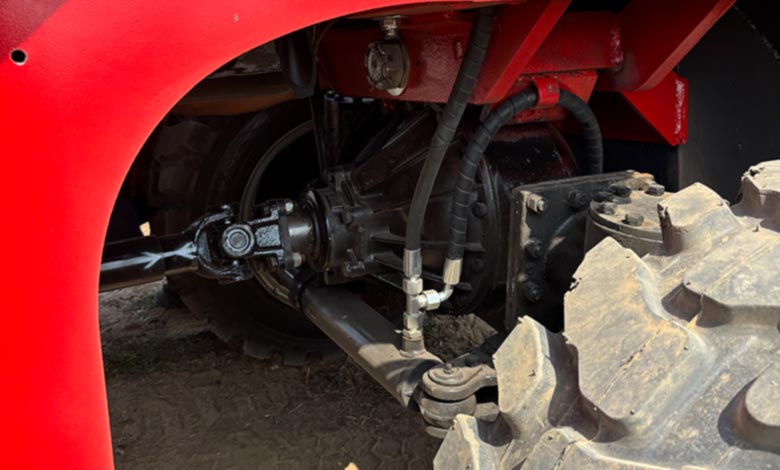
Stone yards rely heavily on low-speed turning under heavy load.9
And this is exactly what puts enormous stress on the machine.
Many people think:
“If the forklift can lift the load, it’s fine.”
But in stone yards, what truly consumes the machine is often:
- Repeated turning under load
- Constant steering corrections in tight spaces
- High ground resistance
Especially when operating areas are narrow, operators continuously adjust steering angles.
For one or two days, the effect may not seem obvious.
But over time:
- Steering systems become more stressed
- Operators become more fatigued10
I gradually realized that when operators complain a forklift is “hard to drive,”
the real issue is often long-term operational fatigue.
This is actually closely related to something I discussed earlier in Why Do Some Forklifts Feel Tiring to Use?
Because many operation problems are not caused by one major failure.
They are caused by small issues accumulating over time.
Why Some Machines Start Feeling Loose Over Time
This is another very typical stone yard issue.
When machines first arrive on site, they often feel perfectly fine.
But after six months or one year, the differences begin appearing.
Some forklifts still feel solid.
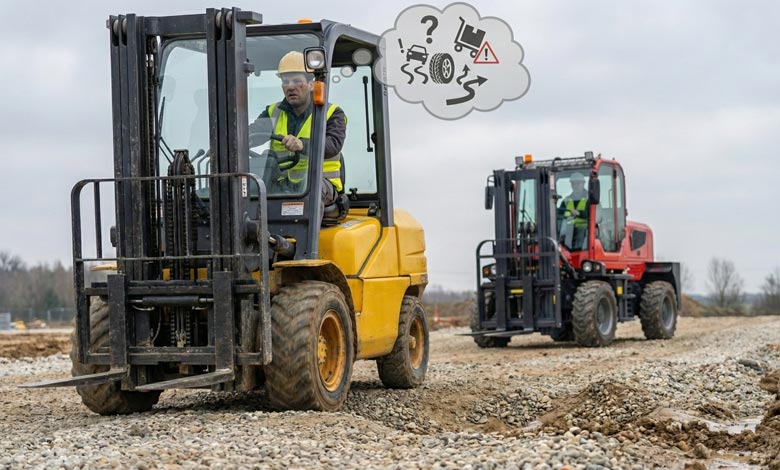
Others begin developing:
- Unusual noises11
- Structural looseness
- Increased vibration
Stone yard environments place extremely high demands on long-term structural stability.
Especially because of:
- Frequent heavy loads
- Constant ground impact
- Long working hours under high intensity
All of these continuously stress the chassis and structural components.
That’s why I now believe:
Stone yards do not mainly test engine power.
They test long-term structural durability.
Why Maintenance Cycles Become Much Shorter in Stone Yards
Many owners only realize this later.
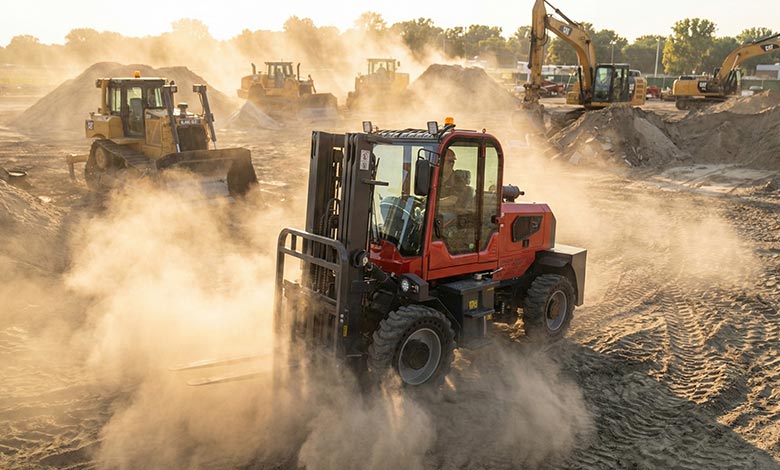
Dust, vibration, and heavy-duty operation significantly accelerate wear.12
Especially around:
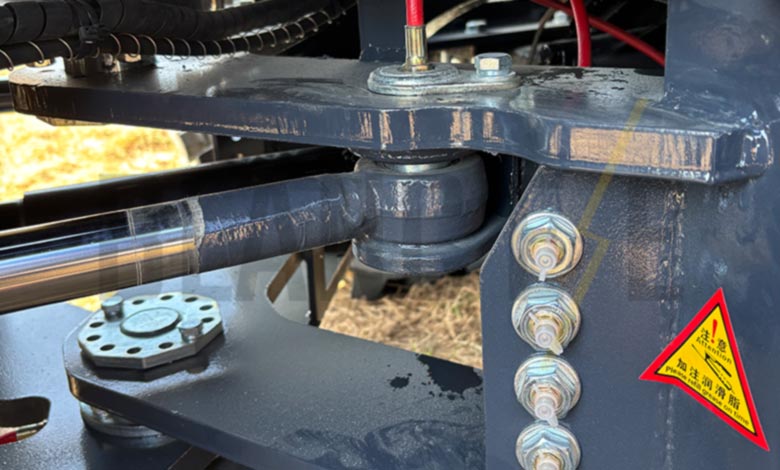
- Lubrication points
- Steering systems
- Connection areas
If maintenance falls behind, machine condition declines very quickly.
I once visited a customer whose operators delayed greasing simply because it was inconvenient.
Eventually:
- Steering became heavier
- Operation became rougher
- Efficiency dropped
And then the poor operation experience created even more frustration.
That’s why I now pay much more attention to one thing:
Is the machine easy to maintain?
Because in stone yards, maintenance convenience often directly affects machine lifespan.
This is also closely connected to something I discussed earlier in Why Small Design Details Affect Long-Term Forklift Experience
In many cases, long-term reliability is not determined by one major component.
It is determined by whether small daily maintenance tasks are easy to continue consistently.
How I Now Evaluate Forklifts for Stone Yard Work
After years of seeing different applications, my perspective has changed a lot.
Higher specifications do not automatically mean a forklift is better suited for stone yards.
Today, I care much more about:
- Long-term stability
- Tire durability
- Steering stress
- Structural strength
- Maintenance convenience
Especially things like:
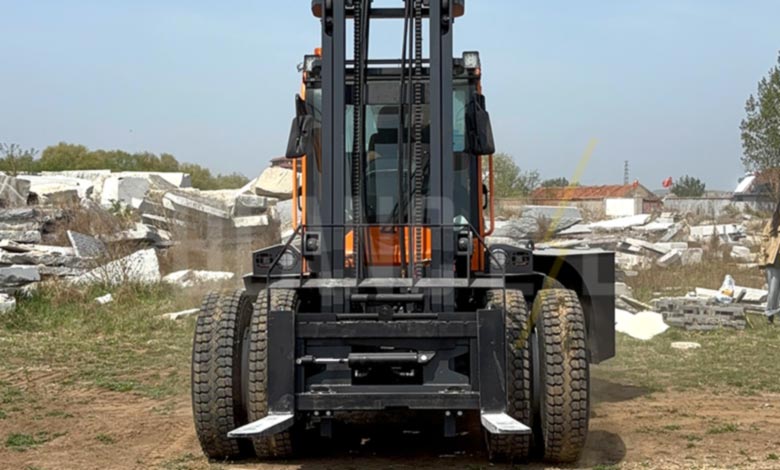
- Twin front tire structures
- Semi-solid tires
- More stable chassis designs
Because these factors become increasingly important over time.
In the end, most of these problems come back to one simple question:
Are operators willing to continue using the machine long term?
Because in many situations, operators notice equipment problems before owners do.
I talked about this more deeply earlier in What Do Forklift Operators Actually Care About?
Because the people who truly understand whether a forklift feels good are usually the people using it every day.
One Thing That Changed My Thinking
Years ago, I thought most customers mainly cared about buying cheaper equipment.
But over time, I realized something very different:
Customers who work in the stone industry long term eventually care most about stability.
Because once a machine stops working:
- It’s not only a repair issue
- It affects workflow
- Delivery schedules
- Labor efficiency
That’s why many experienced customers eventually stop asking mainly about price.
Instead, they ask:
“Can this machine continue working reliably over time?”
Final Thoughts
Stone yards do not really test whether a forklift can move.
They test whether it can survive long-term heavy-duty work.
From my experience:
Most equipment problems do not appear on the first day.
They slowly grow under continuous vibration, heavy loads, and harsh environments.
That’s why today, I believe the best forklift for stone yards is not necessarily the one with the most impressive specifications.
It’s the one that remains stable, durable, and comfortable to operate after years of real work.
About BLANC-ELE
Over the years, we’ve focused more and more on how forklifts perform under real heavy-duty conditions.
Especially for stone yard environments, we pay close attention to:
- Structural stability
- Tire durability
- Steering stress
- Daily maintenance convenience
Because in real projects, forklifts are not judged by specification sheets.
They are judged by long-term performance in demanding environments.
"Farm Machinery and Equipment Safety Part II", https://esc.rutgers.edu/fact_sheet/farm-machinery-and-equipment-safety-part-ii-preventing-machinery-accidents-during-operation/. A neutral source on off-road tire damage mechanisms supports that sharp aggregate and cutting hazards can accelerate tire wear and puncture risk in industrial and earthmoving equipment. Evidence role: mechanism; source type: paper. Supports: Sharp stone edges in stone yards are especially damaging to forklift tires.. Scope note: This would support the general mechanism of tire damage, not the specific performance of any forklift model in a particular stone yard. ↩
"OSHA's Respirable Crystalline Silica Standard for ...", https://www.osha.gov/sites/default/files/publications/OSHA3681.pdf. Occupational and engineering sources on construction or quarry dust support that mineral dust is common in stone-processing environments and can contaminate mechanical components and maintenance points. Evidence role: general_support; source type: government. Supports: Stone dust is a typical environmental factor in stone yards that can affect machinery condition.. Scope note: Such evidence would establish environmental exposure rather than quantify wear rates for rough terrain forklifts specifically. ↩
"Impact of shifting load centers on the stability of the forklift", https://www.academia.edu/43034348/Impact_of_shifting_load_centers_on_the_stability_of_the_forklift. Engineering literature on forklift stability and load handling supports that carrying heavier loads increases stresses on tires, steering, braking, and structural components. Evidence role: mechanism; source type: education. Supports: Heavy loads increase mechanical stress on forklifts used in stone yards.. Scope note: The source may describe general load effects on forklifts rather than stone-yard-specific duty cycles. ↩
"The Ultimate Guide to Commercial Truck Maintenance for Longevity", https://fleetrabbit.com/blogs/post/commercial-truck-maintenance-guide. Maintenance and reliability sources for industrial trucks support that higher utilization and duty cycles increase wear accumulation and maintenance demand. Evidence role: mechanism; source type: institution. Supports: Constant operation increases wear accumulation and maintenance needs in industrial forklifts.. Scope note: This would provide general reliability support rather than a direct measurement from stone yard forklifts. ↩
"Whole Body Vibration Exposure Transmitted to Drivers of Heavy ...", https://pmc.ncbi.nlm.nih.gov/articles/PMC9102739/. Sources on rough-terrain vehicle operation and whole-body vibration support that uneven ground increases vibration exposure and dynamic loading in mobile machinery. Evidence role: mechanism; source type: paper. Supports: Uneven stone-yard ground increases vibration and dynamic stress on forklifts.. Scope note: The evidence would contextualize rough-ground effects generally and may not directly study granite yards. ↩
"The Dangers of Worn or Damaged Forklift Tires - All Lift", https://alllift.com/blog/the-dangers-of-worn-or-damaged-forklift-tires/. Industrial vehicle maintenance literature supports that tires are high-wear components in rough-terrain and material-handling applications, particularly where surfaces are abrasive or irregular. Evidence role: general_support; source type: institution. Supports: Tires commonly become an early maintenance problem for forklifts operating on harsh stone-yard surfaces.. Scope note: This would support tire vulnerability in harsh environments but may not rank tires as the first failure point in every stone yard. ↩
"[PDF] Mechanics of pneumatic tires - NIST Technical Series Publications", https://nvlpubs.nist.gov/nistpubs/Legacy/MONO/nbsmonograph122.pdf. Tribology and tire engineering sources support that frictional forces and high loads increase tire heat generation, abrasion, and tread wear. Evidence role: mechanism; source type: paper. Supports: High friction under load accelerates tire wear in forklift operation.. Scope note: The source would explain the tire-wear mechanism generally rather than provide stone-yard-specific tire-life statistics. ↩
"Pneumatic vs. Solid Forklift Tires", https://www.forklifttire.com/articles/pneumatic-vs-solid-forklift-tires-which-is-best-for-construction-sites/?srsltid=AfmBOooagTFT1A0QpfGlUG1z-YLP43ErBp8gJF3Gt-zhUQg9FjJp4Cs9. Technical references on industrial tires support that solid or semi-solid tire constructions can reduce puncture vulnerability compared with pneumatic tires in debris-filled work environments. Evidence role: mechanism; source type: institution. Supports: Semi-solid tires can be better suited than pneumatic tires for debris-filled stone-yard conditions because they reduce puncture vulnerability.. Scope note: This supports puncture resistance as a design tradeoff and does not prove superiority for all comfort, traction, or cost conditions. ↩
"Common Causes of Forklift Steering Problems", https://heavyequipmentcollege.edu/common-causes-of-forklift-steering-problems/. Forklift operation and steering-system sources support that low-speed maneuvering with heavy loads can increase steering effort and mechanical demand, especially on high-resistance surfaces. Evidence role: mechanism; source type: education. Supports: Low-speed turning under heavy load places high stress on forklift steering systems.. Scope note: This would support the steering-load mechanism generally, not the frequency of such maneuvers in every stone yard. ↩
"Reducing whole body vibration in forklift drivers - PubMed", https://pubmed.ncbi.nlm.nih.gov/22317090/. Ergonomics research on mobile machinery supports that repeated steering, vibration exposure, and awkward or forceful controls can contribute to operator fatigue and discomfort. Evidence role: expert_consensus; source type: paper. Supports: Repeated steering corrections and vibration in rough environments can increase forklift operator fatigue.. Scope note: The evidence would support fatigue risk factors broadly and may not isolate steering corrections in stone yards as the sole cause. ↩
"A Brief Review of Acoustic and Vibration Signal-Based Fault ... - PMC", https://pmc.ncbi.nlm.nih.gov/articles/PMC9959905/. Mechanical reliability sources support that looseness, vibration, and impact loading in machinery can manifest as abnormal noise and may indicate wear or developing faults. Evidence role: mechanism; source type: education. Supports: Unusual noises can be symptoms of wear, looseness, or developing mechanical faults in forklifts exposed to vibration and impact.. Scope note: This supports abnormal noise as a possible symptom, not as a diagnostic confirmation of a specific failure mode. ↩
"Master Summer Undercarriage Wear Limits for Longevity - HVI App", https://heavyvehicleinspection.com/maintenance/preventive-maintenance/summer-readiness/undercarriage-wear-limits. Maintenance engineering literature supports that abrasive contamination, vibration, and high-duty operation are recognized contributors to accelerated wear and shorter service intervals in mechanical systems. Evidence role: expert_consensus; source type: paper. Supports: Dust, vibration, and heavy-duty operation accelerate wear and can shorten maintenance cycles for forklifts in stone yards.. Scope note: This would support the general maintenance principle, while exact maintenance intervals depend on equipment design, load, and operating environment. ↩