
At many job sites, everything looks fine at first.
But once the machine starts working, a problem quickly becomes obvious:
Some forklifts1 feel smooth and easy to operate, while others become more tiring the longer you use them.
Over the years, while working with customers and visiting job sites, I’ve seen this happen again and again.
Two forklifts with similar capacity — 3 ton or 3.5 ton — can feel completely different to operators.
Some operators say the machine is easy to use and very smooth.
Others say it feels tiring and requires more effort throughout the day.
At first, it’s easy to think this comes down to operator skill.
But after seeing enough real situations, I’ve come to a clear conclusion:
In most cases, the issue is not the operator — it’s the machine design2.

What Actually Makes a Forklift “Easy to Operate”?
When choosing a forklift, most buyers focus on capacity, engine, and price.
But in real use, what matters every single day is the operating experience.
From my perspective, a truly easy-to-operate forklift is not necessarily “simple.”
It’s a machine that reduces the operator’s workload3 and makes operation feel natural.
Put more directly:
A good forklift minimizes unnecessary movements and decisions.
The operator should not have to adapt to the machine —
the machine should adapt to the operator.
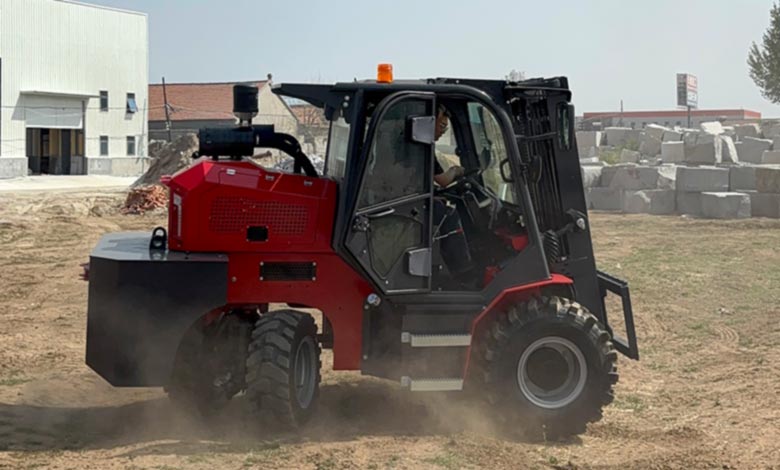
Why Turning Ability Has Such a Big Impact on Operation
This is something I’ve noticed very clearly in real job sites.
Many buyers don’t pay much attention to turning radius4 during selection.
But in practice, it makes a huge difference.
I’ve seen many situations like this:
The forklift can enter the space,
but cannot turn easily.
Or it can turn,
but only after repeated adjustments.
This makes the operator tired and breaks the working rhythm.
Even a small improvement in turning ability — fewer reverse moves, fewer corrections — can make the operation much smoother.
In areas like material yards, farm paths, or confined construction spaces, this difference becomes very obvious.
From my experience, turning ability affects not only efficiency, but also operator fatigue5.
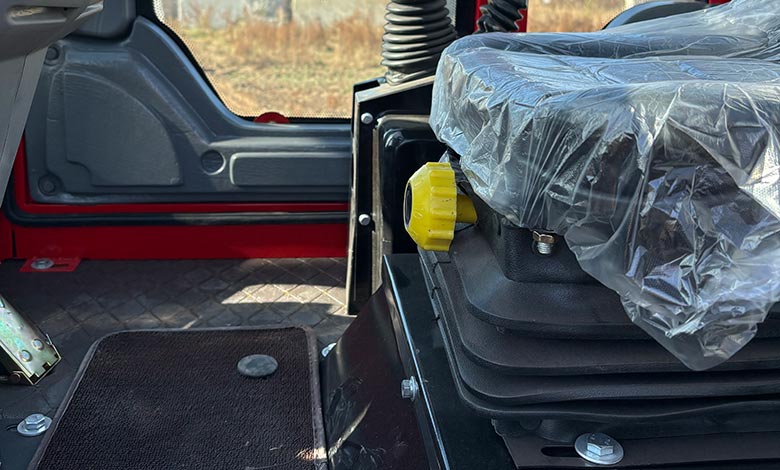
Why Visibility and the Cabin Matter More Than Expected
Many buyers see the cabin as a comfort feature.
In reality, I see it more as an efficiency feature.
In outdoor environments, operators deal with:
- Dust
- Wind
- Temperature changes
If visibility is poor or the environment is uncomfortable, operators naturally become more cautious and tense.6
This reduces efficiency and increases the chance of mistakes.7
On the other hand, when visibility is clear and the working environment is stable8, operators feel more relaxed and work more smoothly.
Over time, this difference becomes very noticeable.
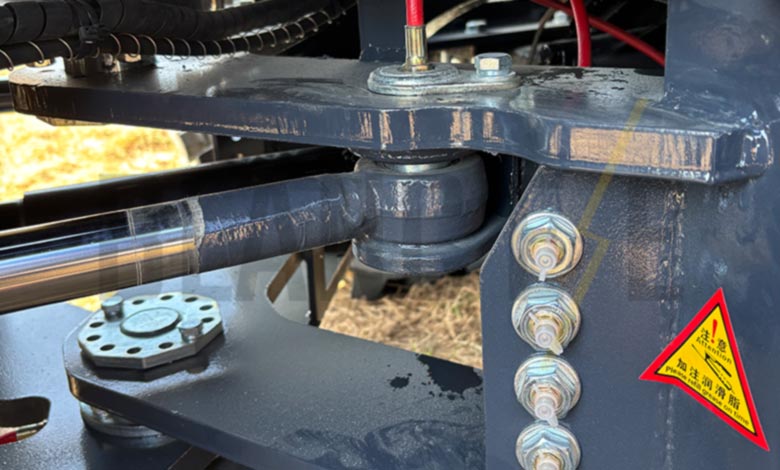
Why Maintenance Convenience Also Affects Operation
This is something many people don’t realize at first.
But after seeing enough real-world use, it becomes very clear.
If a machine is difficult to maintain — for example:
- Grease points are underneath the machine
- Daily checks are inconvenient
Then maintenance tends to be delayed or skipped9.
Over time, the machine condition declines.
And when the machine is no longer smooth, the first thing operators feel is:
It becomes harder to operate.
More importantly, for rough terrain forklifts working under heavy load and complex conditions, poor maintenance can also create safety risks10.
That’s why, from my perspective:
A forklift that is easy to operate must also be easy to maintain.
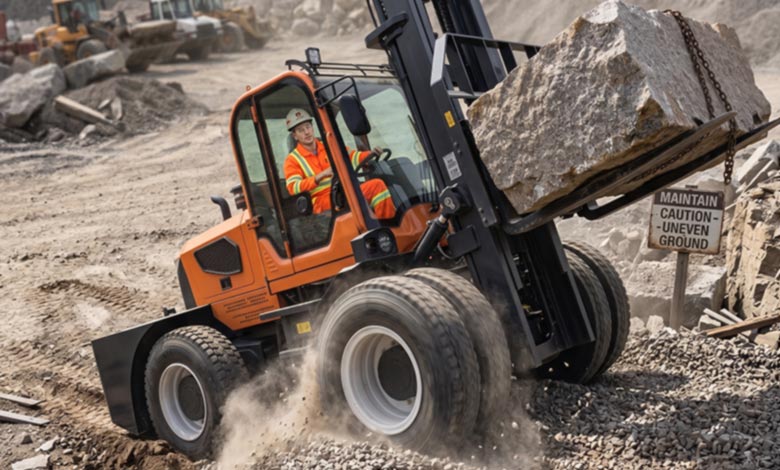
A Simple Way I Evaluate Forklifts On Site
When I look at a machine in real conditions, I use a very simple rule:
If the operator constantly needs to adapt to the machine,
it’s probably not a good fit.
If the operator can quickly get used to it,
and the operation feels smooth and natural,
then it’s usually the right machine.
This may sound simple, but it’s very effective in real decision-making.
A Real Case That Stayed With Me
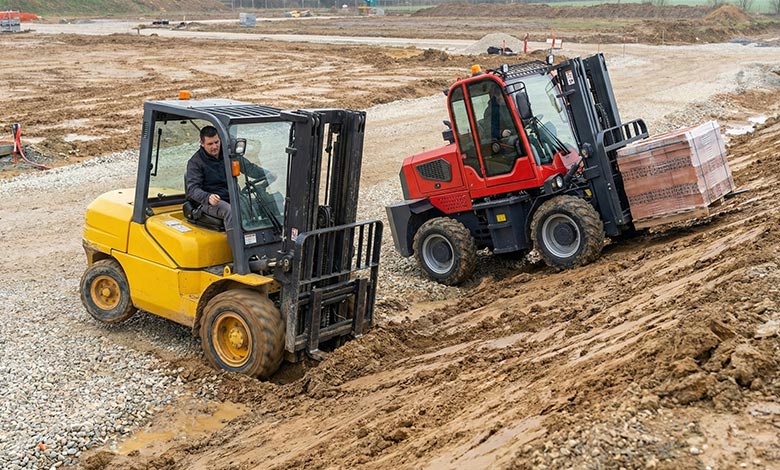
I worked with a customer whose main application was a combination of farm work and material handling in a yard.
At first, they chose a standard forklift.
On paper, everything looked fine.
But in real operation:
- Turning was difficult
- Constant adjustments were needed
- Efficiency was inconsistent
After reviewing their working conditions together, we realized:
The issue was not capacity — it was space and maneuverability.
They switched to a more compact and flexible setup.
Later, their feedback was very straightforward:
“This one is much easier to use.”
It’s a simple sentence, but it reflects a real improvement in efficiency and operator comfort.
When Do I Pay Special Attention to Operation Experience?
Not every situation requires this level of focus.
But if your working conditions include:
- Limited space
- Frequent turning
- Long working hours
- Complex environments
Then operation experience becomes a key factor.
In these cases, an easy-to-operate machine creates very real value.
Final Thoughts
After years of working with different customers, I’ve come to a simple conclusion:
The value of a forklift is not defined by specifications alone.
What matters more is how it feels to use every day.
If a machine is smooth to operate, consistent in performance, and easy for operators to use,
Then its long-term efficiency and reliability will be much higher11.
At the end of the day, a forklift is not just about doing the job.
It’s about doing the job consistently, efficiently, and without unnecessary effort.
About BLANC-ELE
At BLANC-ELE, we don’t focus only on specifications.
We focus on how the machine performs in real working conditions:
- Is it easy to operate?
- Is it easy to maneuver?
- Is it easy to maintain?
Because in real projects:
A forklift is judged by operators — not by specifications on paper.
"Vibration and Ergonomic Exposures Associated With ... - PMC", https://pmc.ncbi.nlm.nih.gov/articles/PMC6005913/. Ergonomics research on forklift operation indicates that machine factors such as cab layout, visibility, steering and control demands, vibration, and operator posture affect workload, discomfort, and fatigue, supporting the claim that different forklifts can feel easier or more tiring to operate over time. Evidence role: expert_consensus; source type: paper. Supports: Some forklifts feel smooth and easy to operate, while others become more tiring the longer you use them.. Scope note: The source should address forklift or powered industrial truck ergonomics generally; it may not compare the exact forklift models discussed in the article. ↩
"[PDF] Human Factors Design Guidance for Driver-Vehicle Interfaces", https://www.nhtsa.gov/sites/nhtsa.gov/files/documents/812360_humanfactorsdesignguidance.pdf. A human-factors or ergonomics source on industrial vehicle design can support that equipment layout, controls, visibility, vibration, and access features influence operator workload and perceived ease of use; this is contextual support rather than proof for any specific forklift model. Evidence role: expert_consensus; source type: research. Supports: Forklift ease of operation is often affected by machine design rather than only operator skill.. Scope note: The evidence would support the general role of machine design in operator workload, not the author’s specific job-site observations. ↩
"Myotonometry in machinery operators and its relationship ... - PMC", https://pmc.ncbi.nlm.nih.gov/articles/PMC11229361/. Ergonomics guidance for mobile equipment describes how well-designed controls, seating, reach distances, and visibility can reduce physical and cognitive workload for operators; this supports the design principle but does not establish a quantitative workload reduction for the article’s forklifts. Evidence role: mechanism; source type: institution. Supports: An easy-to-operate forklift is one that reduces the operator’s workload.. Scope note: The support is general to mobile machinery or industrial vehicles and may not measure forklifts specifically. ↩
"eTool : Powered Industrial Trucks (Forklift) - Traveling & Maneuvering", http://www.osha.gov/etools/powered-industrial-trucks/operating-forklift/traveling-maneuvering. Material-handling and warehouse-design references commonly treat turning radius and aisle width as key constraints for forklift maneuverability; this supports the relevance of turning radius to operation, although it does not assess the author’s particular sites. Evidence role: definition; source type: education. Supports: Turning radius is an important factor in forklift maneuverability and practical usability.. Scope note: The evidence would show why turning radius matters for maneuverability, not prove that it was the decisive factor in the anecdotal cases. ↩
"Fatigue assessment of forklift operators in a 12-hour shift system", https://pubmed.ncbi.nlm.nih.gov/40990629/. Occupational ergonomics literature links repeated maneuvering, awkward postures, vibration, and sustained attention in vehicle operation with operator fatigue; this supports the claim as a plausible mechanism rather than direct evidence for every forklift application. Evidence role: mechanism; source type: paper. Supports: Forklift maneuverability can affect operator fatigue during repeated or confined-space operation.. Scope note: The source may address operator fatigue generally and not isolate turning ability as the only cause. ↩
"eTool : Powered Industrial Trucks (Forklift) - Traveling & Maneuvering", http://www.osha.gov/etools/powered-industrial-trucks/operating-forklift/traveling-maneuvering. Occupational-safety and human-factors sources describe visibility, environmental stressors, and cab conditions as factors affecting operator attention, stress, and safe vehicle operation; this supports the general relationship but not the exact emotional response of all operators. Evidence role: mechanism; source type: government. Supports: Poor visibility and uncomfortable operating environments can make operators more cautious or tense.. Scope note: The support is behavioral and contextual, so it may not directly measure tension in forklift operators. ↩
"Workload Assessment of Tractor Operations with Ergonomic ... - PMC", https://pmc.ncbi.nlm.nih.gov/articles/PMC9920319/. Human-factors research indicates that degraded visibility and environmental stress can increase workload and error likelihood in vehicle or machinery operation; this supports the article’s general claim but does not quantify the effect for forklifts in outdoor yards. Evidence role: mechanism; source type: paper. Supports: Poor visibility or discomfort can reduce operational efficiency and increase errors.. Scope note: Evidence may be drawn from broader machinery or transport studies rather than forklift-only trials. ↩
"1910.178 - Powered industrial trucks. | Occupational Safety ... - OSHA", http://www.osha.gov/laws-regs/regulations/standardnumber/1910/1910.178. Guidance on powered industrial truck safety emphasizes maintaining clear visibility and suitable operating conditions as contributors to safe and effective operation; this supports the principle while not directly proving higher comfort or productivity in a specific workplace. Evidence role: general_support; source type: government. Supports: Clear visibility and stable working conditions help operators work more smoothly.. Scope note: The source would likely support safe operation more directly than the subjective feeling of relaxation. ↩
"[PDF] Human Factors Guide for Aviation Maintenance and Inspection", https://www.faa.gov/sites/faa.gov/files/about/initiatives/maintenance_hf/training_tools/HF_Guide.pdf. Maintenance human-factors literature notes that access difficulty, time pressure, and task inconvenience can reduce maintenance compliance; this supports the claim as a general behavioral tendency rather than documenting the author’s customers. Evidence role: mechanism; source type: paper. Supports: Inconvenient maintenance access can lead to delayed or skipped maintenance tasks.. Scope note: The evidence is likely general to maintenance behavior and may not specifically study forklift grease points or daily checks. ↩
"1910.178 - Powered industrial trucks. | Occupational Safety ... - OSHA", http://www.osha.gov/laws-regs/regulations/standardnumber/1910/1910.178. Regulatory guidance for powered industrial trucks requires inspection and removal from service when defects affect safety, supporting that inadequate maintenance can create safety risks; this directly supports the safety principle, though not the severity of risk in every rough-terrain application. Evidence role: expert_consensus; source type: government. Supports: Poor forklift maintenance can create safety risks, especially under demanding operating conditions.. Scope note: The guidance supports the general safety risk of defects and poor maintenance, not a quantified accident probability for rough terrain forklifts. ↩
"Optimal Periods of Conducting Preventive Maintenance to Reduce ...", https://pmc.ncbi.nlm.nih.gov/articles/PMC8913151/. Reliability and maintenance-engineering sources explain that preventive maintenance and maintainable design improve equipment availability and reduce failure-related downtime; this supports the general efficiency-and-reliability relationship but does not verify the magnitude for a particular forklift. Evidence role: mechanism; source type: education. Supports: Machines that are easier to operate and maintain are likely to have better long-term efficiency and reliability.. Scope note: The evidence supports the maintenance-reliability mechanism generally rather than the article’s absolute prediction that reliability 'will be much higher.' ↩