
Over the years of working with rough terrain forklifts, I’ve gradually realized something very important:
Most buyers focus on specifications.
But the people who truly decide whether a machine works well long term are usually the operators.
At the beginning, I used to focus on the same things many customers care about:
- Capacity
- Engine
- Configuration
- Price
And of course, all of those things matter.
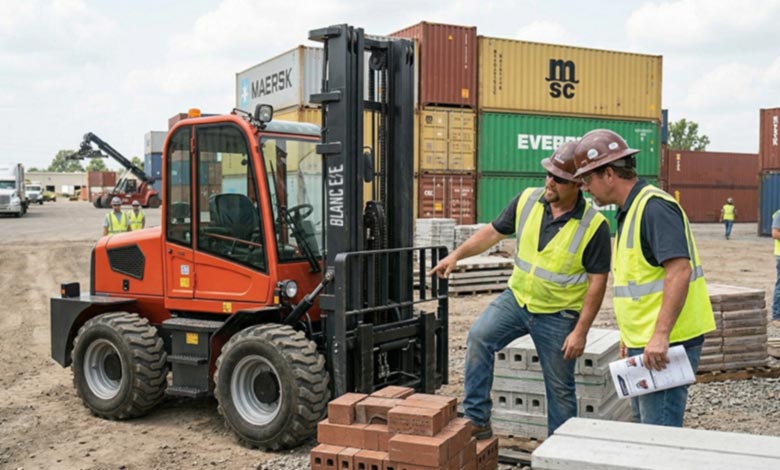
But after visiting more real job sites and speaking with more customers, I started noticing something interesting:
Some machines looked great on paper, but operators didn’t like using them.
Meanwhile, other machines didn’t necessarily look “impressive” in specifications, yet operators preferred them every day.
At first, I didn’t fully understand why.
But after enough time in real working environments, I came to a simple conclusion:
Many efficiency problems are actually people problems.1
And the operator’s daily experience often determines whether a forklift can truly create value over time.2
The First Time I Realized Operation Experience Really Matters
I still remember one farm project very clearly.
The customer mainly used forklifts for farm work and material handling around a storage yard.
At the beginning, the owner focused heavily on specifications.
Most of our conversations were about:
- Engine power
- Lifting capacity
- Price
He repeated one thing several times:
“The machine must have enough power.”
That’s completely normal. Most buyers think that way at first.
Later, after the machine had been used for some time, he contacted me again.
He said:
“The machine is fine, but the operators keep saying it’s tiring to use.”
Honestly, my first thought was also:
Maybe they just need more time to get used to it.
But later, I visited the site myself.
And after spending only a short time there, the real issue became obvious.
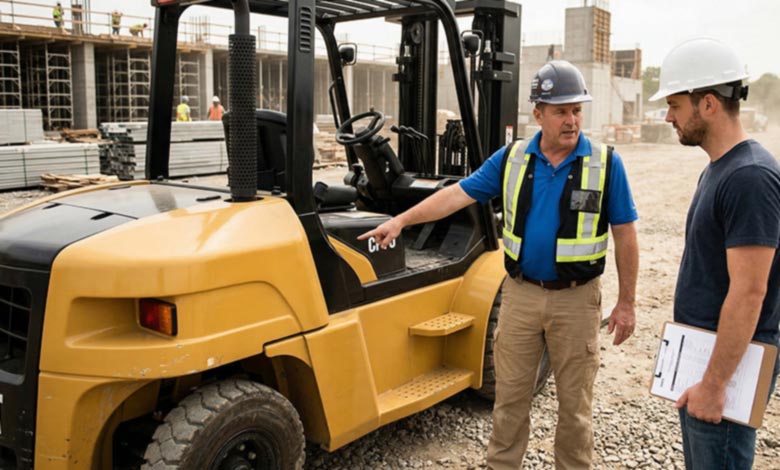
The Real Problem Wasn’t Power — It Was Fatigue
The worksite looked relatively open at first glance.
But once actual work started, the usable operating space was much smaller than expected.3
There were materials stacked on both sides, and the pathways were narrow.
Operators spent the entire day:
- Turning
- Reversing
- Correcting steering angles
The forklift itself wasn’t underpowered.
The real issue was that the machine was slightly too large and not flexible enough in tight areas.
As a result, even simple movements required constant steering corrections.4
I stood beside the machine for about twenty minutes that day.
The operator was continuously turning the steering wheel almost the entire time.
When he finally stepped down from the forklift, he casually said something that stayed in my mind for a long time:
“After a full day with this machine, your arms feel exhausted.”
That sentence changed the way I look at forklifts.
Because at that moment, I realized something important:
Buyers usually think about whether a machine can do the job.5
Operators think about how tiring the job becomes while using it.
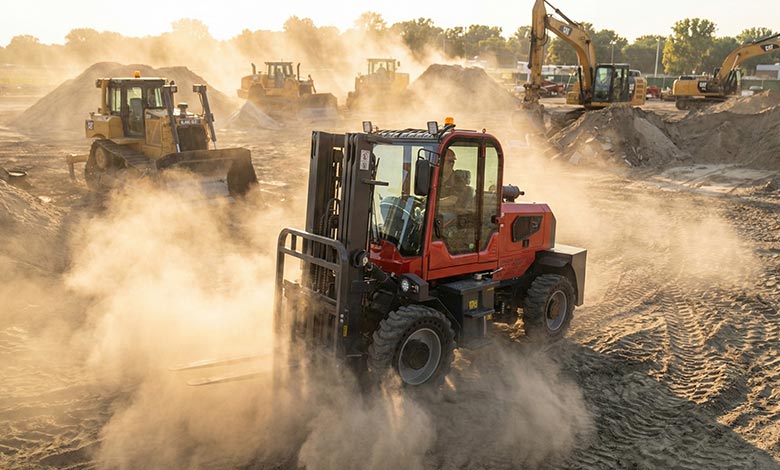
Why I Pay Much More Attention to Operator Feedback Now
After that experience, I started paying close attention to one simple thing during site visits:
Do operators actually want to use the machine?
This is surprisingly honest feedback.
Operators don’t care about marketing language or brochures.
They care about very practical things:6
- Is it smooth to operate?
- Is steering tiring?
- Is visibility comfortable?
- Does the machine feel natural to control?
These things cannot be hidden in real daily work.
I remember another customer from a stone yard operation.
The ground conditions were not terrible, but the site itself was crowded and messy.
Stone blocks, pallets, and leftover materials were everywhere.
At first, the owner believed:
“All 3.5 ton forklifts are basically the same.”
But after some real operation time, the feedback from operators became very clear:
“We constantly need to correct the steering.”
Especially in tight areas, every turn required multiple adjustments.7
On paper, this sounds like a small issue.
But when operators repeat the same unnecessary movement hundreds of times per day, frustration builds quickly.8
Later, we helped them switch to a more compact and maneuverable configuration.
The biggest improvement wasn’t the specification sheet.
It was the working rhythm on site.
The owner later told me something very straightforward:
“Before, the operators complained all the time. Now nobody says anything anymore.”
In many cases, operators are the first people who truly know whether a forklift is good or not.
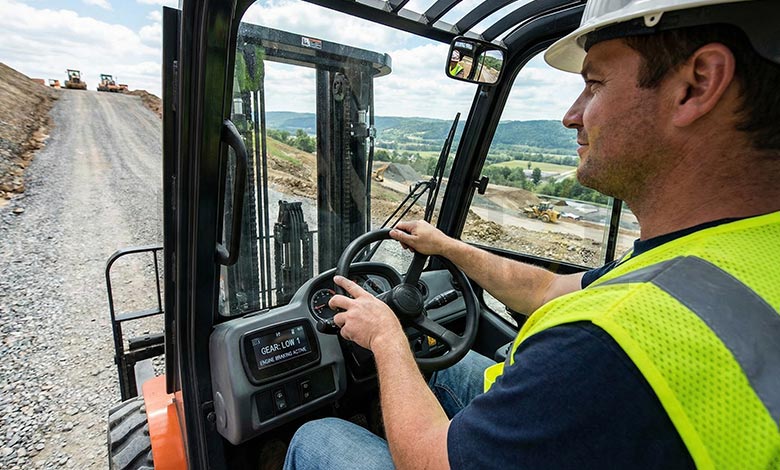
Why Turning Ability Matters More Than Most Buyers Expect
To be honest, I didn’t pay enough attention to turning performance in the past either.
When customers asked about turning radius, I used to immediately start talking about engine power or lifting capacity.
Now I think very differently.
Because after visiting enough real job sites, you start seeing the same pattern repeatedly.
Especially in places like:
- Farms
- Material yards
- Stone yards
- Confined construction sites
Operators spend their entire day turning the machine.
If the forklift is not flexible enough, fatigue builds very quickly.9
And many buyers underestimate something important:
Once operators become tired, their movements change.
Their rhythm slows down.
They become more cautious.
Small mistakes become more likely.10
So today, I no longer look only at whether a machine can turn.
I pay attention to whether it turns comfortably and naturally.
Visibility Is Something Many Buyers Never Fully Experience
Most owners are not the people driving the forklift for eight or ten hours every day.
Operators are.
That’s why when I visit sites now, I often sit inside the cabin myself before discussing specifications.
Some machines immediately feel uncomfortable:
- Limited visibility
- Large blind spots11
- A cramped feeling inside the cabin
For ten minutes, it may not seem like a big problem.
But after a full working day, operator fatigue becomes very real.
Especially in outdoor environments with:
- Dust
- Changing light conditions
- Constant movement around the machine
If visibility feels stressful, operators naturally slow down and become more tense.12
And once tension increases, efficiency always drops.
Why Operators Dislike Machines That Are Difficult to Maintain
This is another thing I underestimated earlier in my career.
But after enough site visits, it became very obvious.
Operators strongly dislike forklifts that are:
- Difficult to grease
- Difficult to inspect
- Difficult to refuel
The reason is simple:
Their daily work is already physically demanding.
If maintenance is also inconvenient, operators naturally start delaying small maintenance tasks.
Over time:
- Machine condition declines
- Steering feels heavier
- Operation becomes less smooth
- Small problems appear more frequently
And eventually, efficiency suffers again.
That’s why I now believe:
A forklift that is easy to operate must also be easy to maintain.
Because easy maintenance is what keeps operation smooth over the long term.
What I Believe After Years in Real Job Sites
Over the years, I’ve become more convinced of one thing:
Buyers usually purchase forklifts based on specifications.
But long-term efficiency is often determined by how operators actually feel while using the machine every day.
From my experience, the forklifts that operators truly accept usually have one thing in common:
Operators are willing to use them.
And when operators feel comfortable and confident using a machine, the forklift’s real efficiency and value finally begin to show.
About BLANC-ELE
Over the years, we’ve gradually focused more and more on one core question:
How does the machine actually feel on site?
That’s why we pay close attention to things like:
- Turning comfort
- Natural operation feel
- Visibility inside the cabin
- Maintenance convenience
Because in real projects, forklifts are not judged by specification sheets.
They are judged by the people who use them every single day.
"Performance optimization of human factors and safety performance ...", https://www.sciencedirect.com/science/article/pii/S2590291125004942. Human-factors research describes how worker fatigue, workload, and equipment-interface demands can influence operational performance and error rates; the evidence supports the general mechanism, not the specific business cases in the article. Evidence role: mechanism; source type: research. Supports: Some forklift efficiency problems arise from human factors rather than machine specifications alone.. Scope note: The source would support the human-factors principle broadly, not quantify forklift efficiency losses at the described sites. ↩
"[PDF] Using Total Worker Health® Concepts to Reduce Fatigue ... - CDC", https://www.cdc.gov/niosh/docs/wp-solutions/2019-102/pdfs/2019-102.pdf. Research in occupational ergonomics supports that equipment usability and operator comfort can affect task performance, fatigue, and safe work behavior; this source provides general ergonomic support rather than proof for any specific forklift model. Evidence role: general_support; source type: paper. Supports: Operator experience is an important factor in long-term forklift efficiency and value.. Scope note: Contextual support only; it does not measure the article’s specific machines or job sites. ↩
"eTool : Powered Industrial Trucks (Forklift) - Narrow Aisles - OSHA", http://www.osha.gov/etools/powered-industrial-trucks/workplace/narrow-aisles. Forklift safety and warehouse-layout guidance identifies aisle width, load dimensions, and turning clearance as key determinants of safe and efficient powered-industrial-truck operation; this supports the relevance of usable space but does not verify the described farm site. Evidence role: general_support; source type: government. Supports: Actual usable operating space can strongly affect forklift maneuverability and performance.. Scope note: Contextual support only; it does not document the article’s specific site conditions. ↩
"Fatigue, induced via repetitive upper-limb motor tasks, influences ...", https://pmc.ncbi.nlm.nih.gov/articles/PMC8031876/. Ergonomic literature on repetitive upper-limb activity and forceful or frequent movements links repeated manual actions with fatigue and musculoskeletal strain; this supports the fatigue mechanism but not the exact number of steering corrections in the article. Evidence role: mechanism; source type: paper. Supports: Frequent steering corrections can contribute to operator fatigue.. Scope note: The evidence is general to repetitive upper-limb work and may not be forklift-specific unless a forklift-operator study is found. ↩
"[PDF] Applying Human Factors and Usability Engineering to Medical ... - FDA", https://www.fda.gov/media/80481/download. Equipment-procurement and human-factors literature distinguishes technical capability from usability, noting that system performance depends on both functional specifications and user interaction; this supports the conceptual distinction rather than the behavior of all forklift buyers. Evidence role: expert_consensus; source type: paper. Supports: A machine’s technical capability is different from its day-to-day usability for operators.. Scope note: The source would contextualize the distinction between capability and usability, not prove that buyers usually behave this way. ↩
"ISO 9241 - Wikipedia", https://en.wikipedia.org/wiki/ISO_9241. Human-centered design standards emphasize that equipment design should account for users’ tasks, physical comfort, visibility, and control interaction; this supports the relevance of practical operator concerns but does not survey forklift operators specifically. Evidence role: expert_consensus; source type: institution. Supports: Operators’ practical concerns such as control feel, visibility, and comfort are legitimate factors in equipment performance.. Scope note: Contextual support; a forklift-specific operator survey would be stronger if available. ↩
"eTool : Powered Industrial Trucks (Forklift) - Narrow Aisles - OSHA", http://www.osha.gov/etools/powered-industrial-trucks/workplace/narrow-aisles. Materials-handling guidance explains that forklift turning radius, wheelbase, load size, and aisle width determine maneuverability and the need for multi-point turns; this supports the operational logic but not the article’s specific stone-yard case. Evidence role: mechanism; source type: government. Supports: Forklifts operating in tight or cluttered areas may require repeated adjustments when maneuverability is limited.. Scope note: Contextual support only; it does not independently confirm the described customer experience. ↩
"Ergonomic Factors That Impact Job Satisfaction and Occupational ...", https://pmc.ncbi.nlm.nih.gov/articles/PMC9518517/. Occupational psychology and ergonomics research associates repetitive tasks and high physical demands with fatigue, discomfort, and lower job satisfaction; this supports the general relationship but not the precise frequency described. Evidence role: general_support; source type: paper. Supports: Repeated unnecessary movements during a workday can increase operator fatigue and frustration.. Scope note: The evidence would support the relationship between repetition and fatigue or dissatisfaction, not the article’s exact count of movements. ↩
"Fatigue assessment of forklift operators in a 12-hour shift system", https://pubmed.ncbi.nlm.nih.gov/40990629/. Ergonomic studies of mobile-machine operation indicate that awkward postures, frequent control inputs, and high maneuvering demands can increase operator workload and fatigue; this supports the mechanism but may not isolate forklift turning radius as the sole cause. Evidence role: mechanism; source type: paper. Supports: Limited maneuverability can increase operator workload and fatigue in repeated turning operations.. Scope note: The source may provide broader mobile-equipment evidence rather than direct evidence for every rough-terrain forklift application. ↩
"Occupation-Induced Fatigue and Impacts on Emergency First ... - PMC", https://pmc.ncbi.nlm.nih.gov/articles/PMC10671419/. Occupational-fatigue research shows that fatigue can impair attention, reaction time, and decision-making, increasing the likelihood of errors; this supports the general safety mechanism but does not calculate error risk for forklift operators specifically. Evidence role: mechanism; source type: research. Supports: Operator fatigue can increase the likelihood of small mistakes during forklift operation.. Scope note: General fatigue evidence; forklift-specific accident data would be needed for a direct risk estimate. ↩
"Look for Mobile Equipment Blind Spots - CDC Stacks", http://stacks.cdc.gov/view/cdc/230956. Forklift safety authorities identify restricted visibility and blind spots as recognized hazards in powered-industrial-truck operation, especially where pedestrians, loads, or obstacles are present; this supports the safety relevance of visibility rather than the comfort response of a specific operator. Evidence role: expert_consensus; source type: government. Supports: Large blind spots are an important operational concern for forklift operators.. Scope note: The source supports blind spots as a safety hazard, but may not directly measure operator tension or efficiency loss. ↩
"Agent Transparency, Situation Awareness, Mental Workload ...", https://pmc.ncbi.nlm.nih.gov/articles/PMC10756021/. Human-factors research links limited visibility and elevated perceived workload with more cautious behavior and reduced task speed; this supports the general behavioral response, not a direct measurement from the article’s sites. Evidence role: mechanism; source type: paper. Supports: Stressful or limited visibility can cause operators to slow down and experience higher workload.. Scope note: Contextual support; the exact effect size for forklift operators would depend on site layout, lighting, and task type. ↩