
Dealers do not lose money only because they choose the wrong forklift size.
They also lose sales time when the machine they promote does not match the jobs their customers actually bring to the yard.
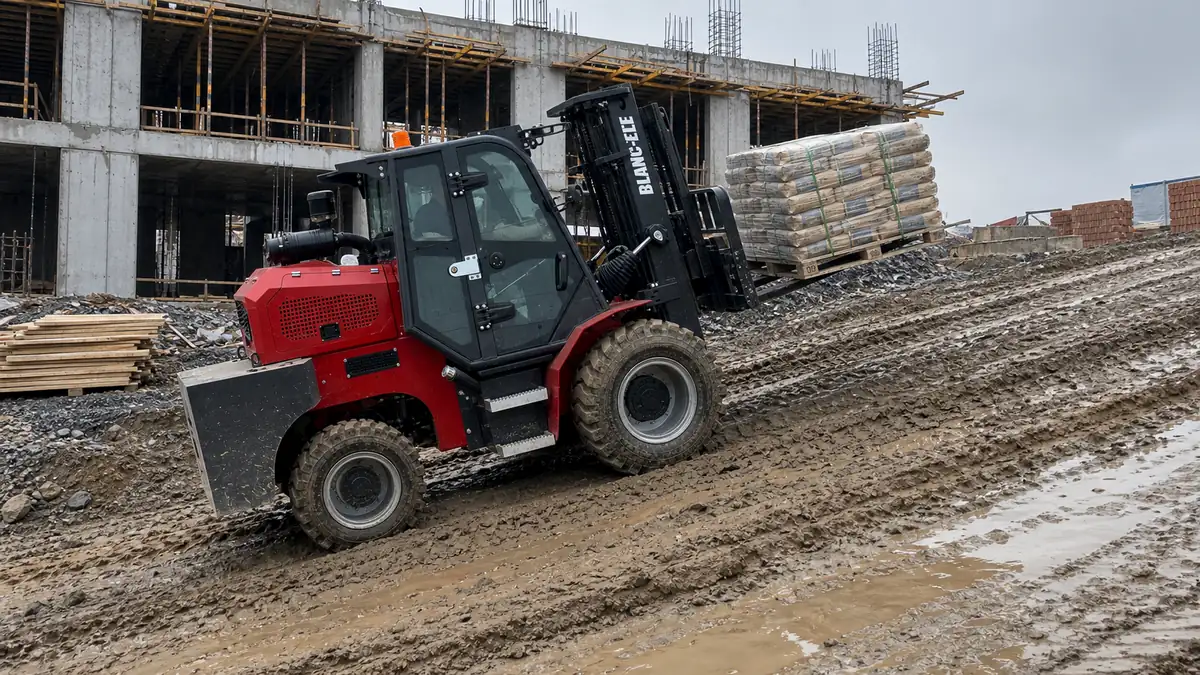
For many overseas dealers and importers, the 3.5 ton rough terrain forklift sits in an important middle position. It is not the smallest outdoor machine, and it is not a heavy quarry or stone-yard machine. It often fits construction material handling, farm supply work, plantations, outdoor warehouses, rental fleets, and mixed project sites where customers want more working margin than a basic 3 ton choice.
That makes it attractive.
It also means dealers should ask better questions before they decide what to stock, advertise, or recommend.
The Short Answer
A 3.5 ton rough terrain forklift is worth discussing when your customers often handle medium outdoor loads on uneven ground, unpaved yards, farm roads, construction access routes, or mixed indoor-outdoor sites.
Before stocking or promoting one, dealers should check:
- the most common load weight and load shape in the local market
- whether customers work on concrete, gravel, soil, mud, farm roads, or job-site ground
- whether the forklift needs to travel with a load, not only lift it
- whether customers ask for side shifters, long forks, fork positioners, clamps, or other options
- whether a 3 ton model has enough working margin for typical jobs
- whether a heavier 5 ton or 7 ton machine is actually needed for some customers
- how spare parts, filters, tires, and wear parts will be planned before shipment
- whether destination-market emission configuration needs separate confirmation
For a dealer, the goal is not to push one model to every buyer.
The goal is to know when the 3.5 ton rough terrain forklift is the right sales conversation, and when another capacity or configuration should be quoted instead.
Why Dealers Like The 3.5 Ton Segment
From the supplier side, I see one reason clearly: 3.5 ton is easy for buyers to understand.
Many end users are not ready to compare every technical detail. They know their work is outdoors. They know a warehouse forklift is not enough. They may already have problems with mud, broken ground, soft entrances, or rough loading areas. They want a machine that feels stronger than a light-duty choice without moving immediately into heavy-capacity purchasing.
For dealers, this can create a useful sales position.
A 3.5 ton rough terrain forklift can be presented to customers who ask questions like:
- "Can it work in a construction material yard?"
- "Can it handle farm supply pallets after rain?"
- "Can it load trucks on uneven ground?"
- "Can it replace a normal forklift for outdoor use?"
- "Can it give more margin than a 3 ton machine?"
These questions are common in developing markets where many yards are not fully paved. They are also common in rental fleets that receive mixed customer requests and need a machine with broader outdoor usefulness.
The key is to avoid making capacity the only selling point.
Rated capacity is easy to put on a brochure. Real working condition is what decides whether the customer is satisfied after delivery.
Start With Your Customers' Real Jobs
Before a dealer stocks a 3.5 ton rough terrain forklift, I would not begin with the machine.
I would begin with the customers.
What do they move every week? Building materials? Fertilizer? Timber? Fruit crates? Blocks? Stone products? Steel? Bagged goods? Mixed pallets for rural distribution?
Then I would ask where they move those loads.
The answer changes the recommendation. A customer moving compact pallets on a mostly paved yard may not need the same configuration as a customer moving long materials over soil, gravel, and soft corners. A farm buyer moving supplies across short outdoor routes may think only about capacity, while the dealer should also think about tires, ground clearance, load center, route distance, and simple maintenance access.
This is why the BLANC-ELE rough terrain forklift range should be treated as a selection conversation, not only a catalog list.
The dealer's advantage is local knowledge. You know which industries are active in your market. You know whether customers complain about mud, tires, slopes, spare parts, or fast delivery. That knowledge should shape the first model you promote.
3 Ton, 3.5 Ton, Or Larger?
The 3.5 ton model is often discussed when the customer is close to the limit of a lighter outdoor machine or wants more working margin.
That does not mean every customer should move up.
For lighter, more compact loads with shorter routes, a 3 ton rough terrain forklift may be enough. For heavier material, larger load centers, long forks, stone work, quarry support, or very demanding outdoor yards, a 5 ton or 7 ton machine may need to be discussed.
The dealer should ask three simple questions before recommending capacity:
- What is the normal load, not only the maximum load?
- How far will the forklift travel with that load?
- Does the load shape move the weight forward from the mast?
The third question is easy to miss. A compact pallet close to the mast is not the same as a long bundle, steel pipe, timber, or uneven material sitting forward on the forks. If attachments are added later, the original capacity discussion may also change.
That is why I prefer to discuss attachments early, even if the buyer wants to keep the first order simple. The related guide on rough terrain forklift attachments and configurations explains why side shifters, fork positioners, long forks, and other options should not be treated as afterthoughts.
What Dealer Inquiries Often Miss
A dealer may send a fast inquiry:
"Please quote one 3.5 ton rough terrain forklift for our market."
That is enough to start a conversation, but it is not enough to build a strong recommendation.
For a useful quotation, I would want to know:
- Which customer group will this machine target first?
- Will it be sold to construction companies, farms, plantations, building-material yards, rental fleets, or general dealers?
- Is the customer usually replacing a warehouse forklift, a used machine, or another outdoor forklift?
- What ground condition is most common in the local market?
- Are buyers asking for a closed cabin, canopy, side shifter, long forks, special tires, or other configuration details?
- Is the machine for stock, a confirmed customer order, or a tender/project?
- Does the buyer need recommended spare parts shipped together?
- Which destination country and port should be considered for the quote?
These questions help prevent a weak quote.
They also help the dealer look more professional to the end customer.
A Typical Dealer Scenario
A dealer may have three common customer groups.
The first group handles construction materials. Their sites change often. Some routes are compacted, some are broken, and some become muddy after rain. They may ask for a machine that can work with pallets, blocks, and general material.
The second group handles farm or plantation supply. They care about outdoor access, simple maintenance, tire durability, and enough traction for farm roads or yard entrances. They may not always speak in technical terms, but they know when a normal forklift gets stuck or feels weak outside.
The third group is a small rental or project buyer. They do not want to buy a machine for only one perfectly defined task. They want a rough terrain forklift that can handle different customers, different yards, and different seasonal conditions.
For all three groups, a 3.5 ton rough terrain forklift can be a practical discussion.
But the final quote still depends on load, road, attachment plan, working hours, and support expectations.
Stock Planning Is Also A Support Question
Dealers should not think only about the first machine sale.
They should also think about the first year after the machine arrives.
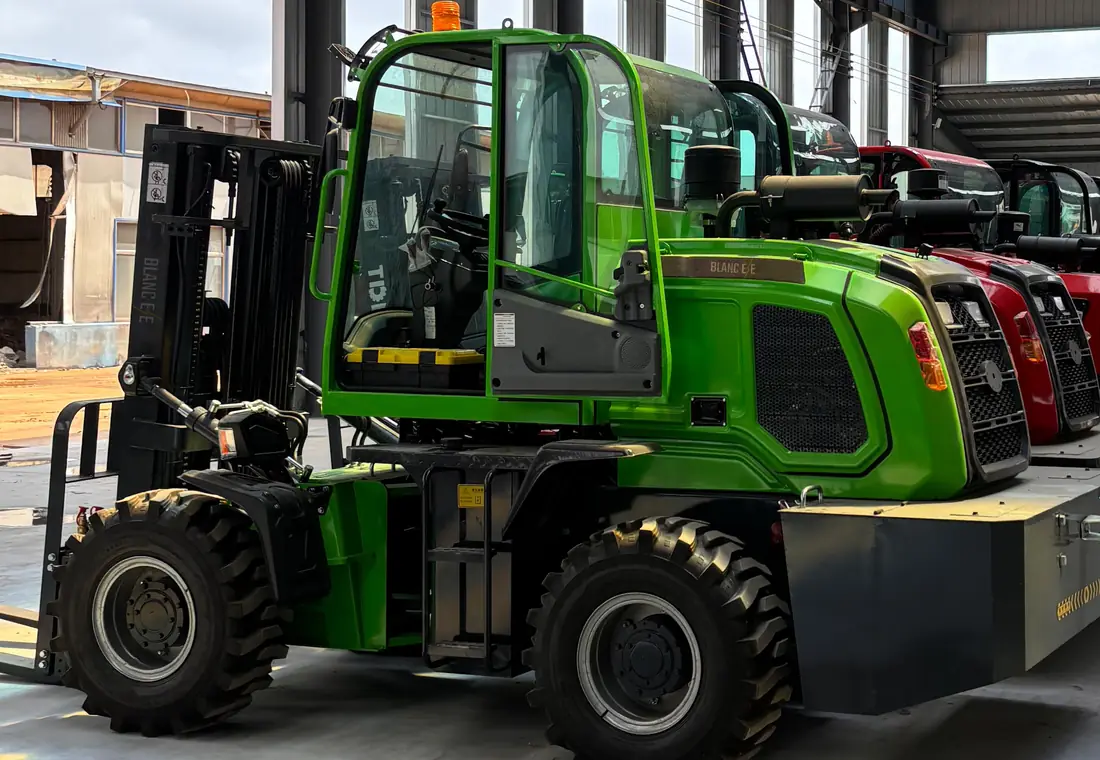
For outdoor forklifts, customers may ask about filters, tires, seals, hoses, wear parts, manuals, and parts diagrams. They may need help from the dealer before they contact the factory. If the dealer has no spare-parts plan, even a good machine can become difficult to support.
This does not mean every order needs a large spare-parts package.
It means the dealer should discuss recommended wear parts, service access, and communication before shipment. Remote after-sales support can be provided through email, WhatsApp, manuals, videos, and parts diagrams, while warranty terms and spare-parts arrangements should be confirmed in the formal quotation and sales contract.
For importers comparing suppliers, I also recommend reading our rough terrain forklift manufacturer checklist. It helps separate product discussion from supplier capability, documentation, communication, and long-term support planning.
How I Would Position The 3.5 Ton Model In A Dealer Catalog
I would not describe it as the best choice for everyone.
That wording is not helpful.
I would position it as a practical middle-capacity rough terrain forklift for buyers who need more outdoor working margin than a light-duty option, but who do not need a heavy 5 ton or 7 ton machine.
The strongest catalog message should be simple:
| Customer need | Dealer positioning |
|---|---|
| Outdoor material handling on uneven yards | Discuss 3.5 ton rough terrain forklift first |
| Mostly light pallets and shorter routes | Compare with 3 ton rough terrain forklift |
| Heavy stone, long load center, or demanding yard work | Discuss 5 ton or 7 ton configuration |
| Attachments likely now or later | Confirm attachment plan before capacity decision |
| Remote market with limited service access | Plan wear parts and documentation before shipment |
This kind of positioning helps avoid overpromising.
It also helps the dealer qualify inquiries faster.
What To Send BLANC-ELE Before Asking For A Dealer Quote
If you are a dealer or importer preparing to quote a 3.5 ton rough terrain forklift, send practical information first:
- target customer industry
- normal and maximum load weight
- load size and shape
- ground condition photos or short videos
- working route and travel distance
- lifting height requirement
- attachment requirements
- destination country and port
- expected order purpose, such as stock, confirmed buyer, rental fleet, or project
- spare-parts expectation
- any local emission or import requirement that must be confirmed
With that information, we can discuss whether the 3.5 ton model is the right starting point, whether a 3 ton model is more suitable, or whether the buyer should move toward a heavier configuration.
Final Recommendation
For dealers, the 3.5 ton rough terrain forklift is not only a product page.
It is a sales filter.
It helps you identify customers who need a serious outdoor forklift but are not yet in the heavy-capacity segment. It gives you a practical way to serve construction, agriculture, plantation, rental, and outdoor-yard buyers with one focused conversation.
The best next step is not to ask only for a price.
Send the working condition, customer type, load details, ground photos, and configuration expectations. Then BLANC-ELE can help you prepare a more accurate recommendation and quote for your market.
Send us your working condition and tell us whether the machine is for stock, a confirmed customer, or a project quotation.