
A warranty duration is only one line in an import decision. The more important question is what the written warranty actually covers, how a claim will be checked, and which costs and responsibilities remain with the buyer.
Short Answer: Put the Warranty Scope in Writing
A rough terrain forklift warranty is useful only when it is tied to the exact machine, configuration and claim process. Before paying a deposit, confirm the coverage period and start point, covered parts, exclusions, evidence required, authorization process, and responsibility for parts, labour, travel and freight. Also confirm how the machine and parts will be identified and what remote or local support is actually included. For BLANC-ELE export orders, warranty terms and spare-parts arrangements are confirmed in the formal quotation and sales contract. Remote support may use email, WhatsApp, photos, videos, manuals and parts diagrams; this does not promise local technicians or same-day on-site service.
Who Needs This Checklist
This guide is for importers, equipment dealers, contractors, farms, rental companies and project buyers comparing a new diesel 4WD rough terrain forklift for overseas delivery.
It is especially relevant when:
- the machine will work far from the supplier;
- the buyer depends on a local mechanic or dealer;
- the order includes a special mast, forks, cabin or attachment;
- the buyer is comparing suppliers with different support promises;
- one machine is important to a project and downtime would be difficult to manage.
The checklist does not replace the final sales contract, local legal advice or competent maintenance. It helps the buyer identify the questions that need written answers before order.
A Real Inquiry Shows Why Duration Alone Is Not Enough
One anonymized inbound inquiry asked for a new diesel forklift and listed a warranty duration, preventive-maintenance service, on-site operator training, local service in the destination country and door-to-door delivery in the same request.
Those are not one warranty item. They are separate commercial and service responsibilities:
- product warranty;
- scheduled maintenance;
- operator training;
- local labour and travel;
- parts supply;
- international and destination delivery.
If a supplier replies with only "warranty included," the buyer still does not know which of those responsibilities is covered. A better quotation separates them line by line and states what is included, excluded or still subject to confirmation.
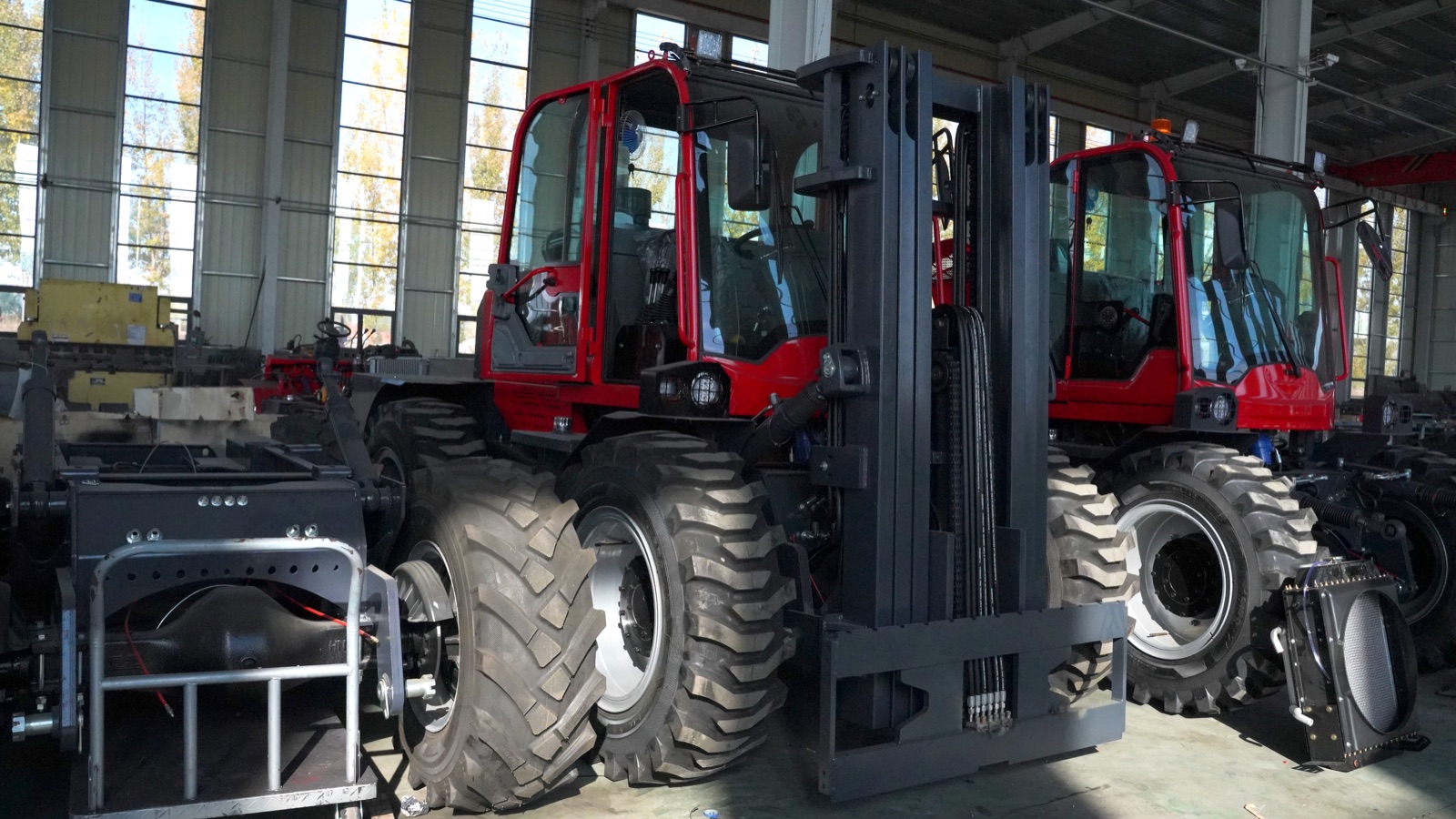
Real BLANC-ELE rough terrain forklifts in a factory-preparation area. Production or pre-shipment photos can support machine identification, but the warranty scope still needs written terms.
Use This Nine-Question Warranty Confirmation Tool
Ask the supplier to answer these nine questions in the quotation or contract. A blank answer is not automatically a rejection, but it is an unresolved risk that needs an owner before payment.
- Which exact machine is covered? Record the model, serial or machine-identification method, engine, mast, forks, attachments and other options that may affect parts identification.
- When does coverage start and end? Confirm the start event, the applicable time or operating-hour boundary, and which record will be used if the dates or meter reading are disputed.
- Which parts and failures are covered? Ask for the covered scope in writing. Do not assume that every component, wear item or maintenance item is included.
- Which exclusions apply? Clarify normal wear, consumables, misuse, overload, collision, unauthorized modification, incorrect maintenance, unsuitable fluids and work outside the confirmed operating conditions.
- What evidence starts a claim? Agree on the machine identity, meter reading, fault description, warning codes, photos, videos, maintenance records and other diagnostic information required.
- Who authorizes diagnosis or repair? Confirm whether the buyer must stop work, contact the supplier and receive approval before replacing a part or opening a major component.
- Who pays for parts, labour, travel and freight? These are different costs. A replacement part does not automatically include international shipping, customs, local labour or technician travel.
- How will support and parts identification work? Confirm the contact channel, working language, manuals or parts diagrams available, and the information needed to identify the correct part for the exact configuration.
- What must the buyer arrange locally? Identify the local mechanic, tools, inspection routine, maintenance records, safe work area and any dealer or service partner that the project requires.
This tool is intentionally more detailed than a single warranty-duration comparison. It turns a vague promise into a set of responsibilities that the buyer, supplier and local service team can understand.
Match the Warranty to the Final Configuration
A rough terrain forklift is not defined only by its rated capacity. The final machine may include a different mast, fork length, cabin, tyre arrangement, engine configuration or attachment. Those choices can change the parts needed and the evidence required during diagnosis.
Before signing, reconcile the warranty wording with the same configuration schedule used for the quotation. If the order changes, confirm that the machine description, parts information and warranty record are updated together.
For buyers considering the 3.5 ton 4WD rough terrain forklift, the useful starting point is still the real load, lift height, ground condition, route and attachment requirement. Warranty wording cannot correct a machine that was selected for the wrong job.
Build a Claim File Before a Problem Occurs
An export buyer should not wait for a fault before deciding how to identify the machine and explain the symptom.
Prepare a simple claim file with:
- formal quotation and sales contract;
- final configuration record;
- machine and engine identification photos;
- pre-shipment or receiving photos;
- operating-hour record;
- inspection and maintenance records;
- parts manual or diagram where available;
- supplier contact and claim instructions;
- name and contact of the local service person.
If a problem appears, start with a clear description: what the machine was doing, what changed, whether a warning appeared, whether there is a leak or unusual sound, and whether the machine can be isolated safely. Then provide wide and close photos or video without asking an untrained person to perform a risky demonstration.

Real BLANC-ELE RT70 front-carriage detail. Useful claim evidence should show the complete area, the exact component, the machine identity and the operating context rather than one unclear close-up.
Separate Remote Support From Local Service
This distinction prevents many misunderstandings.
BLANC-ELE can support export customers through email, WhatsApp, photos, videos, manuals and parts diagrams. The appropriate method depends on the issue, machine configuration and parts availability. Remote communication can help identify information gaps and discuss a next step, but it is not the same as a local technician visit.
If the project requires on-site training, preventive-maintenance visits, local parts stock or a response-time commitment, ask the seller to state whether that service is included, separately quoted, handled by a local dealer or not available. Do not infer it from the word "warranty."
Our guide to buying factory direct or through a local dealer helps assign those local responsibilities. For wear items and planned stock, use the separate spare-parts planning guide for export buyers.
Compare Written Scope, Not the Loudest Promise
Two suppliers can use the same warranty duration while offering very different claim processes and cost boundaries. Compare the written answers to the nine questions above.
A stronger answer should make it possible to identify:
- the exact machine and configuration;
- the covered scope and exclusions;
- the evidence and approval sequence;
- the buyer's local maintenance responsibilities;
- the treatment of parts, labour, travel and freight;
- the available remote or local support method.
Do not treat an unsupported promise of worldwide local service, a fixed response time or absolute performance as evidence. The commercial record should be specific enough that both sides can follow it after delivery.
The rough terrain forklift quotation comparison guide can help align the rest of the machine and export scope before you compare the final offer.
What to Send BLANC-ELE Before a Warranty Discussion
Start with the application and the final machine configuration:
- required capacity, load dimensions and lift height;
- mast, fork and attachment requirements;
- ground, route, gradients and operating environment;
- destination country and port;
- expected daily duty and local maintenance capability;
- any required support, training or document conditions.
Review the BLANC-ELE rough terrain forklift range after those inputs are clear. Then send the application and support requirements to BLANC-ELE. We can discuss the matching new diesel 4WD configuration and confirm warranty and spare-parts arrangements in the formal quotation and sales contract.
References
- BLANC-ELE Rough Terrain Forklift FAQ, shipping, warranty and after-sales support section.
- BLANC-ELE anonymized inquiry records and quotation-comparison workflow, reviewed November 2026.
- BLANC-ELE real factory-preparation and RT70 component photographs.
Last reviewed: November 2026.