A factory quotation arrives in your inbox. A local dealer offers another machine, with a different package of services. Which route is better for your business?
I would start by asking who will keep the forklift working after it reaches your site.
The Answer Depends on Your Team
Buying a rough terrain forklift directly from a manufacturer can suit an importer, equipment dealer or end user that can coordinate shipping and arrange competent local maintenance. Buying through a local dealer can suit a business that needs a nearby point of contact, help with handover or a defined service arrangement. Neither route automatically gives you a lower total cost or better support. Compare the machine and the responsibilities included in each offer. Before choosing, identify who will arrange delivery, prepare the machine for use, diagnose problems, supply parts and pay for work outside the agreed warranty.
The Question Behind �üDo You Have Parts Here?�ü
One archived RT30 inquiry asked whether maintenance consumables were included with the machine and whether parts were available in the buyer's country. Those questions identify a concern that a capacity table cannot answer.
The buyer was considering what would happen after delivery.
As a supplier, I think this is exactly the right conversation to have before an order. A machine can match the lifting requirement while the purchasing arrangement still leaves an important job unassigned. Someone must coordinate the shipment. Someone must receive the machine. Someone must arrange service and communicate the information needed to identify a replacement part.
Our published rough terrain forklift FAQ explains the support available from BLANC-ELE: communication through email, WhatsApp, photos, videos, manuals and parts diagrams. Warranty terms and spare-parts arrangements are confirmed in the formal quotation and sales contract.
That gives buyers a basis for planning. It does not establish a local workshop, a local parts stock or a technician visit at their site.
What You Are Buying With Each Route
A direct purchase gives you a direct commercial conversation with the supplier about the selected machine, configuration, available documents and export arrangements. This can be useful when your business already handles imports or has a team that supports equipment locally.
It also leaves practical questions to resolve. If you use a freight forwarder, who passes the final shipment information to them? If your mechanic needs help, who gathers the machine identification, photos and symptoms? Who approves and pays for a replacement part shipment?
A local dealer may offer a package that includes delivery, handover, service or other assistance. Ask what is actually included for your site and selected machine. A nearby address alone does not tell you whether the dealer stocks the relevant parts or will travel to your location.
Dealer service also has boundaries. Some work may be charged separately. Particular parts may need to be ordered. The person selling the machine may be different from the team handling repairs.
The useful comparison is therefore between two specific offers, with named responsibilities.
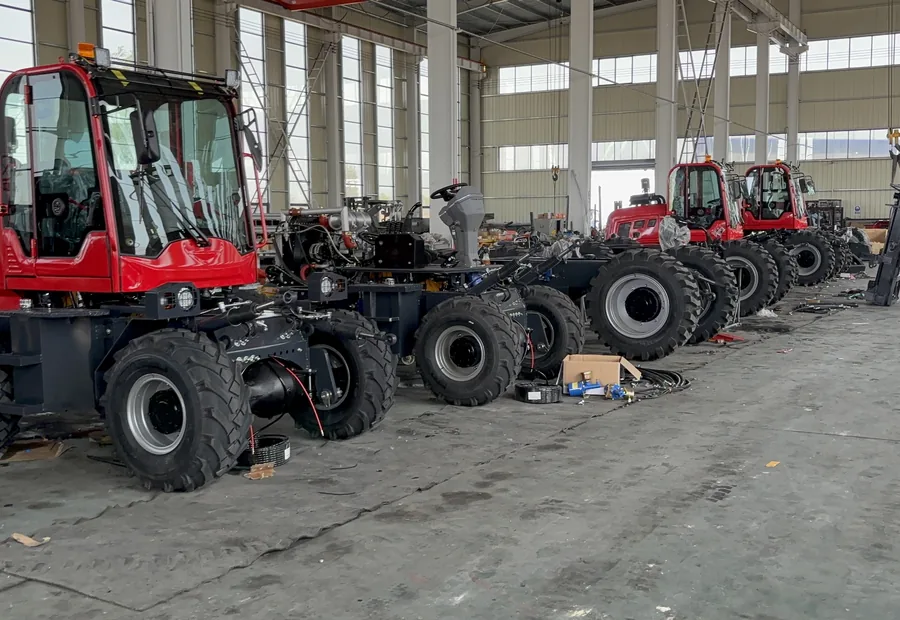
Factory photograph from the BLANC-ELE material library. It illustrates the production setting; current stock and completion dates require separate confirmation.
Put the Responsibilities on One Page
Use this worksheet before committing to either route. Fill in a responsible person or company, the written evidence and any separate charge. Treat an unanswered row as an open purchasing question.
| Responsibility | For a direct factory purchase | For a local dealer purchase |
|---|---|---|
| Confirm the final machine | Match the model and options to the supplier's written offer | Confirm the offered machine and options, including any substitutions |
| Coordinate delivery to your site | Name the forwarder and the party arranging each transport stage | Confirm whether delivery reaches your actual site and what it includes |
| Receive and prepare the machine | Identify who handles unloading and any agreed preparation work | Ask which handover and preparation tasks the dealer performs |
| Arrange routine maintenance | Identify a competent local service provider and obtain the applicable documents | Confirm service coverage, scheduling, travel and separate charges |
| Handle a reported problem | Name the buyer contact and the local person who can provide diagnostic information | Identify the service contact and how the dealer escalates issues |
| Identify and supply parts | Agree the identification process and confirm availability and shipping for the actual part | Distinguish local stock from parts that must be ordered elsewhere |
| Manage a warranty claim | Confirm the claim process and treatment of parts, labour, travel and freight | Confirm the same items and whether the seller handles the claim locally |
| Keep work moving during an interruption | Decide what operational backup your business can arrange | Ask whether any backup assistance is available and on what terms |
This is a purchasing worksheet, not a promise that either channel includes every service listed. Ask the seller to resolve the open rows in writing.
Compare the Budget at the Same Delivery Point
A factory machine offer and a local delivered offer can cover different things. Comparing their totals without aligning the scope can lead to the wrong decision.
Ask for a view of the expenditure needed to get the selected machine to your site and ready for its intended use. Depending on the arrangement, items to confirm may include transport, cargo insurance, destination charges, unloading, preparation, initial service items and local assistance. Obtain destination-specific charges and requirements from the relevant forwarder or adviser.
Avoid counting a cost twice if it is already included. Equally, do not enter zero for something simply because it is absent from the quotation.
Then consider recurring costs: fuel, maintenance, replacement parts and the effect of interruptions on your work. These need your own operating assumptions; a supplier's machine price cannot establish them.
Our guide to comparing rough terrain forklift quotations helps align the offers once you have identified the purchasing route. There is no universal saving percentage for buying direct, and I would not promise one.
Who Is Ready to Buy Direct?
For an equipment dealer or experienced importer, direct procurement may fit existing capabilities. Your team might already coordinate transport, maintain machines and manage customer support. The remaining question is whether the documents, parts arrangements and communication for this particular forklift fit that system.
For a contractor or farm buying its first imported machine, I would give more attention to local support. You do not necessarily need an in-house workshop, but you do need a realistic arrangement with people qualified to service the equipment.
Consider two hypothetical situations.
A contractor has a regular equipment mechanic and a forwarder who already handles its machinery shipments. Direct purchase may be worth evaluating, provided both parties confirm their roles for the new forklift.
A farm depends on one machine and has not arranged local maintenance. A dealer offer with clearly defined service could deserve more weight, even if its initial total is higher. That conclusion still depends on the actual coverage, availability and exclusions.
These are planning examples, not reports of customer results.
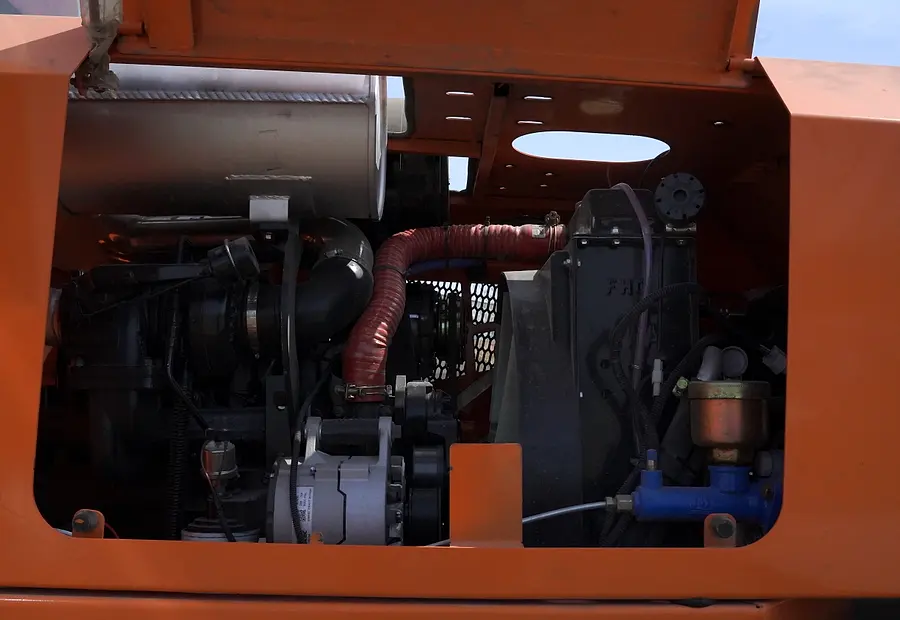
A real BLANC-ELE engine-compartment photograph can help a prospective service provider begin a discussion. It does not replace the selected machine's manual, parts information or a qualified assessment.
Have the Support Conversation Before the Sales Decision
If you are considering direct purchase from BLANC-ELE, send a short description of your business as well as your lifting requirement:
- Are you buying for your own operation or for resale?
- What will the machine handle, and at which site?
- Who will coordinate import and delivery?
- Who can perform maintenance locally?
- Will this be your only machine for the job?
- What assistance do you expect from the supplier after arrival?
- What country, destination port and required project date should the offer address?
These inputs help us discuss the purchase arrangement alongside model selection. For example, if a 3.5 ton rough terrain forklift is on your shortlist, we can review the intended load and configuration while also discussing available documents and support. The appropriate capacity still depends on the actual load, lifting height and selected attachments.
Recommended wear parts can be supplied with shipment. The contents and terms should be agreed for the selected machine. Our spare-parts planning guide for export buyers covers that separate decision.
I would choose the purchasing route only after the machine fit, delivery scope and support responsibilities are clear. If you want to explore a direct order, send BLANC-ELE your application and support requirements. We can start with what your team already handles and identify what the offer still needs to address.
Further Reading
Toyota's discussion of total forklift ownership costs and Hyster's fleet savings checklist provide broader context on purchasing and service planning. Their products and service programmes are separate from BLANC-ELE's offering.
Reviewed: September 8, 2026.