
A forklift specification sheet should reduce uncertainty. Too often, buyers use it as if every number applies to every chassis, mast and attachment.
That is where a clean-looking data table can create the wrong confidence. A rated capacity may be correct, while the actual machine still needs a different mast, steering layout, tyre configuration or attachment check. The sheet is the start of technical review, not the end of it.
Quick Answer
A useful rough terrain forklift specification sheet should let you identify the exact model, rated capacity, load-center basis, lift and lowered mast heights, fork length, overall dimensions, turning radius, operating weight, drive and steering layout, tyres, ground clearance, engine, emission configuration and planned attachments. Do not approve the order from the capacity number alone. Ask the supplier to mark which values are standard, optional or still subject to final configuration. Then reconcile the technical sheet with the formal quotation, attachment list and final machine data plate. If any of those documents disagree, stop and confirm the selected configuration before production or shipment.
Who Should Use This Review
This review is for importers, dealers, contractors, farms, rental fleets buying machines and project procurement teams that receive several technical files before ordering.
It is especially useful when:
- the request includes a different mast or lift height;
- the load is long, wide, irregular or carried with an attachment;
- two steering layouts are available;
- the destination market needs a different engine or emission configuration;
- the machine must pass a gate, container door, ramp or narrow route;
- the quotation and brochure use similar model names but different option lists.
The goal is not to turn every buyer into an engineer. The goal is to identify the fields that need a clear supplier answer.
Start With the Document Identity
Before reading the numbers, confirm what the sheet actually describes.
Check:
- model and series name;
- steering or chassis version;
- standard versus optional configuration;
- revision date;
- destination-market engine or emission basis;
- whether the dimensions include forks or an attachment;
- whether the data is a public reference or a final order specification.
This matters because one model family can include more than one practical configuration. For example, current BLANC-ELE technical references separate some front-wheel-steering and rear-wheel-steering dimensions. A single model name does not automatically tell you which turning radius, overall length or mast-lowered height belongs to the quoted machine.
Rated Capacity Needs Conditions
Rated capacity is usually the first number a buyer sees. It is not a universal promise for every load.
The usable capacity can change with:
- the load center;
- the shape and weight distribution of the load;
- lift height;
- fork length;
- side shift, fork positioner, clamp, bucket or other attachment;
- mast and carriage configuration.
OSHA's powered industrial truck guidance explains that the stated capacity applies to the load center shown on the data plate. It also notes that load size, position and weight distribution affect the capacity. That is why a buyer should ask for the load-center basis and the capacity information for the selected configuration, not rely only on a model name such as 3T, 3.5T or 5T.
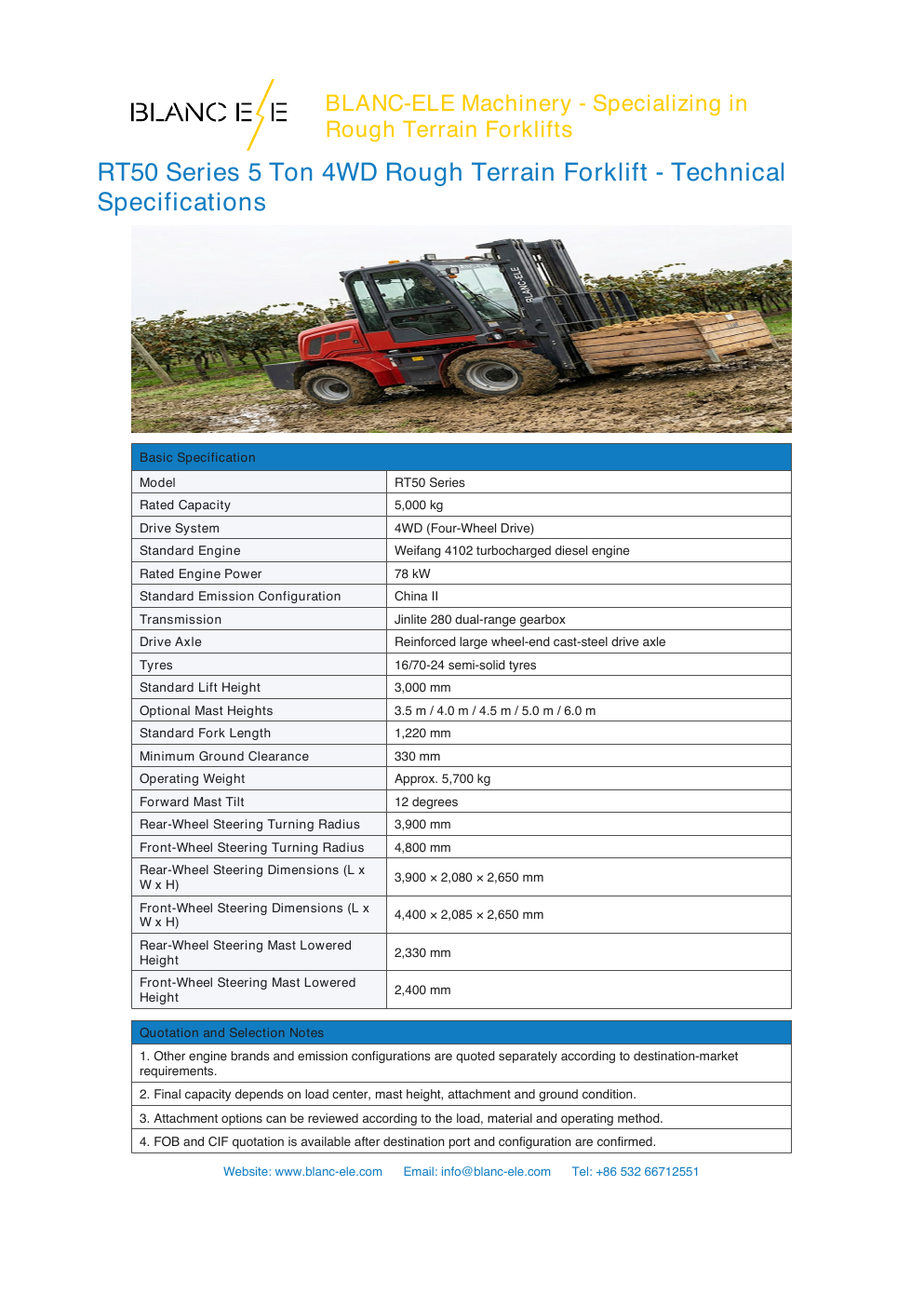
A technical sheet should separate standard data from configuration-dependent values.
Separate Lift Height From Lowered Height
These two fields solve different problems.
Lift height tells you how high the forks can raise under the stated configuration. Lowered mast height tells you whether the machine can pass under a roof, gate or other height restriction.
Also ask whether the published height is:
- the mast lowered height;
- the overall machine height;
- the overhead-guard height;
- the height after any shipping preparation;
- the height for a two-stage or three-stage mast.
A higher mast option can change more than lift height. It may also affect lowered height, visibility, transport planning and the capacity available at elevation. If the job has a low entrance but needs stacking inside, tell the supplier both numbers: the lowest opening and the required fork height.
Dimensions Must Match the Selected Chassis
Length, width and height are useful only when their measurement basis is clear.
For each dimension, ask:
- Does length include the forks?
- Does width include mirrors or the widest tyre position?
- Is height measured to the overhead guard or mast?
- Which steering layout does the drawing show?
- Is the machine fitted with standard tyres?
- Are attachment dimensions included?
The same rule applies to turning radius. A turning-radius number does not prove that the machine can complete the buyer's route. Route width, entry angle, load length, wall clearance and the space needed to straighten the forks all matter.
For a first model review, use the BLANC-ELE rough terrain forklift range to identify the capacity class, then compare the final dimensions for the exact quoted configuration.
Operating Weight Is Not Lifting Capacity
Operating weight describes the machine, not the load it can lift.
Buyers may need operating weight for:
- floor or ramp planning;
- delivery vehicle selection;
- unloading arrangements;
- shipping and lifting plans;
- ground-bearing review.
The rated load and the operating weight should never be swapped in a comparison table. If an attachment, counterweight or cabin option changes the machine weight, the final quotation and data plate should reflect the selected setup.
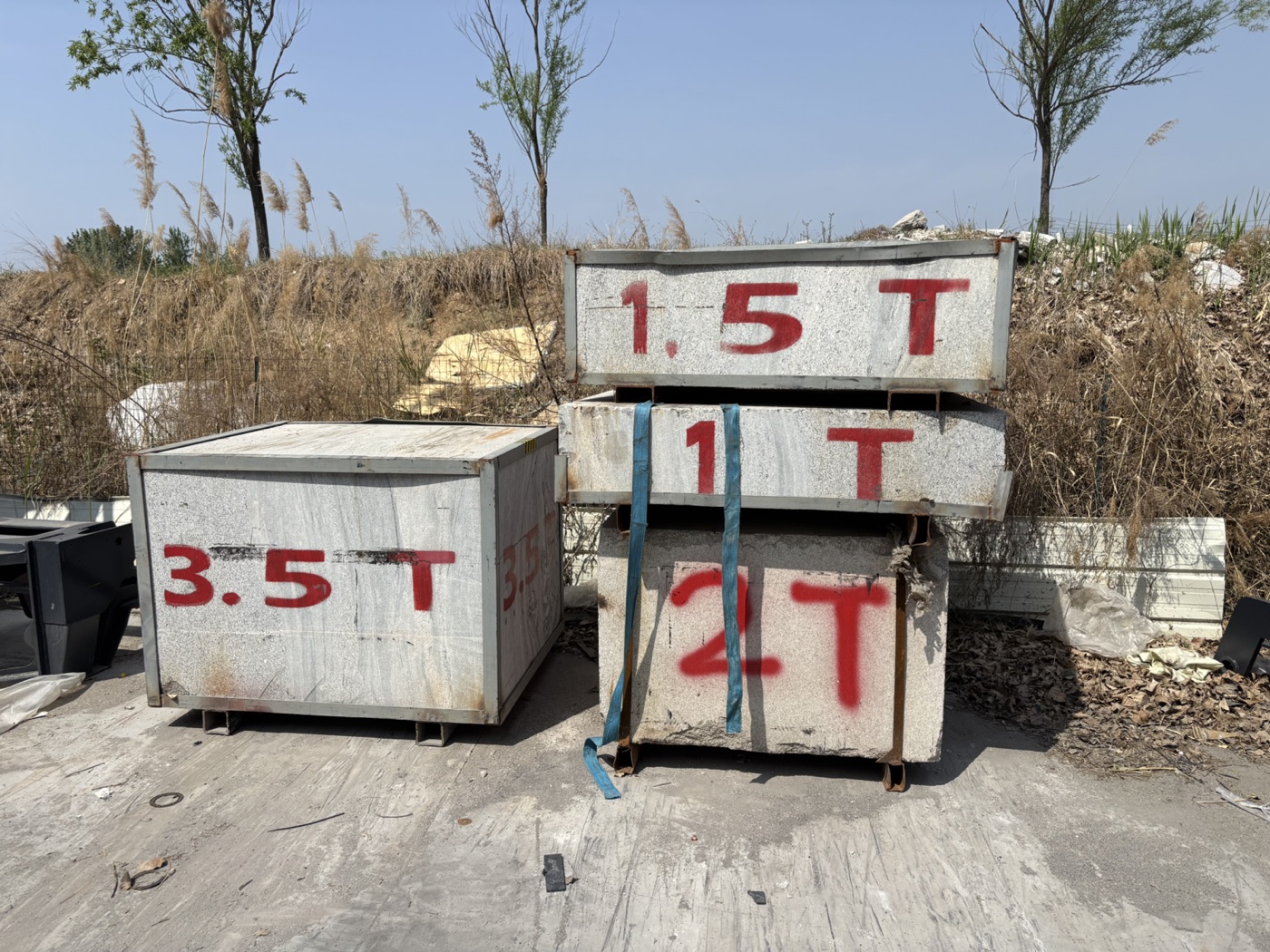
Physical weight evidence does not replace the load-center, mast, attachment and data-plate conditions.
Drive, Steering, Tyres and Clearance Are Separate Fields
"4WD" answers one question: which wheels receive drive. It does not tell you the steering layout, turning radius, tyre pattern, clearance or suitability for a specific route.
Read these fields separately:
- drive system;
- front- or rear-wheel steering;
- tyre size and construction;
- minimum ground clearance;
- transmission and axle description;
- overall dimensions for that chassis.
For a compact outdoor job, the 3.5 ton rough terrain forklift and the 5 ton rough terrain forklift show why capacity class, dimensions and route requirements must be reviewed together.
Do not turn tyre or ground-clearance values into a guarantee for mud, slopes or every uneven surface. Real suitability still depends on ground strength, rut depth, drainage, load, route and operating method.
Engine And Emission Fields Need Destination Context
A technical sheet may show a standard engine, power rating and standard emission configuration. The quotation may offer a different option for the destination market.
Ask the supplier to confirm:
- engine manufacturer and model;
- rated power;
- fuel type;
- standard emission configuration;
- destination-market requirement;
- whether the quoted engine changes dimensions, weight or service parts.
BLANC-ELE's safe public wording is that emission configurations are quoted according to destination-market requirements. Stage V or Tier 4 Final options can be quoted separately when required. Do not treat an optional configuration as standard across all models.
Attachments Must Appear In The Technical Review
An attachment is not a note to add after the forklift has been selected. It can affect capacity, hydraulic requirements, visibility, front-end weight and the data plate.
OSHA states that modifications affecting capacity or safe operation require prior manufacturer approval, and related plates or decals must be changed accordingly. Its nameplate guidance also says a special attachment should be listed on the plate.
For the buyer, the practical request is simple:
- Name the attachment before quotation.
- Send the real load weight and dimensions.
- Confirm required fork or attachment length.
- Ask for the capacity basis with that attachment and mast.
- Confirm the attachment appears in the final configuration and marking.
Our guide on comparing rough terrain forklift quotations covers the commercial-document side. This article stays focused on the technical sheet itself.
A 12-Field Specification Review Worksheet
| Field | What the buyer should confirm | Evidence to request |
|---|---|---|
| Model / series | Exact quoted version | Final model code and revision |
| Rated capacity | Capacity class and conditions | Data plate or approved capacity information |
| Load center | Basis used for stated capacity | Load-center value and load dimensions |
| Mast | Lift height, stages and lowered height | Mast specification for the order |
| Forks | Length and section | Fork dimensions on quotation |
| Attachment | Type, weight and function | Attachment list and capacity review |
| Overall size | Length, width and height basis | Dimension drawing for selected chassis |
| Turning | Steering layout and radius basis | Chassis-specific data |
| Operating weight | Machine configuration included | Final approximate operating weight |
| Tyres / clearance | Size, type and lowest clearance | Tyre and chassis specification |
| Engine / emission | Standard versus destination option | Engine line in formal quotation |
| Documents | Sheet, quote and plate agree | Final signed quotation and machine marking |
If the supplier cannot fill one line yet, mark it as pending. Do not replace a missing answer with an assumption.
What To Send Before Asking For A Final Specification
Prepare these buyer inputs:
- maximum and normal load weight;
- load length, width and height;
- estimated load center;
- required lifting height;
- lowest gate, roof or entrance height;
- route width and tightest turn;
- ground and ramp photos;
- required fork length and attachment;
- destination country and port;
- quantity and expected application.
These inputs allow the supplier to turn a general brochure into an order-specific technical review.
Final Supplier Recommendation
Read a forklift specification sheet as a set of connected conditions, not a list of independent selling points.
The rated capacity connects to the load center, mast and attachment. The dimensions connect to steering, tyres and route access. The engine and emission fields connect to the destination market. The operating weight connects to delivery and ground planning.
Before order, compare the sheet with the formal quotation and final machine marking. If you want BLANC-ELE to review one proposed configuration, send the 12 fields above through the contact page. We can confirm what is standard, what is optional and what still needs engineering or destination-market review.