
Different buyers use different names for the same problem.
One buyer says he needs an "off-road forklift." Another asks for an "all-terrain forklift." A third buyer searches for a "rough terrain forklift." Very often, they are not asking for three completely different machines.
They are trying to solve the same practical question:
Can this forklift leave the smooth warehouse floor and still move loads on real outdoor ground?
In my work with overseas buyers, I do not worry too much about the first word they use. I care more about the working condition behind that word. Mud, gravel, slopes, stone yards, farms, construction roads, container yards, and unprepared ground all create different risks.
That is why I usually slow the conversation down before talking about model size.
First, we define the ground.
Then we define the load.
Only after that do we discuss the right forklift configuration.
The Short Answer
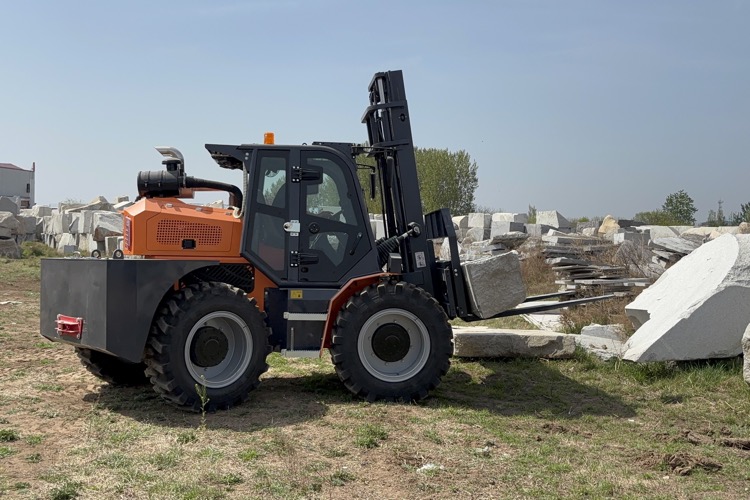
For most overseas buyers, "off-road forklift," "all-terrain forklift," and "rough terrain forklift" are search terms used to describe a forklift for outdoor, uneven, muddy, sandy, or unpaved work.
But the name alone is not enough.
The buyer should confirm:
- ground condition
- load type and weight
- travel distance
- tire type
- drive system
- ground clearance
- turning space
- mast height
- attachment use
- operator visibility
- local maintenance ability
A rough terrain forklift is usually the product family buyers should review when the work goes beyond flat concrete. But the final choice should still be based on photos, videos, load details, working hours, and the route the machine must travel.
If the buyer only says "I need an all-terrain forklift" without explaining the site, the supplier is still guessing.
Why The Names Become Confusing
These terms are confusing because they come from different places.
Buyers often use the words they see in search results, advertisements, local markets, or conversations with other operators.
For example:
- "off-road forklift" usually means the buyer wants to work away from smooth concrete
- "all-terrain forklift" often means the buyer expects the forklift to handle difficult outdoor ground
- "rough terrain forklift" is the more common industry term for forklifts built for uneven outdoor surfaces
- "4WD forklift" focuses on the drive system
- "construction site forklift" describes the application
- "farm forklift" describes the buyer's working environment
The words are different, but the real question is practical:
What ground will the forklift drive on every day?
For a simple indoor comparison, this related article explains the difference between a rough terrain forklift and a standard forklift. For outdoor yards specifically, this newer guide explains why an outdoor yard forklift should be selected differently from an indoor warehouse forklift.
A Typical Buyer Situation
A buyer may send a short message:
"We need one all-terrain forklift for our project."
That sounds clear, but it is not enough for selection.
So I normally ask for site photos or a short video.
Sometimes the ground is not too difficult. It may be compacted gravel with short travel distance and stable pallets. In that case, the buyer may need a practical outdoor forklift configuration, but not the biggest machine.
Other times, the video tells a different story:
- the ground becomes muddy after rain
- trucks leave deep ruts near the loading area
- pallets sit on uneven soil
- the forklift must turn beside stone, brick, or scrap material
- the route crosses a small slope
- the operator has to load trucks from an unpaved yard
- the buyer wants to use forks today and an attachment later
Now the job is more serious.
The buyer is not simply asking for a forklift. He is asking for traction, clearance, tire durability, stability margin, service access, and a configuration that can survive the real site.
That is why the name does not decide the machine.
The working condition decides the machine.
What I Ask Before Recommending A Machine
Before I recommend a rough terrain forklift, I usually want answers to these questions:
- Is the ground concrete, gravel, sand, soil, mud, stone, or mixed?
- Does the site become worse during rainy season?
- What is the normal load: pallets, blocks, bags, timber, stone, bales, or loose material?
- Is the load stable or irregular?
- How far does the forklift travel with load?
- Does the forklift need to work on slopes or ramps?
- What lifting height is required?
- Is the work inside, outside, or both?
- Will the buyer use attachments such as bucket, clamp, side shift, or fork positioner?
- Is local service support available?
These questions may feel basic, but they prevent many wrong purchases.
A forklift can look strong in a photo and still be wrong for the route. It can have enough rated capacity and still struggle if the tire, clearance, drive system, or attachment does not match the site.
Off-Road Does Not Mean "Works Anywhere"
This is an important point.
I do not like using the word "all-terrain" too loosely because some buyers hear it as "works anywhere." No forklift works safely or efficiently on every ground condition.
Even a strong rough terrain forklift still depends on:
- load weight and load center
- tire condition
- ground firmness
- slope angle
- operator training
- travel speed
- braking distance
- visibility
- daily inspection
- maintenance
NIOSH notes that forklift safety depends on factors such as load, speed, operating surface, tire pressure, and driving behavior. That matches what we see in real projects: the machine matters, but the site and operation matter too.
So when a buyer asks me for an "off-road forklift," I do not answer with only a model.
I answer with a working-condition discussion.
Rough Terrain Forklift Is Usually The Better Technical Starting Point
For serious outdoor work, "rough terrain forklift" is usually the better term to use with suppliers.
It tells the supplier that the machine may need to handle:
- uneven ground
- larger outdoor tires
- stronger traction
- more ground clearance
- outdoor dust and water exposure
- longer loaded travel
- less predictable turning areas
- heavier working vibration
This does not mean every buyer needs the same configuration.
A farm buyer moving crop pallets is different from a stone yard buyer. A construction contractor moving cement blocks is different from a dealer stocking machines for local resale. A small outdoor warehouse may have different needs from a remote site with no backup forklift.
The BLANC-ELE rough terrain forklift range is the right product family to review when the buyer's job is outside the normal warehouse environment, but the final recommendation still has to match the real site.
What Usually Matters More Than The Name
Here is how I normally separate the words from the real decision.
| Buyer Search Term | What The Buyer Often Means | What The Supplier Should Confirm |
|---|---|---|
| Off-road forklift | Forklift for unpaved outdoor ground | ground firmness, tire needs, travel route |
| All-terrain forklift | Forklift expected to work in difficult mixed conditions | realistic ground limits, slope, mud, clearance |
| Rough terrain forklift | Forklift designed for outdoor uneven surfaces | capacity, mast, drive system, tires, attachments |
| 4WD forklift | Forklift with four-wheel drive traction focus | whether 4WD is enough for the actual route |
| Construction site forklift | Forklift for building materials and site movement | ground, blocks, pallets, dust, turning space |
| Farm forklift | Forklift for agricultural material handling | soil, mud, bales, crop pallets, attachments |
This table is why I do not treat search words as final requirements.
They are only the beginning of the conversation.
Tire Choice Is Often The First Real Test
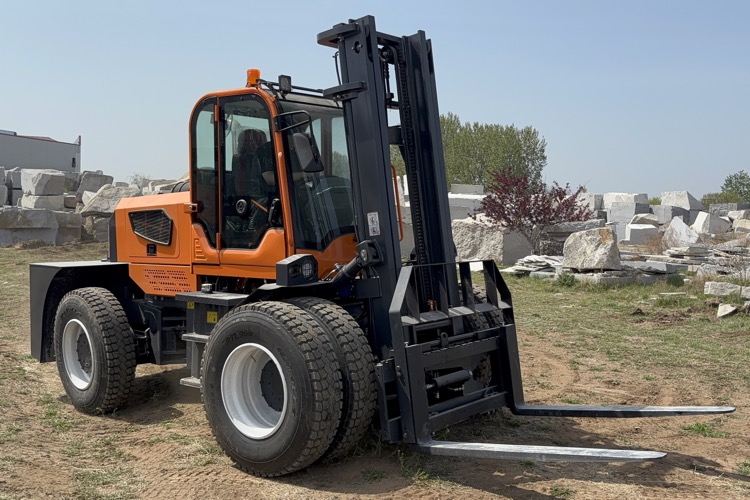
Tires quickly reveal whether the forklift is meant for the right ground.
An indoor warehouse forklift may use tires that are excellent on smooth concrete. But those same tires may not be suitable for loose gravel, mud, stone chips, or broken outdoor concrete.
For outdoor work, I usually ask:
- Is the ground sharp or soft?
- Is the ground wet during part of the year?
- Does the forklift turn on gravel?
- Are there broken bricks, stone, steel pieces, or debris?
- Can replacement tires be sourced locally?
- Is operator comfort important during long loaded travel?
Tires affect traction, stability feel, ground damage, maintenance cost, and daily speed.
If the tire choice is wrong, the buyer may blame the forklift even though the real problem started with the application.
For a deeper tire discussion, this article explains why 4WD forklift tires matter in outdoor performance.
Attachments Can Change The Whole Selection
Many buyers first ask for a forklift, then later mention an attachment.
That order is risky.
A bucket, bale clamp, side shifter, fork positioner, crane jib, or other attachment can change the load center, visibility, hydraulic demand, handling behavior, and daily work pattern.
For example, a buyer may say:
"We mainly use forks, but sometimes we want to move loose material."
That "sometimes" may be important.
If the attachment is discussed too late, the selected forklift may not match the real job. That is why I like to discuss attachments before finalizing the machine, not after the buyer has already chosen the capacity.
For buyers still comparing options, this guide on rough terrain forklift attachments and configurations is useful before asking for the final quote.
A Practical Way To Describe Your Site
Instead of only asking for an "off-road forklift," a buyer can send a clearer request like this:
"We need a rough terrain forklift for an outdoor construction yard. The ground is compacted soil and gravel, but it becomes muddy in rainy season. Loads are cement blocks and pallets. Travel distance with load is about medium range. The forklift must load trucks and move material around the site. Please recommend suitable tires, drive system, mast, and attachment options."
That kind of message helps the supplier give a better answer.
The buyer should also send:
- 3 to 5 photos of the working ground
- a short video of the travel route
- load photos
- approximate load weight and size
- required lifting height
- doorway or container height limits if any
- daily working hours
- climate and rainy-season information
- local maintenance situation
This information saves time and reduces the risk of choosing by name only.
My Supplier-Side Recommendation
If you are an overseas buyer, I suggest using "rough terrain forklift" as the main technical term when talking with suppliers.
You can still mention "off-road forklift" or "all-terrain forklift" because those words explain your search intent. But after that, shift the conversation to working conditions.
The best supplier should ask about:
- ground
- route
- load
- tire
- mast
- attachment
- working hours
- local service
- spare parts
- operator environment
If the supplier only answers with a model name and a price, the discussion is not complete.
A good forklift choice is not made from a keyword.
It is made from the job.
Final Thought
The words "off-road," "all-terrain," and "rough terrain" all point in the same direction: the buyer needs a forklift that can leave the perfect warehouse floor.
But the right answer depends on what happens after the machine leaves that floor.
If you are not sure which configuration fits your site, send us your working condition. Photos, videos, load details, and route information are usually enough for us to start a more practical recommendation.
References
- NIOSH / CDC, "Preventing Injuries and Deaths of Workers Who Operate or Work Near Forklifts": https://www.cdc.gov/niosh/docs/2001-109/
- OSHA 29 CFR 1910.178, Powered Industrial Trucks: https://www.osha.gov/laws-regs/regulations/standardnumber/1910/1910.178
- BLANC-ELE Rough Terrain Forklifts: https://www.blanc-ele.com/products/rough-terrain-forklifts/