
A forklift can be lower than a container's inside ceiling and still fail to pass through the door.
That sounds obvious after the problem appears. Before booking, however, buyers often compare one forklift height from a technical sheet with one "container height" from a freight quotation. Those two numbers may describe different things.
The Direct Answer
Do not decide from catalogue overall height alone. A 40HC container can have more internal height than door-opening height, and carriers warn that dimensions vary. For any rough terrain forklift, compare the measured transport height at its highest fixed point�ünot lift height or a generic overall-height figure�üwith the booked container door. Then review width, payload, floor loading, entry angle, dismantled items and the fixing plan. BLANC-ELE RT50 data shows why: representative overall height is 2,650 mm, while mast-lowered figures are 2,330 or 2,400 mm depending on steering layout. Neither figure alone proves shipping clearance. Final fit requires the selected configuration, a physical transport measurement and freight-forwarder confirmation.
Why Inside Height Is Not The First Number To Check
The cargo must pass through the opening before it can use the space inside.
Hapag-Lloyd gives one 40-foot high-cube example with 2,700 mm inside height but a 2,597 mm door-opening height. OOCL lists another example with 2,698 mm inside height and a 2,585 mm door opening. Both carriers make an important point for machinery buyers: published figures are representative, and the actual container should be confirmed.
That difference matters when a forklift has a cab roof, canopy, mast component, light, exhaust, mirror or other high point near the limit. A machine may look compatible with the internal height and still need a different loading arrangement at the door.
It is also why I do not answer "Will it fit in a 40HC?" from model name alone.
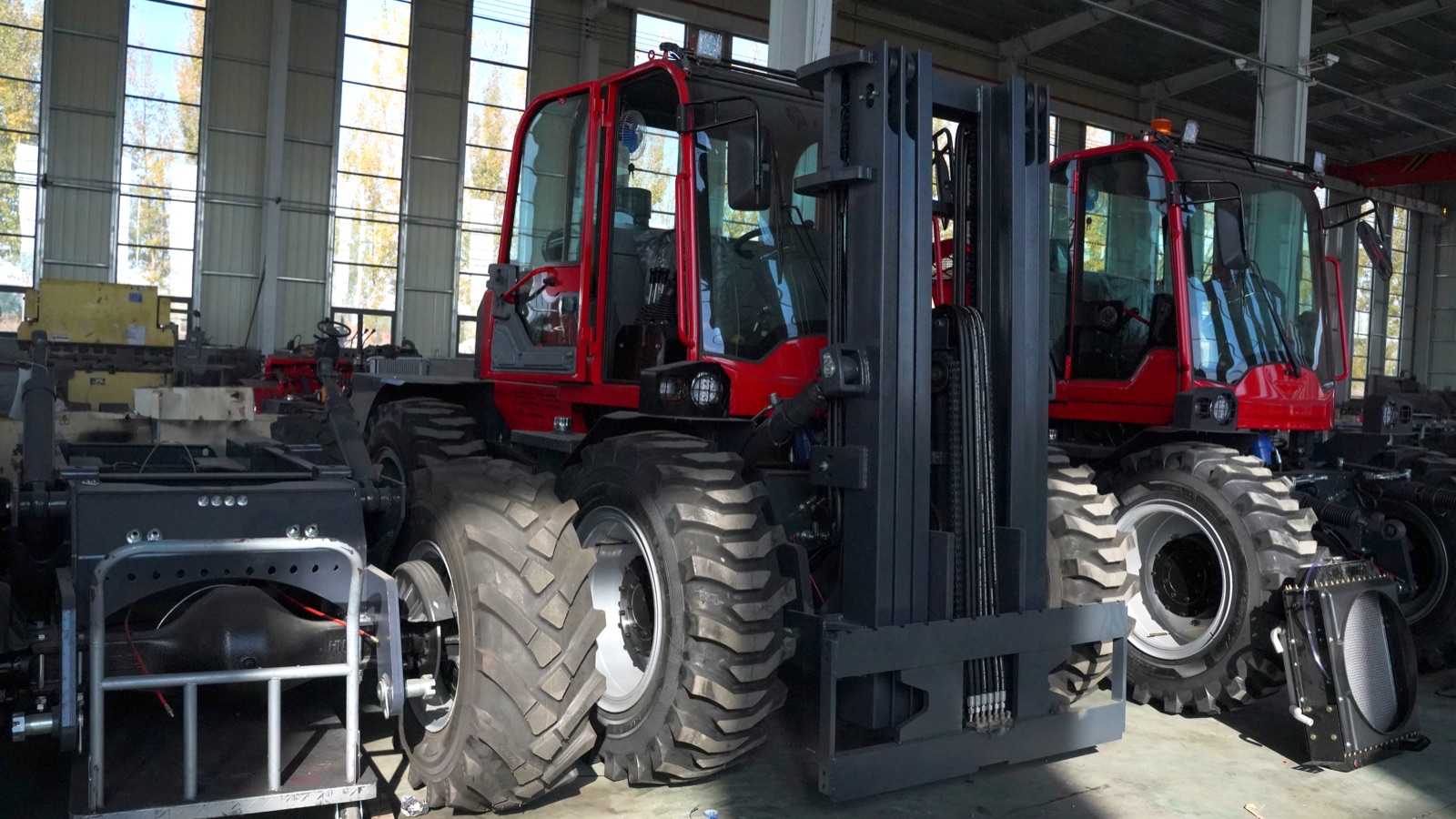
The shipment check should record the actual machine configuration before loading.
Three Heights That Buyers Should Keep Separate
The safest way to start is to label each number before comparing it.
| Height term | What it should describe | Why it can mislead |
|---|---|---|
| Lift height | How high the forks are designed to raise | It is not the machine's transport height |
| Overall machine height | A stated dimension for a representative assembled configuration | The highest point can change with cab, canopy, mast, lights or other options |
| Measured transport height | The actual height of the finished machine in the agreed shipping condition | It is useful only when the measurement point and removed parts are recorded |
| Container internal height | Space available after cargo has passed through the door | It may be higher than the door opening |
| Container door-opening height | The physical entrance clearance | It can vary by equipment owner and individual container |
For the BLANC-ELE 5 ton rough terrain forklift, the current public RT50 technical basis lists representative dimensions of 3,900 � 2,080 � 2,650 mm for rear-wheel steering and 4,400 � 2,085 � 2,650 mm for front-wheel steering. It also lists mast-lowered heights of 2,330 mm and 2,400 mm respectively.
Those are useful product-selection numbers. They are not a universal packing declaration.
For shipping, the supplier still needs to confirm which point creates the 2,650 mm overall height, whether any component will be removed, the resulting measured shipping dimensions and the reassembly requirement. A different mast, cabin or attachment can change the discussion.
A Real Question Behind This Article
In one actual export discussion, a freight forwarder asked whether a 5 ton rough terrain forklift could enter a 40HC container. Their concern was precise: the machine appeared to fit the container's internal height, but not the door height.
That is a useful buyer question because it does not assume the answer.
The correct next step is not to force a yes or no from a brochure. It is to put the final machine configuration, measured shipping condition and actual container specification on the same worksheet. If clearance is insufficient, the supplier and forwarder must review an approved alternative such as a different dismantling plan, loading method or equipment type. The method must be confirmed for that shipment; a photo from another order is not proof.
Use This Container-Clearance Worksheet Before Booking
This worksheet is the decision tool I recommend for importers, dealers and project buyers.
| Item to confirm | Value or evidence required | Confirmed by |
|---|---|---|
| Exact forklift model and steering layout | Model code and signed configuration | Supplier and buyer |
| Mast and cab/canopy | Type, lift height and highest fixed point | Supplier |
| Attachments and loose parts | Installed or packed separately | Supplier and buyer |
| Measured transport length, width and height | Photos showing the measurement points | Supplier |
| Dismantled components | Item list, protection method and reassembly instructions | Supplier |
| Booked container | Container type and equipment owner | Freight forwarder |
| Actual door width and height | Equipment specification or physical confirmation | Freight forwarder |
| Internal length, width and height | Equipment specification | Freight forwarder |
| Payload and floor suitability | Cargo weight and loading approval | Freight forwarder/loading team |
| Entry method and angle | Ramp, dock, crane or other approved method | Loading team |
| Blocking and lashing | Shipment-specific fixing plan | Loading team |
| Destination unloading | Available crane, dock, ramp and reassembly support | Buyer/consignee |
Do not leave the "measured transport dimensions" row as a catalogue copy. Ask for a photograph of the tape or measuring method at the highest point, especially when clearance is tight.
What Photos Should Be Collected
A useful evidence set is small and practical:
- full side view of the final machine
- front view showing maximum width
- highest-point measurement
- width measurement at the widest fixed point
- removed components before packing
- protected loose parts and labels
- machine at the container entrance
- blocking and lashing before the doors close
These images do not replace a packing list or forwarder's approval. They make the shipment record easier to check.
Our broader rough terrain forklift pre-shipment checklist covers configuration, documents, spare parts and loading evidence. The clearance worksheet here has a narrower purpose: preventing the wrong height comparison before the container is booked.
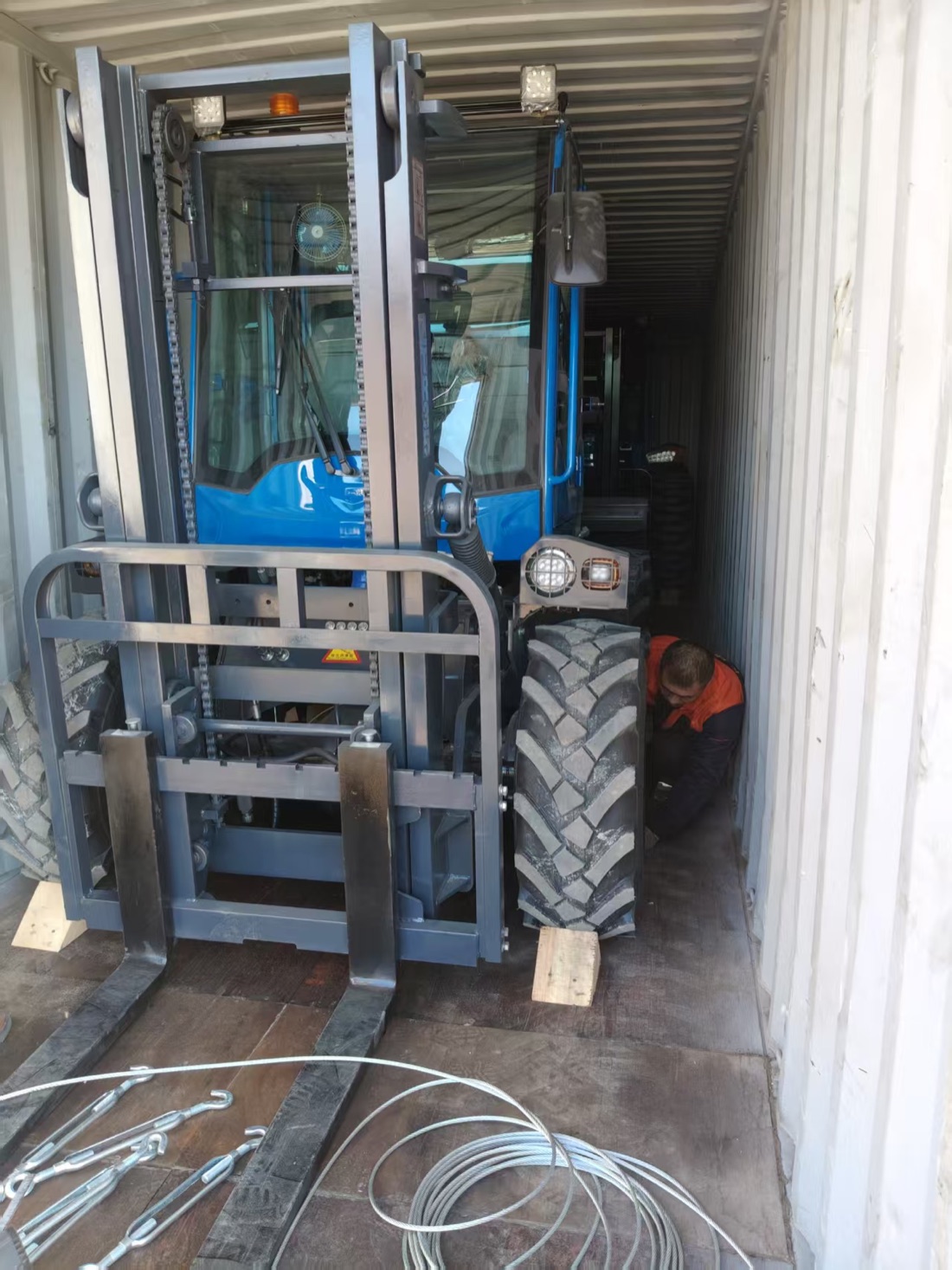
A loading photo records one shipment; it should not be treated as a universal container-fit rule.
Do Not Forget Width, Weight And The Entry Path
Height is often the first warning, but it is not the entire loading decision.
The actual transport width must clear the door and any entrance hardware. The total cargo weight must remain within the approved payload and loading plan. Tyre contact, floor loading, ramp angle and the relationship between the mast, cab and door frame can also affect entry.
Attachments add another layer. Long forks, a bucket, clamp, side-shift assembly or fork extension may be installed, removed or packed separately depending on the agreed plan. Record that condition before comparing dimensions.
This is the same reason a good quotation comparison should look beyond one visible number. The guide on comparing rough terrain forklift quotations explains why configuration, documents and shipment scope should be checked line by line.
What To Send BLANC-ELE For A Shipping Review
If container clearance is part of your buying decision, send us:
- required model or rated-load class
- steering preference if known
- mast type and lift height
- cab or canopy requirement
- attachments and fork length
- destination country and port
- order quantity
- preferred container type or forwarder's equipment note
- destination unloading constraints
We can then review the machine configuration and identify which transport measurements and packing details still need confirmation. Packing dimensions, dismantling and the loading method are confirmed only after the final configuration is selected.
You can compare the wider BLANC-ELE rough terrain forklift range or contact BLANC-ELE with the job-site and shipping details. The goal is not to promise container fit early. It is to remove the height ambiguity before booking and production decisions become harder to change.
References
- BLANC-ELE RT50 Series public technical specification and 5 ton product page, reviewed August 2026.
- Hapag-Lloyd, 40' Standard High Cube, including its equipment-variation note.
- OOCL, 40' High Cube container specifications.
- BLANC-ELE pre-shipment inspection and real export-loading image records.