
Some rough terrain forklift quotations look cheaper because they are incomplete.
They show a capacity, a model name and a price line, but they do not clearly state the mast, engine configuration, tire type, attachment plan, shipping term, spare-parts arrangement or assumptions behind the recommendation. For export buyers, that is risky.
The better way to compare quotations is to compare the configuration line by line first, then compare the commercial terms. A quote for a diesel 4WD rough terrain forklift should make the machine, jobsite assumptions, destination requirements and support boundaries clear enough for the buyer to understand what is included, what is optional and what still needs confirmation before order.
The Short Answer
Do not compare rough terrain forklift quotations only by the final number. First compare rated capacity, real load details, mast height, lowered mast height, fork length, tire type, engine and emission configuration, attachment preparation, shipping term, destination port, spare-parts package and warranty wording. Then check whether the supplier has written the assumptions clearly. A lower quote may be reasonable, but only if it covers the same machine configuration and the same export scope. If one quotation leaves out mast, attachments, destination-market requirements or shipping boundaries, ask for clarification before treating it as a real alternative.
Who This Matters For
This is mainly for overseas dealers, importers, contractors, farm and plantation buyers, rental fleets and outdoor project buyers who are comparing several suppliers before ordering a rough terrain forklift from China.
It is especially useful when the buyer is choosing between:
- a 3 ton or 3.5 ton rough terrain forklift for lighter outdoor handling;
- a 5 ton rough terrain forklift for heavier construction, farm, timber or yard work;
- a 7 ton rough terrain forklift for heavier loads where size, route and shipping method also matter;
- a standard fork configuration and a configuration with side shift, longer forks, bucket, cabin or other options.
If you are still preparing the first inquiry, start with this earlier guide: what information to send before asking for a rough terrain forklift quote. This article is the next step: how to compare quotations after several suppliers have replied.
Why The Lowest Visible Number Can Mislead Buyers
In rough terrain forklift export projects, the final quote is not just a price. It is a record of the selected machine and the assumptions behind it.
A quote may look attractive because it excludes details that another supplier included. For example:
- one quote includes a standard mast, while another includes a higher mast;
- one quote includes side shift or fork extensions, while another only lists standard forks;
- one quote assumes a standard diesel engine configuration, while another reviews destination-market emission requirements separately;
- one quote includes a cabin with A/C or heater, while another leaves cabin type unclear;
- one quote states FOB terms, while another gives a shipping discussion only after the destination port is confirmed;
- one quote includes recommended wear parts or documentation discussion, while another only lists the machine.
None of these differences automatically make one supplier better.
But they make direct comparison impossible until the line items are aligned.
The Quotation Comparison Matrix
Use this matrix before choosing a supplier.
| Quote Item | What To Compare | Why It Changes The Decision |
|---|---|---|
| Model and rated capacity | 3T, 3.5T, 5T, 7T and steering/layout notes | A capacity label alone does not show whether the machine fits the route, load center and duty cycle |
| Actual load assumption | Load weight, size, shape and daily maximum | The same rated capacity can behave differently with long, bulky or forward loads |
| Mast height | Standard lift height, optional mast height and lowered mast height | A higher mast may affect transport height and usable capacity at height |
| Forks and attachments | Standard forks, longer forks, side shift, bucket, clamp or fork positioner | Attachments can change front weight, hydraulic needs and working margin |
| Tire and ground condition | Off-road tires, site surface, mud, gravel, sand, slope and route width | Outdoor traction depends on real ground, not only the product photo |
| Engine and emission configuration | Standard engine, requested engine brand and destination-market requirement | Higher emission configurations should be quoted separately when required |
| Cabin and operator options | Open cabin, closed cabin, A/C, heater and visibility needs | Comfort options affect configuration, delivery planning and cost structure |
| Shipping term | FOB, CIF or other agreed term with destination port | CIF cannot be compared without route, port and shipping-date assumptions |
| Spare parts and documents | Wear parts, manuals, parts diagrams, packing list and invoice documents | Export buyers need support planning, especially in remote sites |
| Warranty and support wording | What is confirmed in the formal quotation and sales contract | Avoid assuming local technicians, instant service or unsupported promises |
The table is not meant to make buying slow. It makes the comparison honest.
If a quote is missing one of these fields, do not reject it immediately. Ask the supplier to clarify. Good suppliers may send a short first reply and then complete the configuration once the buyer provides the site details.
Start By Aligning The Machine Configuration
A useful quotation should identify the rough terrain forklift clearly.
For example, if a buyer is comparing a 3.5 ton machine and a 5 ton machine, the quote should not only say "3.5T" or "5T." It should also explain the engine configuration, mast, fork length, tire type, steering layout and any attachment assumptions.
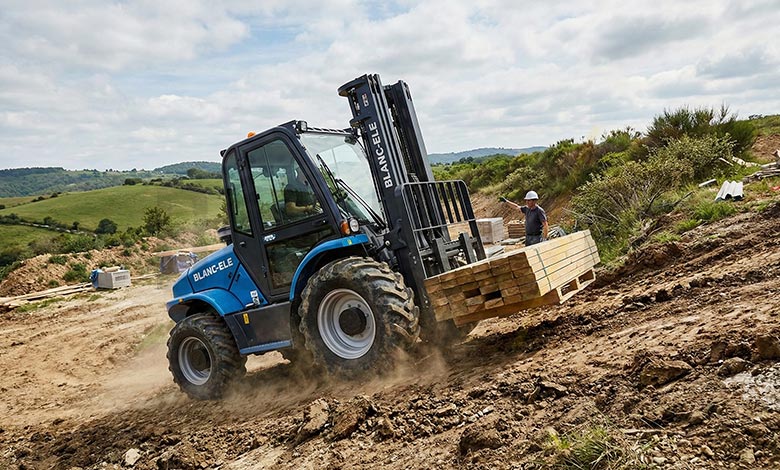
BLANC-ELE's own product materials treat these as configuration details, not decoration. The BLANC-ELE rough terrain forklift range is organized around practical outdoor applications, while model pages such as the 3.5 ton rough terrain forklift and 5 ton rough terrain forklift need to be connected back to the buyer's actual load and route.
This is why I prefer a quote that says:
"This configuration is based on your load, lift height, ground condition, destination port and attachment requirement."
That sentence is more useful than a bare price line.
Check The Mast And Attachment Assumptions Carefully
Mast and attachment details are common places where quotations become different without the buyer noticing.
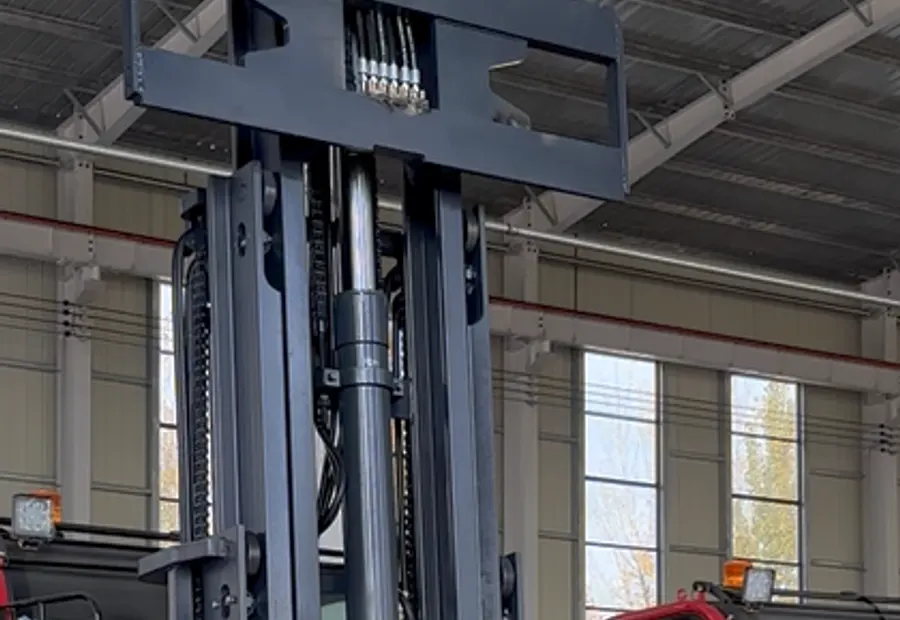
A standard mast may be enough for truck unloading or low stacking. A higher mast may be needed for racking, container-side loading or site storage. But higher lift height should be checked with load size, load center, lowered mast height and working route.
Attachments need the same attention.
Long forks, side shifters, fork positioners, buckets, clamps and crane jibs are not just accessories in a photo. They can affect visibility, front load, hydraulic requirements and usable capacity. If one quotation includes an attachment and another does not, the buyer is not comparing the same machine.
For a deeper attachment discussion, see the rough terrain forklift attachments and configurations guide.
Compare Shipping Terms Only After The Destination Is Clear
For export buyers, FOB and CIF are not just labels.
FOB quotation normally depends on the machine and export handling at the departure port. CIF also depends on the destination port, shipping route, vessel space and shipping-date assumptions. A supplier cannot give a reliable CIF comparison if the buyer only says "ship to my country."
Before comparing shipping terms, confirm:
- destination country and port;
- quantity;
- selected capacity and mast height;
- whether attachments or cabin are included;
- whether any parts need separate packing or loading review;
- document requirements for import clearance.
BLANC-ELE's rough terrain forklift FAQ uses the same logic: FOB/CIF quotation depends on model, destination port, mast height, attachment and emission requirement. That is a practical boundary, not a sales delay.
If shipping is important to your decision, use the rough terrain forklift quote page to send the destination port and configuration details together.
Be Careful With Engine And Emission Wording
Engine and emission details should be checked according to the destination market.
Some buyers need only a standard diesel configuration for their local use. Others may ask for a specific engine brand or a higher emission configuration. These requirements can affect price, lead time and document discussion, so they should not be assumed to be included in every base quote.
The safer question is:
"Is this engine and emission configuration suitable for my destination market, and is any higher requirement quoted separately?"
Avoid treating Stage V, Tier 4 Final or other local requirements as a default promise unless the exact configuration has been reviewed and quoted.
What A Better Supplier Reply Looks Like
A better quotation reply does not need to be long, but it should be complete enough to support a decision.
It should explain:
- which model and configuration are being quoted;
- which buyer inputs were used;
- which assumptions still need confirmation;
- what is included and what is optional;
- how mast, attachments, cabin and emission requirements affect the quote;
- whether FOB or CIF is being discussed;
- what spare-parts and warranty items should be confirmed in the formal quotation and sales contract.
This kind of reply helps the buyer compare value, not only cost.
It also protects the supplier. If the jobsite turns out to be soft mud, a narrow route, a higher stacking point or a different destination requirement, the quote should show whether that condition was considered before order.
A Practical Way To Ask For A Revised Quote
If you already have two or three quotations and they do not match, send a short clarification request like this:
Please revise the quotation so we can compare the same configuration. Confirm rated capacity, mast height, lowered mast height, fork length, tire type, engine/emission configuration, cabin, attachments, spare-parts recommendation, shipping term, destination port and items not included. Please also state which assumptions still need confirmation before order.
That message usually saves time.
It does not force the supplier to reveal private pricing logic. It simply asks for the quote to be complete enough for comparison.
My Supplier-Side Recommendation
When you compare rough terrain forklift quotations, build the comparison in two rounds.
First, align the machine and export scope.
Second, compare the commercial offer.
For BLANC-ELE buyers, the useful starting point is not "send a simple number." It is:
"Here is our load, ground, route, lift height, destination port and attachment plan. Please quote the matching rough terrain forklift configuration and show what is included."
That gives the supplier a fair chance to recommend the right 3T, 3.5T, 5T or 7T machine. It also helps the buyer avoid choosing a cheaper-looking quotation that leaves the real work problem unanswered.
References And Review Notes
- BLANC-ELE rough terrain forklift product materials and quotation/specification documents reviewed for model, mast, attachment, FOB/CIF and configuration-field logic.
- BLANC-ELE rough terrain forklift FAQ reviewed for FOB/CIF, dealer pricing, emission, warranty, spare-parts and shipping wording.
- Last reviewed: August 2026.