
The machine usually gets blamed first.
In export projects, that is not always fair.
After working with many overseas rough terrain forklift buyers, I have seen a common pattern: the forklift itself may be suitable for the job, but one missing filter, hose, sensor, tire, seal, or small wear part can stop the machine for days.
For a local buyer, that may be an inconvenience. The machine usually gets blamed first.
In export projects, that is not always fair.
After working with many overseas rough terrain forklift buyers, I have seen a common pattern: the forklift itself may be suitable for the job, but one missing filter, hose, sensor, tire, seal, or small wear part can stop the machine for days.
For a local buyer, that may be an inconvenience.
For an export buyer in a remote construction site, farm, quarry, brick yard, plantation, or dealer warehouse, it can become a real production problem.
That is why I like to discuss spare parts before the forklift ships, not after the first service problem appears.
The Short Answer
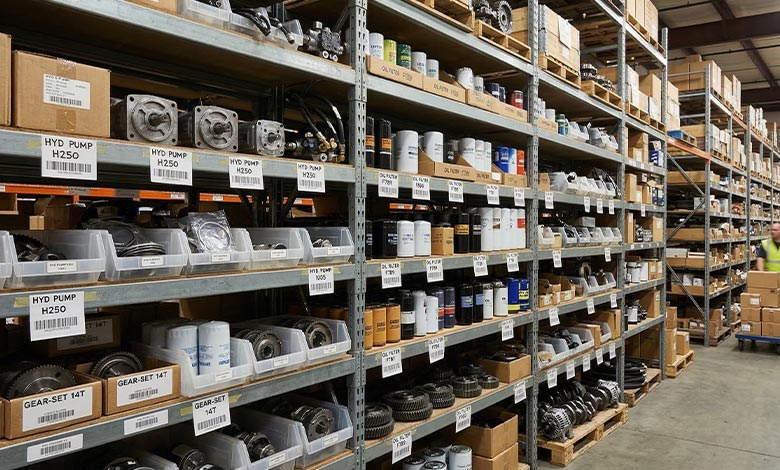
Spare parts planning reduces downtime because export buyers often face longer lead times, fewer local technicians, limited parts stock, and more difficult working conditions than buyers near the factory.
For rough terrain forklifts, the first spare parts discussion should not be random.
It should match:
- the job site
- daily working hours
- ground condition
- climate
- attachment use
- operator skill
- local service ability
- parts delivery time
- the buyer's plan for one machine or a fleet
A good spare parts plan does not mean buying every possible component.
It means preparing the parts most likely to affect operation, inspection, and basic service.
A Typical Export Situation
A buyer may import one rough terrain forklift for a construction project in a developing market.
The forklift arrives, the machine starts working, and the first few weeks look fine. It moves cement, blocks, pallets, steel, or agricultural material across outdoor ground. The buyer feels the choice was correct.
Then a small issue appears.
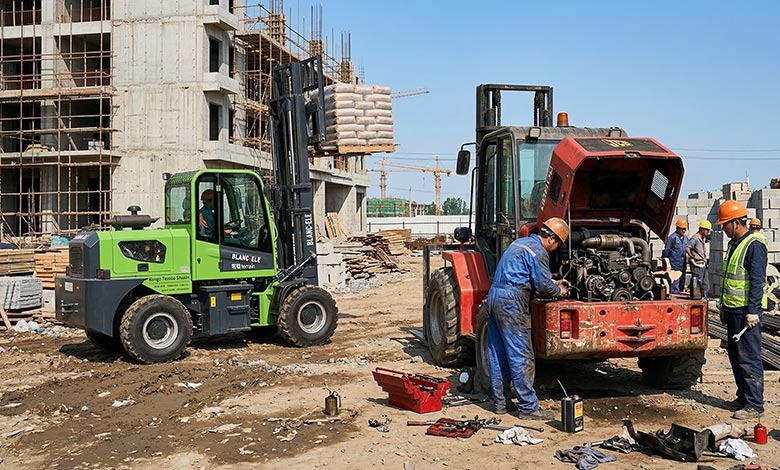
Maybe an air filter becomes dirty faster than expected because the site is dusty. Maybe a hydraulic hose is damaged by debris. Maybe a tire is cut by broken stone. Maybe a small electrical switch fails after hard outdoor use.
The machine is not useless.
But the part is not available locally.
Now the buyer has to identify the part, confirm the number, contact the supplier, wait for reply, arrange shipment, and pay for air delivery if the project is urgent.
The actual component may be small. The downtime is not.
This is why I always tell buyers: spare parts planning is not only an after-sales topic. It is part of the buying decision.
Why Export Buyers Face a Bigger Downtime Risk
Domestic buyers near a mature parts market may solve a small repair quickly. Export buyers often have a different reality.
They may work in areas where:
- there is no local rough terrain forklift dealer nearby
- general forklift parts are available, but special outdoor forklift parts are not
- mechanics are good with engines, but not familiar with the exact machine
- delivery from China takes time
- the forklift is used in dust, mud, heat, gravel, or long outdoor shifts
- one machine must cover many tasks because the buyer does not have a backup unit
In this situation, the question is not only:
"Is the forklift strong enough?"
It is also:
"If a common service part is needed, can the machine return to work quickly?"
For buyers who are still choosing the machine itself, I usually recommend reading this first: Most Forklift Problems Actually Start Before the Machine Arrives.
Many downtime problems are easier to prevent before shipment than to solve after delivery.
The Spare Parts List Should Match the Job, Not Just the Model
Some buyers ask me for a "standard spare parts list."
That can be a starting point, but it is not enough.
Two buyers may order a similar rough terrain forklift, but their parts risk can be very different.
| Buyer Situation | Parts Planning Focus |
|---|---|
| Dusty construction site | air filters, fuel filters, cleaning access, radiator care |
| Farm or plantation | filters, hydraulic hoses, tire condition, grease points |
| Brick yard or block factory | tires, hose protection, filters, wear parts around the mast and forks |
| Dealer importing several units | fast-moving service parts, basic stock, clear part numbers |
| Remote site with no backup machine | service kits and selected high-risk parts before shipment |
This is why I prefer to ask about the work first.
The forklift model tells me what parts fit the machine.
The working condition tells me which parts matter most.
Parts I Usually Discuss Before Shipment
Every project is different, but for rough terrain forklift export buyers, these groups often deserve attention.
Filters
Filters are simple, but they are important.
In dusty outdoor work, air filters and fuel filters may need more attention than a buyer expects. If the operator keeps working with a dirty filter, performance and service life can be affected.
For many export buyers, filters are the easiest parts to prepare early because they are relatively small and useful for regular maintenance.
Hydraulic Hoses and Sealing Parts
Rough terrain forklifts often work around gravel, broken concrete, branches, pallets, bricks, steel material, or farm residue.
Hydraulic hoses should be checked regularly, especially in areas exposed to rubbing, impact, or bending. A damaged hose can stop work quickly.
I do not suggest buyers guess every possible hose. But for remote projects, it is worth discussing which hoses and sealing items are more practical to keep nearby.
Tires and Tire-Related Risk
Outdoor tire problems are common because the ground is not controlled like a warehouse floor.
Sharp stone, broken brick, metal scrap, rough concrete, muddy ruts, and long loaded travel can all shorten tire life.
The right tire discussion should happen before order, and the spare parts plan should include how the buyer will handle tire damage locally.
For more tire-specific thinking, see Why 4WD Forklift Tires Matter More Than Many Buyers Expect.
Electrical Small Parts
Small electrical parts are easy to ignore until the machine cannot start, move, lift, or signal correctly.
For export projects, I like to confirm whether the buyer has local technicians who can check basic wiring, fuses, switches, relays, and sensors.
The goal is not to make the buyer repair everything alone.
The goal is to avoid losing several days because of a small part that could have been prepared or identified earlier.
Wear Parts Around the Mast, Forks, and Steering Areas
Outdoor work creates vibration and impact.
Mast rollers, chains, pins, bushings, fork-related wear points, and steering-related items should be inspected as part of routine service. The exact parts depend on the machine configuration and working condition, so they should be confirmed with the final specification sheet and supplier parts list.
If the buyer uses attachments, the discussion becomes even more important.
Attachments can change load behavior, hydraulic use, visibility, and daily stress on the machine. If you are still deciding between forks, side shift, fork positioner, clamps, or bucket, this guide may help: Rough Terrain Forklift Attachments and Configurations.
What I Ask Buyers Before Recommending Spare Parts
Before I suggest a spare parts set, I normally ask questions like these:
- How many hours will the forklift work per day?
- Is the site dusty, muddy, sandy, rocky, or mixed?
- Is the forklift used for construction, farming, brick, stone, timber, containers, or general yard work?
- Will the buyer have one machine or several machines?
- Is there a local mechanic who can do basic service?
- Are filters, oils, tires, hoses, and general tools available locally?
- How long does international delivery usually take to the buyer's location?
- Does the buyer need parts for one project, one season, or long-term dealer stock?
These questions are not complicated, but they help avoid a blind parts list.
For example, a dealer buying several units may need more standardized stock and clear part-number management. A small farm buyer may need a practical service kit and guidance for regular inspection. A remote construction site may need a more cautious plan because one stopped machine can delay other work.
Do Not Overbuy Random Parts
Some buyers go to the other extreme and ask for a very large parts package.
That is not always the best choice.
Unused parts take storage space, require management, and may not match the parts that actually fail first. A better plan is to think in three levels.
| Level | What It Means | Example Focus |
|---|---|---|
| Regular service | Parts used during routine maintenance | filters, basic service items |
| Higher-risk outdoor work | Parts more exposed to dust, impact, vibration, or rough ground | hoses, seals, tires, selected wear parts |
| Long lead-time risk | Parts that are hard to buy locally and may stop work if unavailable | confirmed model-specific parts |
This keeps the plan practical.
The buyer prepares what is likely to be useful, while the supplier helps confirm what must match the exact forklift configuration.
Dealers Should Plan Differently From One-Machine Buyers
Dealers and importers have a different responsibility.
If they sell rough terrain forklifts in a local market, they are not only selling the machine. They are also building customer confidence.
For a dealer, spare parts planning should include:
- common service items for the models being sold
- clear part numbers and photos
- a simple reorder process
- technician training for basic inspection
- customer guidance for daily checks
- stock planning based on the number of machines in the market
A dealer who can answer basic after-sales questions quickly will usually be more trusted than a dealer who only focuses on the first sale.
For this reason, spare parts planning is also part of brand building.
What to Confirm With the Supplier
Before shipment, I suggest buyers confirm these items with the supplier:
- final machine model and configuration
- engine, mast, tire, and attachment configuration
- recommended service interval and inspection points
- first spare parts list
- part numbers or clear part identification method
- which parts are model-specific
- which parts can usually be sourced locally
- packaging method for spare parts shipped with the machine
- how to request parts later with photos, nameplate, and machine information
This is especially important when the forklift is customized with a special mast, tire, attachment, fork length, or hydraulic option.
Small configuration differences can affect parts selection.
Spare Parts Planning Also Helps Buyers Choose the Right Supplier
Many buyers compare forklifts by appearance, capacity, and basic configuration.
Those points matter, but they do not show the full support picture.
Before working with a supplier, ask:
- Can they explain the recommended spare parts clearly?
- Can they identify parts from photos and machine information?
- Do they understand outdoor job-site conditions?
- Do they ask about the application before recommending parts?
- Can they support the buyer after the machine arrives?
This is one reason I do not like treating rough terrain forklifts like simple catalog items.
For outdoor work, the machine, configuration, application, spare parts, and service plan should be discussed together.
You can also compare this with another ownership-cost topic here: The Real Reason Some Rough Terrain Forklifts Become Expensive to Maintain.
My Practical Recommendation
If you are importing a rough terrain forklift from China, do not wait until a problem happens before thinking about spare parts.
Before order, send the supplier:
- site photos and videos
- ground condition
- main load type
- working hours
- climate and dust condition
- attachment requirements
- local maintenance ability
- expected delivery time for parts
Then ask for a practical spare parts plan based on your application, not just a copied list.
At BLANC-ELE, we prefer to discuss the machine and after-sales plan together, especially for construction sites, farms, plantations, brick yards, stone yards, and dealers in developing markets.
If you are still choosing the forklift itself, you can start from our rough terrain forklifts product page or contact us with your working condition.
The right forklift helps the job start.
The right spare parts plan helps the job continue.
References
- OSHA, 29 CFR 1910.178 - Powered Industrial Trucks
- BLANC-ELE rough terrain forklift product pages, application discussions, and supplier-side export support experience
For an export buyer in a remote construction site, farm, quarry, brick yard, plantation, or dealer warehouse, it can become a real production problem.
That is why I like to discuss spare parts before the forklift ships, not after the first service problem appears.
The Short Answer
Spare parts planning reduces downtime because export buyers often face longer lead times, fewer local technicians, limited parts stock, and more difficult working conditions than buyers near the factory.
For rough terrain forklifts, the first spare parts discussion should not be random.
It should match:
- the job site
- daily working hours
- ground condition
- climate
- attachment use
- operator skill
- local service ability
- parts delivery time
- the buyer's plan for one machine or a fleet
A good spare parts plan does not mean buying every possible component.
It means preparing the parts most likely to affect operation, inspection, and basic service.
A Typical Export Situation
A buyer may import one rough terrain forklift for a construction project in a developing market.
The forklift arrives, the machine starts working, and the first few weeks look fine. It moves cement, blocks, pallets, steel, or agricultural material across outdoor ground. The buyer feels the choice was correct.
Then a small issue appears.
Maybe an air filter becomes dirty faster than expected because the site is dusty. Maybe a hydraulic hose is damaged by debris. Maybe a tire is cut by broken stone. Maybe a small electrical switch fails after hard outdoor use.
The machine is not useless.
But the part is not available locally.
Now the buyer has to identify the part, confirm the number, contact the supplier, wait for reply, arrange shipment, and pay for air delivery if the project is urgent.
The actual component may be small. The downtime is not.
This is why I always tell buyers: spare parts planning is not only an after-sales topic. It is part of the buying decision.
Why Export Buyers Face a Bigger Downtime Risk
Domestic buyers near a mature parts market may solve a small repair quickly. Export buyers often have a different reality.
They may work in areas where:
- there is no local rough terrain forklift dealer nearby
- general forklift parts are available, but special outdoor forklift parts are not
- mechanics are good with engines, but not familiar with the exact machine
- delivery from China takes time
- the forklift is used in dust, mud, heat, gravel, or long outdoor shifts
- one machine must cover many tasks because the buyer does not have a backup unit
In this situation, the question is not only:
"Is the forklift strong enough?"
It is also:
"If a common service part is needed, can the machine return to work quickly?"
For buyers who are still choosing the machine itself, I usually recommend reading this first: Most Forklift Problems Actually Start Before the Machine Arrives.
Many downtime problems are easier to prevent before shipment than to solve after delivery.
The Spare Parts List Should Match the Job, Not Just the Model
Some buyers ask me for a "standard spare parts list."
That can be a starting point, but it is not enough.
Two buyers may order a similar rough terrain forklift, but their parts risk can be very different.
| Buyer Situation | Parts Planning Focus |
|---|---|
| Dusty construction site | air filters, fuel filters, cleaning access, radiator care |
| Farm or plantation | filters, hydraulic hoses, tire condition, grease points |
| Brick yard or block factory | tires, hose protection, filters, wear parts around the mast and forks |
| Dealer importing several units | fast-moving service parts, basic stock, clear part numbers |
| Remote site with no backup machine | service kits and selected high-risk parts before shipment |
This is why I prefer to ask about the work first.
The forklift model tells me what parts fit the machine.
The working condition tells me which parts matter most.
Parts I Usually Discuss Before Shipment
Every project is different, but for rough terrain forklift export buyers, these groups often deserve attention.
Filters
Filters are simple, but they are important.
In dusty outdoor work, air filters and fuel filters may need more attention than a buyer expects. If the operator keeps working with a dirty filter, performance and service life can be affected.
For many export buyers, filters are the easiest parts to prepare early because they are relatively small and useful for regular maintenance.
Hydraulic Hoses and Sealing Parts
Rough terrain forklifts often work around gravel, broken concrete, branches, pallets, bricks, steel material, or farm residue.
Hydraulic hoses should be checked regularly, especially in areas exposed to rubbing, impact, or bending. A damaged hose can stop work quickly.
I do not suggest buyers guess every possible hose. But for remote projects, it is worth discussing which hoses and sealing items are more practical to keep nearby.
Tires and Tire-Related Risk
Outdoor tire problems are common because the ground is not controlled like a warehouse floor.
Sharp stone, broken brick, metal scrap, rough concrete, muddy ruts, and long loaded travel can all shorten tire life.
The right tire discussion should happen before order, and the spare parts plan should include how the buyer will handle tire damage locally.
For more tire-specific thinking, see Why 4WD Forklift Tires Matter More Than Many Buyers Expect.
Electrical Small Parts
Small electrical parts are easy to ignore until the machine cannot start, move, lift, or signal correctly.
For export projects, I like to confirm whether the buyer has local technicians who can check basic wiring, fuses, switches, relays, and sensors.
The goal is not to make the buyer repair everything alone.
The goal is to avoid losing several days because of a small part that could have been prepared or identified earlier.
Wear Parts Around the Mast, Forks, and Steering Areas
Outdoor work creates vibration and impact.
Mast rollers, chains, pins, bushings, fork-related wear points, and steering-related items should be inspected as part of routine service. The exact parts depend on the machine configuration and working condition, so they should be confirmed with the final specification sheet and supplier parts list.
If the buyer uses attachments, the discussion becomes even more important.
Attachments can change load behavior, hydraulic use, visibility, and daily stress on the machine. If you are still deciding between forks, side shift, fork positioner, clamps, or bucket, this guide may help: Rough Terrain Forklift Attachments and Configurations.
What I Ask Buyers Before Recommending Spare Parts
Before I suggest a spare parts set, I normally ask questions like these:
- How many hours will the forklift work per day?
- Is the site dusty, muddy, sandy, rocky, or mixed?
- Is the forklift used for construction, farming, brick, stone, timber, containers, or general yard work?
- Will the buyer have one machine or several machines?
- Is there a local mechanic who can do basic service?
- Are filters, oils, tires, hoses, and general tools available locally?
- How long does international delivery usually take to the buyer's location?
- Does the buyer need parts for one project, one season, or long-term dealer stock?
These questions are not complicated, but they help avoid a blind parts list.
For example, a dealer buying several units may need more standardized stock and clear part-number management. A small farm buyer may need a practical service kit and guidance for regular inspection. A remote construction site may need a more cautious plan because one stopped machine can delay other work.
Do Not Overbuy Random Parts
Some buyers go to the other extreme and ask for a very large parts package.
That is not always the best choice.
Unused parts take storage space, require management, and may not match the parts that actually fail first. A better plan is to think in three levels.
| Level | What It Means | Example Focus |
|---|---|---|
| Regular service | Parts used during routine maintenance | filters, basic service items |
| Higher-risk outdoor work | Parts more exposed to dust, impact, vibration, or rough ground | hoses, seals, tires, selected wear parts |
| Long lead-time risk | Parts that are hard to buy locally and may stop work if unavailable | confirmed model-specific parts |
This keeps the plan practical.
The buyer prepares what is likely to be useful, while the supplier helps confirm what must match the exact forklift configuration.
Dealers Should Plan Differently From One-Machine Buyers
Dealers and importers have a different responsibility.
If they sell rough terrain forklifts in a local market, they are not only selling the machine. They are also building customer confidence.
For a dealer, spare parts planning should include:
- common service items for the models being sold
- clear part numbers and photos
- a simple reorder process
- technician training for basic inspection
- customer guidance for daily checks
- stock planning based on the number of machines in the market
A dealer who can answer basic after-sales questions quickly will usually be more trusted than a dealer who only focuses on the first sale.
For this reason, spare parts planning is also part of brand building.
What to Confirm With the Supplier
Before shipment, I suggest buyers confirm these items with the supplier:
- final machine model and configuration
- engine, mast, tire, and attachment configuration
- recommended service interval and inspection points
- first spare parts list
- part numbers or clear part identification method
- which parts are model-specific
- which parts can usually be sourced locally
- packaging method for spare parts shipped with the machine
- how to request parts later with photos, nameplate, and machine information
This is especially important when the forklift is customized with a special mast, tire, attachment, fork length, or hydraulic option.
Small configuration differences can affect parts selection.
Spare Parts Planning Also Helps Buyers Choose the Right Supplier
Many buyers compare forklifts by appearance, capacity, and basic configuration.
Those points matter, but they do not show the full support picture.
Before working with a supplier, ask:
- Can they explain the recommended spare parts clearly?
- Can they identify parts from photos and machine information?
- Do they understand outdoor job-site conditions?
- Do they ask about the application before recommending parts?
- Can they support the buyer after the machine arrives?
This is one reason I do not like treating rough terrain forklifts like simple catalog items.
For outdoor work, the machine, configuration, application, spare parts, and service plan should be discussed together.
You can also compare this with another ownership-cost topic here: The Real Reason Some Rough Terrain Forklifts Become Expensive to Maintain.
My Practical Recommendation
If you are importing a rough terrain forklift from China, do not wait until a problem happens before thinking about spare parts.
Before order, send the supplier:
- site photos and videos
- ground condition
- main load type
- working hours
- climate and dust condition
- attachment requirements
- local maintenance ability
- expected delivery time for parts
Then ask for a practical spare parts plan based on your application, not just a copied list.
At BLANC-ELE, we prefer to discuss the machine and after-sales plan together, especially for construction sites, farms, plantations, brick yards, stone yards, and dealers in developing markets.
If you are still choosing the forklift itself, you can start from our rough terrain forklifts product page or contact us with your working condition.
The right forklift helps the job start.
The right spare parts plan helps the job continue.
References
- OSHA, 29 CFR 1910.178 - Powered Industrial Trucks
- BLANC-ELE rough terrain forklift product pages, application discussions, and supplier-side export support experience