
A 5-ton forklift is not a five-ton machine. The first number normally describes the load class; it does not tell an importer the complete weight that must be moved, unloaded, or supported on site. Confusing rated capacity with operating weight can lead to the wrong trailer, crane, ramp, floor-loading assumption, or shipping plan.
The Short Answer: One Number Describes the Load, the Other Describes the Machine
Rated capacity describes how much a forklift is designed to lift under stated conditions, including a specified load center, lift height, mast, forks, and attachments. Operating weight describes the approximate weight of the forklift itself in a defined working configuration. They are not interchangeable. For transport and unloading planning, ask the supplier for the final configured machine weight, transport dimensions, removed or loose parts, and lifting or unloading instructions. For load handling, use the confirmed data plate and capacity information for the delivered configuration. Never calculate a transport plan from the model's tonnage label alone.
This distinction matters most to importers, equipment dealers, project procurement teams, and contractors arranging inland transport or unloading. Before asking for a final recommendation, prepare these buyer inputs:
- required load weight, dimensions, and load-center position;
- maximum lift height and preferred mast type;
- forks, side shift, fork positioner, clamp, or other attachment;
- cabin or canopy requirement;
- destination port and inland delivery route;
- unloading method and the rated capacity of the receiving equipment;
- site surface, ramp, bridge, floor, or ground limits;
- destination-market engine and emission requirements.
Rated Capacity Is Not the Forklift's Own Weight
A forklift's rated capacity is conditional. It applies to the configuration and rating conditions stated by the manufacturer. Load size, load-center distance, lift height, mast, forks, and attachments can all affect the capacity available in actual use.
Operating weight answers a different question: approximately how much does the machine itself weigh in the stated configuration? This is the number that usually matters when a freight forwarder, trailer operator, crane contractor, or site manager asks about the machine being transported or received.
The examples below come from current BLANC-ELE technical source sheets. They show why the model class cannot be used as a substitute for machine weight.
Representative source-sheet comparison
- RT30 — 3,000 kg rated capacity; approximately 4,390 kg operating weight. A 3-ton class forklift is not a 3,000 kg transport item.
- RT35R — 3,500 kg rated load; approximately 4,400 kg operating weight. The load rating and machine weight are separate specification fields.
- RT50 — 5,000 kg rated capacity; approximately 5,700 kg operating weight. The model class alone is not enough for trailer or unloading selection.
- RT70 — 7,000 kg capacity class; approximately 6,300 kg operating weight. Capacity class may be higher than the machine's approximate operating weight; final configuration still requires confirmation.
These figures are representative source-sheet values, not final shipment declarations. A buyer should not copy them into a transport booking without confirming the exact machine configuration.
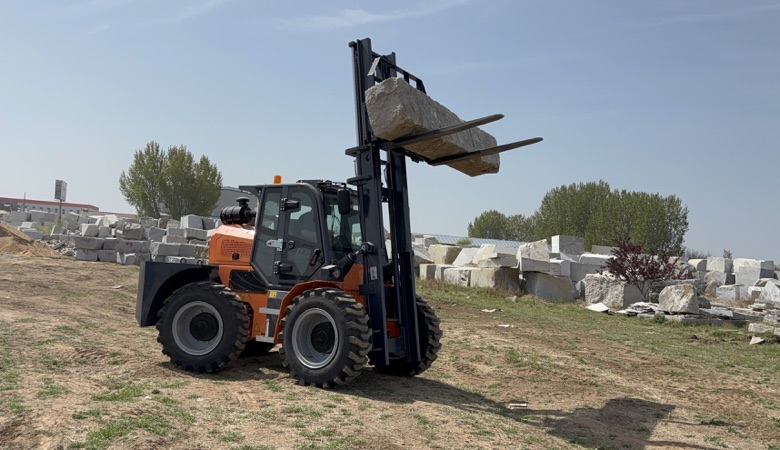
A real BLANC-ELE RT50 application photo. The image shows the machine and working environment; the delivered machine's data plate and final documentation remain the authority for capacity.
Why the Final Machine Weight Can Change
Two forklifts from the same capacity class may not have the same final weight. The quoted operating weight should be tied to a defined configuration, not treated as a permanent number for every version.
Common variables include:
- mast type and maximum lift height;
- fork length and fork carriage;
- side shift, fork positioner, clamp, or other attachment;
- enclosed cabin versus canopy configuration;
- tyre selection;
- engine and transmission configuration;
- counterweight and chassis configuration;
- optional guards, work lights, or other equipment;
- whether parts are installed, removed, or packed separately for transport.
This is also why a brochure value and a final transport document can serve different stages of the buying process. A brochure helps with early comparison. The final configured machine information supports the freight, unloading, and site plan.
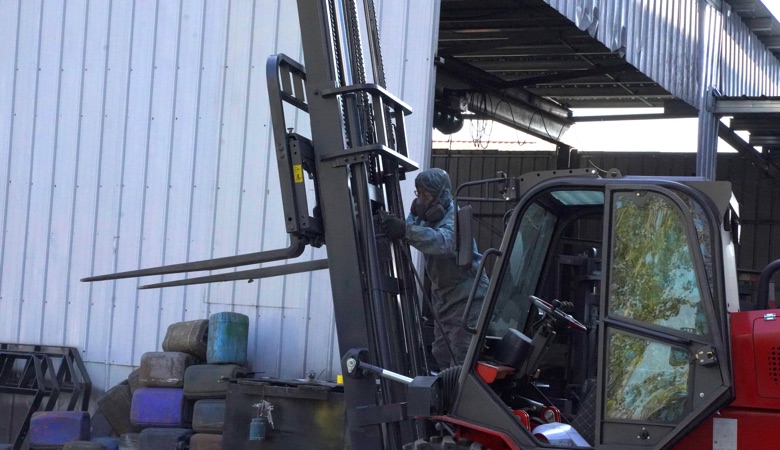
Configuration details should be checked before the final weight and transport arrangement are confirmed.
Use a Weight Reconciliation Worksheet Before Booking
The simplest way to prevent confusion is to keep the lifting question and the logistics question in the same worksheet, but on separate lines.
Use this nine-point reconciliation checklist:
- Rated capacity — establishes the nominal load class. Request the technical sheet and confirm the final data plate.
- Load center — defines a condition behind the capacity rating. Reconcile the technical sheet and data plate with the actual load details.
- Maximum lift height and mast — may affect rated configuration and transport height. Request the final configuration list.
- Forks and attachments — can affect both capacity and machine weight. Confirm the attachment model, weight, and approved capacity information.
- Approximate operating weight — supports early logistics planning. Use the current technical sheet for the proposed configuration.
- Final configured machine weight — supports final transport and unloading decisions. Obtain supplier confirmation for the ordered machine.
- Transport condition — clarifies installed, folded, removed, or loose items. Request the packing list, loading plan, and transport dimensions.
- Unloading method — prevents selecting receiving equipment by guesswork. Obtain a rated crane, ramp, dock, or recovery plan from the responsible contractor.
- Site limits — checks whether the route and operating area are suitable. Obtain buyer or site-engineer confirmation.
The worksheet creates a useful audit trail. If a mast, attachment, or cabin changes after the first quotation, the buyer can see which weight and capacity fields must be reconfirmed.
What to Confirm Before Transport or Unloading
For a preliminary quote, provide the intended load, lift height, attachment, operating terrain, and destination. For the final logistics plan, ask for configuration-specific information rather than relying on the product name.
At minimum, confirm:
- the exact model and ordered configuration;
- approximate operating weight for that configuration;
- final transport dimensions and transport condition;
- whether forks, mast components, cabin parts, or accessories are shipped separately;
- the packing list and any available loading or lifting instructions;
- the rated capacity and suitability of the receiving equipment;
- route, ramp, bridge, floor, and ground restrictions identified by the responsible logistics or site team.
The unloading plan must be made by competent personnel using suitable, rated equipment and the final shipment information. An approximate brochure weight is not an unloading instruction.
If container suitability is part of the decision, read our guide to 40HC container clearance for rough terrain forklifts. It explains why door clearance, packing condition, mast arrangement, and loading method must be considered together.
What Operating Weight Cannot Prove
Operating weight does not prove that a forklift can safely lift a particular load. It also does not prove that a trailer, crane, ramp, floor, or road is suitable.
For load handling, check the delivered machine's data plate, load center, lift height, mast, forks, and attachments. OSHA's powered industrial truck guidance similarly distinguishes truck weight from capacity and advises operators to understand the nameplate information. It also notes that attachments and changes in load size, position, or weight distribution can affect available capacity.
For transport and site engineering, use the final machine and shipment information together with the limits specified by the responsible carrier, lifting contractor, or site engineer. Local requirements may differ by country and project.
How to Request the Final Figure from BLANC-ELE
Start by reviewing the BLANC-ELE rough terrain forklift range. Buyers comparing heavier outdoor applications can also review the 5-ton rough terrain forklift and 7-ton 4WD rough terrain forklift pages.
Then send the load details, lift height, attachment, cabin preference, destination, and unloading method. We can use those inputs to identify the proposed configuration and confirm which weight information is available for quotation and logistics planning. Emission configurations are quoted according to destination-market requirements.
If you are still comparing specification sheets, use our guide on how to read a rough terrain forklift specification sheet before requesting a final configuration.
Contact BLANC-ELE for an FOB quotation and include your transport and unloading constraints. The useful question is not only “What is the forklift's tonnage?” It is “What will this exact machine weigh and look like when it reaches my site?”
References
- BLANC-ELE RT30, RT35R, RT50, and RT70 technical specification source sheets, reviewed September 22, 2026.
- OSHA Powered Industrial Trucks eTool: Nameplate.
- OSHA 29 CFR 1910.178: Powered Industrial Trucks.
Last reviewed: September 22, 2026.