When buyers ask me to recommend a rough terrain forklift, many of them start with capacity:
"I need a 3 ton forklift."
"I need a 5 ton forklift."
"Which capacity do you suggest?"
These are normal questions. Capacity is important.
But for rough terrain forklifts, I often ask one question before I talk too much about tonnage:
"What attachment will you use?"
Because the attachment can change the whole selection.
A forklift with standard forks and a forklift with a bucket, bale clamp, crane jib, fork extensions, or side shift may look like the same machine from far away. But in real work, they do not handle the load in the same way.
The attachment can affect load center, hydraulic requirement, mast choice, visibility, machine balance, tire pressure on the ground, and even the capacity range we should recommend.
So if you are buying a rough terrain forklift for construction sites, farms, plantations, stone yards, brick factories, or outdoor material handling, do not leave the attachment discussion until the end.
Discuss it before you choose capacity.
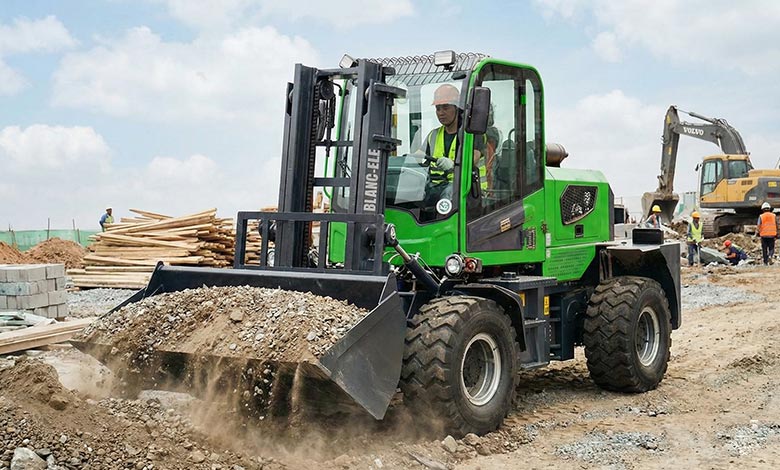
If you are still preparing your first inquiry, you may also read our guide on rough terrain forklift attachments and configurations.
Why Attachments Change More Than The Front Of The Forklift
Many buyers think an attachment is just something installed in front of the forklift.
In daily work, it is more than that.
An attachment can change:
- Where the load sits
- How far the load moves away from the mast
- How the operator sees the load
- How much hydraulic function is needed
- How the forklift turns in a narrow space
- How the load behaves on uneven ground
- How much working margin the machine should have
For example, a pallet of materials placed close to the mast is one situation.
A bucket full of loose material is another situation.
A long load on fork extensions is another situation again.
The rated capacity printed on a brochure does not automatically answer all of these cases.
That is why I prefer to know the attachment plan before recommending the forklift capacity.
The Real Question Is Not Only "How Heavy Is The Load?"
When buyers talk about capacity, they often give me a load weight.
That is useful, but I also need to know how the load is carried.
For attachment work, I usually ask:
- Is the load palletized or loose?
- Is the load long, wide, round, or irregular?
- Will the load center move forward?
- Will the forklift use fork extensions?
- Will a clamp hold the load from the side?
- Will a bucket carry loose material?
- Will a crane jib lift from a hook point?
- Will side shift be needed for narrow or uneven sites?
These questions are not small details.
They decide whether the forklift has enough working margin in real operation.
OSHA's powered industrial truck guidance also treats load composition, load center, and attachments as important safety and capacity factors. OSHA 1910.178 says modifications or additions that affect capacity and safe operation require manufacturer approval, and front-end attachments should be identified in the truck markings when they are not factory installed.
That is the same practical logic we use in supplier discussions:
If an attachment changes the job, it should be discussed before the order.
Dive Deeper: A Typical Farm Buyer With A Bucket
A typical farm or plantation buyer may start with a very simple request:
"We need a rough terrain forklift for pallets and farm work."
At first, standard forks may sound enough.
But after asking more questions, the real work becomes clearer:
- The buyer wants to move fertilizer bags.
- The forklift may also handle loose soil or feed.
- During busy season, the machine may need to clean or move bulk material.
- The ground can be soft after rain.
- The buyer may want a bucket later.
Now the selection changes.
The bucket is not just a small option. It changes how the material sits in front of the machine.
Loose material can shift.
The load may sit farther forward.
The operator may work on uneven farm ground.
The forklift may need different hydraulic preparation and a stronger working margin than a simple pallet-only job.
If the buyer tells the supplier about the bucket after the machine is already produced, the solution may become less clean.
But if we know this before production, we can discuss the right configuration from the beginning.
What Looks Like A Simple Attachment And What It Actually Changes
| Attachment | What buyers often think | What should be checked before order |
|---|---|---|
| Fork extensions | "I only need longer forks" | Load center, cargo length, fork strength, working route |
| Bucket | "I want to move loose material" | Material weight, hydraulic need, visibility, ground condition |
| Bale clamp | "I need to handle bales" | Bale size, clamp force, load shape, farm ground |
| Side shift | "It helps alignment" | Hydraulic function, mast choice, narrow-area operation |
| Crane jib | "I need lifting flexibility" | Hook position, load swing, lifting height, rated load at reach |
| Fork positioner | "It saves time" | Pallet sizes, hydraulic function, daily use frequency |
This is why I do not treat attachments as a final decoration.
They are part of the forklift selection.
Side Shift Can Be More Important Than Buyers Expect
Side shift is one of the most common attachments buyers ask about.
On smooth warehouse floors, the benefit is easy to understand:
The operator can move the forks left or right without repositioning the whole forklift.
But on rough terrain sites, side shift can become even more practical.
When the ground is uneven, muddy, narrow, or full of obstacles, repositioning the whole machine is not always easy. A small correction at the mast can reduce repeated steering and improve alignment.
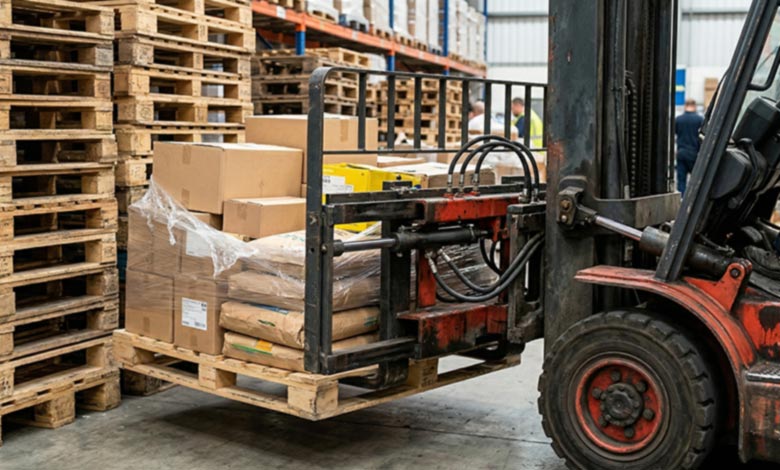
But side shift still needs to be discussed early because it may affect:
- Mast configuration
- Hydraulic lines
- Attachment weight
- Load center
- Visibility
- Maintenance points
So I usually ask buyers:
"Do you need to align loads in tight spaces, or is standard fork positioning enough?"
The answer can change the recommended configuration.
Fork Extensions Can Make A Normal Load Less Normal
Fork extensions are another detail many buyers underestimate.
They may say:
"The load is not very heavy. I just need longer forks."
But longer forks can move the load center forward, especially when the cargo is long or not supported correctly.
This can make the forklift feel different from a standard fork operation.
Before choosing capacity, the buyer should confirm:
- Cargo length
- Cargo weight
- Load center
- Whether the load is evenly supported
- Whether the ground is flat or rough
- Whether the operator needs to turn with the load
If the buyer often handles long materials on rough ground, I would rather discuss the full working condition than recommend capacity from weight alone.
Crane Jibs Need Extra Care
A crane jib can make a forklift more flexible for certain lifting tasks.
But it also changes the way the load behaves.
With a hook, the load may swing.
The lifting point may be farther forward.
The operator may need slower movement and more careful control.
The ground condition becomes more important, especially outdoors.
Before asking for a crane jib, buyers should send:
- Load weight
- Load shape
- Lifting point
- Required lifting height
- Whether the load may swing
- Ground condition
- Working space
- Frequency of crane jib use
This is not the kind of attachment I like to discuss casually after the machine arrives.
It should be part of the original configuration discussion.
Attachments Can Change Hydraulic Requirements
Some attachments only need mechanical installation.
Others need hydraulic function.
That difference matters.
Attachments such as side shift, fork positioner, clamps, and some buckets may require extra hydraulic lines or controls. If the buyer does not mention this before production, adding the function later may become more difficult.
That is why I usually ask:
"Will the attachment need hydraulic movement, or is it only a fixed attachment?"
This small question can prevent a lot of later trouble.
Attachments Can Affect Visibility And Operator Work
Buyers often focus on lifting ability, but the operator also needs to see the work.
Some attachments may block part of the view.
Some make the load wider.
Some require more precise positioning.
Some change the way the operator approaches the cargo.
On rough terrain sites, this becomes more important because the operator is already dealing with uneven ground, mud, slopes, loose gravel, or limited turning space.
If the attachment makes the job slower or harder to see, the buyer should know that before choosing the machine.
Do Not Choose Capacity Only For Today's Standard Fork Job
Many buyers choose capacity based on the job they have today.
But a rough terrain forklift often becomes a multi-use machine.
This is common on farms, construction sites, plantations, material yards, and rental fleets.
At first, the buyer may use only standard forks.
Later, the same machine may need:
- A bucket for loose material
- Long forks for large cargo
- A clamp for irregular loads
- A crane jib for occasional lifting
- Side shift for narrow loading areas
If the buyer chooses the smallest possible capacity for today's job, the machine may have little margin for tomorrow's attachment work.
This does not mean every buyer should choose a larger machine.
It means the buyer should tell the supplier the possible future jobs before capacity is finalized.
A Better Way To Ask For A Recommendation
Instead of asking only:
"What capacity should I buy?"
Send the supplier this information:
- What cargo will you handle?
- What is the normal load weight?
- What is the maximum load weight?
- What is the cargo size?
- Will the load center move forward?
- Which attachment do you need now?
- Which attachment may be needed later?
- Does the attachment need hydraulic function?
- What ground will the forklift work on?
- Is there slope, mud, sand, gravel, or narrow turning space?
- How many hours will the forklift work per day?
This helps the supplier recommend a machine based on the real job, not only the rated capacity.
You can also start from the BLANC-ELE rough terrain forklift range and then send us your working condition for configuration advice.
Practical Checklist Before Choosing Capacity
| Question | Why it matters |
|---|---|
| What attachment will be used? | Different attachments change how the load is carried |
| Is the attachment fixed or hydraulic? | Hydraulic attachments may need extra preparation |
| Does the load center move forward? | Forward load center can reduce working margin |
| Is the load loose or irregular? | Loose or irregular loads behave differently from pallets |
| Will the forklift work on rough ground? | Uneven ground makes attachment work harder |
| Is the site narrow? | Side shift or fork positioning may become more useful |
| Will the machine need future attachments? | Future work should be discussed before order |
| Are spare parts and maintenance points clear? | Attachments add service and inspection needs |
Conclusion
Forklift capacity matters.
But for rough terrain forklifts, capacity should not be chosen before the attachment plan is clear.
A bucket, side shift, clamp, fork extension, crane jib, or fork positioner can change the load center, hydraulic requirement, visibility, operator work, and daily performance.
After working with overseas buyers, I have learned that many configuration problems can be avoided if attachments are discussed early.
If you are choosing a rough terrain forklift, send BLANC-ELE your cargo type, load weight, ground condition, lifting height, and attachment plan. We will help you check the suitable configuration before order.
References
- OSHA 29 CFR 1910.178, Powered Industrial Trucks: https://www.osha.gov/laws-regs/regulations/standardnumber/1910/1910.178
- OSHA eTool, Powered Industrial Trucks - Load Composition: https://www.osha.gov/etools/powered-industrial-trucks/load-handling/load-composition
- BLANC-ELE rough terrain forklift product, attachment, and specification documents. Final configuration should be confirmed before order.