
When many overseas buyers ask for a rough terrain forklift quote, the first message is often very short:
"Please quote 3 ton rough terrain forklift."
Or:
"Send me price for 3.5 ton 4WD forklift."
I understand why buyers ask this way. They want a quick answer, they may be comparing several suppliers, and they do not want to waste time.
But from a supplier's side, I have learned something very practical:
A fast quote is not always a useful quote.
If the supplier does not know the real load, ground condition, lifting height, tire requirement, attachment need, destination country, and shipping plan, the quote may look complete on paper but still miss the important configuration details.
For rough terrain forklifts, the best quotation discussion should not start with only capacity.
It should start with the buyer's real work.
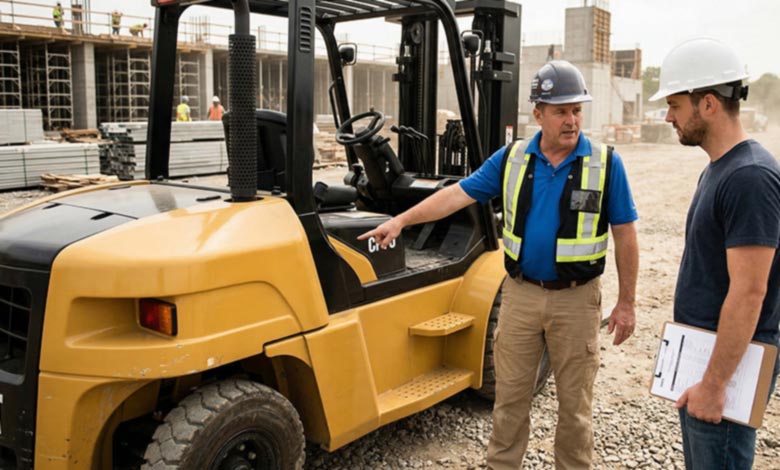
If you are still at the early supplier-comparison stage, this related article may help: why most forklift problems actually start before the machine arrives.
Why A Rough Terrain Forklift Quote Needs More Than Tonnage
A rough terrain forklift is not a simple warehouse machine used only on smooth concrete.
It may work on:
- Construction sites
- Farms and plantations
- Stone yards
- Brick and block factories
- Ports and outdoor warehouses
- Muddy roads
- Sandy ground
- Gravel areas
- Uneven temporary roads
This means the same rated capacity can lead to different configurations.
For example, two buyers may both ask for a 3.5 ton rough terrain forklift.
But one buyer works on a dry outdoor yard with palletized cargo.
Another buyer works on a rainy construction site with long materials, soft soil, and a slight slope near the unloading point.
The quote for these two buyers should not be treated as exactly the same.
The machine may need different tires, mast height, forks, steering preference, attachment preparation, spare parts, or shipping arrangement.
That is why I usually ask buyers to send more information before giving a serious recommendation.
Start With The Real Load
The first detail is the load.
But do not only send one number.
Many buyers say:
"My load is around 3 tons."
That is useful, but it is not enough.
Please send:
- Normal daily load weight
- Maximum load weight
- Load dimensions
- Load shape
- Load center if known
- Whether the load is palletized or irregular
- Whether the load is long, wide, loose, or unstable
- Whether long forks or attachments will be used
The reason is simple.
Forklift capacity is affected by load weight, load position, and load center. A compact pallet near the mast is different from a long load that pushes weight forward.
OSHA's forklift guidance also explains that load composition and load center affect forklift handling and capacity. That is why a supplier should not only ask, "How many tons?"
The better question is:
"How will this load sit on the forks in real work?"
Send Photos Or Videos Of The Working Site
For rough terrain forklifts, site photos are often more useful than a long written description.
A buyer may say:
"The ground is normal."
But "normal" means different things in different countries and job sites.
One buyer's normal ground may be compacted soil.
Another buyer's normal ground may be sand, gravel, broken concrete, or muddy road after rain.
Please send photos or short videos showing:
- The road the forklift will drive on
- The loading and unloading area
- Any slope or ramp
- Mud, sand, gravel, or stones
- Narrow turning areas
- Doorways or low-clearance areas
- The place where cargo is stored
- The truck or container loading area
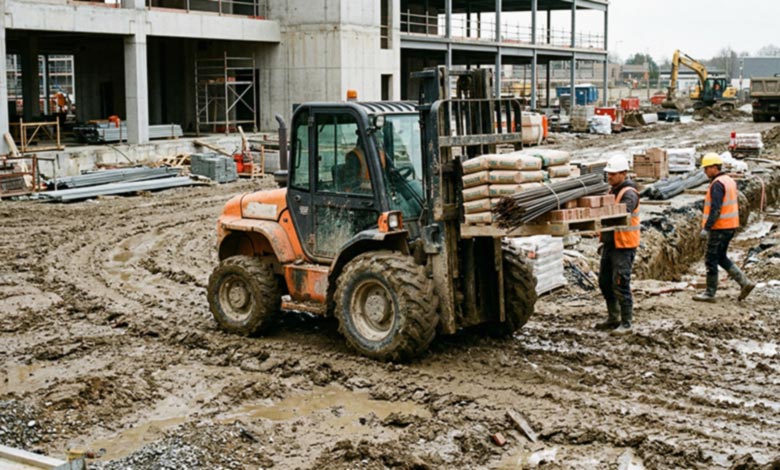
Good photos help the supplier understand whether the machine should focus more on traction, ground clearance, turning flexibility, tire durability, or lifting height.
Without this information, the supplier may give a quote that looks neat but does not really match your site.
Dive Deeper: A Typical "Too Little Information" Case
A typical situation looks like this.
At first, the buyer sends one message:
"Need 3 ton 4WD forklift. Send quotation."
If the supplier only replies with a basic model, both sides may think the discussion is moving quickly.
But after asking more questions, the real working condition becomes clearer:
- The site is a construction project in a rainy region.
- The forklift needs to carry cement blocks and long materials.
- The road is compacted soil, not concrete.
- The buyer needs to unload trucks and move goods into a storage area.
- There is a low entrance near the storage area.
- The buyer may add fork extensions later.
Now the quote is no longer just "3 ton 4WD forklift."
The supplier needs to think about:
- Whether the capacity has enough working margin
- Whether the tire type is suitable
- Whether mast lowered height is acceptable
- Whether fork length should be changed
- Whether attachment preparation is needed
- Whether the shipping plan is clear
- Whether spare parts should be included
This is why a slower but clearer quotation process can actually save time.
It helps avoid changing important details after production has already started.
What Looks Like A Simple Quote And What It Actually Needs
| Buyer sends only this | Supplier still needs to know |
|---|---|
| "3 ton forklift" | Normal load, maximum load, load center, cargo size |
| "4WD forklift" | Ground type, slope, mud, sand, gravel, turning route |
| "3 meter mast" | Required lift height, lowered mast height, entrance clearance |
| "Standard fork" | Cargo width, pallet size, need for long forks or side shift |
| "Ship to my country" | Destination port, trade term, import requirement, documents |
| "Use on construction site" | Road condition, rainy season, daily working hours, spare parts plan |
The more complete the first message is, the more useful the supplier's reply will be.
Confirm Lifting Height And Mast Lowered Height
Lifting height is another detail that buyers sometimes simplify.
They may say:
"I need to lift 3 meters."
But for rough terrain forklift selection, I want to confirm more:
- What is the maximum lifting height?
- What is the normal daily lifting height?
- Does the forklift need to enter a warehouse, shed, or container area?
- What is the entrance height?
- Is there any low roof or pipe?
- Does the buyer need a two-stage or three-stage mast?
- Will the mast affect container loading or transport?
The lifting height is only one side of the question.
The lowered mast height and overall machine height are also important.
A forklift can have the right lifting height but still be wrong if it cannot enter the working area.
For buyers comparing this capacity range, the 3.5 ton rough terrain forklift page can be used as a starting point, but final dimensions should always be confirmed from the specification sheet before order.
Tell The Supplier About Attachments Early
Many buyers ask for a standard forklift first.
Later they may realize they also need:
- Side shift
- Fork extensions
- Bucket
- Bale clamp
- Crane jib
- Fork positioner
- Tipping attachment
Attachments are not just accessories.
They can change the load center, hydraulic requirement, machine balance, fork choice, delivery preparation, and sometimes the recommended capacity.
If the attachment is discussed after the machine arrives, the solution may be less clean.
So before asking for the quote, tell the supplier:
- What cargo will be handled
- Whether standard forks are enough
- Whether attachments may be needed now or later
- Whether hydraulic functions are required
- Whether the attachment changes daily operation
For more detail, see rough terrain forklift attachments and configurations.
Confirm Tire And Ground Requirements
Tire choice is easy to ignore in an early quote.
But for outdoor forklifts, tires can strongly affect daily operation.
Before asking for a quotation, send information about:
- Muddy ground
- Sandy ground
- Gravel or stones
- Wet construction roads
- Farm soil
- Brick or block yard surface
- Mixed indoor and outdoor use
- Replacement tire availability in your market
A tire that works well on one site may not be the best choice for another site.
If the supplier knows the ground condition early, the tire discussion becomes part of the configuration, not an afterthought.
Two buyers can use the same machine very differently.
One buyer may use the forklift for short material movement every day.
Another buyer may use it for long outdoor shifts with frequent loading, turning, and travel.
Before asking for a quote, send:
- Estimated working hours per day
- Number of operators
- Whether the operator has forklift experience
- Maintenance ability on site
- Distance from local repair support
- Common spare parts you want to prepare
- Whether remote support and parts photos are needed
This is especially important for overseas buyers.
A small maintenance issue can become a large downtime problem if the spare parts plan is not prepared early.
Destination Country, Port, And Trade Term Matter
For export orders, the machine itself is only one part of the quotation discussion.
The supplier also needs to understand the shipping and import side.
Please confirm:
- Destination country
- Destination port
- Preferred trade term if known
- Whether you need special documents
- Whether your country has emission or import requirements
- Whether the machine will be shipped by container or other method
- Whether the buyer has a local customs broker or forwarder
Different Incoterms trade terms affect what is included in an export quotation. The International Chamber of Commerce publishes Incoterms rules to define responsibilities between buyers and sellers, so it is better to clarify the trade term before both sides compare quotations.
This does not mean the buyer must know everything before contacting the supplier.
But the destination and basic import requirement should be discussed early.
A Better First Message To Send A Supplier
Instead of writing only:
"Please quote 3 ton rough terrain forklift."
Send a message like this:
"We need a rough terrain forklift for an outdoor construction site in [country]. The normal load is about [weight], maximum load is [weight], and the cargo size is [dimensions]. The ground is [soil/gravel/sand/mud/concrete], and we have [slope/no slope]. Required lifting height is [height], entrance height is [height]. We may need [attachment]. Please recommend a suitable configuration and shipping plan to [destination port]."
This kind of message gives the supplier enough context to think seriously.
It also helps you compare suppliers more fairly.
If one supplier only replies with a simple low configuration and another supplier asks practical questions, you can see who is actually checking your working condition.
Quick Checklist Before Asking For A Rough Terrain Forklift Quote
| Information to send | Why it matters |
|---|---|
| Country and destination port | Helps with shipping and document discussion |
| Normal and maximum load | Prevents capacity selection mistakes |
| Cargo size and load center | Affects real lifting margin |
| Ground condition | Helps choose tire, 4WD, and ground clearance |
| Site photos or videos | Shows real outdoor working conditions |
| Slope or ramp details | Important for route and operator planning |
| Required lifting height | Helps select the mast |
| Entrance or height limits | Prevents access problems |
| Attachment needs | Affects load center and hydraulic preparation |
| Working hours per day | Helps judge durability and maintenance planning |
| Emission or import requirements | Avoids late-stage compliance problems |
| Spare parts expectation | Reduces future downtime risk |
What BLANC-ELE Usually Wants To Know
When you contact BLANC-ELE, we do not only want to know "how many tons."
We want to understand the real job.
The most useful information includes:
- What are you lifting?
- How heavy is it?
- What size is it?
- Where will the forklift drive?
- What does the ground look like after rain?
- How high do you need to lift?
- Is there any low doorway or narrow route?
- Will you use attachments?
- Which country and port should the machine go to?
- Do you need a common spare parts package?
With this information, we can help you check whether a 3 ton, 3.5 ton, 5 ton, or larger rough terrain forklift is more suitable for your work.
You can also start from the BLANC-ELE rough terrain forklift range and then send us your working condition for configuration advice.
Conclusion
Asking for a rough terrain forklift quote is not only about getting a number quickly.
It is about making sure the number is based on the right machine.
If the supplier understands your load, ground condition, lifting height, tire requirement, attachments, destination country, and support needs, the quotation becomes more useful.
After working with overseas buyers, I have found that many wrong-machine problems can be avoided when the buyer sends the right information before the order.
If you are planning to buy a rough terrain forklift, send BLANC-ELE your site photos, load details, lifting height, attachment requirements, destination port, and working conditions. We will help you check the suitable configuration before preparing the quotation.
About This Guide
This guide was prepared from BLANC-ELE's supplier-side experience with overseas rough terrain forklift buyers, export quotation discussions, and outdoor job-site configuration questions. Product specifications and final configuration should always be confirmed with the final BLANC-ELE specification sheet before order.
Last reviewed: June 2, 2026.
References
- OSHA, Powered Industrial Trucks: https://www.osha.gov/powered-industrial-trucks
- OSHA eTool, Powered Industrial Trucks - Load Composition: https://www.osha.gov/etools/powered-industrial-trucks/load-handling/load-composition
- ICC, Incoterms Rules: https://iccwbo.org/business-solutions/incoterms-rules/
- BLANC-ELE rough terrain forklift product and specification documents. Final configuration should be confirmed before order.