
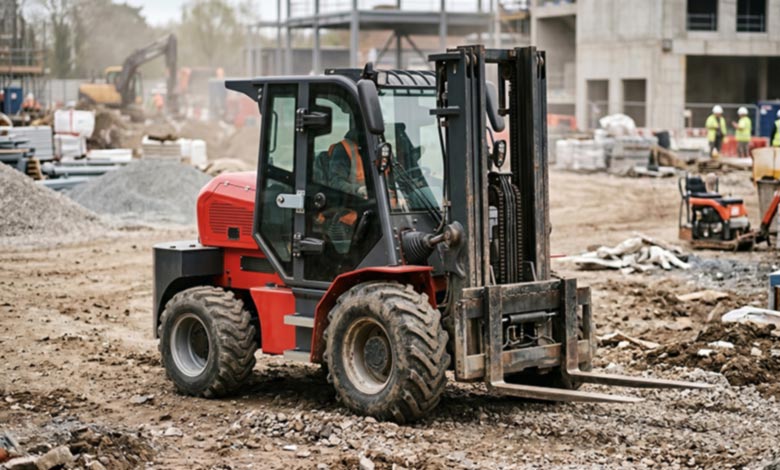
 Compact 3.5 ton 4WD rough terrain forklift designed for tight working environments
Over the years, when helping customers choose the right equipment, I’ve noticed a very common issue:
Many job sites look spacious at first.
But once real work begins, the actual operating space is often much more limited than expected.
When the machine is slightly too large, the result is very clear:
It’s not that the work cannot be done —
it’s that everything becomes slower, more difficult, and sometimes even riskier.
From my experience, in these situations:
A compact 3.5 ton integrated 4WD rough terrain forklift is often a much better choice than standard-sized machines.
Why I Pay More Attention to Size Than Capacity
At the beginning, I used to focus on capacity and engine — just like most buyers.
But after working on more real projects, I realized something important:
In many cases, size determines whether a machine can actually work efficiently.
A standard 3.5 ton rear-steering forklift is typically around:
3700 × 1800 × 2450 mm
This compact model is reduced to:
3400 × 1600 × 2250 mm
On paper, the difference doesn’t look dramatic.
But in real use, it changes everything.
I’ve seen this many times in stone yards and farms:
The machine can enter the area,
but it cannot turn easily.
Or it can turn,
but only after multiple adjustments.
Each small inconvenience may seem minor.
But when repeated all day,
it becomes a real efficiency problem.
https://youtube.com/shorts/979ut7a7Z5s
What Does an 80 cm Turning Circle Actually Mean?
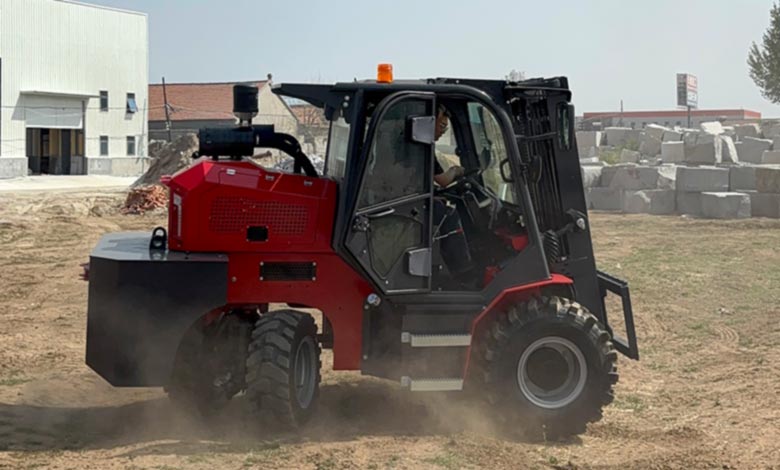 Turning demonstration showing tight maneuverability
When customers see “turning radius” in specifications, most don’t have a clear idea of what it really means.
To be honest, I didn’t either at first.
But after seeing machines in real operation, one thing became very clear:
Turning ability directly affects working rhythm.
This compact model can turn within a circle of approximately 80 cm.
In real conditions, that means:
- Less repositioning
- Fewer reverse adjustments
- Smoother operation
In tight spaces like storage areas, farm paths, or material yards,
this difference becomes very noticeable.
I’ve seen operators struggle with standard machines, needing multiple moves for a simple task.
But with a tighter turning machine:
Work becomes much more fluid.
Why Integrated 4WD Structure Matters in Real Conditions
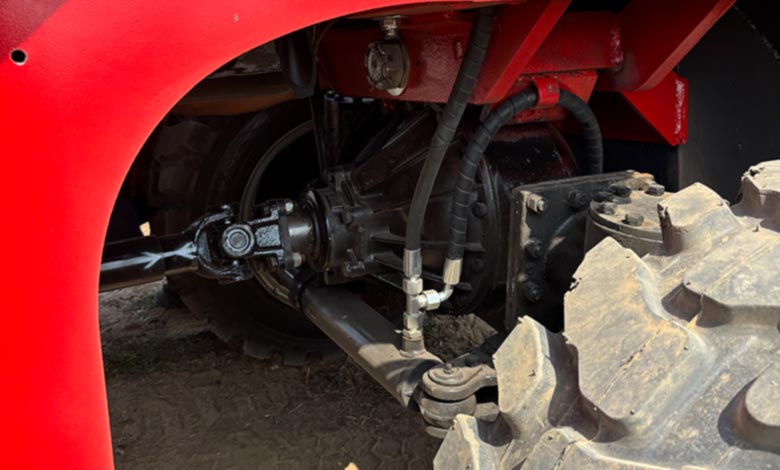 Integrated frame and 4WD system for better stability
Many customers ask me whether 4WD is necessary.
My answer is always:
It depends on the working environment.
But in rough terrain, it makes a real difference.
In places like farms, construction sites, or stone yards:
- The ground is uneven
- Surfaces can be soft or unstable
In these conditions:
- An integrated frame improves structural stability
- 4WD improves traction and passability
Together, they create a machine that feels more reliable in real work.
From my perspective:
Stability matters more than specifications in these environments.
What Semi-Solid Tires Actually Help You Avoid
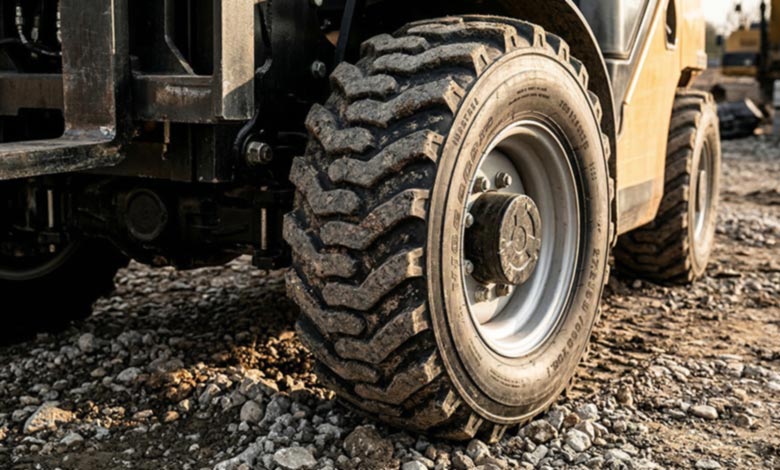 Semi-solid tires designed for durability and rough terrain
Tires are often overlooked during the buying process.
But after some time, most customers start to realize how important they are.
This machine uses:
- Front: 20.5/70-16 semi-solid tires
- Rear: 10.5/46-16 semi-solid tires
In environments like stone yards or construction sites:
- Sharp objects
- Rough surfaces
- Heavy loads
If tires are not durable enough, problems quickly appear:
- Punctures
- Downtime
- Work interruptions
I’ve seen several cases where operations were stopped because of tire issues.
That’s why in these environments:
Tire reliability is not a small detail — it’s essential.
Why I Usually Recommend an Enclosed Cabin
Fully enclosed cabin for better operator comfort
At first, some customers see the cabin as an optional feature.
But in outdoor environments, it makes a real difference.
Operators are exposed to:
- Dust
- Wind
- Temperature changes
And this directly affects:
👉 Their comfort
👉 Their focus
👉 Their working efficiency
From my experience:
When operators feel comfortable,
their performance becomes more stable.
A Case That Stayed With Me
I remember a customer working in a farm and storage yard combination.
At first, they chose a standard-size machine.
Technically, it worked.
But in daily operation:
- Turning was difficult
- Movement required constant adjustment
- Efficiency was lower than expected
After reviewing their working conditions together:
We realized the main issue was not capacity —
it was space.
They switched to a more compact configuration.
Their feedback later was simple:
👉 “Everything feels easier now.”
That’s a very simple sentence.
But it reflects a real improvement.
When I Clearly Recommend a Compact Model
Not every customer needs a compact machine.
But in certain situations, I recommend it very directly:
- Farms
- Stone yards
- Small construction sites
- Confined storage areas
If your work involves:
- Limited space
- Frequent turning
- Moderate to heavy loads
Then a compact forklift is often the more practical choice.
Final Thoughts
After years of working with different customers, I’ve come to a simple conclusion:
Bigger is not always better.
In many cases:
👉 The right size is what matters most.
If a machine can:
- Enter easily
- Turn smoothly
- Work consistently
Then the efficiency gain is immediate.
From my experience:
In tight job sites, choosing a more compact and flexible forklift can make the entire operation much easier.
About BLANC-ELE
At BLANC-ELE, when designing this type of equipment, we focus on:
- Real working space
- Turning performance
- Operational smoothness
Not just specifications.
Because in real projects:
👉 A machine is judged by how it performs on site — not on paper.