
When many overseas buyers contact a rough terrain forklift supplier in China, the first questions are usually very direct:
- How many tons can it lift?
- What engine does it use?
- How soon can it ship?
- Can you send me a quote?
These questions are normal.
But after working with more outdoor forklift buyers over the years, I have realized something important:
Many forklift problems do not begin after the machine arrives.
They begin before the order is placed.
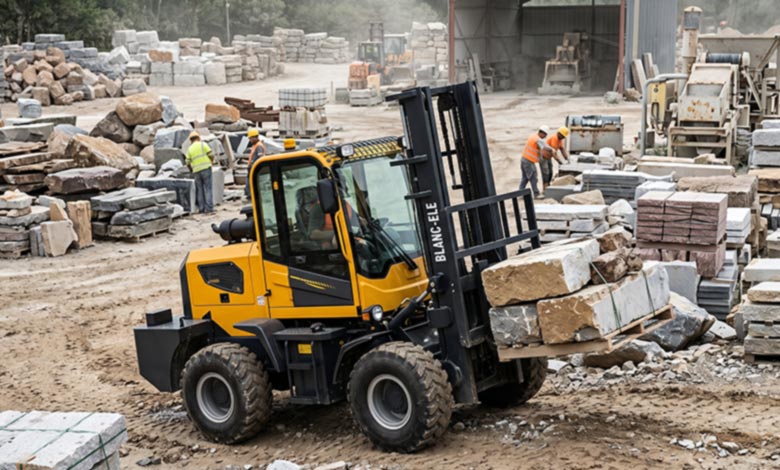
Because a rough terrain forklift is not only a product on a quotation sheet. It is a working machine that must match the buyer's load, ground condition, lifting height, attachments, country requirements, and daily use.
If those details are not confirmed clearly at the beginning, even a good machine can become the wrong machine for the job site.
If you are still comparing suppliers, you may also read our article on why most forklift problems actually start before the machine arrives.
Why Should Overseas Buyers Confirm More Than Capacity?
Many buyers initially think:
"I need a 3 ton or 3.5 ton forklift. Just send me the price."
But in real outdoor work, capacity alone is not enough.
A forklift that works well on flat concrete may not perform the same way on mud, sand, gravel, or a rainy construction site. A forklift that can lift a pallet in a short test may feel very different after several hours of continuous outdoor use.
For overseas buyers, the risk is even higher.
If the forklift arrives with the wrong mast, wrong tires, wrong attachment, or wrong configuration, fixing the problem is much harder than changing it before production.
That is why I usually ask buyers to confirm the working condition first, not only the tonnage.
Confirm The Real Load, Not Only The Rated Load
The first detail to confirm is the load.
But I do not only mean the rated capacity.
I mean:
- Maximum load weight
- Normal daily load weight
- Load dimensions
- Load center
- Whether the cargo is regular or irregular
- Whether the forklift will use long forks or attachments
Many buyers say:
"My load is around 3 tons."
But after we talk more, the real situation may be different.
The load may be long. The pallet may be oversized. The buyer may want to use a clamp or bucket later. The load center may move forward. These details change how the forklift actually works.
For this reason, I do not like recommending a model only by rated load.
The better question is:
"Will this forklift still have enough working margin in the buyer's real daily operation?"
For attachment-related selection, see our guide on rough terrain forklift attachments and configurations.
Ground Condition Can Change The Whole Configuration
Many overseas buyers underestimate the ground condition.
At the beginning, the site may look simple:
- Outdoor yard
- Construction site
- Farm
- Warehouse area
- Stone or material yard
But once the forklift starts working every day, the ground becomes one of the biggest factors.
Dive Deeper
A typical rainy-season construction case looks like this.
At first, the buyer says:
"The ground is not very bad. It is just an outdoor construction site."
But after asking more questions, the real site condition becomes clearer:
- The road is compacted soil, not concrete.
- The rainy season lasts several months.
- The forklift needs to carry materials across soft ground.
- Some areas have slopes.
- Operators may need to turn while carrying loads.
In this situation, the forklift is not only moving cargo.
It is fighting traction loss, soft soil, slope, load movement, and operator fatigue at the same time.
If the buyer chooses the machine only by rated load, they may ignore the real reason the forklift struggles later.
What Looks Simple Before Ordering And What Appears Later
| Before ordering | After real outdoor work starts |
|---|---|
| "The site is just outdoors" | Rain changes the ground completely |
| "The load is not too heavy" | Soft ground makes movement harder |
| "Standard tires should be fine" | Tire traction becomes a daily problem |
| "The forklift only needs to move pallets" | Turning and slope work become more difficult |
| "The machine can move in testing" | Long working hours expose weak configuration |
This is why photos and videos of the working site are very useful before ordering.
Check Mast Height And Machine Size Before Production
Many buyers focus heavily on capacity.
But very often, the real problem is not whether the forklift can lift the load.
The problem is whether the forklift can enter the work area.
Overseas buyers should confirm:
- Mast lowered height
- Maximum lifting height
- Overall machine height
- Overall width
- Turning radius
- Container loading plan
- Warehouse door height
- Worksite entrance width
Dive Deeper
I have seen buyers realize this problem too late.
The machine capacity is suitable.
The engine is suitable.
The tires are suitable.
But after the forklift arrives, the buyer discovers that the mast height is too tall for the warehouse entrance or low-clearance area.
Then the buyer has to consider:
- Modifying the site
- Replacing the mast
- Changing the working route
- Using another machine for that area
Most of this can be avoided before production.
Size Details That Should Be Confirmed Early
| Detail | Why it matters |
|---|---|
| Mast lowered height | Determines whether the forklift can enter low-clearance areas |
| Overall width | Affects narrow-road and warehouse operation |
| Turning radius | Affects tight work sites and yards |
| Fork length | Affects load handling and container loading |
| Container loading plan | Prevents shipping problems before dispatch |
For buyers comparing a 3.5 ton model, the BLANC-ELE 3.5 ton rough terrain forklift page can be used as a starting point, but final dimensions should always be confirmed before order.
Do Not Wait Until Later To Discuss Attachments
Many buyers initially say:
"Standard forks are enough."
Sometimes that is true.
But after the forklift starts working, the buyer may realize that the actual job needs:
- Side shift
- Fork extensions
- Bale clamp
- Bucket
- Tipping attachment
- Crane jib
- Fork positioner
The problem is that attachments are not just accessories.
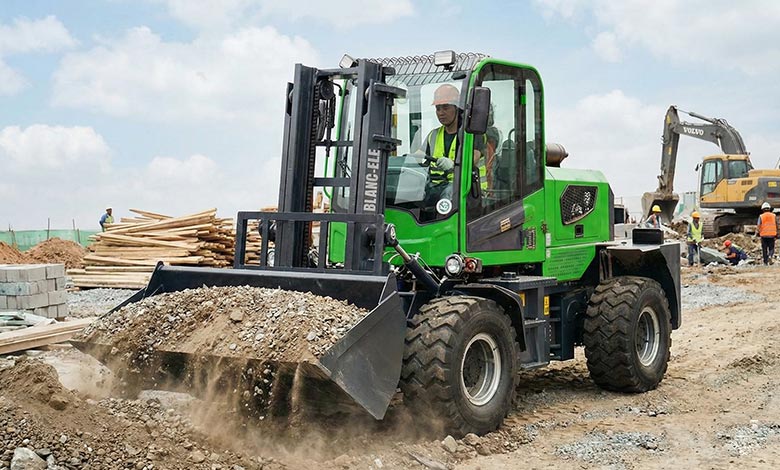
They can change the load center, hydraulic requirement, working method, and even the recommended forklift capacity.
If the buyer discusses attachments only after the machine arrives, the solution may become more expensive or less clean than confirming it before production.
For example, a farm buyer may start with pallet handling. Later, they may want a bale clamp or bucket. A construction buyer may start with standard forks, but later need a side shift because the working area is narrow and uneven.
This is why I usually ask:
"What else may this machine need to do in the next one or two years?"
Confirm Tire Type Before Shipping
Tires are one of the easiest details to overlook.
But for rough terrain forklifts, tire choice directly affects daily operation.
Different sites may need different tire considerations:
- Muddy ground
- Sandy ground
- Gravel
- Stone yards
- Farms
- Construction sites
- Mixed indoor/outdoor use
A tire that works acceptably on dry compacted ground may not perform well in rainy soft soil. A tire that gives strong traction outdoors may not be the best choice for every indoor surface.
So before ordering, overseas buyers should send site photos if possible.
This helps the supplier understand whether the forklift should be configured for traction, ground clearance, durability, or mixed-use operation.
Confirm Emission And Local Requirements
Different countries may have different requirements for engines, emissions, certificates, and import documents.
Before ordering from China, buyers should confirm:
- Country or destination port
- Emission requirement
- Any local compliance documents
- Whether the machine will be used on public roads or only inside private sites
- Whether special certificates are required
- Local fuel quality and maintenance conditions
This is especially important for buyers in markets where import rules are strict or changing.
If emission requirements are unclear, the supplier should confirm before production, not after the machine is finished.
Spare Parts And After-Sales Support Should Be Discussed Before Order
Many buyers pay attention to the forklift itself, but forget the after-sales side.
For overseas buyers, this is very important.
The machine may work far away from the supplier. If a small part is needed later, waiting too long can create unnecessary downtime.
Before ordering, ask the supplier about:
- Common spare parts list
- Filters
- Seals
- Hydraulic hoses
- Pins and bushings
- Tire availability
- Operation manual
- Maintenance guide
- Video support
- Remote troubleshooting
Dive Deeper
Many long-term problems are not caused by one big failure.
They are caused by small issues that are not handled quickly:
- A filter is not replaced on time.
- A hose starts leaking.
- A grease point is ignored.
- An operator does not understand the daily inspection routine.
- A spare part is not prepared in advance.
For local buyers, this may be easier to solve.
For overseas buyers, planning is more important.
What Good Overseas Support Should Include
| Support item | Why it matters |
|---|---|
| Spare parts list | Helps buyers prepare common maintenance parts |
| Operation manual | Reduces operator mistakes |
| Maintenance video | Helps local teams understand daily service |
| Clear parts photos | Reduces confusion when ordering replacements |
| Remote support | Shortens troubleshooting time |
Ask The Supplier These Questions Before Ordering
Experienced buyers usually ask more detailed questions before placing an order.
They do not only ask:
"How much is it?"
They ask:
- Is this forklift suitable for my ground condition?
- What tire type do you recommend?
- What mast height should I choose?
- What is the mast lowered height?
- Can the forklift enter my work area?
- What attachments can be installed?
- Will the attachment affect load capacity?
- What engine or emission option is suitable for my country?
- What spare parts should I prepare?
- How will the machine be loaded and shipped?
- What photos or videos should I provide before production?
- What should my operator check every day?
These questions may take more time before ordering.
But they can prevent much bigger problems after the machine arrives.
What Information Should You Send To BLANC-ELE?
If you want a more accurate recommendation, send us:
- Country and destination port
- Maximum load weight
- Normal daily load weight
- Load dimensions
- Ground condition
- Photos or videos of the site
- Required lifting height
- Height or width restrictions
- Working hours per day
- Attachment requirements
- Tire preference if known
- Emission requirement if known
With this information, we can help you check whether a 3 ton, 3.5 ton, 5 ton, or larger rough terrain forklift is more suitable for your job.
You can also start from the BLANC-ELE rough terrain forklift range and then send us your working conditions for configuration advice.
Conclusion
Buying a rough terrain forklift from China can be a good choice for many overseas buyers, especially when they need a practical, cost-conscious machine for farms, construction sites, yards, and outdoor material handling.
But the most important step is not only finding a supplier.
It is confirming the right configuration before the machine is produced.
After seeing more outdoor applications over the years, I have learned that many forklift problems can be avoided if the buyer and supplier discuss the real working conditions clearly at the beginning.
If you are planning to order a rough terrain forklift from China, send BLANC-ELE your load, ground condition, lifting height, attachment requirement, and destination country. We will help you check the suitable configuration before order.
About This Guide
This guide was prepared from BLANC-ELE's supplier-side experience with overseas rough terrain forklift buyers, configuration discussions, and outdoor job-site applications. Product specifications should always be confirmed with the final BLANC-ELE specification sheet before order.
Last reviewed: May 27, 2026.
References
- OSHA, Powered Industrial Trucks: https://www.osha.gov/powered-industrial-trucks
- OSHA 29 CFR 1910.178, Powered Industrial Trucks: https://www.osha.gov/laws-regs/regulations/standardnumber/1910/1910.178
- OSHA eTool, Forklift pre-operation measurements: https://www.osha.gov/etools/powered-industrial-trucks/operating-forklift/pre-operation/measurements
- BLANC-ELE rough terrain forklift product and specification documents. Final configuration should be confirmed before order.