What Slope Can a Forklift Handle? Why Rough Terrain Forklifts Are the Safest Choice
Forklifts often skid or roll back on slopes, creating safety and efficiency concerns. Different forklift types have very different slope capabilities…
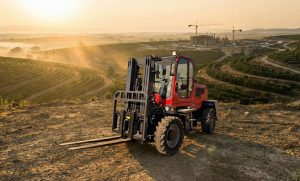
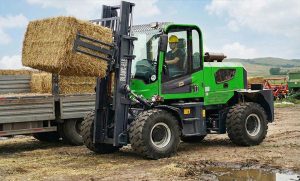
BLANC-ELE provides diesel 4WD rough terrain forklifts for construction sites, farms, yards, ports, and other outdoor working areas. Our machines are built for uneven ground, muddy roads, gravel surfaces, and demanding material handling tasks.
With strong traction, stable lifting performance, customizable mast options, and practical attachments, BLANC-ELE rough terrain forklifts are designed to help buyers improve efficiency in real outdoor conditions.
From 3-ton and 3.5-ton models to heavier-duty options, suitable forklift solutions can be recommended based on your load capacity, lifting height, working environment, and destination market.

Forklifts often skid or roll back on slopes, creating safety and efficiency concerns. Different forklift types have very different slope capabilities…

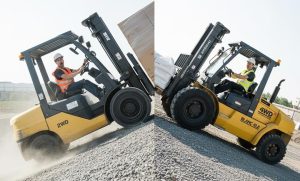
The answer is no. A rough terrain forklift is closer to a traditional forklift, built with 4WD systems, high ground clearance, and off-road tires…

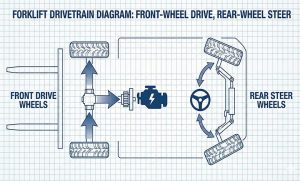
Most forklifts are front- or rear-wheel drive, lacking traction on slippery ground. 4WD rough terrain forklifts distribute power to all wheels…

Rainy, slippery job sites

Standard forklifts, with high centers of gravity, limited traction, and 2WD designs, are prone to sliding or tipping on slopes…

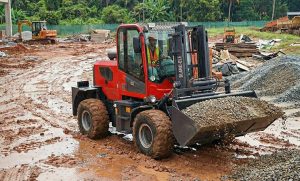
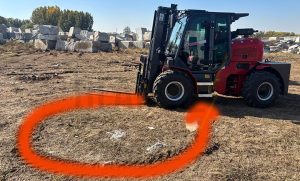
Standard forklifts with low ground clearance, weak 2WD traction, and smooth tires easily get stuck in muddy conditions…

Standard forklifts with low ground clearance and smooth tires easily sink into mud. The solution is rough terrain forklifts…

Rough Terrain Forklifts are built for mud, gravel, and slopes. With strong lifting capacity, large all-terrain tires, and durable design…

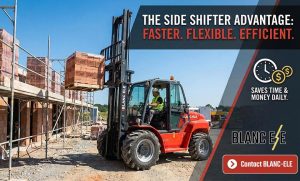
On rough terrain forklifts, adjustable forks quickly match pallet widths, while side shift fine‑tunes placement without repositioning the truck…