
A good rough terrain forklift order usually starts before the buyer asks for a final model.
From the supplier side, I can usually feel the difference in the first few messages.
One buyer only says, "Send me your 5 ton forklift." Another buyer sends the load weight, ground photos, lifting height, route video, attachment idea, destination country, and working hours. The second buyer is much easier to help, not because the project is simple, but because the real job is already visible.
For overseas buyers ordering a rough terrain forklift from China, that early information often decides whether the machine fits the site after arrival.
The forklift itself is important. But the order should not be built around tonnage alone.
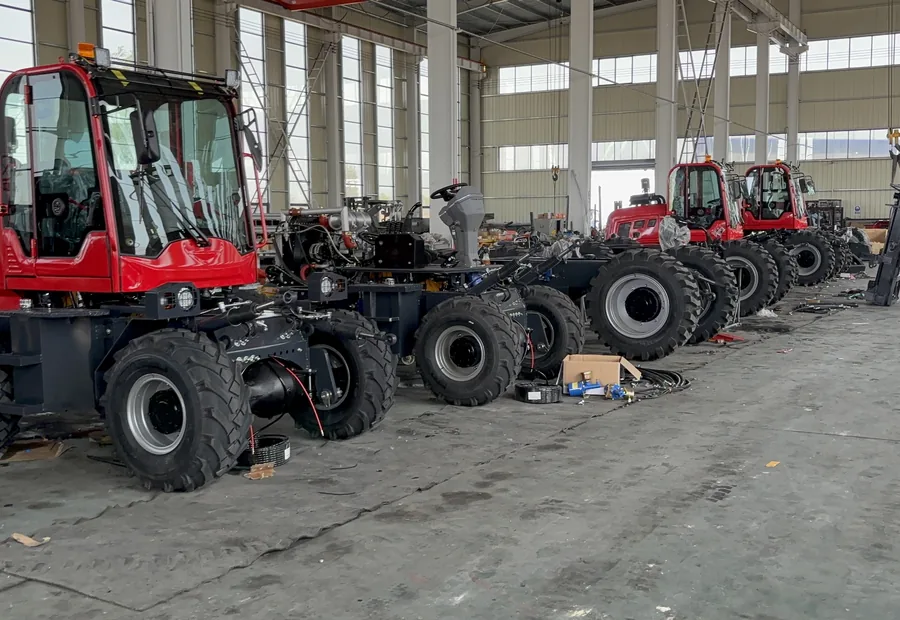
The Real Order Is Not Only the Model Name
Many export inquiries begin with a model size.
"I need 3.5 tons."
"Quote 5 tons."
"Can you supply 7 tons?"
Those are normal starting points. But a rough terrain forklift works outside the clean warehouse environment. It may travel over soil, gravel, ramps, wet ground, broken concrete, farm roads, construction routes, or yard entrances. It may lift pallets one day and long materials the next. It may work far away from local service support.
So before I treat a model as suitable, I want to understand the working condition.
That is why the BLANC-ELE rough terrain forklift range should be discussed as a configuration decision, not just a capacity list.
A Typical Case I See Before Ordering
A buyer may first ask for a medium-size machine because the main load sounds simple. After a few questions, the real site becomes more complicated.
The forklift needs to unload trucks outside. The route is partly compacted soil. Some pallets are compact, but some materials are long. The buyer also wants the option to use longer forks later. The warehouse entrance has a ramp. In the rainy season, the ground near the loading point becomes soft.
If we quote only by capacity, the discussion may look fast. But it is not really efficient.
The supplier may miss the mast height. The buyer may forget load length. Tire choice may be treated as a small detail. Spare parts may be discussed only after shipment. Then the machine arrives, and the buyer discovers that the real problem was never the lifting number.
I prefer to slow down at the beginning and make the order clearer before production.
Confirm the Load Before Confirming Capacity
Rated capacity is useful, but it is not the whole story.
Before ordering, I ask buyers to describe the load in a practical way:
- normal load weight;
- maximum load weight;
- pallet size or material dimensions;
- whether the load is compact, long, tall, loose, or uneven;
- whether the load center may be different from a standard pallet;
- whether the operator needs longer forks or an attachment.
A compact pallet and a long bundle can feel very different on the same forklift. A tall crate, pipe bundle, stone material, agricultural load, or steel frame may change visibility, stability, and fork selection.
This is why I do not like confirming a rough terrain forklift only from one number. Capacity must be checked together with load shape, fork length, route, mast height, and attachment plan.
Send the Ground Photos Early
The ground tells the supplier what the catalog cannot.
A buyer may describe the site as "outdoor," but outdoor can mean many things. It may be a dry concrete yard, a gravel road, a muddy farm path, a sand-covered work area, a brick yard, a quarry support area, or a construction site with unfinished access roads.
For a standard warehouse forklift, those differences may already matter. For a rough terrain forklift, they become part of the order.
Good site photos should show:
- the loading point;
- the normal travel route;
- tire tracks or soft areas;
- ramps or slope transitions;
- turning space;
- the surface after rain if that is a real condition;
- the place where the forklift will unload or stack materials.
A short route video is even better. It shows what a single photo may hide: corners, bumps, slopes, narrow areas, drainage edges, truck positions, and the operator's real path.
Mast Height and Attachment Plans Should Not Wait
Some buyers leave mast height and attachments until late in the order.
That can create confusion.
If the forklift needs to load trucks, stack materials, enter containers, work under a roof, or handle high pallets, the mast discussion should happen early. If the buyer may need side shift, fork positioner, longer forks, clamp, bucket, crane jib, or other tools, that should also be discussed before final configuration.
Attachments are not only accessories. They can affect load center, visibility, hydraulic requirements, fork choice, and daily operation.
For a buyer comparing a 3 ton rough terrain forklift or 3.5 ton rough terrain forklift, attachment planning may decide whether the machine still has enough margin for the job. For heavier outdoor material handling, buyers may compare a 5 ton rough terrain forklift or 7 ton 4WD rough terrain forklift after the load and route are clearer.
If attachments are part of the job, this related guide on rough terrain forklift attachments and configurations is worth reviewing before order.
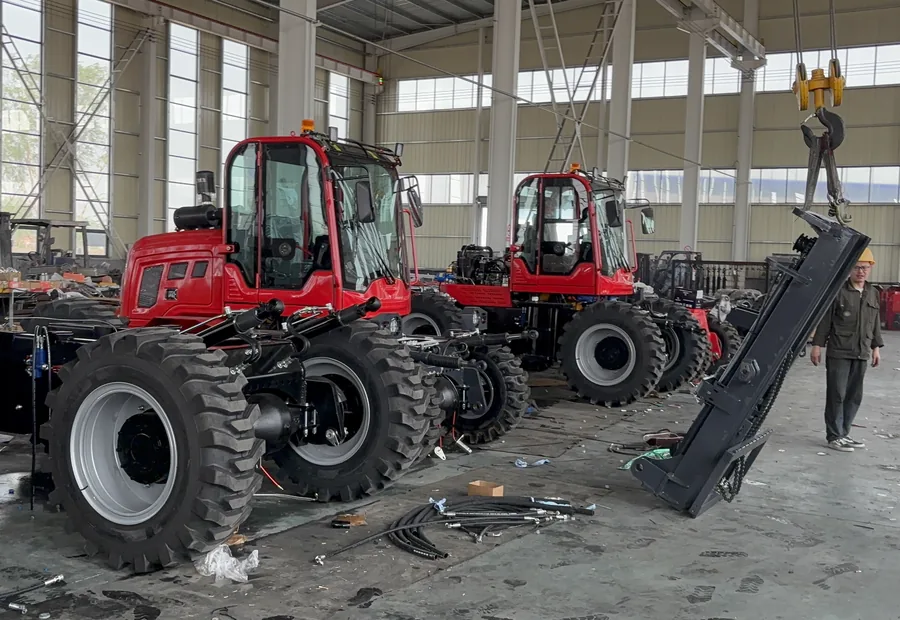
Destination Country Still Matters
Even when the machine is the same size, the destination country may change the order discussion.
I do not treat emission, documentation, shipping, spare parts, and after-sales support as decoration. They affect whether the buyer receives a machine that can be used with fewer surprises.
Before ordering, the buyer should confirm:
| Order Detail | Why It Matters |
|---|---|
| Destination country | Emission configuration and import requirements may differ |
| Working environment | Dust, heat, rain, altitude, or soft ground may affect configuration discussion |
| Lifting height | Mast choice should match truck, stacking, or warehouse entrance needs |
| Tire and ground condition | Tire selection depends on surface, wear, traction, and replacement plan |
| Attachment plan | Attachments can change load center and operation |
| Spare parts plan | Remote sites should prepare common wear parts early |
| Operator routine | Daily work hours, route length, and refueling plan affect practical use |
For emissions, the safe approach is simple: configuration should be quoted according to destination-market requirements. If Stage V or Tier 4 Final options are required, they should be reviewed separately before order, not assumed as standard.
A Clear Inquiry Saves Time for Both Sides
A clear inquiry does not need to be long. But it should help the supplier understand the job.
For a serious rough terrain forklift order, I like to receive:
- load weight and dimensions;
- photos or video of the working route;
- maximum lifting height;
- surface condition in dry and wet seasons;
- attachment or fork-length needs;
- daily working hours;
- destination country;
- whether the machine is for direct use, resale, rental, or a project fleet.
With this information, a supplier can give a more useful recommendation instead of guessing from a short message.
This also helps the buyer compare suppliers more fairly. If one supplier asks no questions and gives a quick answer, while another supplier asks about site, load, mast, tires, and support, the second discussion may look slower at first. In my experience, it is often the more serious one.
Do Not Leave Support Planning Until After Shipment
For export buyers, downtime can become more expensive than the part itself.
The machine may work on a farm, construction site, plantation, yard, quarry support area, or rental project far from the supplier. If a common wear part is missing later, waiting for it can stop the work for days.
That is why spare parts and remote support should be discussed before shipment.
The buyer does not need to buy everything. But it is sensible to confirm which filters, hoses, sensors, seals, tires, electrical parts, and other wear items are recommended for the first shipment. Remote after-sales support can also be provided through email, WhatsApp, manuals, videos, and parts diagrams.
This is also connected with an older article I often think about: most forklift problems actually start before the machine arrives. A clearer order reduces many problems later.
My Recommendation Before You Ask for the Final Order
If you are ordering a rough terrain forklift from China, do not start only with "send me a quick offer" or "send me a 5 ton model."
Start with the job.
Tell the supplier what the forklift will lift, where it will travel, how high it must lift, what attachment may be used, what country it will enter, and what support plan you expect after shipment.
After seeing those details, BLANC-ELE can help you check whether the model direction, mast, tires, forks, attachment, spare parts, and final configuration should be adjusted before order.
That is the point of a good pre-order discussion. It protects the buyer from choosing a machine that looks correct in a short quote but does not fit the real site.
If your project is ready, send us your working condition and we will review the suitable rough terrain forklift configuration before the order is confirmed.