
Fuel questions sound simple until the forklift starts working outside.
Many buyers ask me one direct question:
"What is the forklift diesel tank capacity?"
It is a reasonable question. If the machine will work in a construction site, farm, stone yard, brick yard, port storage area, or remote project, nobody wants the operator to stop every few hours just to refuel.
But from a supplier's point of view, tank size alone does not tell the buyer how long the forklift can work. A large tank on a badly matched machine can still disappoint. A suitable tank on the right route, with the right load and maintenance plan, may work much better than the number suggests.
So when an overseas buyer asks about forklift diesel tank capacity, I usually answer with a few questions first.
The Short Answer
Forklift diesel tank capacity matters, but it should be checked together with:
- daily working hours
- load weight and load shape
- travel distance per cycle
- ground condition
- slope and soft soil
- idle time
- driver habits
- dust and cooling condition
- fuel quality
- service access and spare parts planning
For a rough terrain forklift, the real question is not only "How many liters is the tank?"
The better question is:
"Can this machine support my daily outdoor work pattern without creating avoidable fuel, maintenance, or downtime problems?"
That answer depends on the job.
A Typical Question From Export Buyers
One common inquiry sounds like this:
"We need a diesel 4WD forklift for an outdoor yard. It should work all day. Is the fuel tank big enough?"
At first, that looks like a simple specification question. But I cannot answer it responsibly without understanding the work.
I normally ask:
- Is "all day" six hours, eight hours, or two shifts?
- Is the forklift driving long routes or staying near one loading point?
- Is the load palletized, loose, long, wet, or uneven?
- Is the ground compacted, muddy, sandy, sloped, or covered with stone chips?
- Does the operator idle the engine while waiting for trucks?
- Is fuel available on site, or does refueling require a long stop?
- Are filters, hoses, belts, and common wear parts easy to arrange locally?
In many cases, the buyer did not have a fuel problem yet. The buyer had a route-planning problem, a duty-cycle problem, or a maintenance-planning problem.
That is why I prefer to discuss fuel as part of the whole outdoor working condition.
Outdoor Ground Changes Fuel Planning
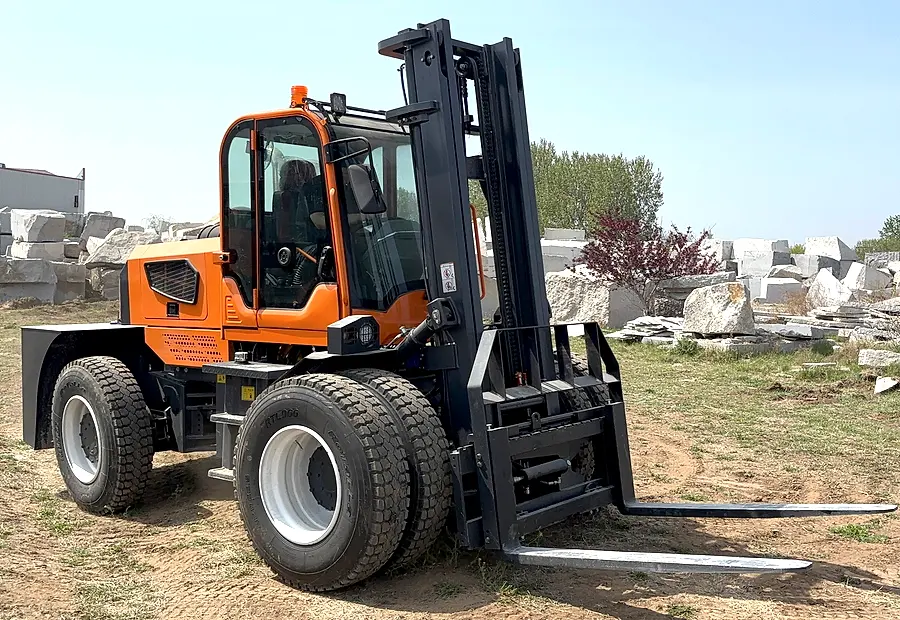
A forklift working on flat concrete is different from a forklift moving loads through sand, gravel, broken brick, mud, or loose soil.
On rough outdoor ground, the machine often works harder because:
- the tires have more rolling resistance
- the operator drives slower and makes more corrections
- the machine may need more traction effort
- the route may be longer than expected
- soft ground can create repeated start-stop movement
- slope and uneven loading points add extra strain
This is why a buyer should not compare fuel planning from a warehouse forklift to a rough terrain forklift.
The same diesel tank can feel different in two jobs.
One buyer may use the forklift mainly for short-distance loading in a compact yard. Another buyer may use the same capacity class to carry loads across a long outdoor route with soft soil and frequent truck waiting time. Their fuel planning will not be the same.
Load And Route Matter More Than Buyers Expect
For fuel planning, I look at the route and load before I worry too much about the tank number.
A short route with a heavy load may be easier than a long route with a lighter but unstable load. A pallet close to the mast is different from a long load that pushes weight forward. Repeated high-lift work is different from simple ground-level transfer.
This also affects model selection.
For lighter outdoor handling, a buyer may start from the BLANC-ELE 3.5 ton 4WD rough terrain forklift. The product page lists 3,500 kg rated load, 4WD drivetrain, off-road pattern tires, and optional lifting heights including 3.5 m, 4 m, 4.5 m, 5 m, and 6 m. Final usable capacity should still be confirmed by load center, mast height, attachment, and ground condition.
For heavier outdoor yards, block factories, construction material handling, stone yards, and tougher duty cycles, the BLANC-ELE RT50 5 ton 4WD rough terrain forklift may be compared. The RT50 page lists 5,000 kg rated capacity, 4WD traction, 330 mm minimum ground clearance, 3-6 m mast options, and rear-wheel or front-wheel steering choices.
Those product facts help the buyer compare capacity class and working condition. They still do not replace the need to check the actual route and daily work pattern.
A Bigger Machine Is Not Always The Fuel Answer
Some buyers think a larger forklift will automatically solve outdoor fuel and work efficiency problems.
Sometimes a heavier model is right. If the load is heavy, the route is rough, the site needs more reserve capacity, or the forklift will handle demanding work every day, a larger model can be the more practical direction.
But if the route is poorly prepared, the load is badly arranged, or the operator waits with the engine idling for long periods, moving up in size may not solve the real issue.
In export projects, I have seen buyers focus on one visible number first:
- rated capacity
- engine power
- tire size
- diesel tank capacity
- mast height
Each number matters. But none of them should be used alone.
A good selection discussion connects the numbers to the job.
Refueling Method Is Part Of The Buying Decision
For remote sites, farms, plantations, and temporary construction projects, refueling is not always convenient.
Before order, I like to understand:
- Is there a safe fuel storage point on site?
- Can the operator refuel near the working area?
- Will the forklift work far from the main yard?
- Does the buyer need one shift or two shifts?
- Is the machine expected to run continuously, or only during truck loading windows?
- Who checks fuel, oil, coolant, filters, and leaks each day?
These questions may sound basic, but they prevent real trouble.
If the machine stops at the wrong time, the buyer may blame the fuel tank. In reality, the project may need a better refueling routine, spare filter plan, or route schedule.
For dealers and importers, this is also a useful sales conversation. Instead of only sending a brochure page, the dealer can ask how the customer uses the machine each day. That creates a more professional recommendation.
Dust, Heat, And Filters Affect The Fuel Conversation
Outdoor diesel forklifts often work in dusty and hot conditions.
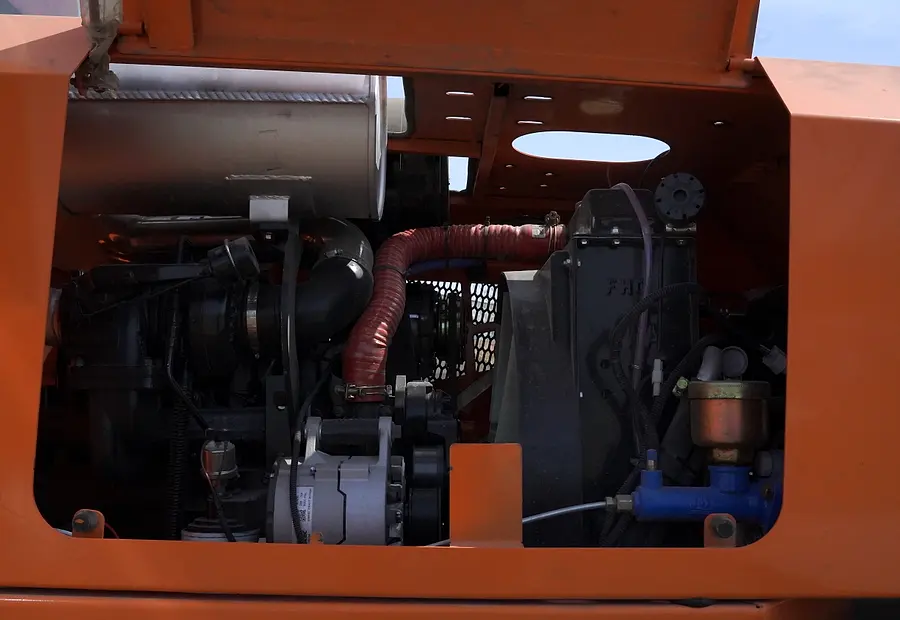
Dust can affect air filters, cooling, radiator condition, fuel filters, and general service intervals. Mud and water can make daily inspection harder. Long idle time can also make the buyer feel that fuel is disappearing faster than expected, even if the machine is not moving much.
This is why I connect fuel planning with maintenance access.
For overseas buyers, common items to discuss before shipment include:
- air filter
- fuel filter
- oil filter
- hydraulic filter
- belts and hoses
- seals and wear parts
- tire repair or replacement plan
- coolant and radiator cleaning routine
- parts diagrams and maintenance guidance
The exact spare parts list should match the final configuration and working condition. For a deeper discussion, this related guide on rough terrain forklift spare parts planning may help.
What I Ask Before Confirming A Recommendation
If a buyer asks me about forklift diesel tank capacity, I prefer to collect practical site information first.
Useful details include:
| Information | Why it matters |
|---|---|
| Daily working hours | Helps judge fuel routine and maintenance pressure |
| Travel distance | Long routes can change fuel planning more than tank size |
| Load weight and dimensions | Confirms whether the model has enough working margin |
| Ground condition | Mud, sand, gravel, slope, and broken ground affect effort |
| Loading pattern | Continuous work is different from truck-waiting work |
| Fuel availability | Remote refueling can create downtime |
| Operator habit | Long idling and aggressive driving affect fuel use |
| Dust and heat | Filters and cooling need more attention |
| Spare parts access | Export buyers should not wait for a small filter after a problem starts |
With these details, the recommendation becomes more useful.
Without them, the answer becomes only a number.
How Dealers Can Use This Question
For dealers, "forklift diesel tank capacity" is not a weak question. It is a chance to understand the customer.
If a customer asks only about tank size, the dealer can ask:
- What material are you moving?
- How many hours does the forklift work per day?
- How far does it travel per cycle?
- Is the route flat, soft, dusty, muddy, or sloped?
- Are you replacing an existing forklift?
- What problem are you trying to solve: refueling time, fuel cost, downtime, or work efficiency?
Those answers help decide whether the buyer should compare 3.5 ton, 5 ton, or heavier rough terrain forklift options.
They also help avoid a common mistake: selling a machine from a specification table without understanding the site.
My Practical Recommendation
If you are buying a diesel rough terrain forklift for outdoor work, ask for the diesel tank capacity, but do not stop there.
Also check the real working day:
- how far the forklift travels
- how often it stops and starts
- how heavy and stable the load is
- how rough the ground is
- whether the site is dusty, hot, muddy, or sloped
- how refueling is handled
- whether daily maintenance access is practical
- which spare parts should be prepared with the shipment
For many export buyers, the right forklift is not the one with the biggest tank on paper.
It is the machine whose capacity class, 4WD traction, tires, ground clearance, mast, steering choice, refueling routine, and service plan match the real job.
If you are comparing a diesel 4WD rough terrain forklift for construction, farm, brick yard, stone yard, port storage, or rental fleet use, send the load details, route photos, daily working hours, ground condition, destination country, and refueling situation before asking for a final recommendation.
That information helps us recommend a machine and configuration around the work, not only around one diesel tank number.