
When buyers choose a rough terrain forklift, they usually talk about capacity, engine, tires, mast height, and delivery time first.
Forks often come later.
Many buyers simply say:
"Standard forks are fine."
Sometimes they are right.
But in outdoor work, farms, brick yards, construction sites, warehouses with rough outdoor yards, and mixed-use material handling, fork configuration can quietly affect daily efficiency more than buyers expect.
A forklift may have enough rated load. It may have 4WD. It may use the right tires. But if the operator spends too much time repositioning the machine, adjusting fork spacing by hand, or struggling to align with pallets on uneven ground, the machine does not feel efficient in real work.
That is why I like to discuss three options early:
- standard forks
- side shifter
- fork positioner
They are not the same thing.
And choosing the wrong one can make a good forklift feel less useful after it arrives.
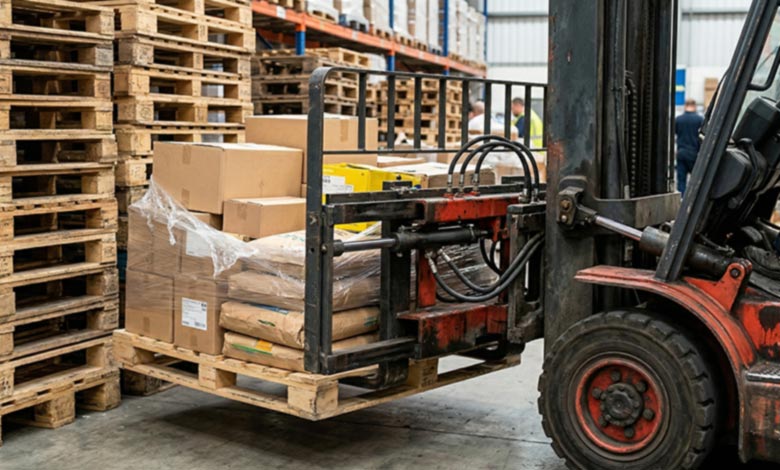
The Short Answer
Standard forks are usually enough when the buyer handles similar pallets, has enough working space, and does not need frequent fine alignment.
A side shifter is useful when the operator often needs small left-right adjustment after approaching the pallet or load.
A fork positioner is useful when the buyer often handles different pallet widths, different cargo sizes, or loads that require frequent fork-spacing changes.
For many buyers, the correct choice is not about choosing the most advanced attachment. It is about choosing the front-end setup that matches the daily material.
If you want a broader attachment overview, you can also read our guide on rough terrain forklift attachments and configurations.
Why This Question Matters More Outdoors
In a clean warehouse, the forklift may work on flat concrete, clear aisles, standard pallets, and fixed storage positions.
Outdoor work is different.
On construction sites, farms, stone yards, brick yards, timber yards, and outdoor warehouses, the operator may deal with:
- uneven ground
- loose pallets
- different cargo widths
- stacked material that is not perfectly aligned
- narrow working areas
- mud or gravel under the tires
- loads placed by trucks, workers, or other machines
- repeated loading and unloading under time pressure
In these conditions, the operator may not be able to approach every pallet perfectly straight.
That is where fork setup starts to matter.
The machine may only need a small correction, but without the right setup, that small correction may require reversing, turning, approaching again, and trying again. Do this many times in one day, and the operator feels it.
What Standard Forks Are Best For
Standard forks are the simplest and most common choice.
They are usually suitable when:
- cargo size is consistent
- pallets are similar
- working space is wide enough
- the operator can approach the load straight
- fork spacing does not need to change often
- the buyer wants a simple setup with fewer hydraulic functions
For many buyers, standard forks are still the right answer.
For example, if a buyer mainly unloads standard pallets from trucks, moves them across a yard, and stacks them in a predictable area, standard forks may be enough.
I do not recommend adding functions only because they sound useful.
Every additional function should solve a real daily problem.
The problem appears when the buyer says "standard forks are enough" before checking the real work. If the cargo width changes often, if the operator works in a tight space, or if alignment is always difficult, standard forks may slow the job down.
What a Side Shifter Actually Solves
A side shifter allows the fork carriage to move slightly left or right.
In daily work, this is useful when the forklift has already approached the pallet, but the forks are not perfectly aligned. Instead of reversing and repositioning the whole machine, the operator can make a small hydraulic adjustment.
This is especially helpful when:
- working space is limited
- the ground is muddy or uneven
- the operator cannot approach perfectly straight
- pallets are placed close together
- the forklift loads trucks or containers frequently
- material is stacked near walls, columns, or racks
- the site has many small alignment corrections
In my experience, buyers often underestimate this point.
They think side shift is only for convenience.
But on rough outdoor ground, convenience can become daily efficiency. It may reduce unnecessary reversing, reduce repeated steering correction, and make pallet handling smoother for the operator.
For a deeper side-shift angle, this related article may help: what are the benefits of adjustable forks with side shift on rough terrain forklifts?
A Typical Case: The Forklift Can Lift, But Alignment Wastes Time
A typical construction-material buyer may say:
"We handle pallets of blocks, cement, tiles, and mixed materials. Standard forks should be okay."
Then we look at the working area.
The forklift needs to unload trucks, move materials across uneven ground, and place pallets close to other stacks. The yard is not very wide. Sometimes workers place pallets in a hurry, so the pallet is not perfectly aligned.
The forklift has enough rated load.
The tire choice is suitable.
The engine power is not the problem.
But the operator keeps correcting the approach angle.
Without side shift, the machine may need to reverse and approach again for small left-right errors. With side shift, the operator can correct some of these small errors hydraulically.
In this kind of case, side shift does not make the forklift "stronger."
It makes the forklift easier to use in the real working area.
That is the difference buyers often miss.
What a Fork Positioner Actually Solves
A fork positioner adjusts the spacing between the forks hydraulically.
This is different from a side shifter.
Side shift moves the fork carriage left and right.
Fork positioning changes the distance between the forks.
This is useful when the buyer handles cargo with different widths, such as:
- different pallet sizes
- large bags
- crates
- bundled materials
- different farm products
- construction materials with mixed packaging
- loads that need wider or narrower fork support
If the operator needs to get off the machine often to manually adjust fork spacing, the work becomes slower. On hot, muddy, dusty, or busy job sites, this small task becomes irritating very quickly.
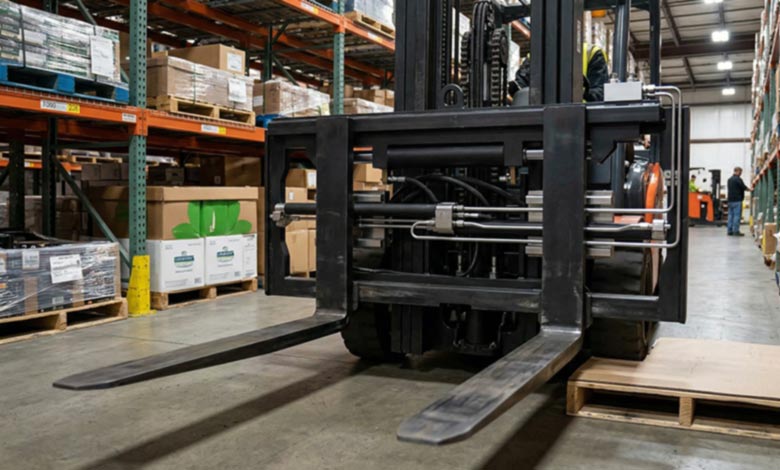
Side Shifter vs Fork Positioner
Many buyers mix these two up, so I explain it like this:
| Question | Side Shifter | Fork Positioner |
|---|---|---|
| What does it adjust? | Left-right position of the fork carriage | Distance between the forks |
| Main problem it solves | Small alignment correction | Different pallet or cargo widths |
| Best for | Tight spaces, truck loading, pallet alignment | Mixed pallet sizes, varied cargo, frequent fork spacing changes |
| Operator benefit | Less reversing and repositioning | Less manual fork adjustment |
| Buyer should check | Does the site often need small side correction? | Does cargo width change often? |
The best choice depends on the problem.
If the operator's problem is "I am slightly left or right of the pallet," side shift helps.
If the operator's problem is "the forks are too narrow or too wide for this load," a fork positioner helps.
If the buyer has both problems, then a combined setup may be worth discussing, but it should still be checked against load center, attachment weight, hydraulic requirements, and final configuration.
Do Not Add Attachments Without Checking Capacity and Load Center
Attachments are useful, but they are not magic.
A side shifter, fork positioner, fork extension, clamp, bucket, or other attachment can change the working condition of the forklift. It may add weight to the front, move the load forward, affect visibility, or change how the operator handles the load.
OSHA's powered industrial truck guidance emphasizes that load composition, weight distribution, and load center affect stability and capacity. OSHA 1910.178 also treats attachments and modifications seriously when they affect capacity and safe operation.
This is why I do not suggest choosing attachments only by habit.
Before confirming side shift or fork positioning, the buyer should tell the supplier:
- normal load weight
- maximum load weight
- pallet size
- cargo width
- lifting height
- ground condition
- turning space
- whether other attachments may be used later
- daily working hours
For attachment planning, the attachment itself is only one part of the decision. The final machine configuration also matters.
When Standard Forks Are Enough
Standard forks may be the better choice when:
- most pallets are the same size
- the operator has enough room to approach straight
- the work is simple loading and unloading
- cargo is compact and predictable
- the buyer wants fewer hydraulic functions
- the machine does not need frequent fork spacing changes
For example, a small yard that handles similar palletized goods every day may not need side shift or fork positioning. In that case, spending more attention on tires, mast height, service access, and spare parts may be more useful.
This is why the supplier should not automatically push every buyer toward more functions.
The right configuration should match the daily work.
When I Usually Recommend Side Shift
I usually discuss side shift when the buyer tells me:
- the working area is narrow
- pallets are placed close together
- truck loading and unloading happens often
- the ground makes perfect alignment difficult
- the operator often needs small left-right correction
- the forklift works around walls, columns, shelves, or stacked materials
This is common in outdoor warehouses, construction yards, brick yards, and mixed-use sites where space is not as clean as a planned warehouse aisle.
Side shift can be a practical option when small alignment corrections happen many times every day.
When I Usually Recommend a Fork Positioner
I usually discuss a fork positioner when the buyer handles different load widths.
For example:
- one load is a standard pallet
- the next load is a wider pallet
- another load is a large bag
- another load is a crate or bundled material
If the fork spacing must be changed often, manual adjustment becomes a daily interruption.
A fork positioner can make the machine more suitable for mixed cargo, especially when the operator needs to keep working without leaving the seat repeatedly.
But again, the final recommendation should be checked with load weight, load center, hydraulic setup, and the forklift's full configuration.
What to Send Before Choosing Fork Configuration
If you are not sure whether you need standard forks, side shift, or fork positioning, send these details before order:
- photos of the most common cargo
- pallet size or cargo width
- normal load weight
- maximum load weight
- how often the cargo size changes
- site photos showing working space
- truck loading or container loading requirement
- ground condition
- lifting height
- whether the operator works in narrow spaces
- whether other attachments may be needed later
This information helps the supplier recommend a front-end setup based on real work, not only on a standard brochure configuration.
You can also start from the BLANC-ELE rough terrain forklift range and then send us your working condition for configuration advice.
Final Thought
Standard forks, side shifter, and fork positioner all have a place.
The mistake is choosing before the daily work is clear.
If the load is consistent and the working space is simple, standard forks may be enough. If the operator often needs small left-right correction, side shift may save daily effort. If the cargo width changes often, a fork positioner may be more practical.
As a supplier, I prefer to ask about the work first:
"What do you lift every day, where do you place it, and how often does the cargo size change?"
That question usually leads to a better forklift configuration than simply saying:
"Standard forks are fine."
References
- OSHA Powered Industrial Trucks eTool: Load composition, load center, stability, and capacity considerations: https://www.osha.gov/etools/powered-industrial-trucks/load-handling/load-composition
- OSHA 29 CFR 1910.178: Powered industrial trucks, including requirements related to attachments, modifications, nameplates, and rated capacity: https://www.osha.gov/laws-regs/regulations/standardnumber/1910/1910.178
- BLANC-ELE rough terrain forklift attachment pages, product pages, and supplier-side configuration experience. Final configuration should be confirmed before order.