
When many customers experience forklift problems, the first reaction is usually:
“The machine quality is bad.”
But after seeing more outdoor job sites over the years, I’ve realized something important:
Many forklift problems actually begin long before the machine even arrives.
Because long-term forklift performance is not determined only by manufacturing quality.
Very often, it depends on whether the forklift was truly matched to the real working environment1.
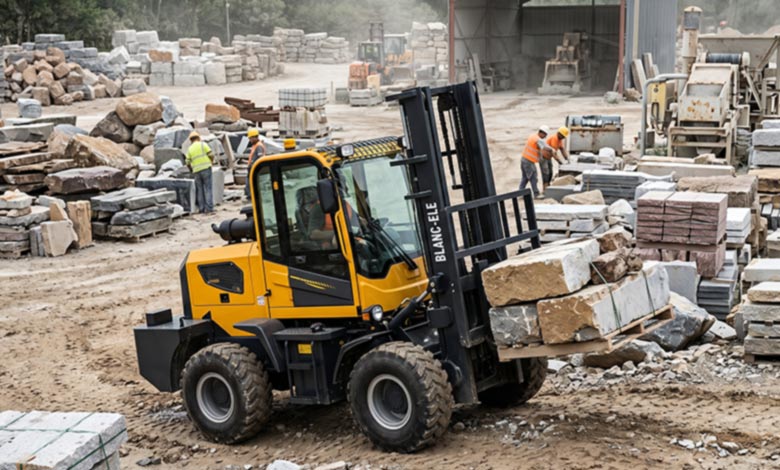
Many forklifts look perfectly fine when they first arrive on site. But once real outdoor work begins, problems gradually become more obvious.
Why Do Many Buyers Choose the Wrong Forklift From the Beginning?
When purchasing rough terrain forklifts for the first time, many buyers focus heavily on:
- Capacity
- Price
- Engine brand
- Specification sheets
Those things are important.
But many factors that truly affect long-term operation cannot be seen on a specification sheet2.
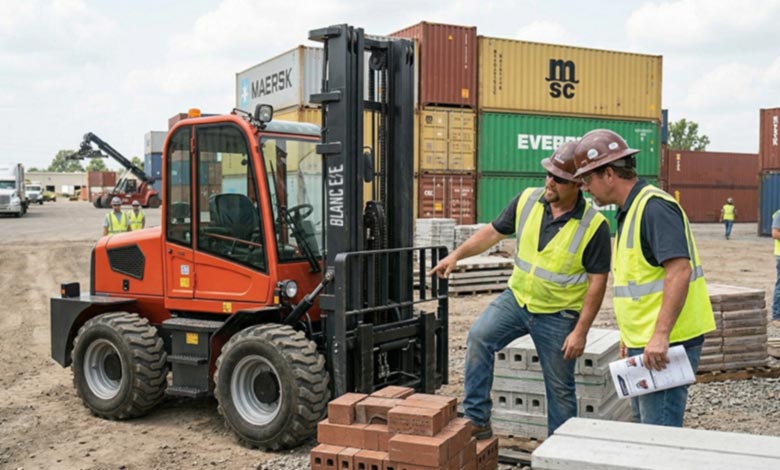
Dive Deeper
Over the years, I’ve realized that many customers did not actually purchase a “bad forklift.”
Instead, the forklift simply was not suitable for the job site from the beginning.
For example:
- Standard tires used in muddy terrain3
- Two-wheel drive used on slopes4
- Mast heights too tall for underground work5
- Engines too weak for heavy-load applications6
At first, the forklift may still appear usable.
But over time, the problems become increasingly obvious.
Problems Often Ignored During Purchasing
| What Buyers Focus On Initially | What Matters More Long-Term |
|---|---|
| Purchase price | Terrain suitability |
| Engine brand | Long-term reliability |
| Specifications | Real mobility |
| Initial power | Long-term work efficiency |
Many forklift problems are not caused by poor quality.
They begin because the forklift was never properly matched to the working environment.
Why Do Many Customers Underestimate Their Actual Working Conditions?
Many first-time buyers do not fully realize how different outdoor environments can completely change forklift requirements7.
Especially in:
- Muddy terrain
- Slopes
- Stone yards
- Rainy construction sites
- Farms
working conditions become far more demanding than expected.
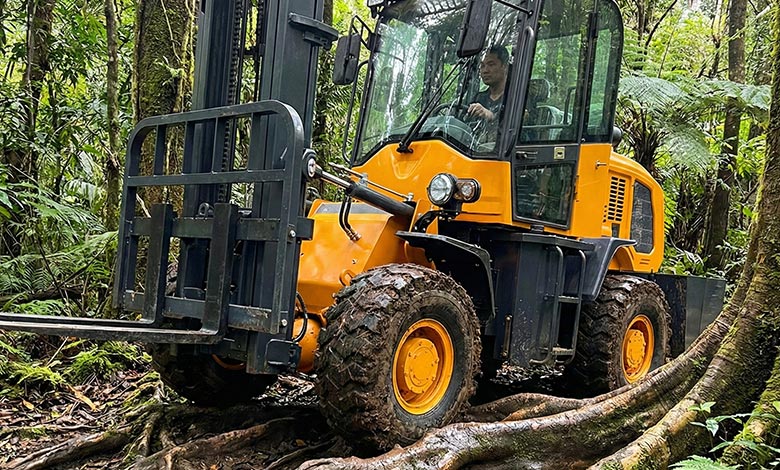
Dive Deeper
I once spoke with a customer working on a Southeast Asian rainy-season construction project.
At first, they simply thought:
“As long as the forklift can move, it should be fine.”
But once continuous rain arrived, they quickly discovered the muddy terrain was much more difficult than expected.
Their previous forklift suffered from:
- Poor tire traction
- Limited ground clearance
- Frequent slipping on slopes
Operators constantly corrected steering throughout the day.
When selecting new equipment later, they began paying much closer attention to:
- Four-wheel drive8
- Tire width
- Ground clearance
- Chassis stability
Because once forklifts enter difficult terrain, many real problems never appear on specification sheets.
Working Conditions That Are Often Underestimated
| Working Environment | Common Problem |
|---|---|
| Mud | Slipping and getting stuck |
| Slopes | Light steering feel |
| Stone yards | Faster tire wear |
| Rainy job sites | Reduced traction9 |
| Narrow sites | Difficult turning |
Many customers only realize how demanding their job site truly is after several months of operation.
Why Are Mast Height and Machine Size Frequently Chosen Incorrectly?
Many buyers focus heavily on lifting capacity during purchasing.
But in reality, mast height and overall forklift size often affect daily operation far more than expected.
Especially in:
- Underground garages
- Warehouses
- Shipping containers
- Narrow construction sites
physical dimensions become extremely important10.
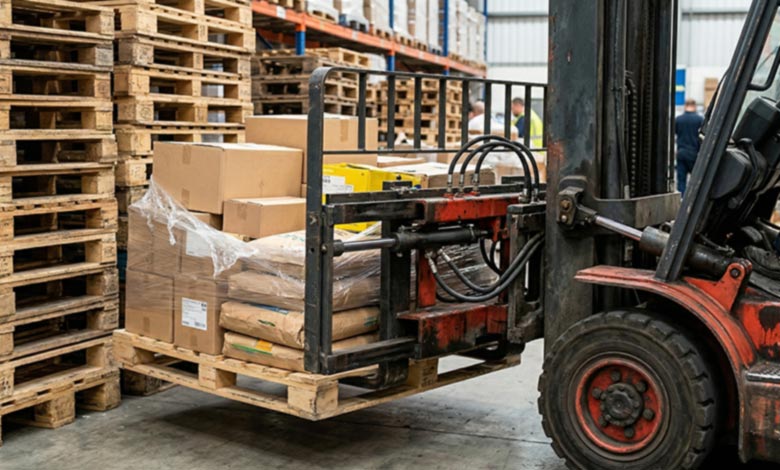
Dive Deeper
I once worked with a customer whose forklift arrived on site, only to discover the mast height could not enter the underground work area.
The customer eventually had to:
- Modify the site
- Replace equipment
- Lower mast specifications
This wasted both time and money.
Other customers encounter different problems:
The forklift capacity is sufficient.
But the machine itself is simply too large.
As a result:
- Turning becomes difficult
- Work areas become restricted
- Productivity decreases
Most of these problems could have been avoided during the purchasing stage.
Common Size-Related Problems
| Problem | Result |
|---|---|
| Mast too tall | Cannot enter low-clearance areas |
| Machine too wide | Difficult operation in narrow areas |
| Large turning radius | Lower efficiency |
| Long wheelbase | Reduced mobility |
Very often, the biggest issue is not lifting capacity.
It is whether the forklift truly fits the working environment.
Why Do Many Buyers Eventually Begin Prioritizing 4WD?
Many customers initially believe:
“Two-wheel drive should be enough.”
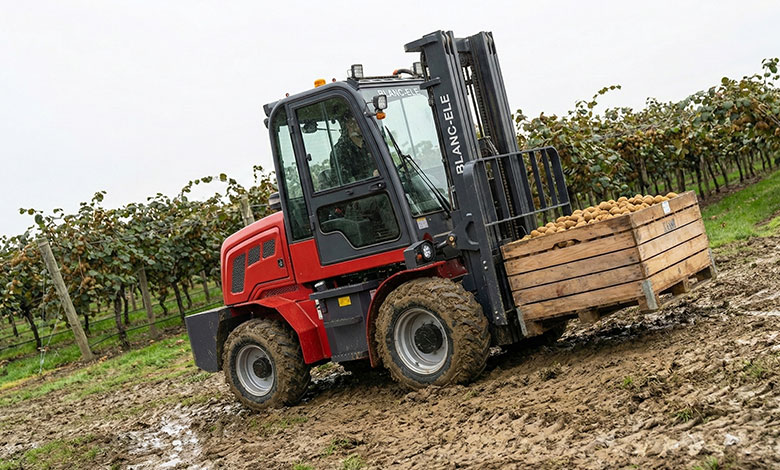
But once forklifts begin operating in real outdoor conditions, the importance of four-wheel drive becomes increasingly obvious.
Especially in:
- Slopes
- Mud
- Rainy construction sites
- Farms
traction and stability become critical11.
Dive Deeper
I’ve noticed many buyers initially focus only on:
“Can the forklift move?”
But after long-term use, they begin asking a different question:
“Can the forklift continue working reliably every day?”
Because two-wheel drive forklifts are more likely to:
- Slip
- Require constant steering correction
- Get stuck in soft ground
Meanwhile, four-wheel drive forklifts usually feel much more stable12.
Especially under heavy loads, the difference becomes even more noticeable.
Why 4WD Becomes More Important Over Time
| Configuration | Long-Term Effect |
|---|---|
| 2WD | More terrain limitations |
| 4WD | Better terrain adaptability |
| Stronger traction | Reduced risk of getting stuck |
| Stable mobility | Improved work efficiency |
Many customers completely change their opinion about 4WD after experiencing difficult outdoor conditions.
Why Are Attachment Problems Often Created During Purchasing?
Many buyers initially think:
“Let’s start with a standard forklift first.”
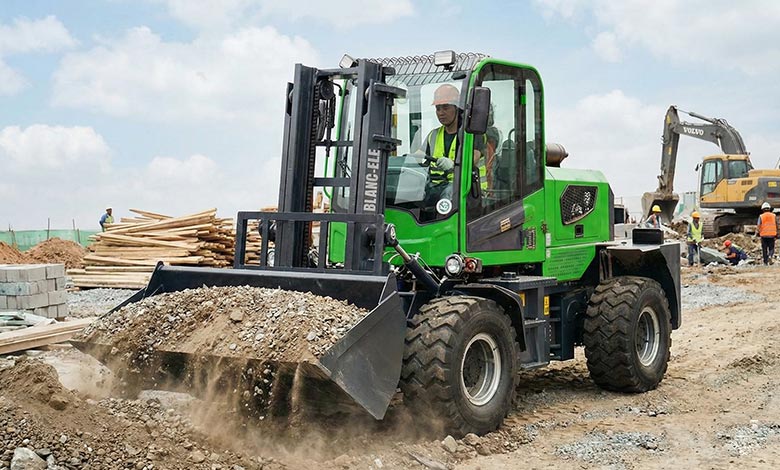
But after long-term operation, many customers realize that attachment selection directly affects work efficiency13.
Dive Deeper
For example, some customers initially skip side shifters.
But during long-term outdoor work, operators constantly need to reposition the entire forklift.
Especially in:
- Uneven terrain
- Narrow working spaces
- Irregular cargo handling
this becomes increasingly inefficient.
Other customers later discover that what they actually needed was:
- Buckets
- Bale clamps
- Crane jibs
- Tipping attachments
instead of standard forks alone.
Attachment Mistakes That Often Cause Regret Later
| Attachment Issue | Long-Term Effect |
|---|---|
| No side shifter | Lower operating efficiency |
| Incorrect attachment type | Limited work capability |
| Later modification | Higher cost |
| Poor cargo compatibility | Increased operating difficulty |
Very often, work efficiency depends not only on the forklift itself, but on whether the machine truly matches the actual job.
Why Do Experienced Buyers Ask So Many Detailed Questions?
After working with more outdoor forklift customers over the years, I’ve noticed something clearly:
Experienced buyers rarely begin by asking only about price.
Instead, they ask many detailed questions.
Because they understand something important:
Many forklift problems are already decided during the purchasing stage.
Dive Deeper
Experienced buyers often ask questions such as:
- Is the forklift suitable for this terrain?
- How steep are the slopes?
- What happens during rainy seasons?
- Is 4WD necessary?
- Is the mast height suitable?
- Are the tires appropriate for stone yards?
- Is a side shifter needed?
Because they understand:
The most expensive problems are often not future repairs.
The most expensive problems happen when the forklift was never properly matched to the job site from the beginning.
Why Experienced Buyers Focus on Details
| Focus Area | Reason |
|---|---|
| Terrain suitability | Reduce future problems |
| Maintenance accessibility | Reduce downtime |
| Proper configuration | Improve efficiency |
| Attachment selection | Better work compatibility |
Many long-term outdoor users eventually realize that proper forklift selection is just as important as forklift quality itself.
Conclusion
After seeing more outdoor applications over the years, I’ve realized many rough terrain forklift problems do not begin after years of operation — they begin much earlier, when the forklift and the job site were never truly matched in the first place.
"1910.178 - Powered industrial trucks. | Occupational Safety ... - OSHA", http://www.osha.gov/laws-regs/regulations/standardnumber/1910/1910.178. Industrial-truck safety guidance from government or standards bodies commonly states that truck selection must account for workplace surface, gradients, load characteristics, and operating environment; this supports the contextual claim that environment-fit influences forklift performance. Evidence role: expert_consensus; source type: government. Supports: Long-term forklift performance depends on whether the forklift is matched to the real working environment.. Scope note: Such guidance supports the principle of matching equipment to conditions but may not directly measure long-term failure rates. ↩
"1910.178 - Powered industrial trucks. | Occupational Safety ... - OSHA", http://www.osha.gov/laws-regs/regulations/standardnumber/1910/1910.178. Forklift and powered-industrial-truck guidance from occupational safety institutions identifies operational factors such as floor or ground condition, gradients, load stability, visibility, and traffic patterns as relevant to safe and effective use; this supports the claim that specifications alone do not capture all operational requirements. Evidence role: general_support; source type: institution. Supports: Specification sheets do not capture all factors that affect long-term forklift operation.. Scope note: The source would provide contextual support rather than proving that buyers commonly overlook these factors. ↩
"[PDF] A Guide to Getting the Best Value and Performance", https://ag.purdue.edu/department/extension/ppp/resources/ppp-publications/_docs/ppp-99.pdf. Technical tire and vehicle-traction references explain that tire tread pattern, contact area, and ground conditions affect traction on soft or wet surfaces; this supports the example that standard tires may be unsuitable for muddy terrain. Evidence role: mechanism; source type: education. Supports: Standard tires can be inappropriate for muddy terrain because tire design and surface conditions affect traction.. Scope note: A general traction source supports the mechanism but may not evaluate a specific forklift tire model. ↩
"[PDF] Prediction of mobility, handling, and tractive efficiency of wheeled off ...", https://ross.aoe.vt.edu/papers/senatore-2010-thesis.pdf. Vehicle dynamics and off-road mobility literature describes how available tractive effort and weight transfer affect hill-climbing and gradeability; this supports the contextual point that drive configuration matters on slopes. Evidence role: mechanism; source type: paper. Supports: Two-wheel-drive forklifts can be poorly suited to slopes because drive configuration affects traction and gradeability.. Scope note: The source may discuss vehicle traction generally rather than forklift-specific slope performance. ↩
"eTool : Powered Industrial Trucks (Forklift) - Pre-Operation - OSHA", http://www.osha.gov/etools/powered-industrial-trucks/operating-forklift/pre-operation/measurements. Forklift safety and operating guidance requires attention to overhead clearance, mast height, and the dimensions of doors, ceilings, and obstructions; this supports the claim that mast height can make a forklift unsuitable for low-clearance work areas. Evidence role: definition; source type: government. Supports: A mast that is too tall can prevent a forklift from operating in underground or low-clearance areas.. Scope note: The evidence would establish the relevance of clearance checks but would not document the specific customer example in the article. ↩
"eTool : Powered Industrial Trucks (Forklift) - Load Handling - OSHA", http://www.osha.gov/etools/powered-industrial-trucks/load-handling/load-composition. Engineering references on vehicle powertrain performance and gradeability explain that engine power and torque influence a vehicle’s ability to move loads, particularly under grades or resistance; this supports the claim that insufficient power can limit heavy-load applications. Evidence role: mechanism; source type: education. Supports: Insufficient engine power or torque can make a forklift unsuitable for heavy-load applications.. Scope note: The evidence would be mechanical context and may not specify a threshold for any particular forklift model. ↩
"1910.178 - Powered industrial trucks. | Occupational Safety ... - OSHA", http://www.osha.gov/laws-regs/regulations/standardnumber/1910/1910.178. Occupational safety guidance for powered industrial trucks distinguishes operating hazards by workplace conditions, including outdoor surfaces, ramps, slopes, weather, and terrain; this supports the claim that outdoor environments can change forklift requirements. Evidence role: expert_consensus; source type: government. Supports: Outdoor environments such as mud, slopes, rain, farms, and construction sites can change forklift requirements.. Scope note: The guidance supports the principle but does not quantify how often buyers underestimate outdoor conditions. ↩
"Aem Rough Terrain Forklift Safety Manual", https://admisiones.unicah.edu/scholarship/XlIpDe/6OK120/aem-rough-terrain_forklift__safety__manual.pdf. A technical or safety source on rough-terrain forklifts and off-road traction explains that driving all four wheels can improve traction and mobility on soft, wet, uneven, or sloped ground, supporting the article’s point that 4WD becomes important in demanding outdoor conditions. Evidence role: mechanism; source type: education. Supports: Four-wheel drive is often more suitable than two-wheel drive for rough-terrain forklift operation in mud, slopes, rainy construction sites, and farms because traction and stability are critical.. Scope note: The source may support the traction advantage of 4WD generally; actual forklift stability and suitability also depend on tires, load, ground conditions, operator practice, and manufacturer specifications. ↩
"[PDF] REVIEW OF CAUSES AND ALLEVIATION OF LOW TIRE TRACTION ...", https://ntrs.nasa.gov/api/citations/19680010151/downloads/19680010151.pdf. Road and vehicle-safety research shows that wet surfaces reduce tire-road friction and increase the likelihood of loss of traction; this supports the article’s statement that rainy job sites can reduce traction. Evidence role: mechanism; source type: research. Supports: Rainy job sites can reduce traction for forklifts.. Scope note: Most friction studies address road vehicles, so the support is mechanistic rather than forklift-specific. ↩
"eTool : Powered Industrial Trucks (Forklift) - Narrow Aisles - OSHA", http://www.osha.gov/etools/powered-industrial-trucks/workplace/narrow-aisles. Forklift operating guidance emphasizes checking aisle width, turning radius, door height, overhead clearance, and confined-space dimensions before use; this supports the claim that physical dimensions are important in warehouses, containers, garages, and narrow sites. Evidence role: expert_consensus; source type: government. Supports: Mast height and overall forklift size can strongly affect daily operation in confined or low-clearance environments.. Scope note: The source would support the operational relevance of dimensions but not the frequency with which buyers choose them incorrectly. ↩
"1910.178 - Powered industrial trucks. | Occupational Safety ... - OSHA", http://www.osha.gov/laws-regs/regulations/standardnumber/1910/1910.178. Forklift safety literature identifies stability, load center, grades, surface condition, and traction as key factors in safe operation, especially on ramps or uneven ground; this supports the claim that traction and stability are critical in outdoor work. Evidence role: expert_consensus; source type: government. Supports: On slopes, mud, rainy construction sites, and farms, forklift traction and stability are critical.. Scope note: The evidence supports the safety and operational importance of traction and stability but may not compare specific 2WD and 4WD models. ↩
"What Slope Can a Forklift Handle? Why Rough Terrain ... - blanc-ele", https://www.blanc-ele.com/what-slope-can-a-forklift-handle-why-rough-terrain-forklifts-are-the-safest-choice/. Off-road vehicle mobility references explain that all-wheel or four-wheel drive can distribute tractive force across more wheels and improve mobility on low-traction surfaces; this supports the contextual claim that 4WD may improve rough-terrain stability and mobility. Evidence role: mechanism; source type: research. Supports: Four-wheel-drive forklifts can provide better rough-terrain mobility and perceived stability than two-wheel-drive forklifts.. Scope note: The evidence would support the drivetrain mechanism generally and may not prove that every 4WD forklift feels more stable than every 2WD model. ↩
"1910.178 - Powered industrial trucks. | Occupational Safety ... - OSHA", http://www.osha.gov/laws-regs/regulations/standardnumber/1910/1910.178. Powered-industrial-truck guidance notes that attachments alter a forklift’s function, capacity, load handling, and operating characteristics; this supports the claim that selecting appropriate attachments can affect work capability and efficiency. Evidence role: general_support; source type: government. Supports: Forklift attachment selection affects work efficiency and capability.. Scope note: The source would directly support the functional effect of attachments, while the efficiency effect may be contextual unless measured in a specific study. ↩