
When many buyers purchase a rough terrain forklift, the first thing they usually compare is the purchase price.
But after seeing more outdoor job sites over the years, I’ve realized something important:
The real difference between forklifts often does not appear when they are new.
It appears several years later.
In long-term outdoor use, maintenance convenience, downtime frequency, component wear, and daily serviceability often determine whether a forklift remains economical to own1.
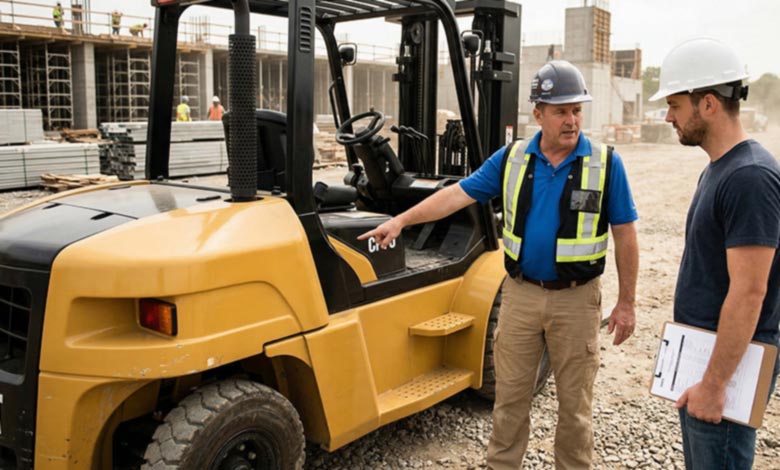
Many forklifts look similar when they are brand new, but after years of outdoor work, the differences in maintenance cost, reliability, and operator experience become much more obvious.
Why Do Many Buyers Focus Mainly on Purchase Price at the Beginning?
When customers first compare forklifts, the easiest things to compare are usually:
- Engine brand
- Specifications
- Capacity
- FOB price
Those things are important.
But many long-term problems are almost invisible during the purchasing stage.
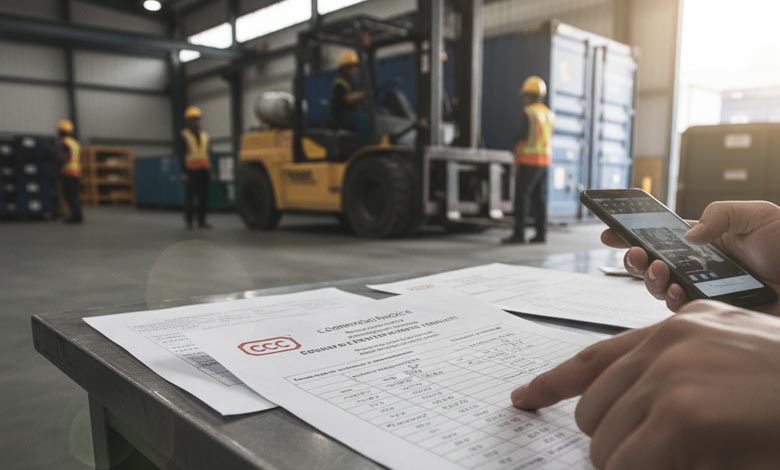
Dive Deeper
Especially for buyers purchasing their first rough terrain forklift, the biggest focus is often:
“How much does it cost today?”
But after years of outdoor operation in:
- Mud
- Dust
- Gravel
- Heavy-load conditions
- Continuous daily work
forklift wear increases much faster than many people expect2.
At first, many machines may seem very similar.
But after two or three years, the differences become increasingly obvious3.
Why Long-Term Cost Is Often Ignored
| Focus During Purchase | Problems That Appear Later |
|---|---|
| Purchase price | Downtime frequency |
| Engine specifications | Maintenance difficulty |
| Initial power | Long-term reliability |
| Equipment configuration | Component lifespan |
Many forklifts become expensive not because of the purchase price, but because they gradually become harder to maintain.
Why Does Maintenance Convenience Become More Important Over Time?
Many buyers initially think maintenance is simple:
Change oil. Apply grease. Replace filters.
But after long-term outdoor operation, maintenance convenience directly affects machine condition.
Especially with rough terrain forklifts, if service points are difficult to access, maintenance intervals often become longer and longer4.
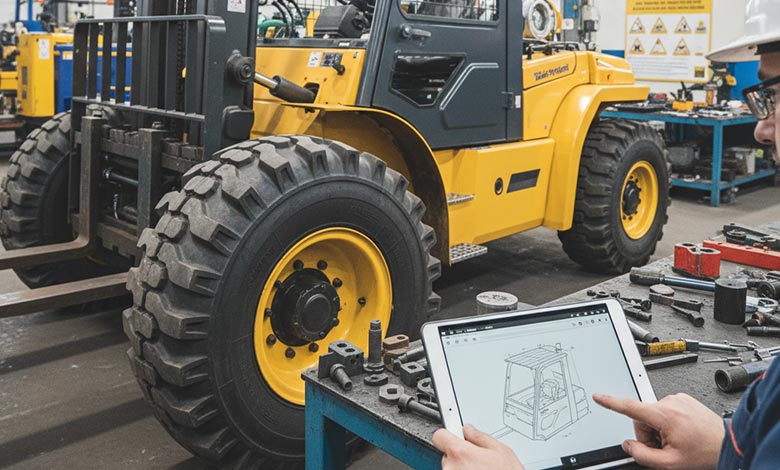
Dive Deeper
I once spoke with a Southeast Asian construction customer whose previous forklift required mechanics to crawl underneath the chassis regularly just to apply grease.
At the beginning, maintenance was performed normally.
But over time:
- The chassis became covered in mud
- The work environment became dirtier
- Access space was too limited
- Daily servicing became inconvenient
Gradually, maintenance started getting delayed.
Eventually, pin and joint wear became increasingly serious5.
When they later purchased new equipment, maintenance accessibility became one of their biggest priorities.
What Makes Maintenance More Difficult?
| Design Problem | Long-Term Effect |
|---|---|
| Hard-to-reach grease points | Longer maintenance intervals |
| Limited chassis space | Lower service efficiency |
| Hidden inspection areas | Oil leaks harder to detect |
| Complicated hose layouts | More difficult troubleshooting |
Many forklifts are not impossible to maintain.
They simply become increasingly unpleasant to maintain.
Why Can Downtime Become More Expensive Than Repairs?
Many buyers initially think:
“Higher repair costs are acceptable.”
But after long-term operation, many customers realize something else:
Downtime is often far more expensive than the repair itself6.
Especially in:
- Stone yards
- Construction sites
- Farms
- Ports
Once equipment stops working, the entire workflow is affected7.
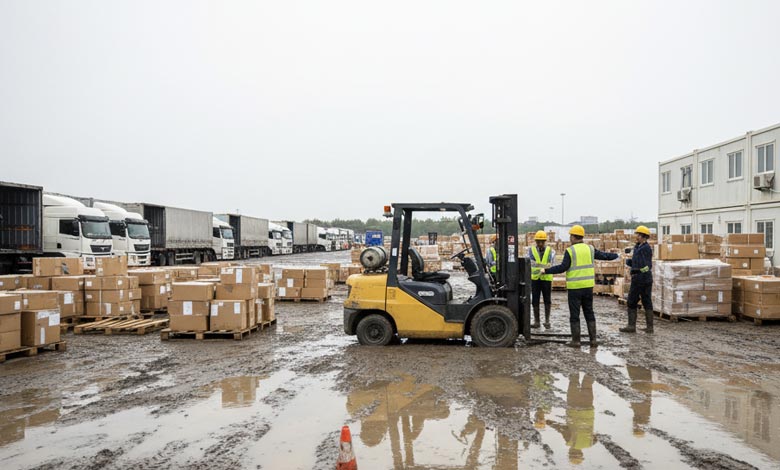
Dive Deeper
I once spoke with a Middle Eastern customer whose forklift suffered a hydraulic hose problem.
The repair cost itself was not extremely high.
But the forklift remained out of service for two days.
The entire loading schedule at the site was disrupted.
After that experience, they began paying much more attention to:
- Ease of component replacement
- Maintenance space accessibility
- Simplicity of daily inspection
Because in many cases, the real expense is not the repair itself.
It is the machine being unable to work.
Why Downtime Increases Operating Cost Quickly
| Downtime Problem | Result |
|---|---|
| Construction delays | Project interruption |
| Workers waiting8 | Increased labor cost |
| Temporary replacement equipment9 | Rental expense |
| Lower loading efficiency | Reduced overall productivity |
Many long-term outdoor users eventually begin prioritizing reliability much more seriously.
Why Do Some Operators Gradually Stop Wanting to Use Certain Forklifts?
This is actually a very real issue.
Many forklifts feel fine when they are new.
But after several years:
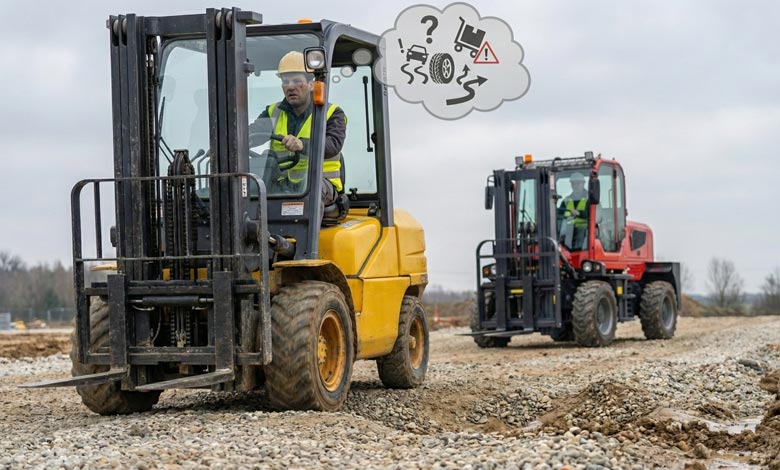
- Steering becomes heavier
- More abnormal noises appear
- Mast movement increases
- Oil leakage becomes more common
Operators gradually become less willing to use the machine.
Long-term maintenance condition directly affects operator experience10.
Dive Deeper
I’ve noticed that many buyers initially focus only on:
“Can the forklift do the job?”
But over time, more customers begin focusing on something different:
“Do operators still want to use it every day?”
Because operators interact with the machine constantly.
They usually notice problems before anyone else.
Especially during:
- Long outdoor shifts
- Heavy-load operation
- Rough terrain work
poor maintenance gradually changes how the entire forklift feels.
Problems Operators Notice First
| Common Problem | Effect |
|---|---|
| Heavy steering | Increased fatigue |
| Mast shaking | Reduced confidence |
| Oil leakage | Poor working environment |
| Abnormal noise | Reduced trust in machine |
In many cases, operators notice declining machine condition long before major failures happen11.
Why Do Small Design Details Reduce Long-Term Operating Cost?
After seeing more rough terrain forklifts over the years, I’ve realized something clearly:
The best forklifts are not simply the ones with the highest specifications.
The best forklifts are the ones that remain easy to inspect, easy to maintain, and easy to service after years of hard work.
Many design details seem unimportant at first, but become extremely valuable over time.
Dive Deeper
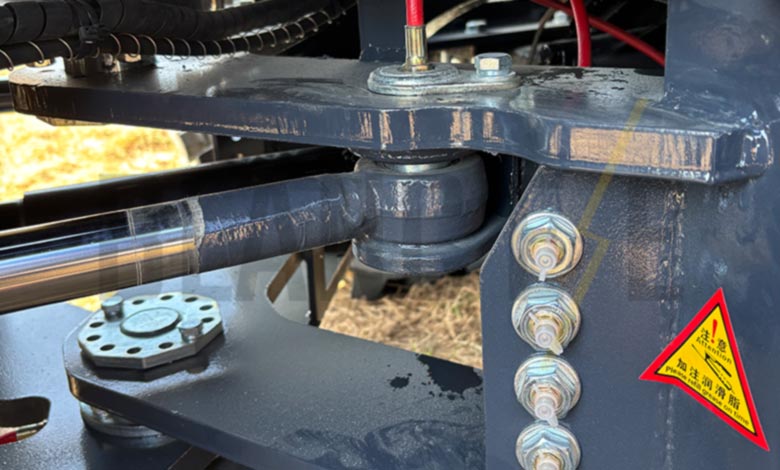
Today, more buyers are paying attention to features such as:
- External grease lines
- External fuel filling ports
- Visible fuel level indicators
- Larger maintenance access areas
- Cleaner hydraulic layouts
Because these details directly affect:
- Daily maintenance efficiency
- Operator experience
- Downtime probability
- Long-term ownership cost
In many cases, the true long-term value of a forklift is not decided by the specification sheet.
It is decided by whether the machine still feels reliable and easy to live with after years of outdoor work.
Design Features That Reduce Long-Term Cost
| Design Feature | Long-Term Benefit |
|---|---|
| External grease lines | Easier maintenance |
| External fuel port | Faster refueling |
| Visible fuel indicator | Easier inspection |
| Larger maintenance space12 | Improved repair efficiency |
| Cleaner structural layout | Reduced maintenance difficulty |
Many experienced outdoor users eventually begin caring more about these details than initial specifications.
Conclusion
After seeing more outdoor applications over the years, I’ve realized truly expensive forklifts are not always the ones with the highest purchase price — they are the ones that gradually become harder to maintain, easier to shut down, and more frustrating to keep operating.
"[PDF] Major Equipment Life-cycle Cost Analysis - Institute for Transportation", https://mdl.mndot.gov/_flysystem/fedora/2023-01/201516.pdf. A life-cycle cost source can support that ownership cost for industrial equipment includes acquisition, maintenance, repair, downtime, and operating costs, rather than purchase price alone. Evidence role: general_support; source type: government. Supports: In long-term outdoor use, maintenance convenience, downtime frequency, component wear, and daily serviceability often determine whether a forklift remains economical to own.. Scope note: This would support the cost framework generally, not prove the economics of any specific rough terrain forklift model. ↩
"29 CFR § 1926.57 - Ventilation. - Law.Cornell.Edu", https://www.law.cornell.edu/cfr/text/29/1926.57. A source on off-road or construction equipment maintenance can support that abrasive dust, mud, heavy loading, and rough ground increase wear and maintenance demands for mechanical and hydraulic components. Evidence role: mechanism; source type: education. Supports: Outdoor operation in mud, dust, gravel, heavy-load conditions, and continuous daily work accelerates forklift wear.. Scope note: The evidence is likely to describe mechanisms and operating conditions generally rather than quantify wear acceleration for all forklifts. ↩
"[PDF] Major equipment life cycle cost analysis by Edward P. O'Connor", https://dr.lib.iastate.edu/bitstreams/9cc741a3-8603-4628-8890-d1ae29f0bded/download. A reliability or maintenance-cost study can support that differences in equipment reliability and maintenance requirements tend to emerge during the operating life, after initial purchase and commissioning. Evidence role: general_support; source type: paper. Supports: Differences among forklifts become more visible after several years of operation.. Scope note: The cited source may not confirm the specific two- or three-year timeframe unless it studies forklifts over that duration. ↩
"Corrective Maintenance Time (CMT) | www.waru.edu", https://www.waru.edu/acquipedia-article/corrective-maintenance-time-cmt. A maintainability engineering source can support that poor accessibility increases maintenance time and can reduce the likelihood or regularity of preventive maintenance tasks. Evidence role: mechanism; source type: research. Supports: Difficult access to service points can lead to longer or less consistent maintenance intervals.. Scope note: This supports the maintainability principle; it may not directly measure behavior among rough terrain forklift owners. ↩
"Choosing And Applying Lubricating Grease", https://ag.purdue.edu/department/extension/ppp/resources/ppp-publications/mobile/ppp-1451.html. A tribology or machinery-maintenance source can support that inadequate lubrication increases friction and wear in pins, bushings, and articulated joints. Evidence role: mechanism; source type: paper. Supports: Delayed greasing can increase pin and joint wear in machinery.. Scope note: The evidence would support the wear mechanism generally, not verify the specific customer anecdote. ↩
"[PDF] Major equipment life cycle cost analysis by Edward P. O'Connor", https://dr.lib.iastate.edu/bitstreams/9cc741a3-8603-4628-8890-d1ae29f0bded/download. A construction-equipment cost study can support that downtime costs include lost production, idle labor, schedule delay, and replacement equipment, which may exceed direct repair costs in some operations. Evidence role: statistic; source type: paper. Supports: Downtime can cost more than the direct repair expense for work equipment.. Scope note: The relative size of downtime and repair costs varies by job site, utilization rate, and availability of backup equipment. ↩
"[PDF] Reducing Machine Downtime through Improved Material Flow", https://scholarworks.wmich.edu/cgi/viewcontent.cgi?article=3093&context=honors_theses. A construction productivity or logistics source can support that failure of key handling equipment can interrupt dependent tasks, reduce productivity, and cause schedule disruption. Evidence role: general_support; source type: paper. Supports: Failure of a forklift or similar handling machine can disrupt site workflow.. Scope note: This support is contextual because workflow impact depends on how critical the forklift is to the site process. ↩
"[PDF] Major equipment life cycle cost analysis by Edward P. O'Connor", https://dr.lib.iastate.edu/bitstreams/9cc741a3-8603-4628-8890-d1ae29f0bded/download. A productivity or downtime-cost source can support that equipment unavailability can create idle labor time, which is treated as a direct economic consequence of downtime. Evidence role: mechanism; source type: paper. Supports: Equipment downtime can cause workers to wait and increase labor cost.. Scope note: The source may describe idle labor as one component of downtime cost rather than quantify it for forklift-specific operations. ↩
"Maintenance Costs and Advanced Maintenance Techniques ... - PMC", https://pmc.ncbi.nlm.nih.gov/articles/PMC9890517/. A fleet-management or construction-equipment cost source can support that downtime may require rental or standby replacement equipment, adding to total operating cost. Evidence role: general_support; source type: government. Supports: Downtime can create rental expense for temporary replacement equipment.. Scope note: This support would establish replacement rental as a recognized downtime cost, not show that it occurs in every forklift failure. ↩
"Woodworking - Packaging/Shipping - Forklifts/Pallet Jacks - OSHA", https://www.osha.gov/etools/woodworking/packaging-shipping/forklifts-pallet-jacks. An occupational ergonomics or industrial-vehicle safety source can support that equipment condition, steering effort, vibration, noise, and leaks affect operator comfort, fatigue, and perceived safety. Evidence role: expert_consensus; source type: government. Supports: The maintenance condition of a forklift affects operator experience.. Scope note: This would support the relationship between machine condition and operator experience generally, not measure the effect for the forklifts discussed in the article. ↩
"[PDF] An unsupervised approach to early fault detection ... - UPCommons", https://upcommons.upc.edu/bitstreams/d212903b-e17d-49f7-aac1-24cb8512a086/download. A condition-monitoring or maintenance source can support that operators’ observations of abnormal noise, vibration, leakage, or handling changes are useful early indicators of equipment deterioration. Evidence role: mechanism; source type: research. Supports: Operators may notice signs of declining machine condition before major failures occur.. Scope note: The evidence may show that operator observation contributes to early fault detection, not that operators always detect problems before formal inspections. ↩
"[PDF] Design for Maintainability OCHMO-TB-036 - Executive Summary", https://www.nasa.gov/wp-content/uploads/2023/12/ochmo-tb-036-design-for-maintainability.pdf. A maintainability-design source can support that adequate access space around components reduces inspection and repair time and improves service efficiency. Evidence role: mechanism; source type: research. Supports: Larger maintenance access areas can improve repair efficiency and reduce maintenance difficulty.. Scope note: This would support the design principle generally rather than rank specific forklift designs. ↩