
Many forklifts feel completely normal when running empty. But once they enter outdoor job sites, farms, or stone yards — especially under heavy loads — some machines immediately begin feeling unstable.
From my experience working around outdoor rough terrain conditions, true forklift stability is not only about lifting capacity1. Tires, chassis structure, weight distribution, ground contact, and drivetrain design all play major roles2 in how stable a forklift feels under load.
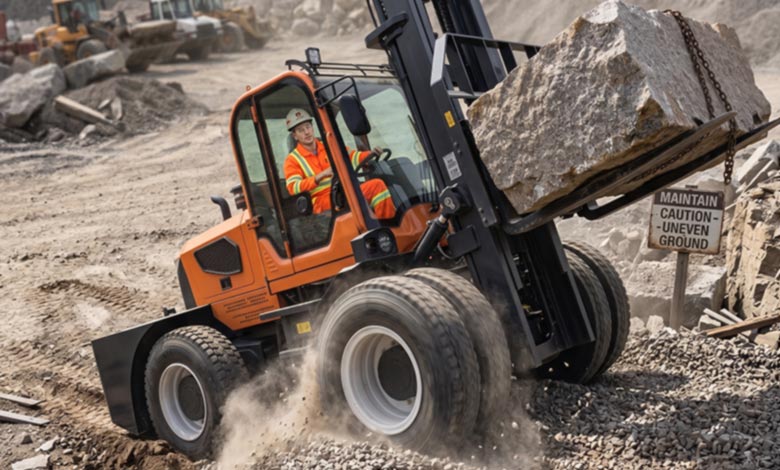
I’ve noticed that experienced buyers often care less about engine power during test drives, and much more about whether the machine still feels stable when carrying heavy loads.
Why Do Some Forklifts Feel Fine Empty But Completely Different Under Load?
Many forklifts feel smooth and easy to operate while unloaded.
But once they begin:
- Carrying heavy materials
- Turning under load
- Driving across uneven ground
- Lifting loads high
their weaknesses quickly become obvious.
The real stability of a forklift is usually exposed only during heavy-duty operation.3
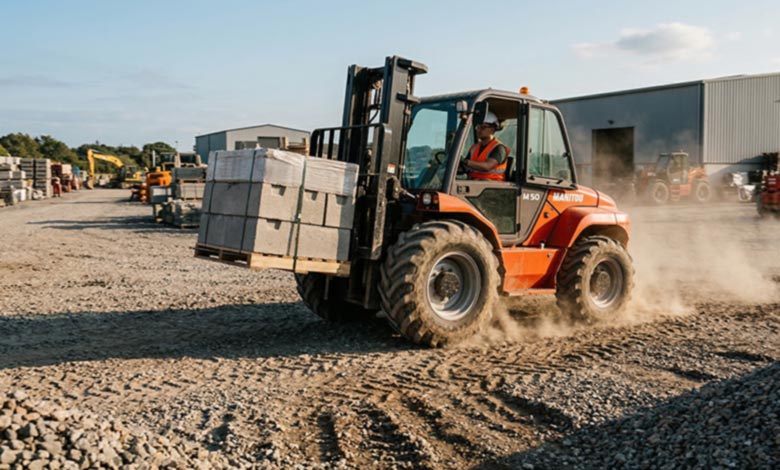
Dive Deeper
I once accompanied a customer during a forklift test drive. At first, he felt several machines seemed similar.
But later, he intentionally tested:
- Loaded turning
- Uneven ground driving
- High mast lifting
The differences immediately became clear.
Some forklifts began showing:
- Body shaking
- Rear wheel floating
- Mast sway
- Unstable steering feel
Meanwhile, other machines felt much more “solid,” even if they were not necessarily the fastest.
Experienced buyers pay close attention to this feeling.
Because they understand something important:
Outdoor forklifts are usually most dangerous under heavy loads — not when running empty.4
Why Heavy Loads Expose Problems Faster
| Working Condition | Common Stability Problem |
|---|---|
| Loaded turning | Weight shift |
| High lifting | Mast sway |
| Uneven terrain | Chassis instability |
| Muddy ground | Reduced tire grip |
Many forklifts perform similarly on flat concrete, but heavy outdoor work quickly exposes major differences5.
Why Do Tires Directly Affect the Feeling of Stability?
Many buyers focus heavily on engines and lifting capacity when choosing forklifts.
But outdoors, tires affect stability far more than many people expect6.
Tire width, tread design, structure, and contact area all directly affect how stable a forklift feels under heavy loads.7
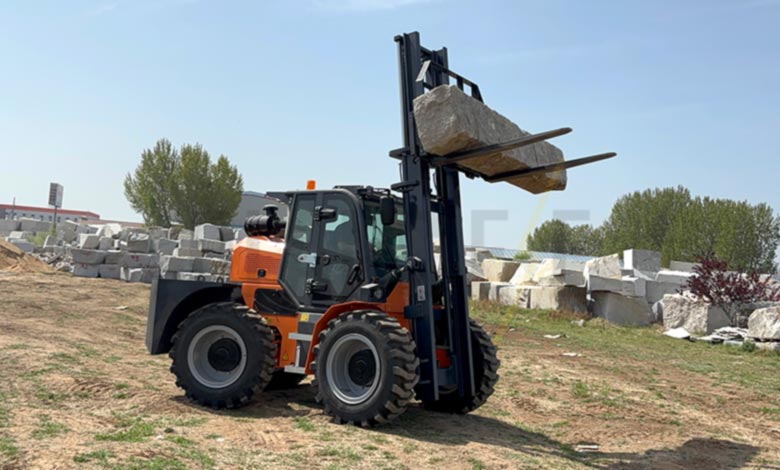
Dive Deeper
I once visited a stone yard where the difference became extremely obvious.
Several forklifts had similar lifting capacities, but some used narrower tires.
Under heavy loads while turning, operators clearly felt the machine becoming “light” or unstable.
Meanwhile, forklifts with wider tires and larger ground contact areas felt much more planted.
This becomes especially obvious on:
- Gravel surfaces
- Muddy ground
- Slopes
- Uneven construction sites
Today, many experienced buyers intentionally pay attention to whether a forklift feels firmly planted on the ground.
How Tires Affect Stability
| Tire Feature | Stability Effect |
|---|---|
| Wider tires | Better support |
| Deep tread8 | Improved traction |
| Semi-solid tires | Increased stability |
| Larger contact area | Reduced slipping |
These differences may seem small initially, but become increasingly obvious during long-term heavy-duty outdoor operation.
Why Does Four-Wheel Drive Make Forklifts Feel More Stable?
Many people think four-wheel drive only improves off-road mobility.
But in real outdoor heavy-load environments, 4WD also significantly improves stability9.
Four-wheel drive helps forklifts maintain traction and balance more effectively on difficult surfaces.

Dive Deeper
I’ve seen this many times on farms and construction sites.
Two-wheel drive forklifts often begin slipping during:
- Wet ground driving
- Slope operation
- Muddy turning
Once slipping begins, operators constantly correct steering.
This creates an unstable feeling very quickly.
Meanwhile, four-wheel drive forklifts usually feel more controlled because traction remains more evenly distributed10.
Under heavy loads, the difference becomes even more obvious.
Why 4WD Improves Stability
| Feature | Effect |
|---|---|
| Four-wheel drive | Better traction |
| Balanced power delivery | Reduced slipping |
| More stable turning | Better control |
| Stronger terrain adaptability | Increased operator confidence |
Many buyers who work long-term in outdoor environments eventually begin prioritizing 4WD systems much more seriously.
Why Does Weight Distribution Affect Operator Confidence?
Some forklifts make operators feel uncomfortable within just a few minutes of driving.
Very often, this feeling comes from poor weight balance.
Center of gravity, machine width, and counterweight design directly affect how confident operators feel under heavy loads.11
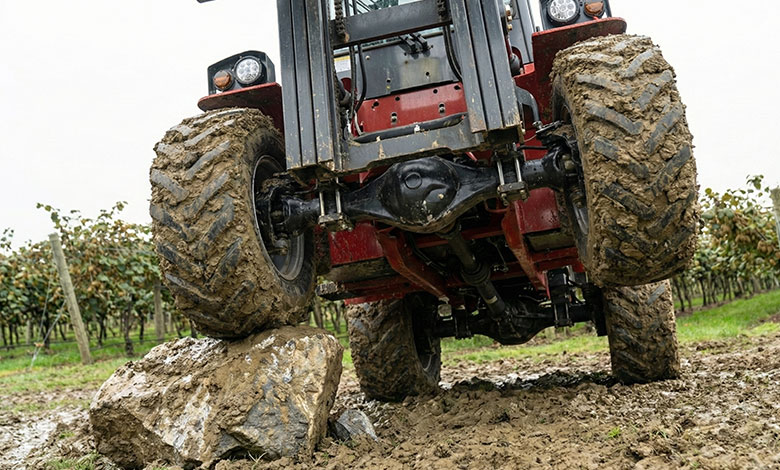
Dive Deeper
I remember one customer saying something during a test drive that stayed in my mind.
He said:
“Some forklifts immediately make you feel like you shouldn’t drive fast.”
This does not always mean the engine is weak.
Often, it simply means the machine does not feel stable enough.
Especially during:
- High lifting
- Slope driving
- Loaded turning
poor weight distribution makes operators instinctively nervous.
Meanwhile, forklifts with stable chassis design allow operators to work much more confidently.
What Affects Forklift Weight Balance?
| Factor | Influence |
|---|---|
| Machine width | Side stability |
| Counterweight design | Overall balance |
| Mast structure | Lifting stability |
| Chassis layout | Center of gravity |
In many cases, operator confidence reveals more truth than specification sheets.
Why Does Mast Movement Make Operators Uncomfortable?
Many experienced buyers intentionally raise the mast high during test drives.
Because people who work in outdoor material handling understand something important:
Mast stability matters a lot.
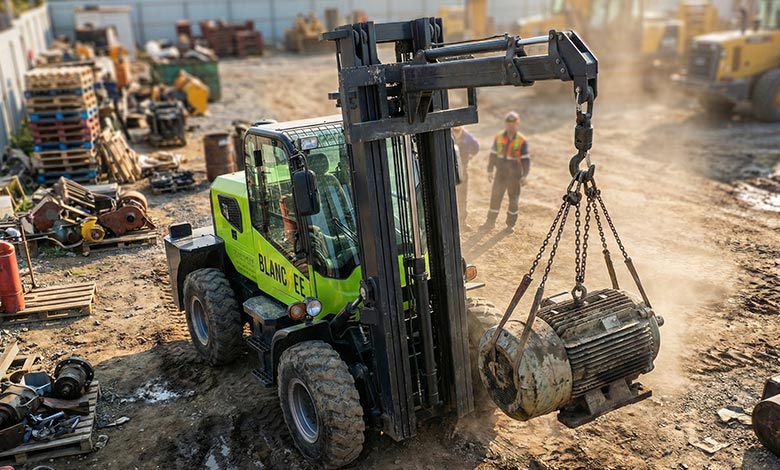
Excessive mast movement not only affects operation quality, but also directly affects operator confidence.
Dive Deeper
Especially in environments such as:
- Stone yards
- Construction sites
- Heavy material handling areas
operators frequently work with raised loads.
If mast stability is poor:
- Loads begin swaying
- Operators become nervous
- Operating speed decreases
Over time, operators may avoid lifting loads higher than necessary.
This eventually reduces overall work efficiency.
Why Mast Stability Is Important
| Problem | Result |
|---|---|
| Mast sway | Reduced operator confidence |
| Unstable high lifting | Lower efficiency |
| Load movement | Increased risk |
| Nervous operation | Higher fatigue |
People who work long-term in outdoor rough terrain environments are usually extremely sensitive to mast stability.
What Kind of Forklift Makes Operators Feel Truly Confident?
After years of observing outdoor rough terrain applications, I’ve realized something clearly:
The best forklifts are not necessarily the ones with the most extreme specifications.
The best forklifts are the ones operators truly feel comfortable using under heavy loads every day.
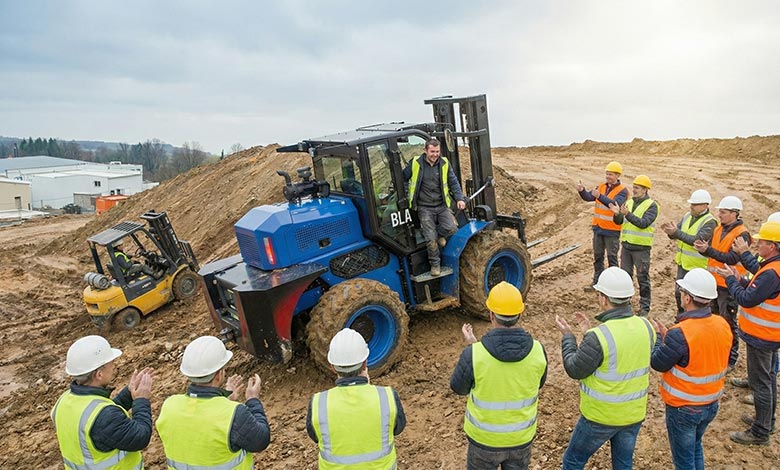
Forklifts that create real operator confidence usually combine stable chassis design, good tires, proper weight balance, four-wheel drive, and overall structural stability.
Dive Deeper
Today, many buyers conduct test drives much more professionally than before.
They intentionally test:
- Loaded turning
- Uneven terrain
- High mast lifting
- Muddy ground driving
Because this is where the real differences appear.
Features That Improve Stability
| Feature | Benefit |
|---|---|
| Four-wheel drive | Better traction |
| Wide tires | Improved support |
| Semi-solid tires | Increased stability |
| Lower center of gravity12 | Reduced body movement |
| Stable chassis structure | Better balance |
Many forklifts look similar on paper, but once they begin working outdoors under heavy loads, operator feedback becomes extremely honest.
Conclusion
After years of visiting outdoor job sites and farms, I’ve realized truly good rough terrain forklifts are not simply machines that can work — they are machines that still feel stable, controlled, and trustworthy under heavy loads.
"Powered Industrial Truck Operator Training - Stability of ... - OSHA", http://www.osha.gov/training/library/powered-industrial-trucks/app-a. Occupational safety guidance on powered industrial trucks explains that stability depends on the combined center of gravity of the truck and load, the load center, the stability triangle, and operating conditions, not rated capacity alone. Evidence role: expert_consensus; source type: government. Supports: Forklift stability is determined by multiple physical and operating factors, not only by lifting capacity.. Scope note: The source addresses forklift stability principles generally rather than comparing specific outdoor rough-terrain models. ↩
"[PDF] Estimation of vertical load on a tire from contact patch length and its ...", https://vtechworks.lib.vt.edu/bitstream/handle/10919/33559/Dhasarathy_D_T_2010.pdf. Forklift and vehicle-stability references describe stability as a function of center of gravity, support base, traction, and operating surface; this supports the relevance of weight distribution, ground contact, and drivetrain-related traction to perceived stability. Evidence role: mechanism; source type: government. Supports: Tires, chassis structure, weight distribution, ground contact, and drivetrain design affect forklift stability under load.. Scope note: The evidence is likely to support the mechanisms separately rather than provide a single study ranking all listed factors together. ↩
"Powered Industrial Truck Operator Training - Stability of ... - OSHA", http://www.osha.gov/training/library/powered-industrial-trucks/app-a. Safety materials for powered industrial trucks identify loaded travel, turning, elevated loads, slopes, and uneven surfaces as conditions that increase instability and tip-over risk, supporting the claim that demanding operation reveals stability limits. Evidence role: expert_consensus; source type: government. Supports: Forklift stability problems become more apparent during loaded, uneven, turning, or elevated-load operation.. Scope note: The word “usually” reflects practical interpretation; safety sources identify risk conditions but may not quantify how often instability appears only during heavy-duty use. ↩
"Workers Who Operate or Work Near Forklifts | NIOSH - CDC", https://www.cdc.gov/niosh/docs/2001-109/default.html. Forklift safety guidance notes that loads shift the combined center of gravity and that traveling or turning with heavy or raised loads increases tip-over hazards, giving contextual support to the greater risk of loaded operation. Evidence role: expert_consensus; source type: government. Supports: Forklifts are generally more hazardous when carrying heavy loads than when operating empty, especially outdoors.. Scope note: The source may not specifically compare all outdoor empty versus loaded operating scenarios, so it supports the risk mechanism rather than a universal ranking of danger. ↩
"Powered Industrial Truck Operator Training - Stability of ... - OSHA", http://www.osha.gov/training/library/powered-industrial-trucks/app-a. Guidance on rough-terrain and powered industrial truck operation identifies terrain irregularities, slopes, mud, and load handling as factors that affect traction and stability, supporting the idea that outdoor work differentiates machine performance. Evidence role: general_support; source type: government. Supports: Heavy outdoor operating conditions expose stability and performance differences among forklifts.. Scope note: The evidence is contextual and may not provide comparative test data between forklift models. ↩
"[PDF] Tire Force Estimation in Off-Road Vehicles Using Suspension Strain ...", https://etd.auburn.edu/bitstream/handle/10415/2966/Hill_Thesis.pdf?sequence=3&isAllowed=y. Engineering literature on tire–terrain interaction shows that tire contact area, tread, inflation or tire structure, and surface conditions govern traction and sinkage, which are central to vehicle stability on deformable or uneven ground. Evidence role: mechanism; source type: paper. Supports: Tire characteristics strongly affect forklift stability on outdoor surfaces.. Scope note: This evidence supports the physical mechanism for outdoor traction and stability; it does not measure buyers’ expectations. ↩
"A Study on the Contact Characteristics of Tires–Roads Based ...", https://pmc.ncbi.nlm.nih.gov/articles/PMC10532792/. Terramechanics and off-road vehicle studies relate tire width, tread pattern, construction, and contact patch to traction, ground pressure, and slip, which are mechanisms underlying stability during loaded outdoor travel. Evidence role: mechanism; source type: research. Supports: Tire width, tread design, tire structure, and contact area influence stability under heavy outdoor loads.. Scope note: The source will likely address off-road vehicles or tires generally rather than forklift operator perception specifically. ↩
"[PDF] Modeling of wheel-soil interaction over rough terrain using the ...", https://huei.engin.umich.edu/wp-content/uploads/sites/186/2015/02/Terramechanics-2013.pdf. Off-road tire and soil-interaction research indicates that tread lugs can improve traction on loose or deformable surfaces by increasing shear engagement with the ground. Evidence role: mechanism; source type: paper. Supports: Deep tread can improve traction on outdoor surfaces.. Scope note: The effect depends on soil type, tread design, tire load, and surface moisture; deep tread is not universally better on every surface. ↩
"Four-wheel drive - Wikipedia", https://en.wikipedia.org/wiki/Four-wheel_drive. Technical descriptions of four-wheel drive explain that distributing drive torque to all wheels can improve traction on low-friction or uneven surfaces, which can contribute to vehicle control and stability under difficult terrain conditions. Evidence role: mechanism; source type: encyclopedia. Supports: Four-wheel drive can improve outdoor forklift stability by improving traction and control.. Scope note: Four-wheel drive improves traction but does not by itself prevent rollovers or guarantee forklift stability; load position and center of gravity remain critical. ↩
"[PDF] Traction/Braking Force Distribution for Optimal Longitudinal Motion ...", https://huei.engin.umich.edu/wp-content/uploads/sites/186/2015/02/vehicle.pdf. Four-wheel-drive systems are designed to transmit propulsive force through multiple wheels, reducing dependence on a single driven axle for traction and supporting more controlled movement on slippery terrain. Evidence role: mechanism; source type: education. Supports: Four-wheel drive can distribute traction more evenly than two-wheel drive in difficult outdoor conditions.. Scope note: Actual torque distribution varies by drivetrain design, differential type, tires, and surface conditions. ↩
"Powered Industrial Truck Operator Training - Stability of ...", http://www.osha.gov/training/library/powered-industrial-trucks/app-a. Forklift stability guidance explains that the combined center of gravity of the truck and load must remain within the stability triangle and that counterweights and the support base affect resistance to tipping. Evidence role: mechanism; source type: government. Supports: Center of gravity, machine width, and counterweight design affect forklift stability under heavy loads.. Scope note: The source supports the stability mechanism; the link to operator confidence is an inferred human response rather than directly measured confidence data. ↩
"Evaluation of the effectiveness of vehicle roll stability control (RSC ...", https://pubmed.ncbi.nlm.nih.gov/34242108/. Vehicle and forklift stability principles show that a lower center of gravity reduces the overturning moment for a given lateral acceleration or slope, thereby increasing resistance to tipping. Evidence role: mechanism; source type: education. Supports: A lower center of gravity reduces body movement and tipping tendency.. Scope note: The benefit depends on the full vehicle geometry, load height, speed, turning radius, and ground conditions. ↩