In recent product planning and real project discussions, one trend has become quite clear:
👉 More and more customers are moving toward higher-capacity rough terrain forklifts, especially in the 6-ton and 8-ton range1.
At the same time, we’re also seeing more targeted structural changes, such as:
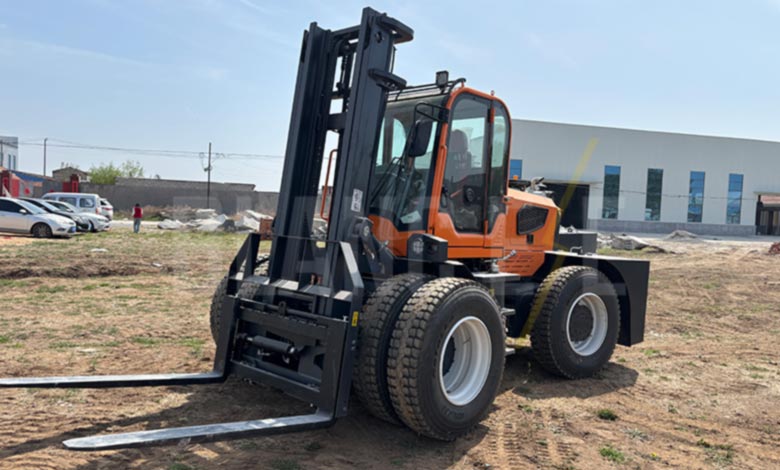
👉 Twin front tires2 for improved stability under heavy load.
From what we’ve seen in real applications, these machines are not just “bigger forklifts.”
👉 They are built for a completely different level of work.
Different Working Conditions Require Different Equipment
One thing that has become very clear over time is this:
👉 It’s not about which forklift is better
👉 It’s about which one fits the job
For example:
In standard warehouse environments or relatively flat ground:
✔ Mid-sized forklifts
→ Flexible, efficient, and well-suited for daily handling tasks
But in more demanding conditions, such as:
- Heavy material handling3
- Uneven outdoor ground4
- Long working hours under load
👉 The requirements change significantly:
👉 Higher capacity
👉 Better stability
👉 Stronger ground adaptability
👉 And this is exactly where 6–8 ton machines start to make sense.
Why Higher Capacity Becomes Necessary in Heavy-Duty Work
Once the working environment involves:
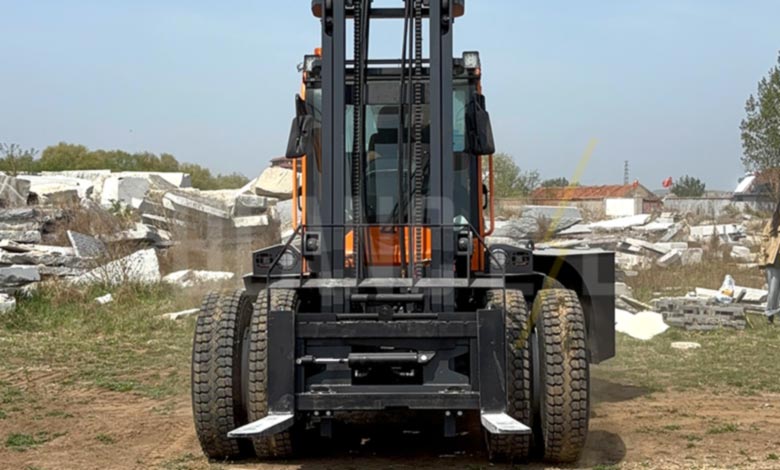
👉 Outdoor + uneven ground + heavy loads
The focus is no longer just “lifting.”
It becomes:
👉 Consistent and stable performance over time
In these situations, the machine needs:
- Stronger structural support
- Better weight distribution
- More reliable ground contact
👉 This is often when customers naturally move toward higher-capacity equipment.
What Twin Front Tires Actually Change
One of the key upgrades in these machines is the twin front tire design.
From a practical point of view, the difference is quite noticeable.
1. More Stable Load Handling
With twin tires:
👉 The contact area with the ground increases
Which means:
👉 Load distribution becomes more even
👉 The machine feels more stable during lifting and movement
2. Better Traction on Challenging Ground
In outdoor environments like:
👉 Twin tires help improve:
👉 Traction and passability
👉 The machine is less likely to slip or get stuck.
3. Increased Safety Under Load
This becomes especially important during:
👉 Lifting + turning + moving under load
👉 The added stability is very noticeable
👉 Operators feel more confident during operation
How These Machines Are Actually Used
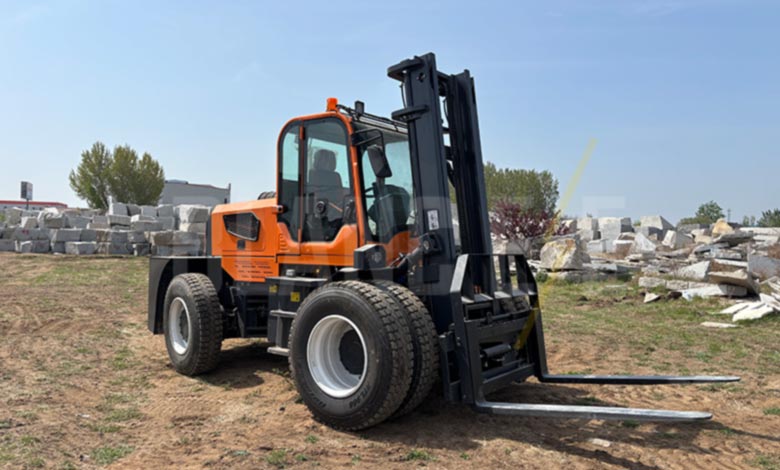
From what we see in real projects, machines in this range are typically not used for warehouse work.
👉 They are built for:
👉 Heavy-duty outdoor environments
Common scenarios include:
- Stone yards
- Construction sites7
- Building material handling
- Outdoor storage yards
👉 In these environments, the priority is:
👉 Stability, durability, and continuous operation
Who Should Consider This Type of Equipment
Based on our experience, these machines are typically suitable for:
- Stone processing operations
- Construction projects8
- Outdoor heavy material handling9
- Industrial yards
👉 If your work is mainly indoor or light-duty:
👉 This level of equipment may not be necessary
👉 But for:
👉 Heavy loads + outdoor + long working hours
👉 This type of configuration becomes much more relevant.
Configuration Matters More Than a Fixed Specification
For 6–8 ton machines, we don’t usually approach it as a fixed model.
Instead, we look at how the machine will actually be used.
Typical considerations include:
👉 Engine options10 (power + emission compliance)
👉 Tire configuration (ground condition)
👉 Attachments11 (multi-purpose use)
For example:
- Bucket12 → loading and site cleaning
- Clamp13 → handling special materials
- Side shift14 → improving efficiency
👉 In many outdoor applications, the value of a forklift is not just in the machine itself,
👉 but in how many different jobs it can handle.
Final Thoughts
After working on different projects, one thing stands out clearly:
👉 Choosing equipment is not complicated
👉 The key is:
👉 Understanding the working conditions first
👉 There is no “better” forklift
👉 Only the one that fits your job
A Note from BLANC-ELE
At BLANC-ELE15, we focus less on pushing specific models, and more on understanding:
- Working environment
- Ground conditions
- Type of material handling
Then we suggest:
👉 The right configuration
👉 Suitable attachments
👉 Practical solutions
Because in real projects:
👉 Choosing the right type matters more than comparing specifications.
Explore the advantages of these forklifts for heavy-duty tasks and how they outperform smaller models. ↩
Learn how twin front tires enhance stability and traction, making forklifts safer and more efficient. ↩
Discover the best forklifts and equipment designed specifically for heavy material handling tasks. ↩
Find out how to select the right forklifts that can handle challenging outdoor terrains effectively. ↩
Explore this resource to learn how to optimize forklift performance and safety in muddy environments. ↩
Explore this link to discover top forklifts designed for gravel, ensuring optimal performance and stability in challenging conditions. ↩
Explore this resource to discover the ideal forklifts tailored for construction sites, ensuring safety and efficiency in heavy-duty tasks. ↩
Get insights into the most suitable forklifts for construction projects and their unique requirements. ↩
Explore the specific challenges faced in outdoor heavy material handling and how to overcome them. ↩
Learn about the various engine options and their importance in choosing the right forklift for your needs. ↩
Explore this resource to discover how the right attachments can enhance the versatility and efficiency of your rough terrain forklift. ↩
Explore this resource to understand how bucket attachments enhance forklift versatility and efficiency in various applications. ↩
Explore this resource to understand how clamp attachments enhance forklift versatility and efficiency in material handling. ↩
Explore this resource to understand how side shift attachments enhance forklift versatility and operational efficiency in various tasks. ↩
Explore BLANC-ELE's insights on selecting the right equipment tailored to your specific working conditions and needs. ↩