
A 4x4 forklift inquiry can hide several different jobs behind one short phrase.
Sometimes the buyer means a forklift for a muddy construction site. Sometimes it is a farm machine for moving fertilizer, fruit crates, or timber. Sometimes a dealer says "4x4" because the customer simply does not want a normal warehouse forklift getting stuck outdoors.
I understand the shortcut. Four-wheel drive is easy to explain.
But from a supplier's side, I do not stop at the words "4x4 forklift." I want to know what the machine will actually do after it arrives.
The Short Answer
A 4x4 forklift is not chosen by four-wheel drive alone. Before quoting or ordering, check the ground, route, load center, tire condition, ground clearance, steering layout, mast height, attachment plan, daily working hours, and parts support.
For dealers and importers, this is especially important. Your customer may ask for "one 4x4 forklift," but the same phrase can point to a light farm job, a construction yard, a brick or stone area, a rental fleet, or a mixed outdoor application.
The BLANC-ELE 4WD forklift page positions these machines for outdoor conditions such as mud, sand, slopes, gravel, farms, construction sites, and quarries. That tells us the direction. It does not replace the real working-condition check.
The First Question Is Not The Drive System
The first question I ask is usually about the route.
Where does the forklift start? Where does it pick up the load? Where does it drop the load? What is the ground like between those points?
If a buyer says "outdoor yard," I still need more detail. Outdoor yard can mean compacted gravel, broken concrete, wet clay, sand, muddy farm paths, loose stone, slope work, or a temporary construction road. The forklift may look strong in all of those places, but the result can be very different.
Before discussing model size, I prefer to see:
- photos of the loading point;
- a short video of the loaded travel route;
- the tightest turning area;
- the wet-season ground condition if rain is common;
- any slope, rut, trench, or broken surface on the route;
- the truck unloading area and storage area.
These details quickly show whether the buyer needs a compact 4WD rough terrain forklift, a heavier machine, route preparation, a different tire discussion, or a different handling method.
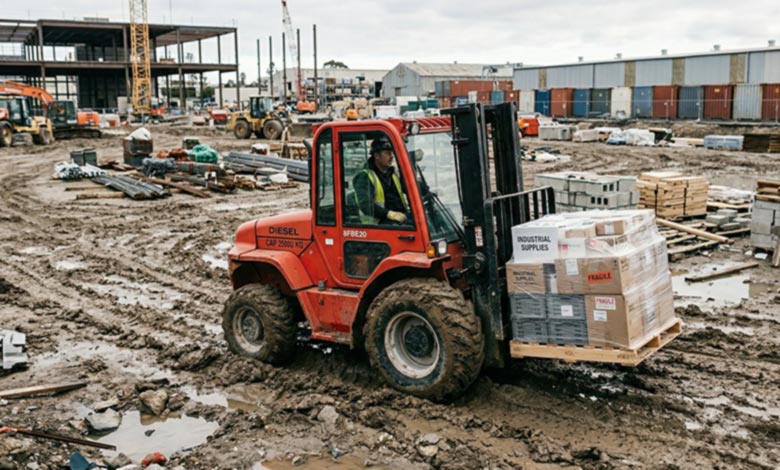
A Typical Dealer Conversation
A dealer may tell me, "My customer wants a 4x4 forklift. They work outside and sometimes in mud."
That sounds clear, but it is not enough for a serious recommendation.
After a few questions, the situation may become more practical. The customer handles building materials in the morning, then uses the same machine for farm supplies in the afternoon. The ground is acceptable in the dry season but soft after rain. The customer wants a machine that can be sold to several end users, not only one jobsite.
In this situation, I would help the dealer separate the inquiry into three layers:
- What is the normal daily load?
- What is the worst ground condition the forklift must face?
- What type of customer will use the machine after delivery?
If the dealer is stocking one machine for resale, the answer may point to a balanced configuration. If the machine is for one confirmed construction project, the answer may be more site-specific. If the machine will enter a rental fleet, support and wear parts become more important.
That is why I do not like quoting only from a keyword. A 4x4 forklift should be matched to a working story.
Four-Wheel Drive Helps, But It Does Not Fix Every Site
Four-wheel drive helps a forklift keep traction on outdoor ground. It is one reason buyers compare 4WD rough terrain forklifts with normal warehouse forklifts.
But 4WD is still only one part of the machine.
The forklift can still perform poorly if the load is too far forward, the ground is too soft, the turning area is too narrow, or the operator needs to travel too far with a heavy load. Tires, ground clearance, steering layout, mast choice, attachment choice, and daily maintenance all matter.
This is the same point I made in an earlier article about why 4WD alone is not enough for a rough terrain forklift. The drive system matters, but the job decides the final configuration.
Check Load Shape Before Capacity
Many buyers start with a capacity number.
"I need 3 tons."
"Maybe 3.5 tons."
"Can you quote 5 tons?"
Those are useful starting points, but the load shape changes the conversation. A compact pallet of blocks is not the same as long steel. Fertilizer bags are not the same as stone. Timber, crates, pipes, molds, and oversized farm loads can all create different load-center problems.
Before confirming a 4x4 forklift, I suggest checking:
- normal load weight;
- maximum load weight;
- load length, width, and height;
- pallet quality and pallet size;
- whether the load is stable or flexible;
- whether the load center is longer than expected;
- whether the job may need long forks, side shift, fork positioning, clamp, bucket, or other attachments.
The BLANC-ELE rough terrain forklift range covers several capacity classes, including common 3 ton, 3.5 ton, 5 ton, and 7 ton directions. The correct choice depends on the real load and route, not only the number printed in the inquiry.
Where 3 Ton And 3.5 Ton Machines Often Fit
For dealers, the 3 ton and 3.5 ton range is often easier to explain to mixed outdoor customers.
These machines can make sense when the buyer needs more outdoor ability than a standard warehouse forklift but does not need a heavy machine for stone, blocks, or large construction materials all day. They are often discussed for farms, yards, small construction projects, and general outdoor material handling.
The BLANC-ELE 3.5 ton 4WD rough terrain forklift is positioned for construction sites, farms, yards, and rental fleets. For a dealer, that makes it a useful middle-capacity option when the customer base is broad.
Still, I would not recommend it blindly. If the customer regularly handles dense materials, long travel routes, rougher ground, or several operators in a rental environment, the discussion should include more working details.
Where A 5 Ton Machine Needs To Be Compared
A 5 ton rough terrain forklift deserves comparison when the job is heavier, rougher, or less predictable.
For example, the BLANC-ELE RT50 5 ton 4WD rough terrain forklift is positioned for heavier outdoor work such as brick yards, construction sites, stone yards, farms, and uneven material-handling routes. The product page highlights 4WD traction, 330 mm ground clearance, 3-6 m mast options, and rear-wheel or front-wheel steering choices.
Those details are useful only when they are matched to the site. A 5 ton machine may be more practical for heavy loads, but it also needs suitable turning room, route width, operator training, and loading discipline.
This is where many buyers make the wrong comparison. They compare only capacity, while the site is really asking about stability, travel distance, tire wear, mast choice, and daily workload.
Do Not Forget Support And Wear Parts
For an overseas buyer, the first month after delivery is not the whole story.
A 4x4 forklift may work in a remote yard, construction site, farm, brick yard, or rental fleet. If a small wear part, filter, hose, seal, bearing, tire, sensor, or tool is missing, the machine may stop for a simple issue that could have been prepared before shipment.
That is why I like to discuss parts support before the machine leaves the factory.
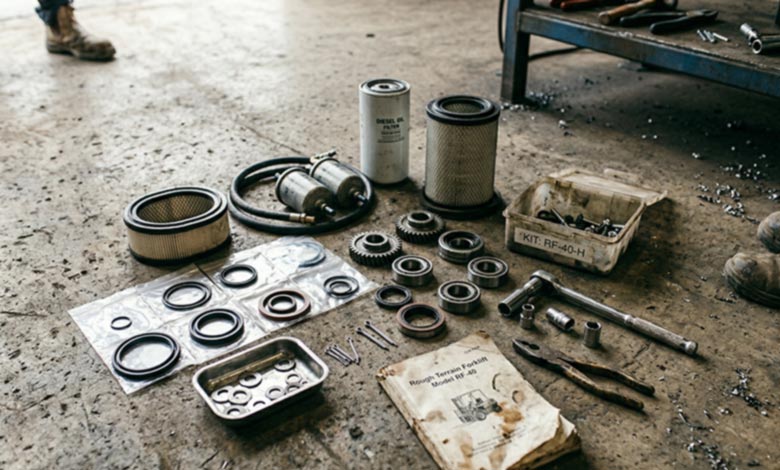
Before order, dealers and importers should check:
- which wear parts should ship with the machine;
- whether filters, seals, hoses, and common maintenance items are easy to identify;
- whether manuals, videos, and parts diagrams are available;
- whether the final configuration matches the data plate and documents;
- whether the destination country has documentation or emission requirements that must be confirmed;
- whether the buyer understands the daily maintenance routine.
This is not just after-sales work. It is part of the buying decision.
What Dealers Should Ask Before Quoting
If you are a dealer or importer, I would not ask your customer only "How many tons?"
I would ask:
- What material will the forklift handle most often?
- What is the heaviest load and the normal daily load?
- How far does the forklift travel while loaded?
- What is the ground like in dry and wet conditions?
- Is the site open, narrow, sloped, or crowded?
- Does the operator need rear-wheel steering, front-wheel steering, or a familiar layout?
- Is the machine for one end user, resale stock, or rental use?
- Which spare parts should be prepared before shipment?
These questions make the sales conversation more professional. They also protect the dealer from selling a machine that technically works but does not fit the customer's daily job.
If you need a more complete preparation list, this rough terrain forklift quote information checklist is a useful internal tool before asking for a formal recommendation.
My Practical Recommendation
If your customer asks for a 4x4 forklift, treat it as a signal, not the final specification.
The customer is telling you they need outdoor traction. Your job is to find out how much traction, how much capacity, how much ground clearance, how much turning space, how much support, and what kind of configuration the job really needs.
For lighter mixed outdoor applications, a 3 ton or 3.5 ton rough terrain forklift may be enough. For heavier construction, brick, stone, farm, or rough-yard work, a 5 ton machine may need to be compared. For any model, the final recommendation should come from ground photos, load details, lift height, route video, attachment needs, and destination-market requirements.
If you want BLANC-ELE to review a 4x4 forklift inquiry, send us the working condition with site photos, load information, lifting height, route details, and the buyer's target use. We can then suggest a more realistic configuration instead of guessing from one phrase.