
When customers ask me to help configure a rough terrain forklift1, the side shifter2 is often treated as a "nice-to-have" secondary option. It doesn't make the machine lift more weight, and it doesn't add horsepower to the engine.
However, based on my years of experience serving customers across farms, construction sites, and material yards, the side shifter2 is the one option that operators are most likely to regret not choosing later.
1. The Common Regret I Hear After Delivery
After a few months of real-world use, I frequently hear the same comment from customers:
“We saved money by skipping the side shifter, but now we really wish we had added it.”
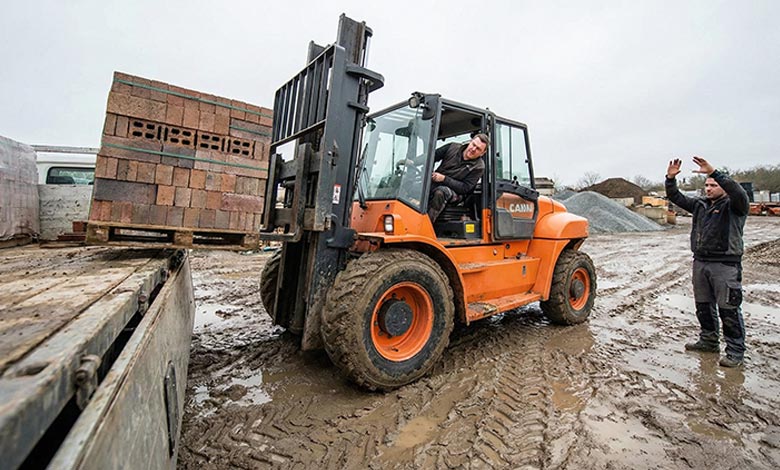
I hear this from brickyards, orchards, and construction teams alike. The reason is simple: The value of a side shifter2 becomes much clearer in daily operation—especially in mud and gravel—than it does on a specification sheet.
2. What a Side Shifter Really Does for You
At its core, a side shifter2 allows the fork carriage to move left and right hydraulically3 without repositioning the entire machine.
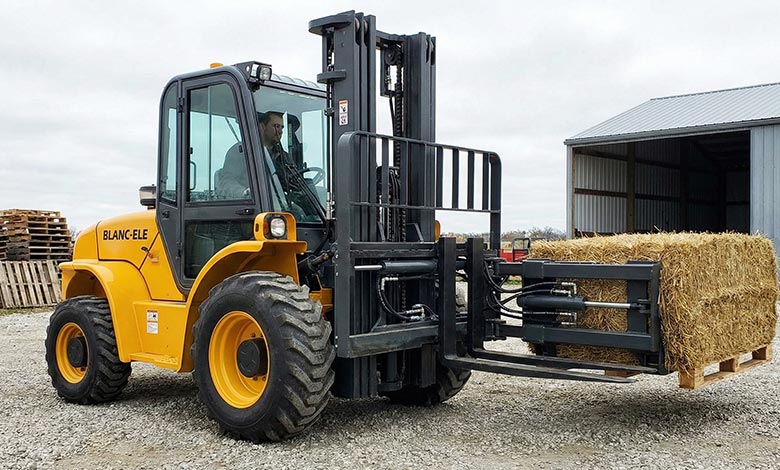
When I recommend this for a BLANC-ELE4rough terrain forklift1, it’s because it works with almost all attachments5:
- Standard pallet forks
- Buckets
- Bale clamps
It adds lateral precision to everything you do. From my perspective, a side shifter2 doesn't just change whether a task can be done—it changes how smoothly and quickly your team can finish it.
3. Avoiding the "Shimmy": How It Changes Daily Work
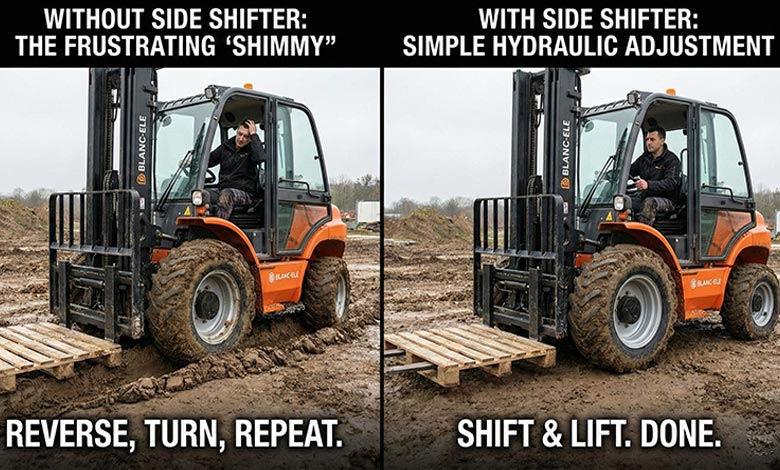
Without a side shifter2, if an operator misses the pallet pockets by just 5 centimeters, they have to go through a frustrating process:
- Reverse the entire machine.
- Turn the steering wheel slightly.
- Drive forward again, hoping the alignment is perfect this time.
On a smooth warehouse floor, this is annoying. On a muddy construction site or an uneven field, this "shimmy" wastes fuel, tears up the ground, and exhausts the operator.
With a side shifter2, the operator simply bumps a lever inside the cab. The forks shift over, and the job is done. No reversing required.
4. Why It’s Especially Valuable on Rough Terrain
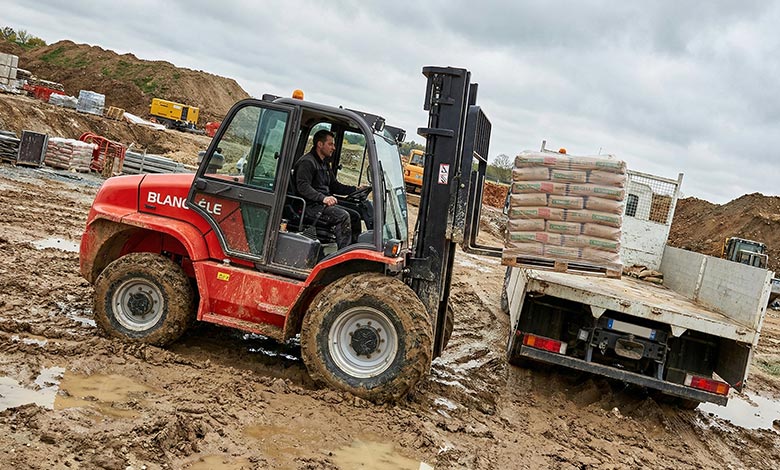
Rough terrain forklifts don't operate in a perfect world. I often see our machines working where:
- The ground slopes sideways.
- The truck is sitting in a pothole.
- The space to maneuver is tight and irregular.
In these conditions, achieving perfect vehicle alignment is nearly impossible. A side shifter compensates for imperfect ground.
This is why I always tell my clients: A side shifter2 is helpful in a warehouse, but it is practically mandatory for efficiency in a muddy yard.
5. The More Attachments You Use, The More You Need It
Another point I often remind buyers about is that side shifting is not just for pallets.
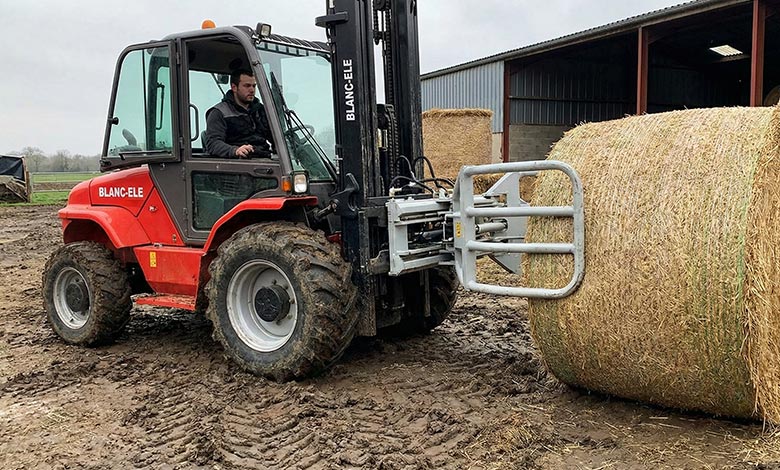
As soon as you attach a Bale Clamp6 to pick up hay, or a Bucket to load gravel, the need for accurate positioning increases. Trying to align a large hydraulic clamp without the ability to side-shift is incredibly frustrating.
Many of my customers only realize this after they start using different attachments5—and by then, they wish they had configured their BLANC-ELE4 machine differently from the start.
6. Why I Recommend Deciding Early (The Retrofit Cost)
There is a practical, financial reason I encourage customers to include a side shifter2 in their initial order:
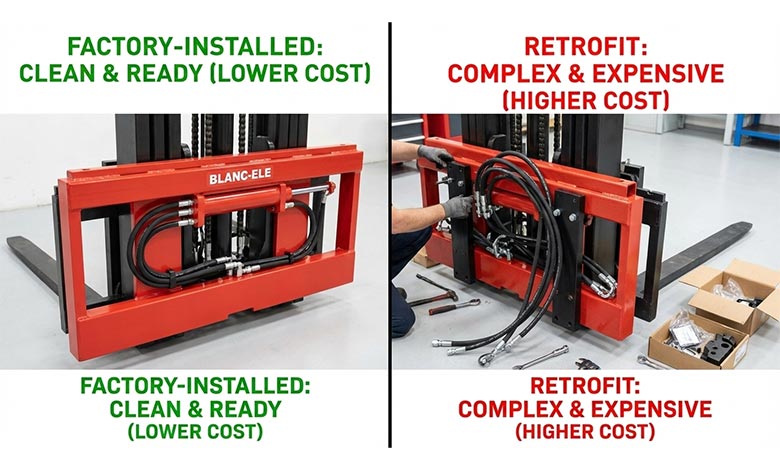
Retrofitting a side shifter later is almost always more expensive.
It involves buying new parts, paying for labor, and routing new hydraulic hoses. When you order it factory-installed on your BLANC-ELE4 forklift, the integration is cleaner, cheaper, and ready to work from day one.
Conclusion: It’s Not a Luxury, It’s a Tool
A side shifter2 does not make a rough terrain forklift1 stronger. But in my experience, it makes the machine more flexible, faster, and far less frustrating to operate.
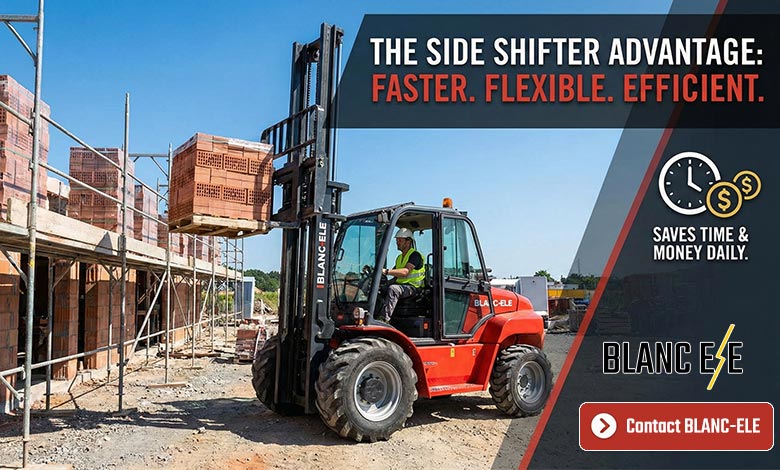
If you are configuring your machine today, my advice is simple: Don't skip the side shifter2. It is a small investment that pays for itself in saved time every single day.
Still not sure about your configuration? [Contact BLANC-ELE4] and let’s discuss what setup makes the most sense for your specific job site.
Learn about essential features that improve performance and safety in rough terrain forklifts. ↩
Discover how a side shifter can enhance forklift efficiency and operator comfort in various terrains. ↩
Understand the role of hydraulic systems in enhancing the functionality of forklifts. ↩
Explore the unique advantages of BLANC-ELE forklifts and why they are preferred by professionals. ↩
Discover the various attachments available for rough terrain forklifts and their benefits. ↩
Find out how a Bale Clamp can increase your forklift's versatility in handling materials. ↩