
When configuring a rough terrain forklift1, a bucket2 is often not the first attachment customers think about. However, based on our experience working with customers across different industries, the bucket2 is one of those options that tends to be re-evaluated only after real use begins.
Many customers do not actively plan to add a bucket2 at the beginning. They realize its value later, when daily work shows that a rough terrain forklift1 can handle far more tasks than pallet handling alone.
1. A Bucket Does Not Turn a Forklift Into a Loader — It Makes It More Flexible
One question we often hear is: “Does adding a bucket2 mean using the forklift like a wheel loader?”
From our perspective, that is not the real purpose of a bucket.
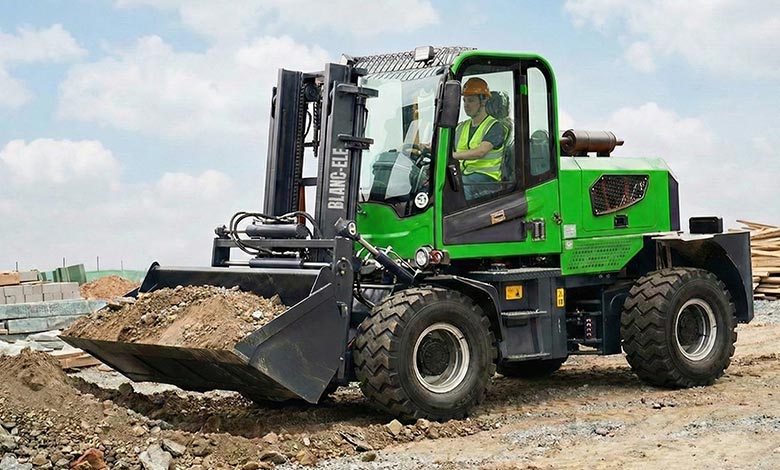
The value of a bucket2 is not about replacing a dedicated loader. It is about allowing a rough terrain forklift1 to take on additional, practical tasks that already exist on site—without bringing in another machine.
In farms, construction sites3, and material yards4, loose and non-palletized materials are everywhere. If every small task requires a separate machine, coordination and cost quickly increase.
2. You Don’t Think You Need It — Until You Start Using It
From what we see in customer feedback5, a bucket2 is rarely a “must-have” during the initial purchase. But after the forklift has been in use for some time, we often hear comments like:
“Some jobs would be much easier if we had a bucket.”
These are usually not heavy-duty or continuous loading tasks. They are small but frequent jobs—clearing debris, moving soil for landscaping6, or transporting loose feed—and that is where the bucket2 starts to matter.
▶ Video 1: Bucket Lifting and Movement
To give a clearer picture of how a bucket works on a rough terrain forklift1, here is a short video showing the lifting and basic movement.
https://www.youtube.com/embed/eE4zebuMtws
This video is not about speed or productivity. It simply shows how a bucket gives the forklift the ability to handle loose and irregular materials.
3. Why Buckets Are More Useful on Rough Terrain Forklifts
From the applications we support, rough terrain forklift1s usually operate in environments where:
- The ground is uneven.
- Working areas are irregular.
- Perfect positioning is difficult.
In these conditions, many tasks are not about precision, but about getting the job done efficiently.
Compared with warehouse environments, a bucket2 on a rough terrain forklift1:
- Has a higher tolerance for positioning errors.
- Requires less exact alignment than forks.
- Is more likely to be used regularly for site maintenance.
This is why the value of a bucket2 is often more obvious outdoors.
4. The Real Value is Reducing Equipment Switching
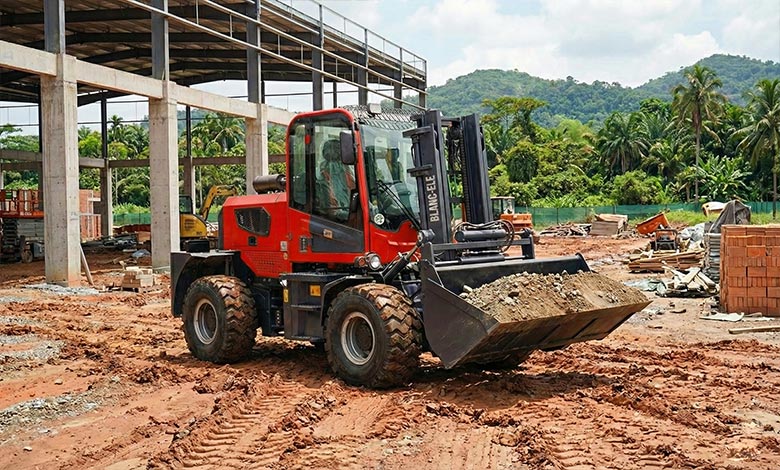
In our experience, customers do not choose a bucket2 to increase peak efficiency. They choose it to reduce equipment switching7 and coordination.
Without a bucket2, customers often need to:
- Schedule a loader.
- Or rely on manual labor for simple tasks.
For jobs that are not intensive but occur frequently, having one rough terrain forklift1 handle them directly is often faster and more practical.
▶ Video 2: BLANC-ELE Forklift Working with a Bucket
The video below shows the structural details and operation of a bucket2 on a BLANC-ELE8 machine.
https://www.youtube.com/embed/l-YAKQXLSEI
In real work, a bucket2 may not be used every minute. But when it is needed, it allows the forklift to take on extra tasks immediately—without bringing in additional equipment.
5. The Power of "Bucket + Side Shifter"
From our configuration experience, what customers often find most practical is not just the bucket itself, but the combination of:
Bucket + Side Shifter
With a side shifter9, the bucket2 becomes easier to position and adjust when dumping or scooping. At the same time, the bucket further increases the value of the side shifter9.
Many customers who later add both options tell us:
“This forklift can do much more than we originally expected.”
6. How BLANC-ELE Approaches Bucket Configurations
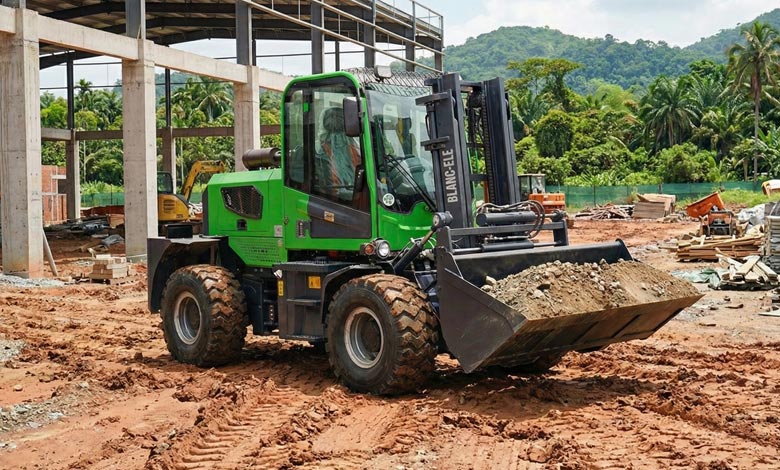
As a rough terrain forklift1 manufacturer, BLANC-ELE8 does not recommend options simply for the sake of adding features. Our focus is whether an attachment will actually be used in the customer’s real working conditions10.
From farms to construction sites3 and material yards4, we see that a bucket2 often becomes an attachment whose value grows over time—not something that looks impressive only on day one.
Conclusion: Not a Luxury, But a Practical Tool
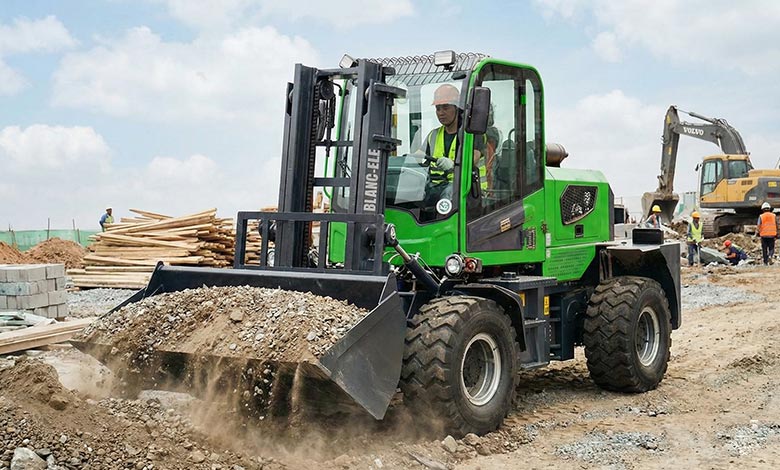
A bucket2 does not make a rough terrain forklift1 stronger. What it does is make the machine:
- More flexible.
- Less dependent on additional equipment.
- Better suited to changing outdoor conditions.
Based on our experience, considering a bucket during the initial configuration is often a decision customers are less likely to regret later.
Want to know if a bucket makes sense for your application?
If you are evaluating how to make your rough terrain forklift1 handle more real-world tasks, or want advice on whether a bucket2, side shifter9, or other attachments fit your operation, BLANC-ELE8 is ready to help.
We work with customers to configure rough terrain forklift1s based on actual applications—so adjustments don’t have to be made later.
👉 [Contact us to discuss your application and get a configuration recommendation.]
Explore the advantages of rough terrain forklifts to understand their versatility and efficiency in various applications. ↩
Learn how adding a bucket can significantly improve the functionality of your forklift for diverse tasks. ↩
Learn about the essential roles forklifts play in construction sites and how they improve workflow. ↩
Explore the various tasks that can be efficiently handled in material yards using forklifts and attachments. ↩
Discover how customer feedback shapes the design and functionality of equipment to meet real-world needs. ↩
Explore the best tools and equipment for landscaping projects to enhance efficiency and effectiveness. ↩
Understand the challenges of equipment switching and how it can impact productivity and costs. ↩
Explore how BLANC-ELE forklifts enhance efficiency and versatility with attachments like buckets, tailored for real-world applications. ↩
Find out how a side shifter can enhance the usability of your forklift, making it more efficient for various tasks. ↩
Understand how real working conditions influence the choice of equipment and attachments for optimal performance. ↩