If you’re considering buying a 4x4 rough terrain forklift1, I can almost guarantee the first two questions on your mind are: How much is it? and How many tons?
That’s completely normal. Most buyers start by comparing price and capacity.
But in my experience working with outdoor projects, what really determines whether a forklift performs well isn’t the sticker price — it’s whether the machine actually matches your job site conditions.
I’ve seen buyers choose the cheapest option at the beginning, only to deal with overheating, traction problems, and spare parts delays within the first year. Rough terrain forklifts2 are not warehouse forklifts with bigger tires. If you choose the wrong configuration, the long-term cost can easily exceed what you saved upfront.
If I had to sum it up in one sentence:
What really matters is matching the forklift to your working conditions — not simply chasing the lowest price.
Let’s break down what that actually means.
1. Ground Conditions Matter More Than Horsepower
Many buyers focus on engine horsepower first. Bigger numbers feel safer.
But on real outdoor sites, I care much more about traction and ground adaptability than horsepower.
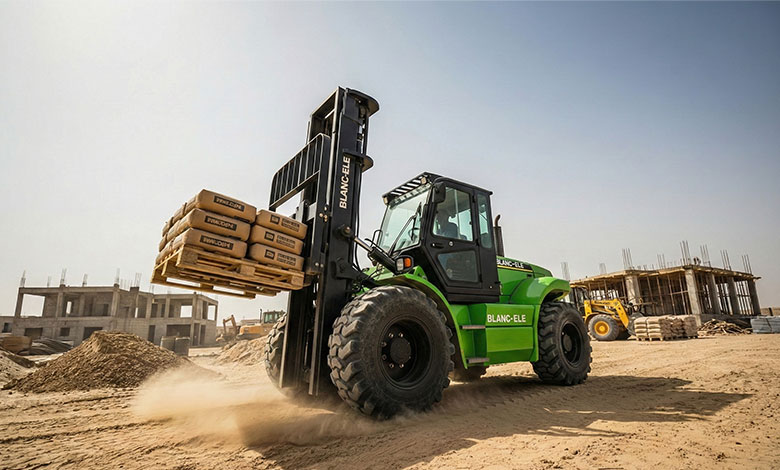
In several West African construction projects3 we’ve supported, the biggest issue wasn’t lack of power — it was machines getting stuck in sand or losing stability on uneven ground.
What makes the difference in those environments is:
- 4WD (four-wheel drive) traction
- Differential lock design
- Sufficient ground clearance
- Strong chassis structure
A powerful engine doesn’t help much if the tires can’t grip the surface.
When discussing configuration, I usually start by asking:
- What type of ground are you working on?
- Is it sandy, muddy, gravel, or rocky?
- Are there slopes involved?
These answers are far more important than a horsepower number on a brochure.
2. Choosing the Right Lifting Capacity (Bigger Isn’t Always Better)
Another common assumption is that buying a larger capacity forklift is “safer.”
In reality, oversizing can create unnecessary cost and inefficiency.
Generally speaking:
- 3.5-ton models4 are sufficient for most construction sites and agricultural logistics.
- 5-ton models are more suitable for mining or heavy material handling.
Buying too small limits productivity.
Buying too large increases:
- Fuel consumption
- Maintenance cost
- Turning radius
- Purchase price
One thing many buyers overlook is the load center. A forklift rated at 5 tons under standard load center conditions may carry less if the load dimensions change.
I often advise clients to evaluate actual load type and lifting height before deciding on capacity. Matching the machine to real usage matters more than choosing the largest number available.
3. In Hot Climates, Cooling Systems Are Critical
If your project is located in tropical or desert regions, cooling performance becomes a priority.
In some African projects, clients reported that machines worked fine in the morning but struggled after several hours of continuous operation in 40°C heat. The issue wasn’t engine power — it was insufficient cooling capacity.
That’s why I pay close attention to:
- Radiator size and cooling efficiency
- Airflow design
- Filtration systems for dust-heavy environments
In hot regions, reinforced cooling systems5 often matter more than additional horsepower.
Diesel engines are generally more practical for remote outdoor sites, but even then, heat management must be properly configured.
Stability under harsh conditions is more valuable than impressive specifications on paper.
4. Tire Selection Is Not a Small Detail
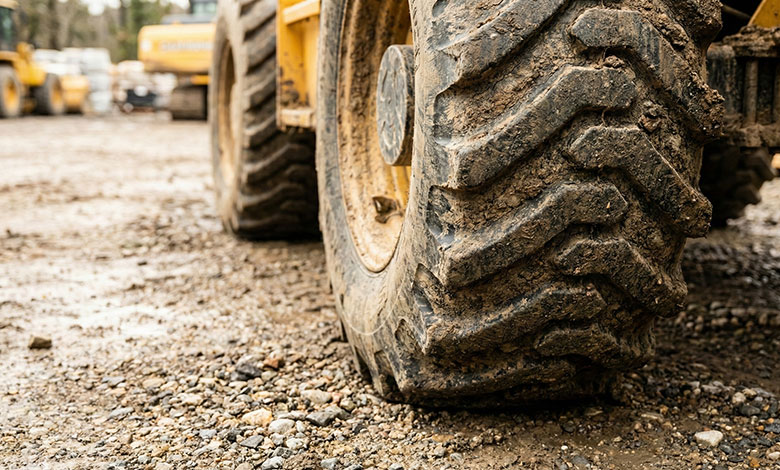
Tires are frequently underestimated, but in outdoor applications, they directly affect:
- Traction
- Stability
- Operator safety
- Tire lifespan
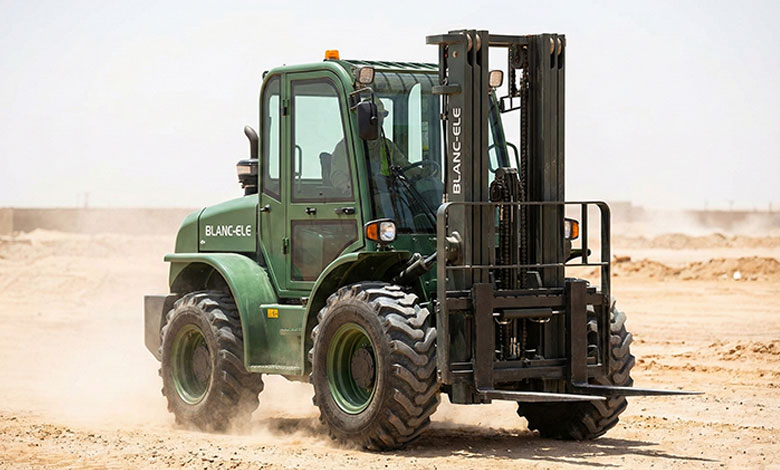
For sandy or gravel surfaces, deep-tread pneumatic tires are usually the better choice.
For mining or heavy-duty environments, reinforced tire options may be necessary.
Using the wrong tire type can result in:
- Reduced grip
- Faster wear
- Higher safety risks
- Lower overall efficiency
Tires are consumables, but choosing the right type from the start significantly reduces long-term operating costs.
5. Spare Parts & After-Sales Support Define Long-Term Value
For international buyers, this is often the most underestimated factor.
The machine itself is important — but ongoing support is just as critical.
Before making a decision, consider:
- Is spare parts supply stable?
- Are technical documents available?
- Can remote technical support be provided?
- Does the supplier have real export experience6?
I’ve seen cases where buyers chose extremely low-priced equipment, only to face long downtime later because spare parts were unavailable. In those situations, the initial savings quickly disappear.
In heavy equipment, after-sales support often matters more than price.
6. Think About Total Cost of Ownership, Not Just Purchase Price
Experienced buyers don’t look at the quotation alone — they evaluate total cost of ownership7 (TCO), including:
- Initial purchase price
- Fuel consumption
- Maintenance costs
- Downtime losses
- Resale value
Some forklifts appear cheaper upfront but consume more fuel and require more repairs. Over several years, the total cost may exceed that of a higher-quality machine.
Low price does not automatically mean low cost.
7. Common Buying Mistakes to Avoid
From what I’ve observed, the most common mistakes include:
- Comparing price only
- Ignoring ground and climate conditions
- Overlooking spare parts support8
- Over-configuring unnecessarily
- Choosing suppliers without real export experience6
A rough terrain forklift is a long-term investment. It’s not just a warehouse forklift with bigger tires.
Final Thoughts: Fit First, Price Second
Buying a 4x4 rough terrain forklift1 should be a practical decision based on real working conditions.
If you clarify the following details first:
- Country or region of use
- Application (construction, mining, farm, yard, etc.)
- Required lifting height
- Typical ground conditions9
The right configuration becomes much clearer.
If you're unsure which model suits your project, start by defining your operating environment. Matching the machine to the job site will always save more money than negotiating the lowest price.
Explore this link to find top-rated 4x4 rough terrain forklifts that suit your specific needs. ↩
Explore this link to gain insights on selecting the right rough terrain forklift for your specific job site conditions. ↩
Explore this resource to discover essential strategies and insights for successful construction project management. ↩
Explore this resource to understand how 3.5-ton models can optimize efficiency and cost-effectiveness for your projects. ↩
Learn about the significance of cooling systems to ensure optimal forklift performance in extreme heat. ↩
Find out why choosing suppliers with export experience can save you from future headaches. ↩
Understanding TCO will help you evaluate the true cost of your forklift investment. ↩
This link provides insights on the importance of spare parts availability for long-term forklift reliability. ↩
Understanding how ground conditions impact performance can help you make an informed choice. ↩