
When forklifts struggle on uneven ground, the issue is often not poor quality, but using the wrong type of forklift for the actual surface conditions.
If your jobsite includes mud, gravel, slopes, or uneven outdoor ground, standard forklifts1 often fail to work reliably. Forklifts for these conditions must offer stronger traction2, higher ground clearance3, and better overall stability.
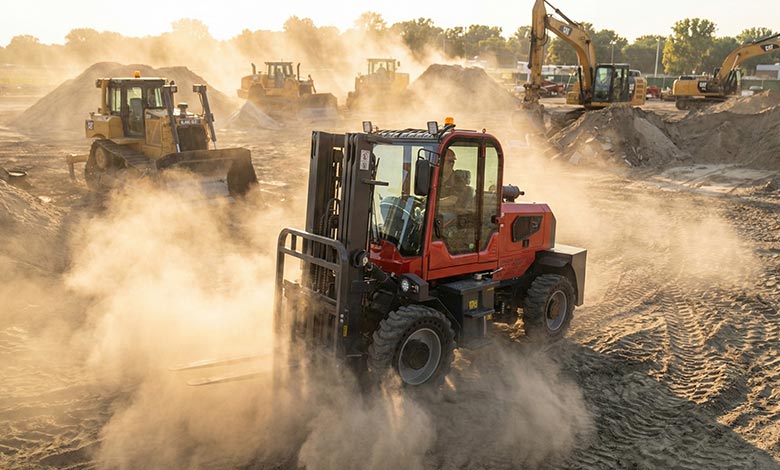
Before comparing specifications, it’s essential to understand what your ground conditions are really demanding from a forklift.
Why Uneven Ground Changes Forklift Requirements Completely
In many customer conversations, I’ve noticed that ground conditions are often underestimated until problems start happening repeatedly.
Uneven ground amplifies issues like poor traction2, low ground clearance3, and unstable steering. These are not maintenance problems; they are selection mistakes made early on.
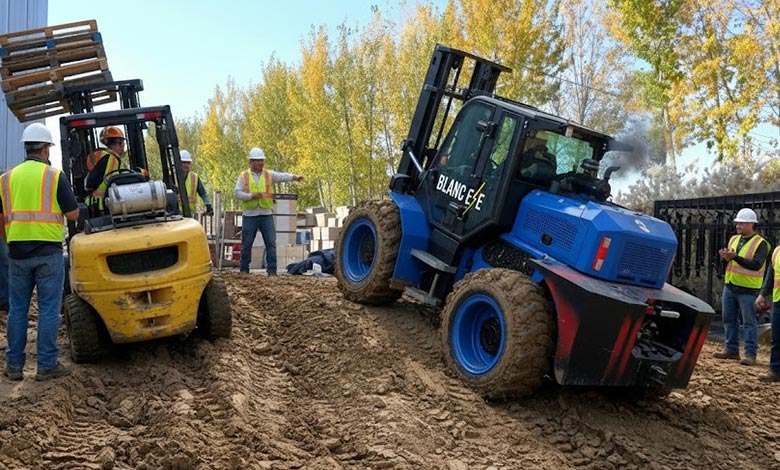
I’ve seen many worksites where forklifts constantly slip, get stuck, or feel unstable. The first reaction is usually, “This forklift isn’t good.”
But once we look closer, the real issue becomes clear: the ground conditions exceed what a standard forklift is designed to handle.
As a manufacturer focusing on rough terrain forklifts4, BLANC-ELE5 encounters this situation frequently when working with farms, construction sites, and material yards.
On uneven outdoor surfaces, forklifts face several challenges:
- Inconsistent tire-to-ground contact6
- Rapid shifts in load center7 due to bumps and slopes
- Reduced steering control on loose or soft ground8
When these issues appear, adjustments and repairs can only offer limited improvement. Fundamentally, this is a mismatch between equipment type and operating environment.
On Uneven Ground, Why Capacity Is Not the Most Important Factor
Many buyers focus first on whether they need a 3-ton or 3.5-ton forklift, but on uneven ground, I usually pause that discussion.
For uneven ground, traction2, drive system, tires, ground clearance3, and chassis stability9 often matter more than rated lifting capacity.
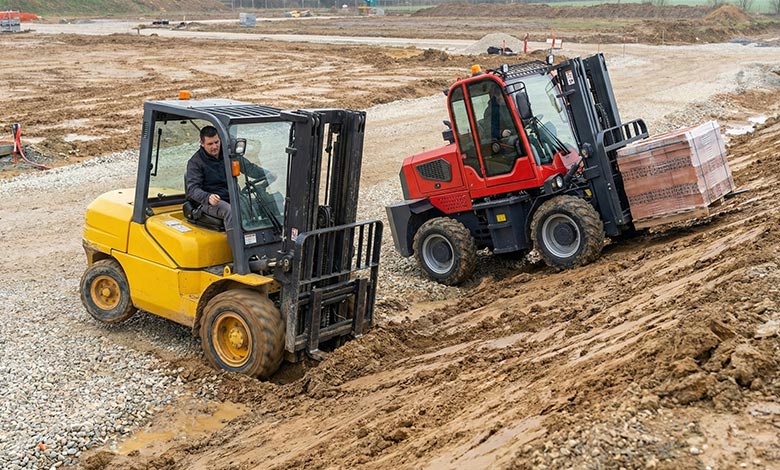
In outdoor environments10, the gap between paper specifications and real performance becomes obvious. Two forklifts with the same capacity can behave very differently depending on their design.
For example:
- Two-wheel-drive forklifts lose traction2 easily on soft ground8
- Low-clearance forklifts bottom out on ruts and uneven surfaces
- Inappropriate tires lead to constant slipping
From practical experience working with customers at BLANC-ELE5, forklifts that are properly configured for uneven ground consistently outperform higher-capacity models that are simply not designed for outdoor conditions.
From my experience, being able to move smoothly and work consistently matters more than lifting slightly more weight when the ground is uneven.
One Simple Question to Tell If You Need a Rough Terrain Forklift
Instead of recommending models immediately, I usually start with a very simple question.
If your forklift struggles or cannot operate normally after rainfall, your application is no longer a standard indoor or yard scenario.
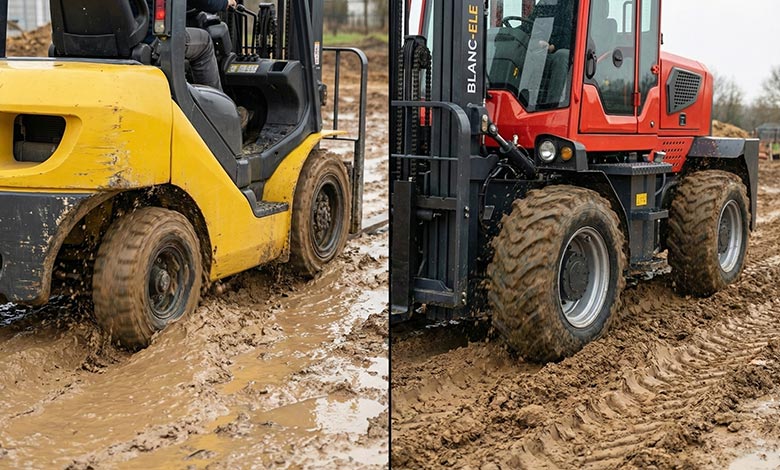
If rain turns your worksite into soft soil, muddy surfaces, or low-traction2 ground and forklift performance drops sharply, the situation is clear.
At BLANC-ELE5, this question alone helps many customers quickly understand whether they should consider a rough terrain forklift rather than continuing to adapt standard equipment.
Continuing with a standard forklift means forcing the machine to adapt to conditions it was never designed for. At that point, the issue is not operator skill — it’s equipment suitability.
Most Buyers Are Not Looking to Upgrade — They Just Want Work to Be Easier
In my experience, most buyers are not chasing “better” machines; they are responding to daily operational pressure11.
When ground conditions start limiting safety and efficiency, choosing the right forklift type reduces workload and risk rather than increasing cost.
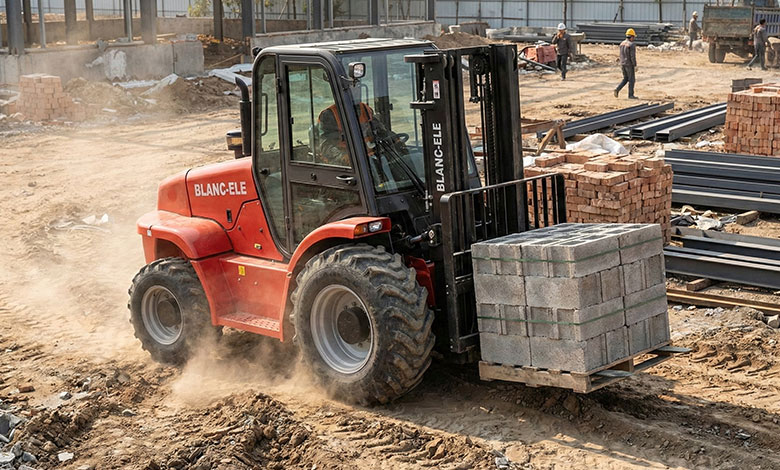
What customers usually want is simple:
- A forklift that can finish a full day’s work reliably
- Less stress for operators
- Fewer delays caused by terrain
Many customers who contact BLANC-ELE5 are not looking for the newest or most complex machine. They simply want a forklift that works reliably on their actual jobsite, day after day.
Why Few Users Go Back After Using the Right Forklift for Uneven Ground
This is one of the most common responses I hear from customers across different industries.
Once a forklift truly matches the ground conditions, the improvement in stability and control is immediately noticeable.
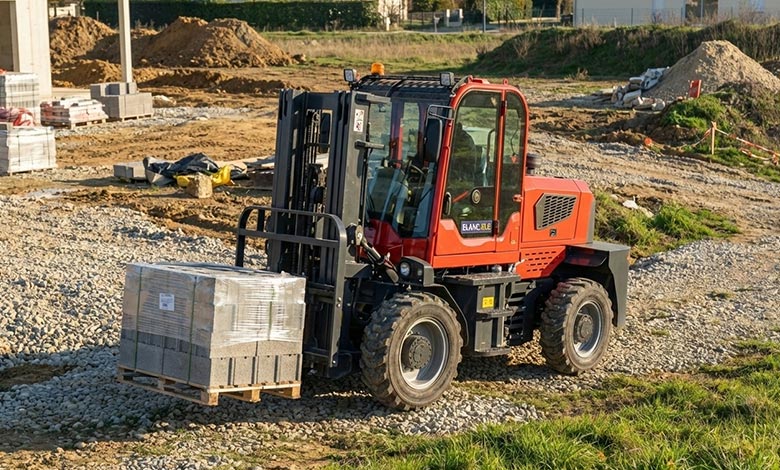
Many customers say something similar after switching:
“Now the forklift works for the site, instead of the site working around the forklift.”
This change isn’t driven by marketing claims or specifications. It comes from real, daily use in demanding outdoor environments10 — something BLANC-ELE5 designs its rough terrain forklifts4 around.
Conclusion
When choosing a forklift, ground conditions matter more than specifications. The right forklift for uneven ground determines long-term efficiency, safety, and operational stability.
If your worksite includes uneven or changing ground conditions, BLANC-ELE5 can help you evaluate your application and recommend a rough terrain forklift configuration that fits your real working environment.
Learn why standard forklifts may not be suitable for uneven ground and what alternatives exist. ↩
Learn how traction impacts forklift efficiency and safety in outdoor environments. ↩
Understanding ground clearance can help you choose a forklift that performs well on uneven surfaces. ↩
Explore this link to discover top-rated rough terrain forklifts that excel in challenging outdoor conditions. ↩
Explore BLANC-ELE's expertise in rough terrain forklifts to understand how they enhance performance on uneven ground. ↩
Discover the importance of tire-to-ground contact for optimal forklift operation on uneven surfaces. ↩
Understanding load center can enhance your forklift's stability and performance in challenging conditions. ↩
Find expert tips for safely operating forklifts on soft ground to avoid accidents and inefficiencies. ↩
Chassis stability is crucial for safe operation; find out how it affects performance on uneven ground. ↩
Explore the unique challenges faced by forklifts in outdoor settings and how to overcome them. ↩
Discover how the right forklift can alleviate stress and improve efficiency in your operations. ↩