
When we speak with overseas buyers, the question we hear most often isn’t about price or lifting capacity.
It’s this:
“If something breaks, how fast can I get spare parts?”
That question is more important than many people realize.
In various industry discussions, spare parts1 supply is often mentioned as a concern. But in real-world projects, long-term reliability has far less to do with country of origin and much more to do with whether the parts system is properly prepared.
If a machine stops working, even the cheapest purchase quickly becomes expensive.
Why Spare Parts Matter More Than Brand Names
It’s natural to focus on brand reputation first. But brand name does not automatically mean parts availability.
Even large international brands may face delays if spare parts are not stocked locally. For outdoor equipment used on construction sites, mining areas, or remote industrial yards, logistics time2 often determines downtime — not branding.
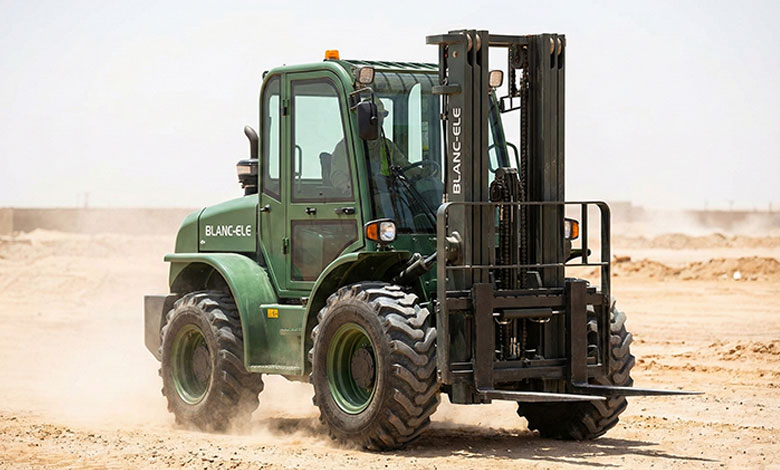
Rough terrain forklifts operate in:
- Construction sites
- Mining areas
- Stone yards
- Remote infrastructure projects
In these environments, downtime cost3 is often far higher than the cost of spare parts themselves.
5 Key Questions You Should Ask Before Buying
From our export experience, I usually suggest buyers clarify the following points before placing an order.
1️⃣ Is the Engine Built on a Mature Platform?
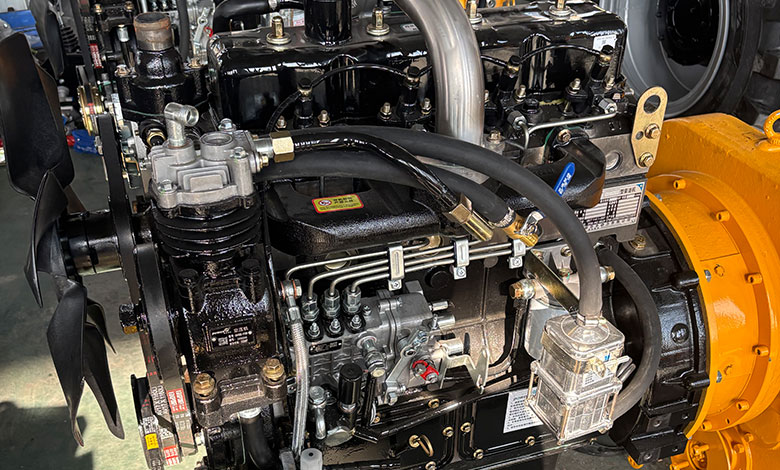
The engine is the core of any rough terrain forklift.
We commonly use Yuchai or Yunnei diesel engines. Both brands have been exported for many years and are widely used in multiple markets, including Africa and the Middle East. They are established, commonly serviced diesel platforms.
A mature engine platform usually means:
- Stable spare parts supply
- Widespread service familiarity
- Standardized components
- Easier long-term maintenance
Why Mature Engine Platforms Are Safer
In heavy outdoor equipment, complexity does not always mean better.
Mature diesel engine platforms are typically:
- Mechanically straightforward
- Easier to maintain
- Supported by broader supply networks
- Well-documented technically
Engines that have been circulating in multiple markets for years bring a level of operational confidence that newer or niche systems often cannot provide.
2️⃣ Is a Wear Parts Package Provided With the Machine?
When we ship a forklift, we usually include a basic wear parts package4 — such as filters and commonly replaced components.
This is not a marketing feature.
It’s a risk management decision.
Early-stage downtime caused by routine maintenance parts can often be avoided if those parts are already on-site.
3️⃣ Are Common Wear Parts Kept in Stock?
For standard wear components, we maintain inventory. Lead time typically depends on logistics rather than manufacturing.
For export projects, this distinction matters. Waiting for production is very different from waiting for shipping.
4️⃣ Can Spare Parts Be Purchased Separately?
A supplier that supports separate spare parts sales5 usually indicates a more transparent and stable support system.
We provide spare parts independently and can assist buyers in preparing a recommended spare parts list based on their project needs.
Long-term equipment use requires long-term support.
5️⃣ Is the Machine Structurally Simple and Durable?
In some cases, buyers assume that more complex systems mean better performance.
For rough terrain forklifts, especially in demanding outdoor environments, simpler and proven structures often mean:
- Lower maintenance complexity6
- Higher stability
- Fewer failure points
In harsh working conditions, durability often matters more than advanced features.
Common Buying Mistakes
In practice, we’ve seen several recurring mistakes:
- Focusing only on purchase price
- Not asking about spare parts lead time
- Ignoring engine platform background
- Overlooking logistics realities in the project location
Many operational issues are not caused by machine defects, but by insufficient preparation during the purchasing phase.
How to Reduce Downtime Risk
If you want to minimize long-term operational risk7, consider the following:
- Choose equipment with a mature diesel engine platform
- Confirm spare parts inventory before ordering
- Prepare a basic spare parts stock before project launch8
- Maintain communication with your supplier
We often recommend that buyers prepare a small essential spare parts inventory before the project begins. This approach significantly reduces downtime risk.
This is not an extra expense — it’s part of operational planning.
Reliability Comes From Preparation, Not Labels
Industry debates about brands and origins will continue.
But in real projects, reliability depends on:
- Engine maturity
- Standardized spare parts
- Inventory planning
- Supply chain readiness
Long-term reliability is not determined by where a forklift is manufactured. It is determined by how well the spare parts system and maintenance planning are prepared.
Preparation reduces risk far more effectively than assumptions.
Understanding spare parts availability is crucial for minimizing downtime and ensuring operational efficiency. ↩
Explore the impact of logistics on spare parts availability and overall equipment performance. ↩
Learn about the hidden costs of downtime and how to mitigate them effectively. ↩
Discover the significance of wear parts packages in preventing downtime and ensuring smooth operations. ↩
Understanding spare parts sales can help you gauge the support system of your equipment supplier. ↩
Explore how simpler systems can lead to better reliability and lower maintenance costs. ↩
Learn strategies to minimize operational risks and enhance the reliability of your equipment. ↩
Preparation before project launch is crucial for ensuring smooth operations and minimizing risks. ↩