
Your new forklift is struggling, operators are getting stuck, and moving pallets feels slow and unsafe. You thought you bought a machine with enough power, but the reality in the yard tells a different story.
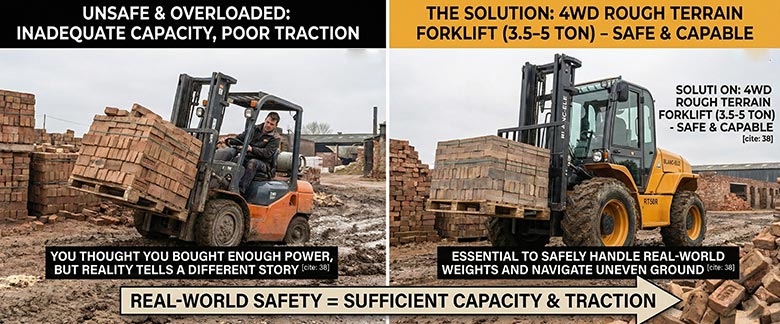
The solution is a 4WD rough terrain forklift1 with a capacity significantly higher than your estimated pallet weight2. A 3.5-ton or 5-ton model is essential to safely handle real-world pallet weight2s and navigate the broken, uneven ground of a typical brick yard3.
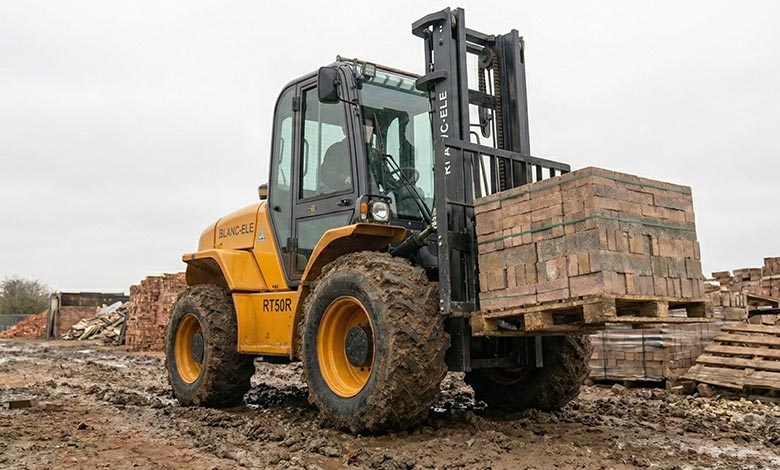
Honestly, the two biggest mistakes I see brick factories make when choosing a forklift are underestimating the real pallet weight2 and ignoring how bad the yard ground actually is. A factory owner will tell me, “Our brick pallets are only around 2 tons, so a 3-ton forklift should be fine, right?”
But when I visit the site, nine out of ten times I find the actual weight is much higher. The other thing people overlook is the ground itself. It’s the real efficiency killer. Your pallets are heavier than you think, and your ground is worse than you admit—that’s exactly why choosing a heavy-duty rough terrain forklift4 like the BLANC-ELE RT Series5 matters more than most people realize.
1. Why is your 2-ton brick pallet actually over 3 tons?
Your operator is reporting that the forklift struggles with a "2-ton" load, and you're wondering if the machine is underpowered. The machine is probably fine; the load is the variable you miscalculated.
The actual weight of a brick pallet often exceeds its "dry" weight by 20-50% due to water absorption6 after rain, tighter stacking, and variations in pallet materials. This turns a theoretical 2-ton load into a real-world 3-ton load.
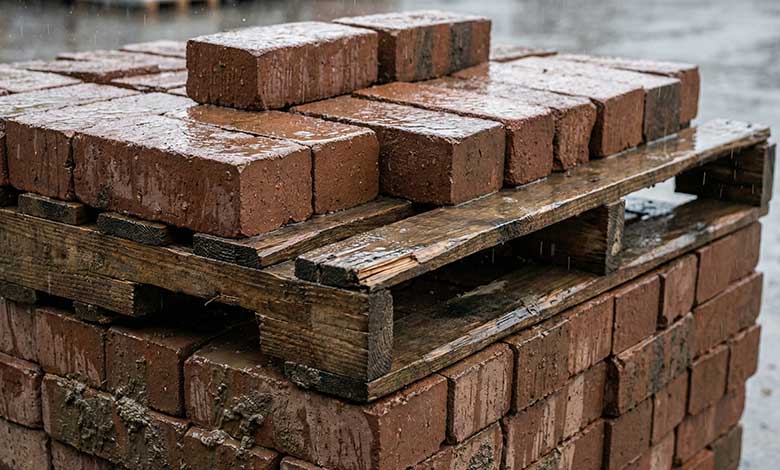
This is the most common and dangerous miscalculation I encounter. The weight on the spec sheet is not the weight in your yard. Bricks are porous, like sponges. After a single rainstorm, a pallet can absorb hundreds of kilograms of water.
Here are the hidden factors that add weight:
| Factor | Why It Adds So Much Weight |
|---|---|
| Water Absorption | Clay and concrete bricks absorb significant amounts of water. A pallet left in the rain can become 20-30% heavier overnight. |
| Stacking Density | Operators often stack pallets as tightly as possible to save space. A few extra layers or tighter packing can add 300-500kg of extra weight. |
| Pallet Structure | Heavier, hardwood pallets weigh significantly more than standard ones. This variation is rarely accounted for in "theoretical" calculations. |
| Debris and Mortar | Small amounts of mortar, sand, and other debris accumulate on pallets, adding yet more unaccounted-for weight. |
This is why at BLANC-ELE, we always recommend a 3.5-ton forklift as a minimum, and often a 5-ton model for busy yards. It's not about overkill; it's about operating safely with the actual weight.
2. Why do standard forklifts fail in a brick yard?
You've invested in a new forklift, but it's constantly spinning its wheels in the gravel or getting stuck in muddy patches. Productivity plummets.
Standard forklifts fail because they are designed for smooth, flat concrete. Their 2WD systems and low ground clearance are completely defeated by the reality of a brick yard3: loose gravel, broken bricks, sand, potholes, and mud.
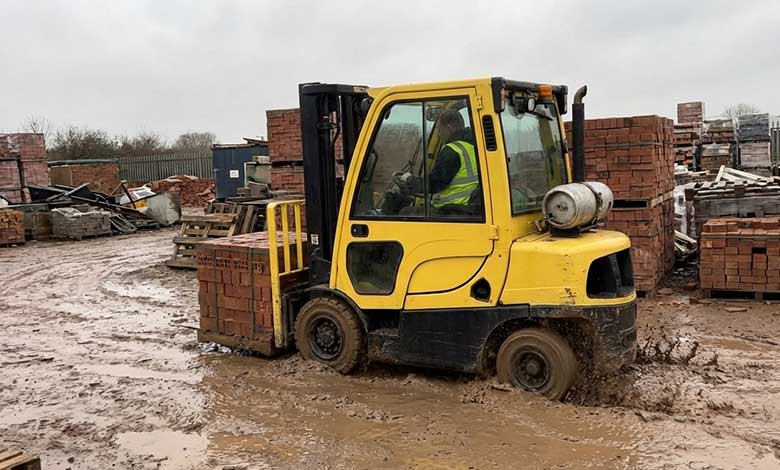
The efficiency killer in a brick yard isn’t engine power—it’s the ground condition. A standard forklift, even a powerful one, is useless if it can't get traction. I've seen brand-new warehouse machines rendered completely ineffective within minutes of arriving on a brick site.
Here’s exactly what happens:
- Loss of Traction: The drive wheels of a 2WD forklift hit a patch of sand or mud and start spinning. With no differential lock7 or 4WD, the machine is helpless.
- Getting High-Centered: The low undercarriage of a standard forklift gets caught on broken bricks or debris. This lifts the drive wheels off the ground, making movement impossible.
- Tipping Risk: When a standard forklift's small wheel drops into a pothole, the entire machine tilts dangerously.
3. How does a 4WD rough terrain forklift solve these problems?
You need a solution that works with your yard, not against it.
A 4WD rough terrain forklift1 delivers constant traction by powering all four wheels, while its high ground clearance8 allows it to drive over obstacles instead of getting stuck on them.
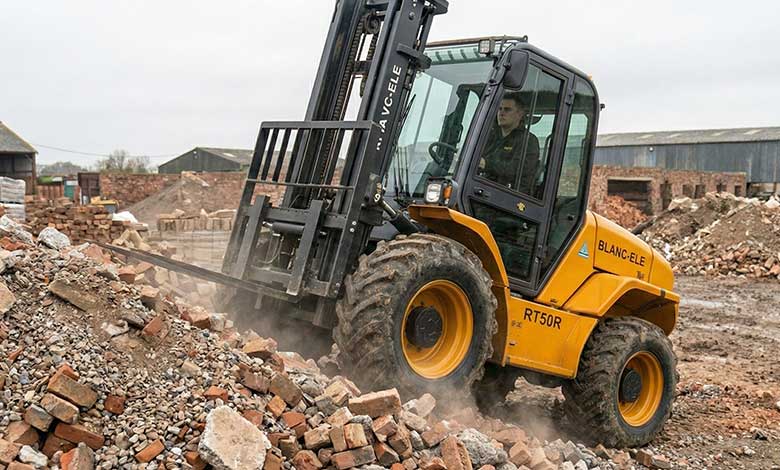
This is where the BLANC-ELE design changes everything. Our 4WD rough terrain forklift1s are purpose-built for hostile environments. We don't just add big tires to a standard frame; we engineer the entire chassis for off-road performance.
Let's compare the performance:
| Scenario | Standard 2WD Forklift | BLANC-ELE 4WD Rough Terrain Forklift |
|---|---|---|
| Muddy Patch After Rain | Front wheels spin, digging deeper. Stuck. | All four wheels grip, pushing through without stopping. |
| Gravel or Sand Area | Loses traction and momentum. | Deep-tread agricultural tires dig in and maintain grip. |
| Driving Over Debris | Low chassis hits broken bricks and damages the transmission. | High ground clearance passes over debris safely. |
| Entering a Pothole | Dangerous tilt. | Articulated steering axle absorbs the bump, keeping the load stable. |
A BLANC-ELE rough terrain forklift gives your operator the confidence to move pallets efficiently, no matter what the yard looks like that day.
4. How does the right forklift prevent dangerous load instability?
You've seen an operator take a corner on uneven ground, and the entire pallet of bricks shifted alarmingly.
The right forklift prevents instability with a wider wheelbase, a lower center of gravity, and a robust mast design. These features work together to keep heavy, high-stacked pallets level.
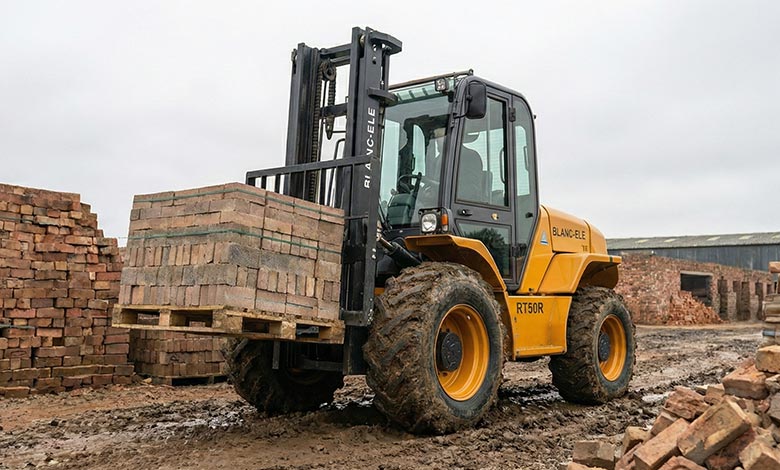
Lifting a heavy pallet is only half the battle. Brick and block pallets are inherently top-heavy. A rough terrain forklift is engineered for stability in these exact conditions:
- Wider Stance: BLANC-ELE machines feature a wider track width than standard forklifts. This acts like a wider base on a pyramid, significantly reducing tipping risk.
- Reinforced Mast Channels: Our masts are built from thicker steel to resist twisting. When the machine hits a bump, the mast stays rigid, preventing the "whip effect" that causes loads to fall.
- Oscillating Steer Axle: This allows the rear wheels to move up and down over bumps while keeping the chassis level, absorbing shocks before they reach the load.
Buying a forklift that isn't suited for your yard is one of the most expensive "deals" you can make.
The right forklift saves money by maximizing productivity, cutting downtime, and preventing product breakage9. These operational savings far outweigh the initial investment.
Let's break down the real financial impact:
- Stop Paying for Downtime: Every hour your forklift is stuck, you are paying an operator to do nothing. A reliable 4WD machine works all day.
- Stop Breaking Product: Stable machines mean fewer dropped pallets and less wasted inventory.
- Faster Cycle Times: If operators have to drive at a crawl to avoid getting stuck, your yard is inefficient. BLANC-ELE forklifts allow for fast, confident travel.
- Reduce Repair Bills: A standard forklift in a brick yard3 will destroy its transmission and undercarriage. Our machines are armored to handle this abuse.
Conclusion
For a brick factory, the choice is simple: accept that your pallets are heavy and your yard is rough. Don't gamble with a standard machine.
Invest in a 4WD rough terrain model with the capacity to handle reality.
Is your current forklift struggling with heavy brick pallets10? [Contact BLANC-ELE today] for a free consultation on the right capacity and configuration for your specific yard conditions.
Explore how a 4WD rough terrain forklift can enhance productivity and safety in challenging environments. ↩
Find out how to properly assess pallet weight to avoid operational issues with forklifts. ↩
Learn about the unique challenges faced in brick yards and how to overcome them. ↩
Learn why heavy-duty forklifts are crucial for handling tough conditions and heavy loads. ↩
Discover the unique features of the BLANC-ELE RT Series that cater specifically to brick yards. ↩
Understand the impact of water absorption on pallet weight and forklift performance. ↩
Discover the importance of differential locks in enhancing forklift traction. ↩
Learn how high ground clearance can prevent getting stuck in uneven terrain. ↩
Learn how the right forklift can minimize product damage and improve efficiency. ↩
Find out the best practices for safely handling heavy brick pallets with forklifts. ↩