
When I talk to customers about rough terrain forklifts, one question comes up almost every time:
“How high can it lift?”
It sounds like a simple question — but in reality, most buyers asking it haven’t fully figured out what they actually need.
I’ve seen many cases where customers initially want “the higher, the better.” But once we go deeper into their real working conditions, it turns out:
They don’t actually need that much height.
So in this article, I want to share how we usually approach this — based on real discussions with customers over the years.
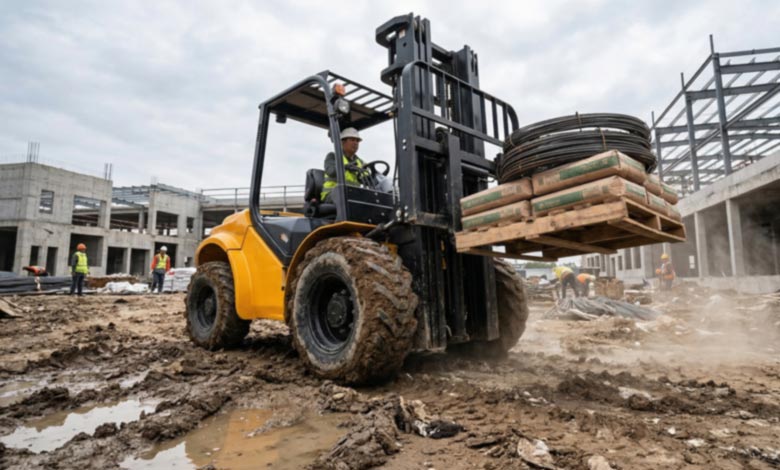
Why Lift Height Is More Complex Than It Looks
At first glance, lift height feels like a straightforward spec.
But in real use, it affects much more than just how high you can lift:
- Machine stability
- Mast structure
- Cost
- Overall usability
For example:
If you're only moving materials at ground level, a 3-meter lift is already more than enough.
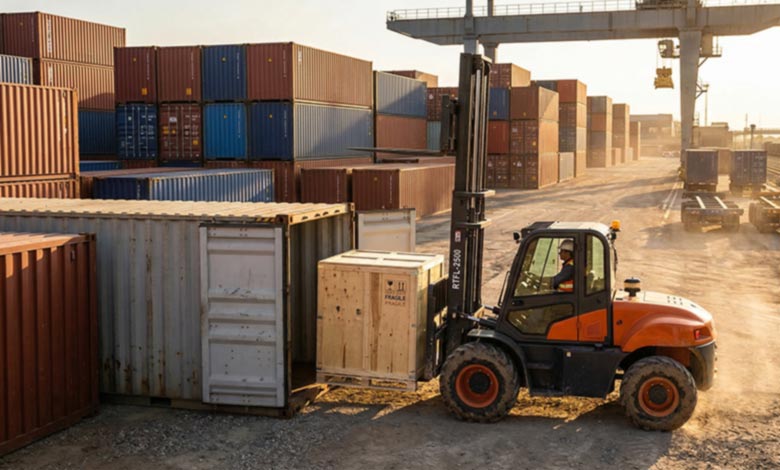
But if you're stacking, loading trucks, or working with containers, that's a completely different story.
So lift height isn’t about choosing the maximum — it’s about choosing what actually fits your job.
Common Lift Height Ranges We See
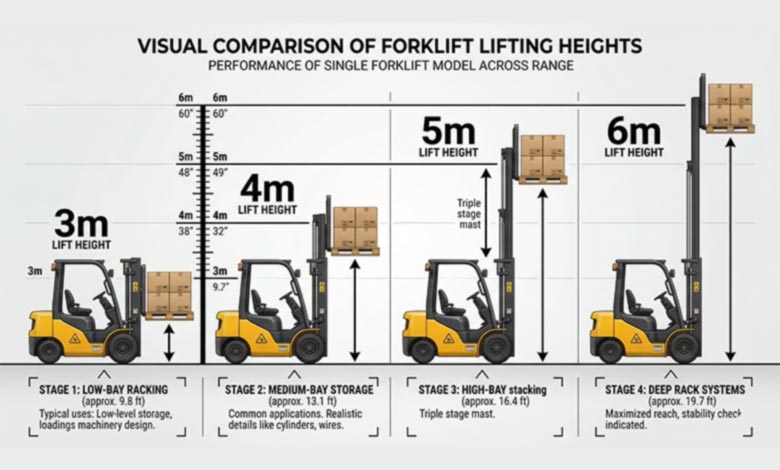
From what we supply regularly, rough terrain forklifts usually fall into these ranges:
- 3–4 meters → basic handling
- 4–5 meters → most common
- 5–6 meters → higher stacking needs
- 6m+ → special applications
In reality, around 4 meters is the sweet spot for most customers.
It balances cost, stability, and flexibility really well.
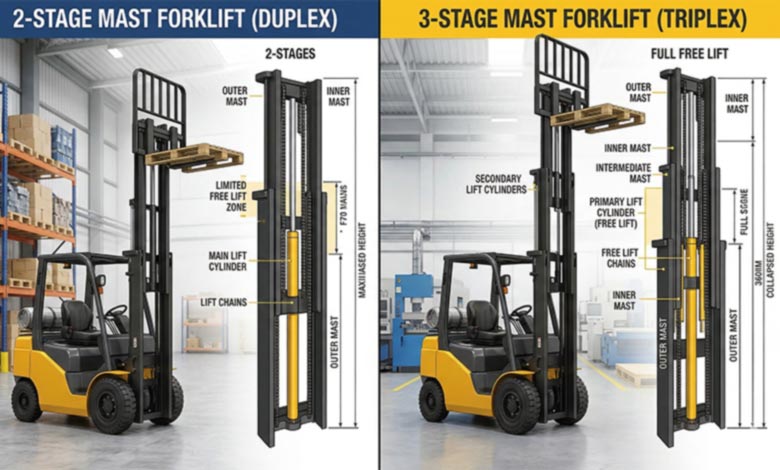
2-Stage vs 3-Stage Mast — Something Many Buyers Miss
Lift height isn’t just about numbers. It’s also about mast type.
And this is something many buyers overlook early on.
2-Stage Mast
This is the simpler and more standard option.
- More stable
- Lower cost
- Easier to maintain
Best for:
- Lower lift height
- Outdoor handling work
If you're mostly working at lower levels, this is often enough.
3-Stage Mast
This setup allows higher lifting while keeping the overall machine height lower when retracted.
- Higher lift capability
- Better for limited overhead space
- More flexible in warehouses or containers
Best for:
- Container loading/unloading
- Working under height restrictions
- Stacking at higher levels
How We Usually Recommend Lift Height (Based on Real Use)
Instead of guessing, we always tie lift height to actual working conditions.
Here’s a simple reference:
| Application | Recommended Lift Height |
|---|---|
| Construction sites | 3–4m |
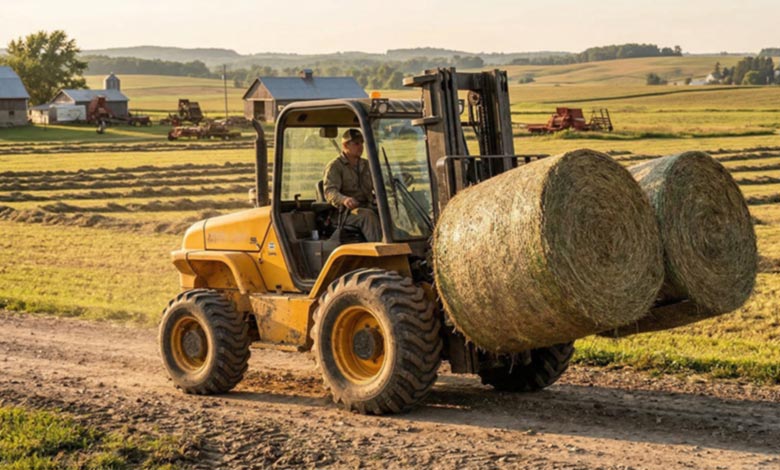
| Farms | 3–5m |
| Stone / sand yards | 3–4m |
| Timber yards | 3–5m |
| Warehousing / stacking | 4–6m |
| Container work | 4.5–6m |
Most outdoor jobs honestly don’t require extreme lift heights.
Common Mistakes I See Buyers Make
1. “Higher is always better”
Not really.
Higher lift means:
- Higher cost
- More complex structure
- Potential impact on stability
If you don’t actually need it, it’s wasted.
2. Ignoring real site limitations
Things like:
- Door height
- Warehouse clearance
- Container size
We’ve seen machines ordered too tall — and then limited in real use.
3. Mixing up handling vs stacking
This is very common.
- Just moving materials? → lower height is fine
- Stacking? → you need more height
But many buyers don’t clearly separate these at the start.
What I Usually Ask Customers First
Before recommending anything, I usually ask two simple questions:
- Are you mainly handling or stacking?
- What’s the highest point you actually need to reach?
Most of the time, the right answer becomes clear just from that.
Final Thoughts
From what we’ve seen over the years, most customers don’t need extreme lift height.
What really matters is:
- Matching your actual working conditions
- Keeping the machine stable and reliable
- Choosing something practical, not just bigger
At BLANC-ELE, we usually help customers choose the right setup — whether that’s:
- Different lift heights
- 2-stage or 3-stage mast
Not the highest spec — just the right one.
If you're not sure what fits your project, feel free to reach out. We're always happy to share real-world suggestions.