
You trust your experienced operators to be safe, so a rear-view camera1 might just seem like another gadget on the spec sheet. But on a bulky rough terrain forklift, what they can't see can cause serious problems.
Yes, absolutely. The huge blind spots2 on rough terrain forklifts make rear-view cameras essential. They don't just help with reversing; they provide critical visibility of low obstacles, uneven ground, and people, preventing accidents where mirrors alone fail.
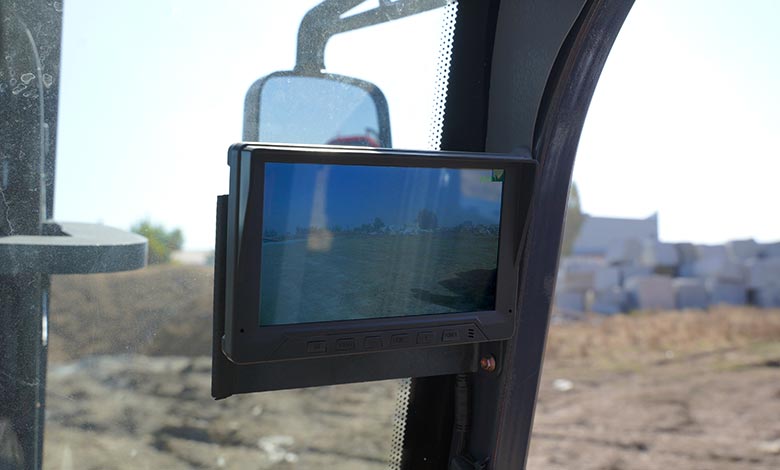
As someone who has spent years in the industrial machinery field, I've seen a lot of technology come and go. At BLANC-ELE, we supply forklifts to farms, construction sites, and lumber yards. In all my conversations with clients, one optional feature consistently gets the highest praise: the rear-view camera.
It’s a feature people often underestimate—until they use it on a muddy, busy job site.
1. Why Are Forklift Camera Systems Essential for Safety?
You might think good training and mirrors are enough. But in a busy, unpredictable outdoor environment, even the best operator can’t see everything.
Forklift camera systems eliminate dangerous rear blind spots2. These blind spots2 are significantly larger on rough terrain models due to high counterweights and large off-road tires.
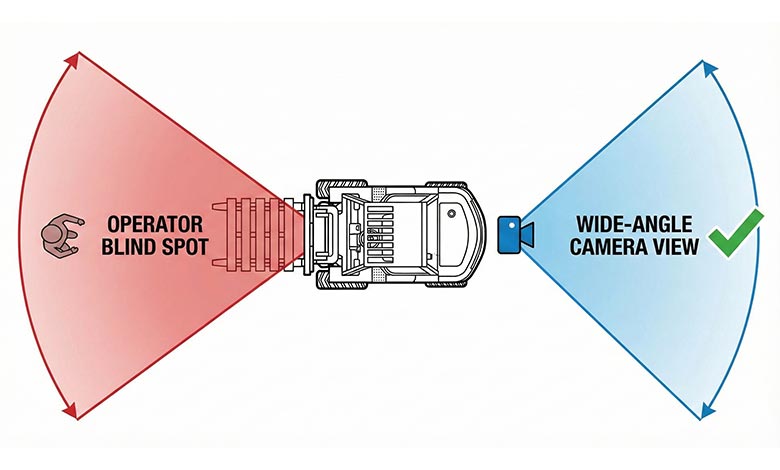
We realized early on that a rough terrain forklift is a different beast. Its robust structure creates a blind zone directly behind the machine that mirrors cannot reach.
The feedback from BLANC-ELE customers is that the camera’s main value is revealing the unexpected:
- Low Obstacles: Tools, buckets, or pallets left on the ground that are too low for mirrors.
- Ground Changes: Sudden ditches or potholes that could destabilize the machine.
- People: Workers walking into the machine’s path in noisy environments.
We offer this as a high-value option on our forklifts because it acts as a non-negotiable layer of safety redundancy3.
2. Are Cameras Better Than Mirrors? (The "Vibration" Factor)
Forklifts have used mirrors for decades, so why change? Because mirrors have fundamental limitations in rough terrain.
Yes, cameras are superior. Mirrors vibrate violently on uneven ground, blurring the reflection. A camera provides a stable, digital wide-angle view, day or night.
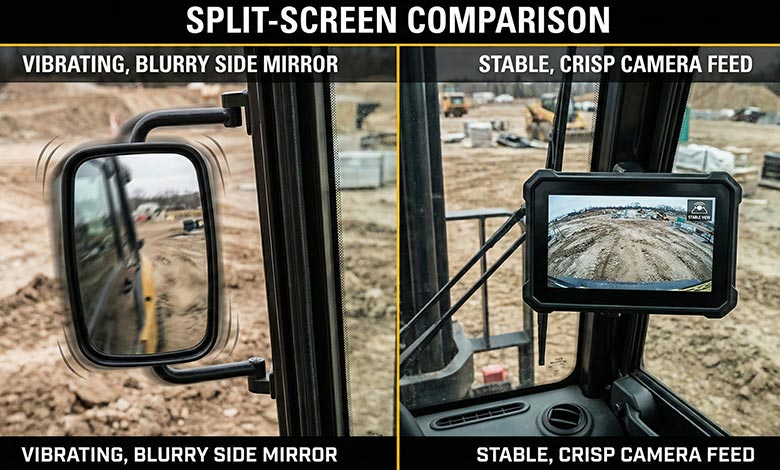
Let's break down the practical differences based on field tests:
| Feature | Standard Mirrors | BLANC-ELE Camera Option |
|---|---|---|
| Stability | Image blurs significantly on rough ground due to vibration. | Digital image stabilization provides a clear view even on bumps. |
| Coverage | Shows limited side angles; leaves a huge "dead zone" directly behind. | Wide-angle lens covers the entire rear blind zone. |
| Clarity | Can be obscured by rain, fog, or dust. Useless at night. | Waterproof & Night Vision capable for all-weather work. |
| Operator Strain | Requires constant head-turning and twisting. | Offers a single, easy-to-glance screen on the dashboard. |
Relying solely on mirrors is physically tiring. A camera screen reduces that physical strain, helping a good operator stay sharp all day long.
3. How Do Cameras Boost Daily Efficiency?
Safety is the main goal, but there is also a clear ROI (Return on Investment)4 in terms of speed.
Cameras boost efficiency by reducing "reversing hesitation5." Operators can move decisively without constant stopping to check blind spots2, leading to faster cycle times.
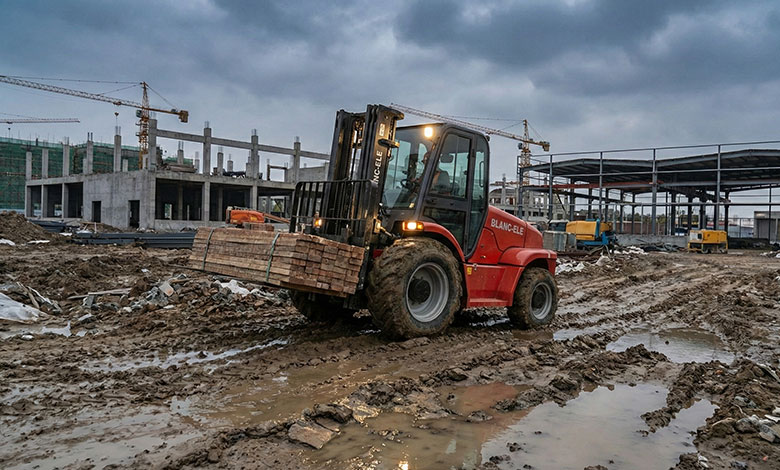
When an operator is 100% confident about what’s behind them, the constant "stop, check, inch backward, re-check" process is replaced by a smooth, continuous motion.
- Faster Positioning: Get the angle right the first time.
- Less Stress: Reducing the mental load means operators work better for longer.
Many clients tell us: "Once our drivers got used to the camera system, they refused to drive the older machines without it."
Conclusion
A rear-view camera1 on a rough terrain forklift isn't just a fancy gadget; it is a fundamental tool for modern safety and efficiency.
At BLANC-ELE, we strongly recommend adding the Rear-View Camera option to your rough terrain forklift configuration. It is a small investment that protects your most valuable assets: your people and your equipment.
Building your new forklift? [Contact BLANC-ELE] to ask about our Camera & Safety packages6 today.
Explore how rear-view cameras enhance safety and visibility for forklift operators, making them essential for rough terrain. ↩
Learn about the dangers of blind spots in forklifts and how technology can mitigate these risks. ↩
Understand the concept of safety redundancy and its importance in preventing accidents in heavy machinery. ↩
Learn how investing in safety features like cameras can lead to significant returns in efficiency and reduced accidents. ↩
Understand reversing hesitation in forklifts and how camera systems can help streamline operations. ↩
Explore the options available for enhancing forklift safety with camera systems and other features. ↩