
When overseas buyers ask me about outdoor material handling, one question comes up again and again:
"Should I buy a rough terrain forklift or a telehandler?"
I understand why this question is confusing. Both machines can work outdoors. Both can use forks. Both are seen on construction sites, farms, yards, and industrial projects. And if you only look at photos, a telehandler often looks more powerful because of the telescopic boom.
But in real buying decisions, I do not start with appearance.
I usually ask:
"What does the machine need to do every day?"
That answer is more useful than the machine name.
The Short Answer
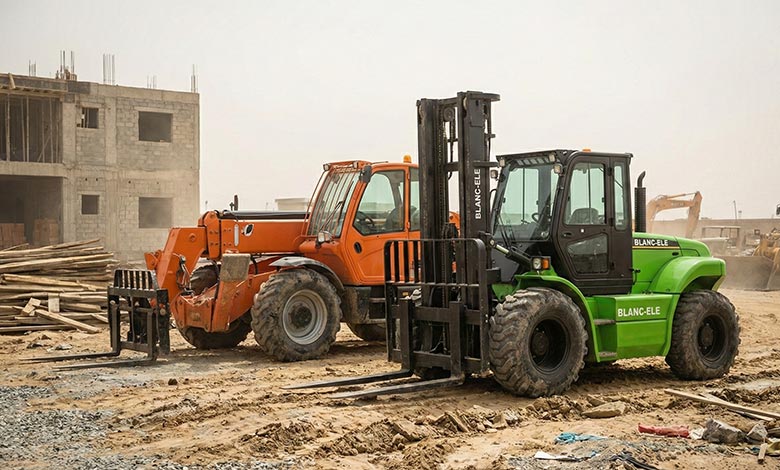
A rough terrain forklift is usually a better fit when most of the work is ground-level material movement:
- unloading trucks or containers
- moving pallets, bricks, cement, bags, boxes, steel parts, or farm goods
- working across gravel, soil, compacted dirt, yard roads, or unfinished site surfaces
- lifting and stacking near the machine, without needing long forward reach
- keeping maintenance and daily operation relatively simple
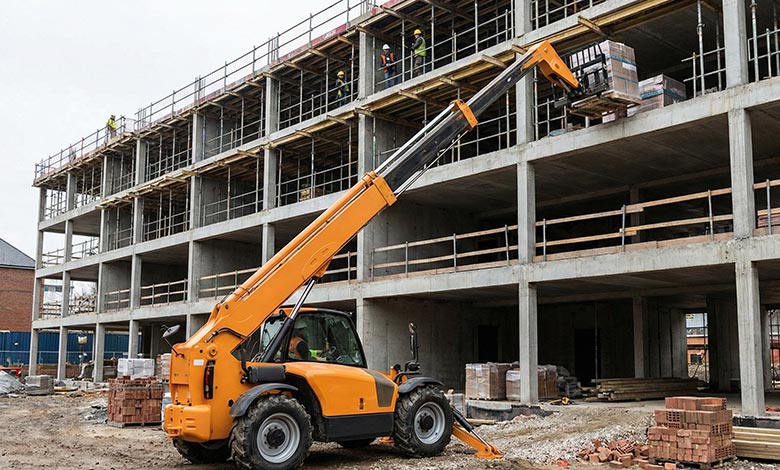
A telehandler is usually a better fit when the job really needs forward reach or height:
- placing materials over obstacles
- reaching into upper floors, platforms, or roof areas
- setting loads beyond the front wheels
- handling work where a vertical mast cannot reach the required position
- using a trained operator who understands boom angle, reach, load charts, and site stability
So the question is not:
"Which machine is better?"
The better question is:
"Is my main job carrying and loading near the machine, or reaching and placing away from the machine?"
That one question already prevents many wrong purchases.
Why Buyers Often Confuse the Two Machines
There is a technical reason for the confusion.
OSHA's powered industrial truck eTool lists Class VII as rough terrain forklift trucks. Under that category, OSHA includes vertical mast rough terrain forklifts and variable reach machines with telescoping booms. In many markets, that variable reach machine is commonly called a telehandler.
So yes, there is overlap in the larger equipment family.
But from a buyer's daily-use point of view, the difference is still very important.
A vertical mast rough terrain forklift is mainly designed to lift loads close to the machine, similar to a conventional forklift, but with outdoor mobility and rough-ground capability. A telehandler uses a telescopic boom, so it can place loads forward and upward in ways a vertical mast forklift cannot.
That reach is valuable.
It also changes the decision.
The more you reach forward, the more you must think about load chart, ground stability, boom angle, operator training, and safe working practice. A telehandler is not just "a stronger outdoor forklift." It is a different tool for a different type of work.
If you want a basic comparison of definitions, you can also read this related BLANC-ELE article: are rough terrain forklifts the same as telehandlers?
A Typical Case I See With Overseas Buyers
Here is a very common situation from developing-market job sites.
A buyer tells me:
"Our construction site is not flat. We need a telehandler."
Then I ask for photos and a short video of the work route.
After checking the real job, we may find that the machine will mainly unload pallets from trucks, move cement bags and building materials across a yard, carry loads from the gate to the storage area, and occasionally stack materials under a shed.
There is rough ground, yes.
But there is no real need to place loads over a wall, across a trench, or to a high floor. The daily work is mostly transport, loading, unloading, and short-height stacking.
In that situation, I would not automatically push the buyer toward a telehandler just because it looks more advanced. A rough terrain forklift may be the more practical machine, especially when the buyer also cares about easier operation, simpler daily service, and local mechanic familiarity.
This does not mean the telehandler is wrong.
It means the job does not fully use the telehandler's strongest advantage: forward reach.
Now look at another case.
A contractor needs to lift packaged materials to an upper slab, place loads behind a barrier, or reach over uneven ground where the machine cannot drive close to the unloading point. The site has enough open space, the operator is trained, and the buyer can support the machine properly after delivery.
In that case, a telehandler may be the better choice.
This is why I do not like one-line answers. The correct machine depends on the work route, load position, site layout, and support ability.
Rough Terrain Forklift vs Telehandler: Practical Comparison
| Decision Point | Rough Terrain Forklift | Telehandler |
|---|---|---|
| Main job | Moving and lifting loads close to the machine | Reaching forward and placing loads at distance or height |
| Best daily use | Truck unloading, yard transfer, pallet handling, farm goods, construction materials | Upper-floor placement, over-obstacle loading, long forward reach |
| Load position | Close to mast and front wheels | Can be extended away from the machine by boom |
| Operator focus | Forklift-style driving, lifting, stacking, load center | Boom angle, reach distance, load chart, ground level, attachment setup |
| Site layout | Useful where materials are moved repeatedly between nearby points | Useful where the machine cannot drive close to the placement point |
| Maintenance reality | Often easier for teams already familiar with forklifts | Usually needs stronger attention to boom, hydraulics, pins, hoses, and load chart discipline |
| Buyer risk if chosen wrong | Not enough reach or height for real placement work | More machine complexity than needed for simple loading and yard transport |
This table is not a rule for every job site. It is a starting point for discussion.
Before recommending a machine, I still want to see photos, load details, ground condition, lifting height, and working route.
Do Not Compare Only Rated Capacity
One mistake I see is comparing two machines only by rated load.
For forklifts, capacity is connected to load center, load shape, position, and weight distribution. OSHA explains that a forklift's stated capacity applies to the load center shown on the data plate, and that irregular loads or loads positioned farther forward can reduce usable capacity.
That matters for rough terrain forklifts.
It matters even more when buyers use long loads, fork extensions, buckets, clamps, or crane jibs.
For telehandlers, the buyer also needs to study the load chart. A telehandler may handle a certain load close to the machine, but that does not mean the same load can be safely handled at full reach or at a high boom angle.
So when a buyer asks me:
"Can this machine lift this weight?"
My answer is usually:
"At what load center, what height, what reach, what attachment, and on what ground?"
That may sound slower, but it is the proper way to avoid the wrong recommendation.
If your application may use buckets, clamps, fork extensions, or lifting jibs, read this first: rough terrain forklift attachments and configurations
Ground Condition Still Matters for Both Machines
Some buyers hear "rough terrain" and think the machine can work anywhere.
That is not true.
OSHA also notes that "rough terrain" does not mean a forklift can be safely operated on every possible type of terrain. In real jobs, this point is very important.
I always want to know:
- Is the ground compacted soil, loose sand, mud, gravel, broken concrete, or slope?
- Does the route change during the rainy season?
- Are there deep tire ruts?
- Is the road wide enough for turning?
- Does the machine work near trenches, edges, or soft shoulders?
- Will the operator travel with loads over long distances?
A rough terrain forklift can be a strong solution for outdoor material movement, but it still needs a workable route. A telehandler also needs stable ground, especially when lifting with the boom extended.
In many developing-market projects, the issue is not only the machine. The issue is whether the site route has been prepared well enough for daily material handling.
If a buyer sends me only one product photo from another supplier and asks me to match it, I cannot judge properly. If the buyer sends the working route, load photo, and lifting point, the recommendation becomes much more accurate.
For construction-site use, this related guide may also help: how rough terrain forklifts improve efficiency on construction sites
Where a Rough Terrain Forklift Is Usually the Better Fit
In my experience, a rough terrain forklift often fits better when the buyer's work is simple but heavy and repeated.
For example:
- a construction material yard moving pallets and bags
- a farm moving fertilizer, harvest bins, feed, or packaged goods
- a brick factory moving stacked materials between production and storage
- a small contractor unloading trucks on unfinished ground
- a dealer selling to customers who need outdoor forklifts but do not need boom reach
- a warehouse with rough outdoor yard sections
These buyers usually care about practical things:
- Can the machine travel on site roads?
- Can it lift the common load safely?
- Can local operators learn it quickly?
- Can maintenance be handled without waiting too long?
- Can the machine work through busy seasons?
- Can the supplier help confirm tires, mast, attachment, and shipping before order?
This is why I often guide buyers back to the real application before discussing models.
You can start from the BLANC-ELE rough terrain forklift range to see the general product direction, then confirm the final configuration with working-condition details.
Where a Telehandler Is Usually the Better Fit
A telehandler becomes more useful when the machine must place a load somewhere a vertical mast forklift cannot reach.
For example:
- placing materials to an elevated floor
- reaching over a trench, ditch, wall, or barrier
- unloading when the machine cannot drive close to the target position
- moving materials on a large open site where reach saves many manual handling steps
- using one machine for different reach-height tasks with suitable attachments
But this only makes sense when the buyer has the right job for it.
If the machine spends most of its time doing simple pallet movement, the buyer may not benefit much from the boom. The site may also need more discipline around load charts, attachments, ground level, inspection, and operator training.
I do not say this to make telehandlers look bad. They are very useful machines when the job needs them.
I say it because a buyer in a remote market should not buy extra complexity unless that complexity solves a real daily problem.
Attachments Can Change the Answer
Attachments are one of the most common reasons a machine choice changes.
A buyer may first say:
"We only need forks."
Later, during the conversation, we learn they also want to handle loose materials, long steel, pipes, drums, or irregular cargo.
That changes the discussion.
Fork extensions, buckets, clamps, side shifters, and lifting jibs can change load center, visibility, weight distribution, and the final machine configuration. OSHA's powered industrial truck standard also requires attention to attachments and capacity-related markings when attachments affect operation.
So before choosing between a rough terrain forklift and a telehandler, I like to confirm the attachment plan early.
If the buyer only needs pallet forks and occasional simple handling, a rough terrain forklift may still be enough. If the attachment plan requires reach, height, and placement away from the machine, then a telehandler may become more reasonable.
The attachment is not a small accessory decision. It can change the machine decision.
Maintenance and Support Should Be Part of the Choice
In developed markets, buyers may have strong dealer networks, trained technicians, rental fleets, and easy access to specialized service.
In many developing markets, the situation is different.
A machine may work far from the city. The operator may also be the daily checker. The buyer may have a general mechanic, not a specialist for every machine type. Spare parts planning, tire availability, hydraulic hose replacement, filters, grease points, and basic troubleshooting become very important.
For many rough terrain forklift buyers, this is one reason they prefer a simpler machine for ground-level material handling.
Again, I am not saying simple always means better.
I am saying the support plan must match the machine.
If a telehandler is truly needed, then the buyer should also prepare for the higher importance of boom inspection, hydraulic system care, pins, wear points, load chart discipline, and operator training. If a rough terrain forklift is enough for the job, the buyer may avoid unnecessary complexity.
This is also why I often tell buyers to think about the second year of ownership, not only the first day after delivery.
For more on this angle, see why some rough terrain forklifts become expensive to maintain.
My Supplier-Side Decision Checklist
If you are choosing between a rough terrain forklift and a telehandler, here is the checklist I would use before recommending one.
1. What percentage of work is transport vs placement?
If most work is moving materials from one point to another, a rough terrain forklift may be enough.
If the main job is placing loads at distance or height, a telehandler deserves serious consideration.
2. How close can the machine get to the load and target?
If the machine can drive close to both pickup and unloading points, a vertical mast machine often works well.
If the machine must stay back and reach forward, a telehandler may be needed.
3. What is the real lifting height and forward reach?
Do not guess this.
Measure the height, the distance from machine to target, and the obstacle in between. A small drawing is often more useful than a long message.
4. What is the load shape?
Palletized goods are different from long steel, pipes, drums, loose materials, or irregular cargo.
The load shape affects load center and attachment choice.
5. What is the ground condition?
Send photos and videos.
Dry ground, rainy-season mud, loose sand, slope, gravel, and broken concrete all affect the recommendation.
6. Who will operate and maintain it?
If the buyer has trained operators and good service support, more complex equipment may be reasonable.
If the buyer needs a practical machine for repeated daily work with limited support, the simpler solution may be better.
7. What attachments will be used?
Do not leave this until after the machine is chosen.
Attachments can change capacity, visibility, stability, and the correct configuration.
What to Send Before Asking for a Recommendation
If you want a supplier to recommend the right machine, send these details:
- material type and normal load weight
- maximum load weight
- load size and shape
- pallet size, if used
- required lifting height
- required forward reach, if any
- site photos and route video
- ground condition in dry season and rainy season
- slope or ramp details
- turning space and road width
- attachment plan
- daily working hours
- destination country and support expectations
With this information, we can help you decide whether a rough terrain forklift is enough, whether a telehandler is more suitable, or whether the site needs another handling plan.
You can also send us your working condition and we will help check the suitable configuration before order.
Final Thought
A telehandler is not automatically better because it reaches higher.
A rough terrain forklift is not automatically better because it may be simpler.
The right choice depends on the real job.
If your work is mostly ground-level loading, unloading, pallet movement, and outdoor yard transport, a rough terrain forklift may be the practical answer. If your work truly needs forward reach and high placement, a telehandler may be the better tool.
As a supplier, my advice is simple:
Do not buy the machine that looks strongest in a photo.
Buy the machine that matches the work you repeat every day.
References
- OSHA Powered Industrial Trucks eTool: Forklift classifications, including Class VII rough terrain forklift trucks and variable reach type machines: https://www.osha.gov/etools/powered-industrial-trucks/types-fundamentals/types/classes
- OSHA Powered Industrial Trucks eTool: Load composition, load center, stability, and capacity considerations: https://www.osha.gov/etools/powered-industrial-trucks/load-handling/load-composition
- OSHA 29 CFR 1910.178: Powered industrial trucks, including rules on attachments, nameplates, and rated capacity: https://www.osha.gov/laws-regs/regulations/standardnumber/1910/1910.178
- BLANC-ELE rough terrain forklift product pages, specification documents, and supplier-side configuration experience. Final configuration should be confirmed before order.