
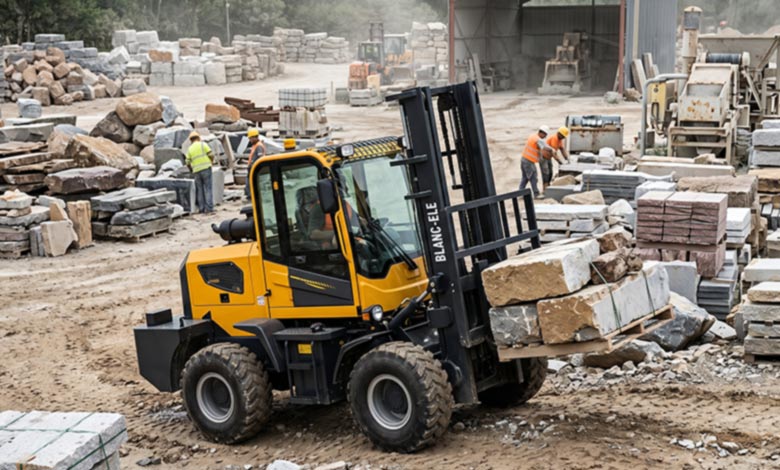
In many projects we’ve worked on, especially in stone yards and heavy material handling environments, we’ve noticed a common pattern:
👉 Many buyers choose equipment based on “standard handling needs”
But after real use, they realize:
👉 This type of work is completely different.
Why Stone Yard Applications Are Different
Stone yards and similar heavy-duty environments are not typical forklift scenarios.
They usually involve:
- Heavy loads (stone blocks, dense materials)
- Uneven ground (gravel, mud, slopes)
- Outdoor operation
- Long working hours
👉 Which means the requirement is not just lifting.
👉 It’s stable and consistent performance1 over time
Common Problems We Often See
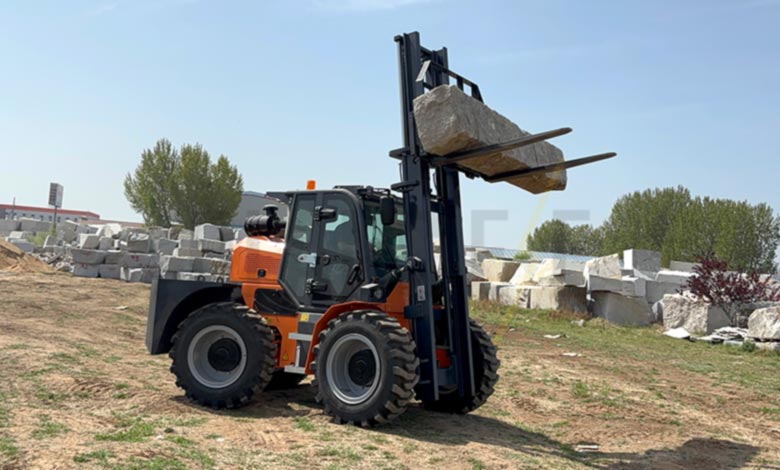
1. It Can Lift, But Feels Unstable
The machine may technically handle the load.
But in real conditions:
👉 It feels unstable
👉 Operators lose confidence
2. Poor Ground Adaptability
On rough surfaces:
- Wheels slip
- Traction is weak
- Movement becomes inefficient
3. Performance Drops Over Time
Short-term use may seem fine.
But with:
👉 Continuous heavy-duty operation
👉 Efficiency drops noticeably.
What This Type of Work Actually Requires
From experience, the requirements are very clear:
👉 Stability under load
👉 Sufficient capacity margin
👉 Strong ground adaptability2
👉 In simple terms:
👉 Not just “can it work”
👉 But “can it keep working reliably”
Why Certain Configurations Matter More in This Scenario
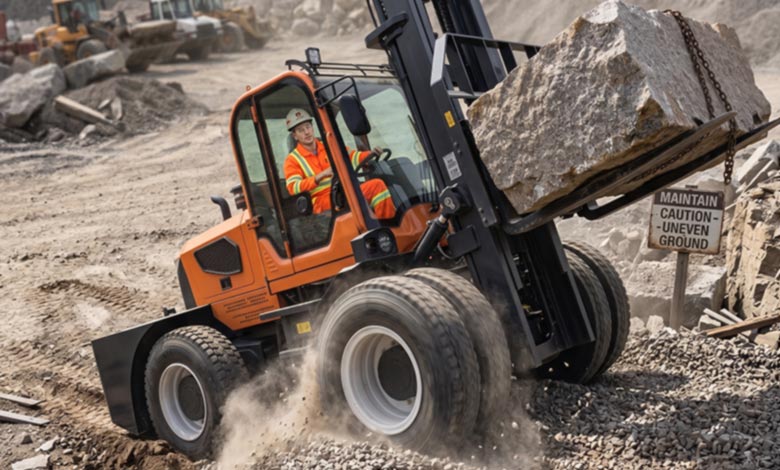
Twin Front Tires (Key Feature)
This is one of the most noticeable differences.
👉 Larger contact area
👉 Better load distribution
👉 Improved traction
👉 Especially effective on:
- Gravel
- Loose surfaces
- Uneven ground
Higher Capacity (Not Just Enough, But Stable)
In these environments:
👉 “Just enough” is often not enough
👉 A capacity buffer helps maintain:
👉 Stable long-term performance
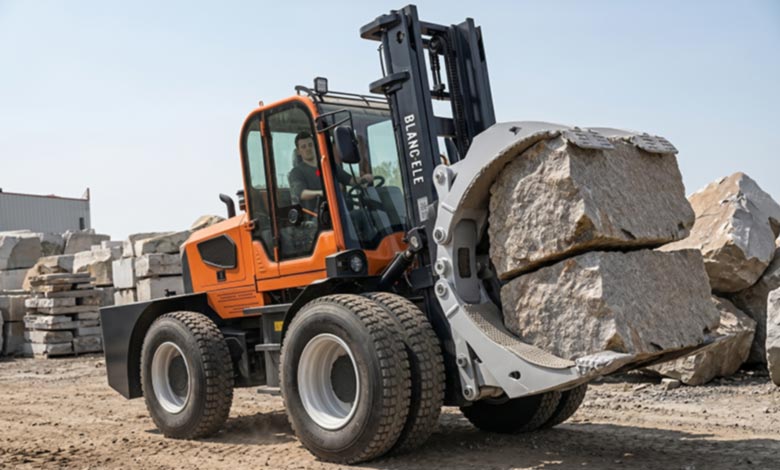
Attachments Make a Big Difference
Stone yards rarely involve standard pallet handling.
Typical needs include:
👉 With the right setup:
👉 One machine can handle multiple tasks.
A Typical Situation We’ve Seen
Some customers start with standard configurations.
At first:
👉 It seems workable
But over time:
👉 Ground issues appear
👉 Stability becomes a concern
👉 Operator fatigue increases
After adjusting to a more suitable setup:
👉 Operation becomes smoother
👉 Efficiency improves
👉 Work becomes more consistent
👉 This is actually very common.
👉 The issue is not the machine itself
👉 But the initial selection direction
How to Know If This Applies to You
If your working conditions include:
- Mostly outdoor work
- Uneven or rough ground
- Heavy materials
- Long working hours
👉 Then equipment stability and adaptability should be your priority.
👉 Not just specifications.
Final Thoughts
From our experience, choosing equipment for stone yards is not complicated.
👉 The key is:
👉 Understanding your working environment first
👉 There is no “better” forklift
👉 Only the one that fits your job
A Note from BLANC-ELE
At BLANC-ELE6, we don’t simply recommend a model.
We first understand:
- Your working conditions
- Ground situation
- Type of materials
Then suggest:
👉 The right equipment level
👉 Suitable configurations
👉 Attachment options
👉 Because in real projects:
👉 Choosing the right direction matters more than comparing specs.
Find out which features contribute to stable and consistent performance, essential for long-term operations in demanding environments. ↩
Understand the significance of ground adaptability in forklifts, which can greatly affect operational efficiency and safety. ↩
Explore this resource to understand how clamp attachments enhance efficiency and stability in heavy material handling. ↩
Explore this resource to discover how bucket attachments enhance forklift versatility and efficiency in heavy material handling. ↩
Explore this link to understand how side shift attachments enhance forklift versatility and efficiency in handling materials. ↩
Explore BLANC-ELE's expertise in forklift selection tailored for stone yards, ensuring optimal performance and stability. ↩