
If you’re planning to buy equipment for a construction site, you’ve probably asked this question:
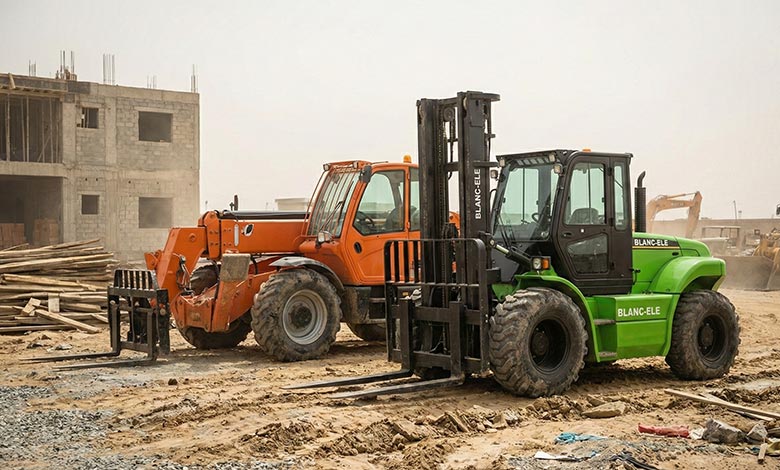
Should I choose a rough terrain forklift1 or a telehandler2?
On paper, both machines seem similar. Both are built for outdoor work. Both can lift heavy materials. Both are commonly seen on construction projects.
But in real projects, I’ve seen buyers make the wrong choice simply because they focused on lifting height3 and ignored stability, maintenance complexity4, and long-term cost5.
If I had to summarize it clearly:
If your project mainly involves horizontal material handling6 and requires strong stability on uneven ground, a rough terrain forklift1 is usually the more cost-efficient choice.
If extreme lifting height3 or forward reach is essential, then a telehandler2 may be the better option.
Let’s look at the real differences.
1. Structural Difference: Mast vs Boom
A rough terrain forklift1 uses a traditional mast system.
A telehandler2 uses a telescopic boom.
This structural difference changes everything.
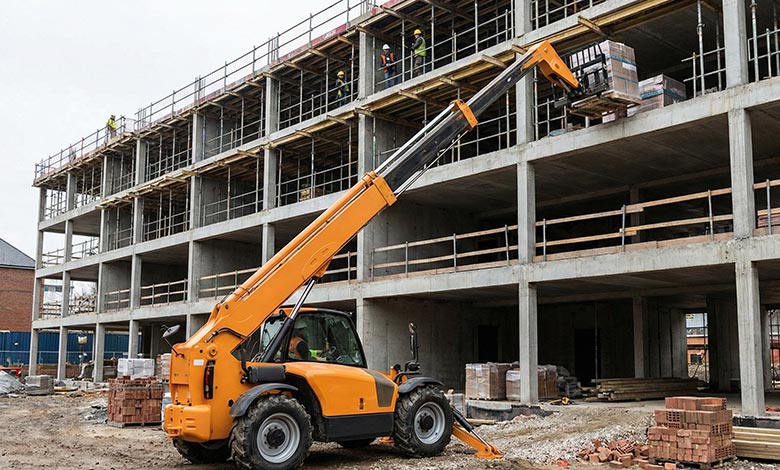
A telehandler2’s boom allows:
- Higher lifting height3s
- Forward reach
- More flexibility for certain tasks
But it also means:
- More complex hydraulics
- Higher maintenance requirements
- Different stability characteristics
In one construction project in West Africa, a client initially chose a telehandler2 for a mid-rise building. After six months, they realized that over 80% of the daily work involved moving pallets of cement and bricks across uneven ground — not high-elevation lifting.
The machine was capable, but overly complex for the actual job.
Structure determines suitability. Not just specifications.
2. Lifting Height vs Stability: What Do You Really Need?
Telehandlers are attractive because of their lifting height3.
But here’s the practical question I always ask:
How often will you actually use the maximum height?
In many construction sites in Southeast Asia that we’ve discussed with contractors, real daily tasks include:
- Transporting cement bags
- Moving steel bars
- Handling pallets
- Loading and unloading materials
These are mostly horizontal movements, not extreme vertical lifting.
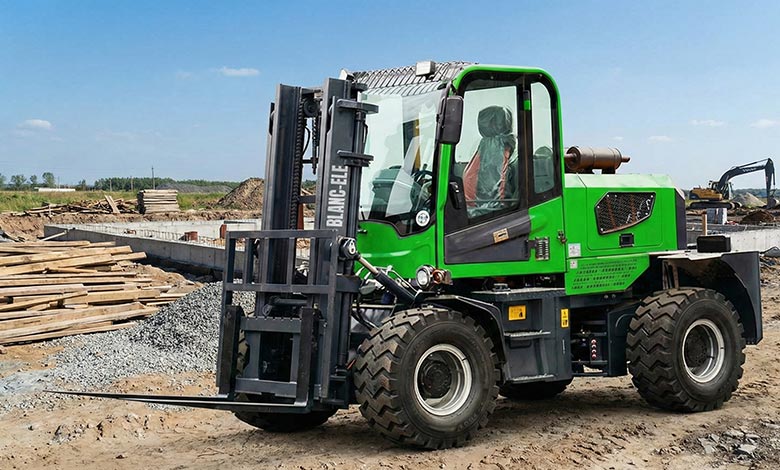
Rough terrain forklifts typically offer:
- Lower center of gravity
- Stronger stability on rough ground
- Simpler operation
- Faster cycle times for repetitive loading
On sandy or gravel surfaces, stability often matters more than height.
If your machine feels unstable on uneven terrain, productivity drops immediately.
3. Cost Comparison: Beyond the Purchase Price
Telehandlers generally cost more upfront.
But the bigger difference often appears later.
Because of the telescopic boom system, telehandler2s involve:
- More hydraulic components
- More wear points
- Higher repair complexity
- Longer downtime if major service is required
In markets like parts of Africa and the Middle East, spare parts availability can directly affect project timelines.
Several buyers have told us that downtime due to parts delays caused more financial loss than the original price difference between machines.
Rough terrain forklifts, with their simpler structure, are often easier to maintain and more predictable in long-term operating cost.
When project margins are tight, simplicity becomes an advantage.
4. Application Scenarios: Different Projects, Different Answers
Let’s break it down clearly.
Small to Mid-Size Construction Sites
- Mainly ground-level material transport
- Moderate lifting height3
- Budget-sensitive
👉 A rough terrain forklift1 is usually more economical and stable.
High-Rise or Specialized Projects
- Need extended forward reach
- Higher elevation work
- Specific attachment requirements
👉 A telehandler2 may be more suitable.
Mining, Quarry, and Heavy Outdoor Yards
- Uneven surfaces
- Heavy loads
- Continuous ground-level transport
👉 Rough terrain forklifts are often more practical and durable.
There is no universal “better” machine — only the better fit.
5. Common Buying Mistakes
From experience, I’ve seen several common mistakes:
- Overestimating required lifting height3
- Ignoring maintenance complexity4
- Choosing based only on features
- Not matching equipment to real ground condition7s
In more than one case, buyers later admitted they rarely used the maximum boom extension they paid for.
Equipment should match daily tasks — not theoretical maximum capabilities.
Final Thoughts: Fit First, Features Second
Both rough terrain forklift1s and telehandler2s have their place.
But before making a decision, clarify:
- Maximum lifting height3 required
- Typical load type
- Ground condition
- Budget and maintenance capacity
If your project focuses on stable, efficient horizontal transport on uneven ground, a rough terrain forklift1 often makes stronger business sense.
If height and forward reach are critical, then a telehandler2 may justify its additional complexity.
The right decision is not about which machine looks more advanced — it’s about which one truly fits your site.
Explore the benefits of rough terrain forklifts for outdoor construction, especially on uneven ground. ↩
Learn about telehandlers, their features, and when they are the best choice for construction projects. ↩
Understand the significance of lifting height in equipment selection for construction tasks. ↩
Get insights into the maintenance needs of different construction equipment to make informed choices. ↩
Evaluate the long-term financial implications of choosing between these two types of equipment. ↩
Learn about horizontal material handling and its relevance to equipment selection in construction. ↩
Explore how different ground conditions impact the effectiveness of construction machinery. ↩