
When many buyers first contact BLANC-ELE1 about a rough terrain forklift2, they usually describe their needs in very simple terms: “We just need a forklift that can work on bad ground.”
What often happens next is predictable. The forklift stays busy only when pallet handling is needed. Meanwhile, in other parts of the site, labor is short, loose material loading is slow, and efficiency never really improves.
To be honest, this is rarely a forklift problem. It’s a problem of underestimating what a rough terrain forklift2 is actually capable of.
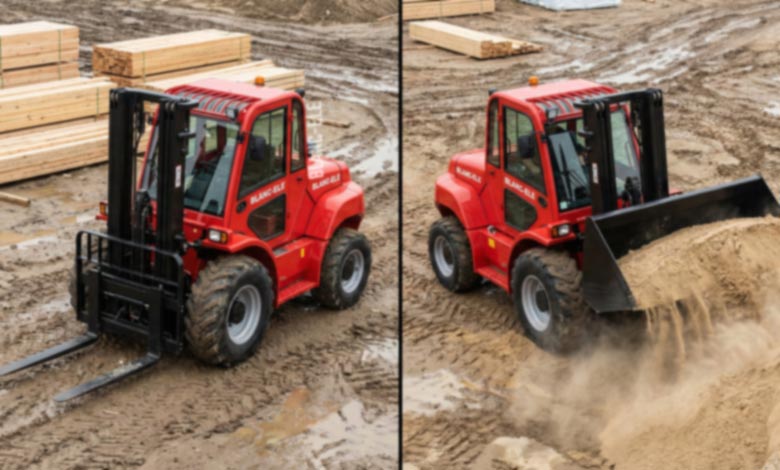
The True Value of a Rough Terrain Forklift
Most customers initially see a rough terrain forklift2 as nothing more than “forks plus wheels.”
But in real projects, many buyers later realize something important: The forklift wasn’t underperforming — its potential simply wasn’t unlocked.
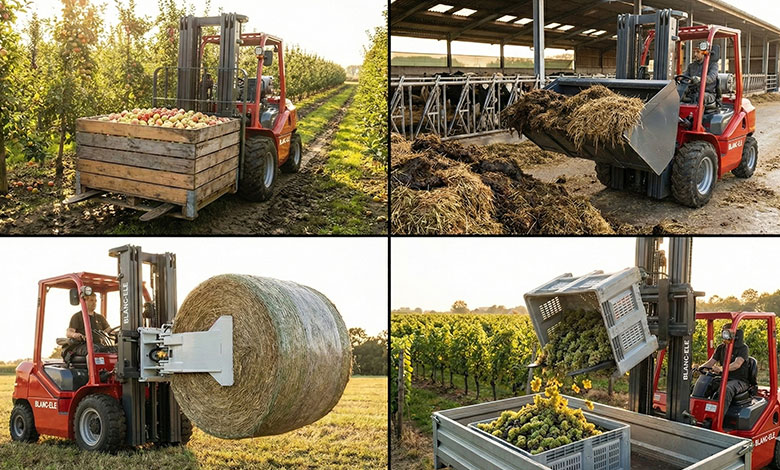
With a strong chassis, high torque, and a stable hydraulic system3, a BLANC-ELE1rough terrain forklift2 is built for far more than just pallet handling. Attachments are the key to expanding its role and turning one machine into a flexible working tool.
1. Loader Buckets: Turning a Forklift into a Temporary Loader
On construction sites4, brick factories, and farms, one attachment I often recommend is a Hinged Loader Bucket5.
The reason is simple: Not every project justifies buying a dedicated wheel loader.
Many customers face these exact situations:
- Occasional cleaning of sand, gravel, or soil.
- Pushing and leveling temporary access roads.
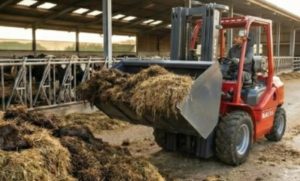
- Loading loose materials like fertilizer or coal.
- Intermittent use rather than full-day loading work.
I usually tell customers something very straightforward:
“If loading work is only occasional, one forklift with a bucket is far more cost-effective than maintaining two separate machines.”
A loader bucket is not meant to replace a professional wheel loader for heavy digging. But it perfectly fills the gap between “manual shoveling” and “expensive heavy equipment.”
2. Bale Clamps: Opening the Door to Agriculture and Recycling
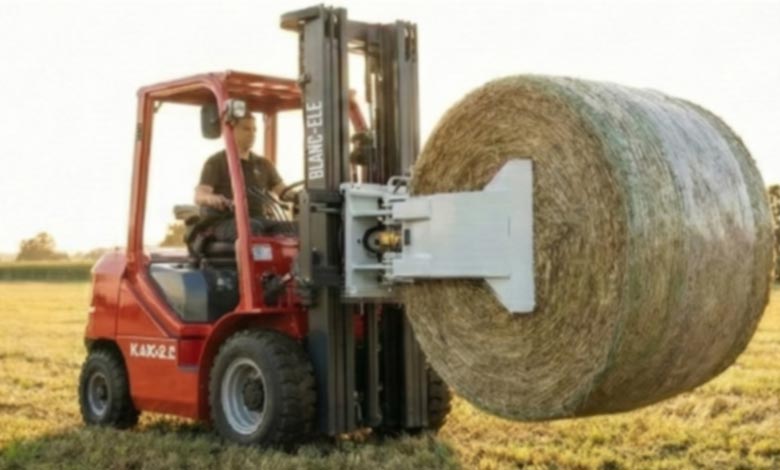
In agricultural applications, I’ve noticed a clear trend: Forks are used less, and hydraulic clamps are used more.
For materials such as hay bales, cotton bales, waste paper, and recycled plastics:
- The loads are irregular and soft.
- Fork insertion is inefficient and can damage the product.
- Slipping is a major safety risk.
With bale clamps6, rough terrain forklift2s can:
- Grip loads securely from the sides.
- Reduce product damage significantly.
- Work safely on soft or muddy ground where stability is key.
Most agricultural customers don’t ask whether a forklift can lift the load. They care more about how securely it can handle it without damage.
3. Quick Couplers: The Key to Efficiency
When customers plan to use multiple attachments7 (e.g., switching between forks and a bucket), I always emphasize the importance of a Quick Coupler8.
In real-world operation:
- If changing tools takes 20 minutes and a wrench, operators simply won't do it.
- Attachments end up sitting unused in the corner of the yard.
I often say this to customers:
“The value of attachments7 isn’t what you buy — it’s how often you actually change them.”
With a hydraulic quick coupler, an operator can switch from forks to a bucket in seconds, often without leaving the cab. This turns the forklift into a true multi-tasker.
4. Attachments Should Match the Job — Not the Catalog
Some buyers tell me: “Show me all your attachments7. I want as many options as possible.”
My response is usually direct:
“Before looking at attachments7, tell me what you move every day.”
Each attachment changes the machine's physics:
- Hydraulic Demand: Does the machine have enough auxiliary valves?
- Weight Distribution: Heavy attachments reduce lifting capacity (derating).
- Visibility: Does the attachment block the driver's view?
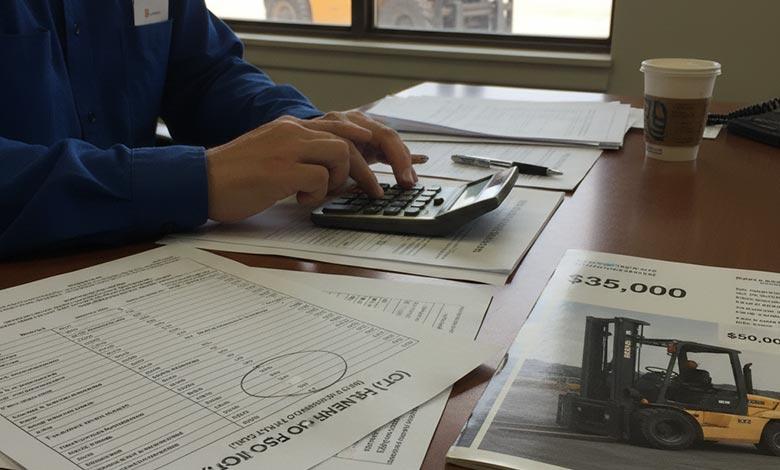
Choosing the wrong attachment doesn’t just waste money — it can actually reduce efficiency and operator confidence. At BLANC-ELE1, we calculate these factors for you to ensure safety.
5. Why Rough Terrain Forklifts Handle Attachments Better
Many attachments7 are heavy by nature. Using them on standard warehouse forklifts often feels risky and unstable.
Rough terrain forklifts are better prepared for this type of work because they typically feature:
- Stronger Frames: Built to handle dynamic stress9.
- Larger Counterweights: Balancing the extra weight of the attachment.
- Wider Chassis: Providing lateral stability when clamping or dumping.
That’s why many customers tell me after using attachments7 on our machines:
“This attachment feels unsafe on a warehouse forklift, but solid as a rock on a rough terrain model.”
Conclusion
Attachments are not optional add-ons. They are the key to unlocking the full ROI of your equipment.
Choose the right attachments7, and your BLANC-ELE1rough terrain forklift2 becomes more than a lifting tool — it becomes a versatile mobile solution that adapts to your site's real needs.
Looking to do more with one machine? [Contact BLANC-ELE] to discuss which attachments7 fit your specific application.
Explore this link to discover how BLANC-ELE forklifts can enhance efficiency and versatility on your job site. ↩
Explore the advantages of rough terrain forklifts to understand their versatility and efficiency in various applications. ↩
Understand the role of hydraulic systems in enhancing the performance and versatility of forklifts. ↩
Explore this resource to discover how attachments can enhance forklift versatility and efficiency on construction sites. ↩
Learn how a Hinged Loader Bucket can transform your forklift into a multi-purpose machine for various tasks. ↩
Discover how bale clamps improve handling of soft and irregular loads in agriculture and recycling. ↩
Learn about the different attachments available for forklifts and how they can expand functionality. ↩
Find out how Quick Couplers can significantly increase efficiency by allowing quick attachment changes. ↩
Gain insights into how dynamic stress impacts forklift operation and the importance of strong frames. ↩