
Quick Answer: When choosing construction site forklifts1, standard warehouse models typically fail due to low clearance and poor traction. The industry standard for job sites is a 4WD Rough Terrain Forklift2. These machines feature high ground clearance3, deep-tread tires4, and reinforced chassis to handle mud, gravel, and heavy loads like bricks and steel without getting stuck.
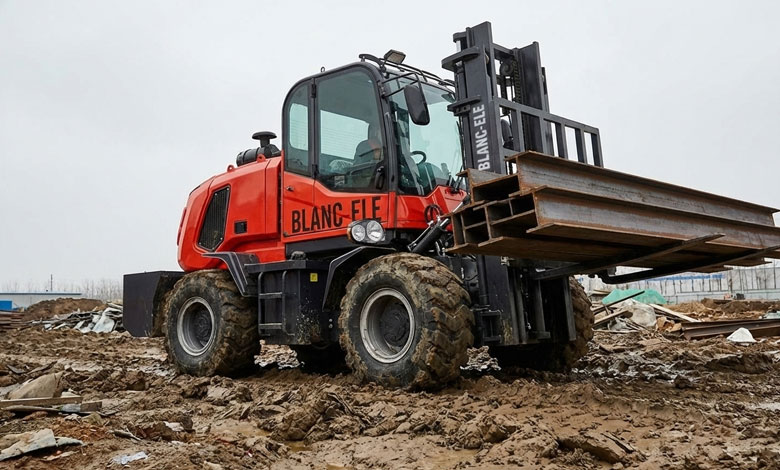
After working with construction-site customers for many years, I’ve learned one thing very clearly: Most forklift problems on job sites are not caused by operators — they’re caused by choosing the wrong machine from the start.
Many customers say the same thing when they first contact BLANC-ELE:
“On paper, our old forklift looked fine. Why did everything go wrong once it entered the site?”
Honestly, I’ve heard this question too many times.
In this guide, I’m not going to explain generic forklift categories. I want to share what I’ve seen on real construction sites — what actually works, what usually fails, and why investing in a specialized Rough Terrain Forklift is the only way to protect your profit margin.
1. Construction Sites Are Nothing Like Warehouses
One of the biggest mistakes buyers make is selecting a forklift for a construction site the same way they would for a warehouse.
But construction sites combine almost everything forklifts dislike:
- Uneven and unfinished ground (potholes, debris).
- Mud, sand, gravel, and water.
- Short but steep temporary ramps.
- Heavy dust, vibration, and long working hours.
I often tell customers something very direct:
“A construction site isn’t a place where forklifts show performance — it’s where their weaknesses are exposed.”
2. Why Standard Forklifts Almost Always Struggle on Job Sites
To save budget, many buyers ask me first: “Can we just use a standard pneumatic tire forklift outdoors for now?”
My answer is usually the same: It might work for a week — but it won’t last a year.
I’ve seen this scenario repeat itself many times with standard machines:
- Traction Failure: It works on dry days, then spins helplessly after one rainstorm.
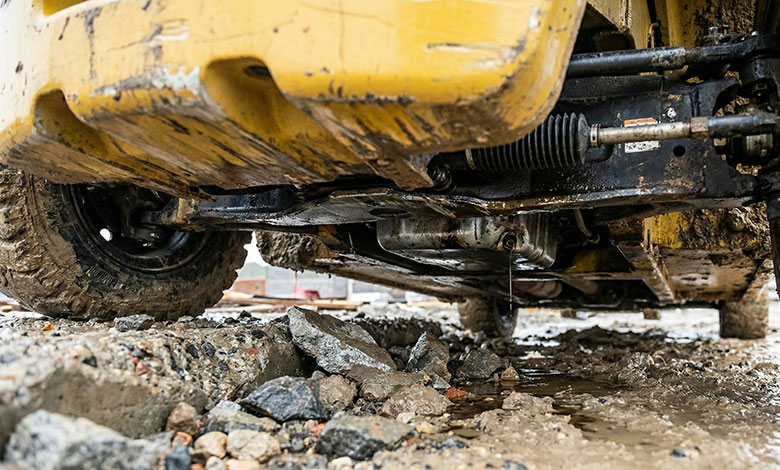
- Undercarriage Damage: The chassis scrapes the ground, damaging oil pans and steering rods.
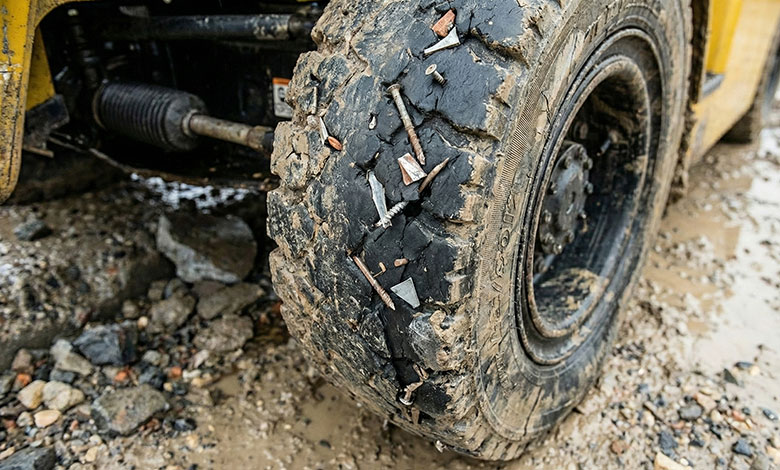
- Tire Wear: Standard tires get shredded by construction debris in months.
Three to six months later, the customer calls BLANC-ELE again — not to compare prices, but to replace the machine that is constantly broken.
3. When Do You Actually Need a Rough Terrain Forklift?
If your site has two or more of the following conditions, a standard forklift is already the wrong choice:
- [x] Uneven ground or unpaved tracks.
- [x] Mud, loose gravel, or sand.
- [x] Slopes or ramps > 10%.
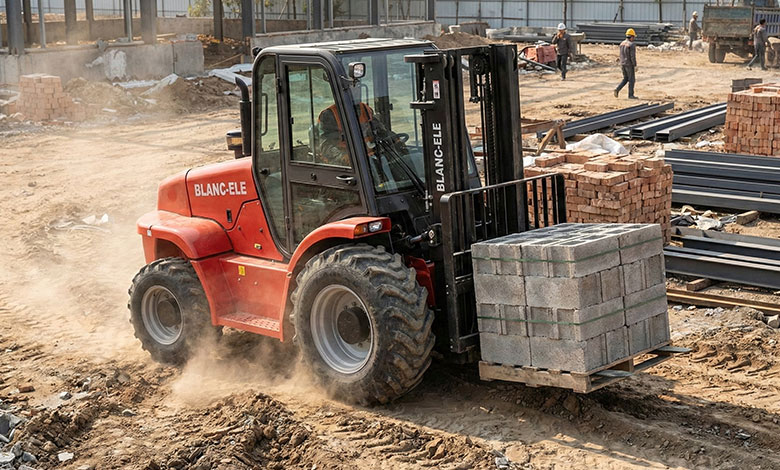
- [x] Heavy materials (bricks, steel beams, cement).
- [x] Long-term outdoor operation.
A rough terrain forklift isn’t about speed or comfort. It’s about not getting stuck, not breaking, and not stopping work.
As I often say:
“Rough terrain forklifts aren’t built for extreme conditions — they’re built so problems don’t happen every day.”
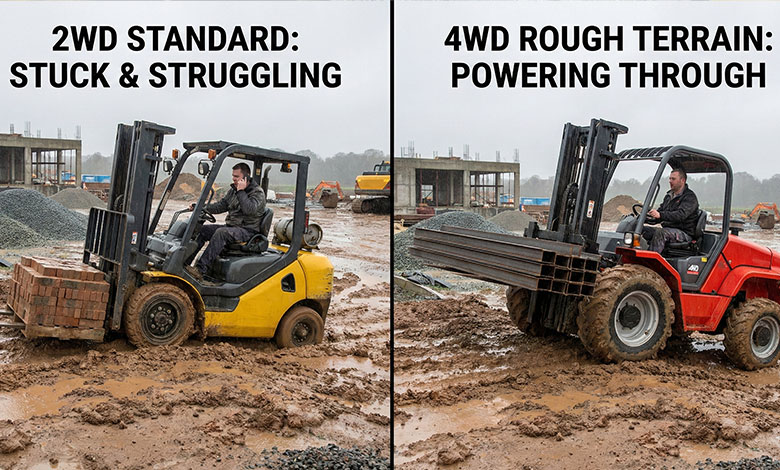
4. 2WD vs 4WD: A Bigger Difference Than Most Buyers Expect
This is probably the most common question I get: “Is 2WD enough?”
Many customers look at their site on a sunny day and think it's fine. The problem is: construction site conditions never stay the same.
I’ve seen sites that were fine in the morning and became impassable mud pits after heavy truck traffic or rain.
Real-World Comparison:
| Feature | 2WD Standard Forklift | 4WD Rough Terrain Forklift |
|---|---|---|
| Mud / Soft Soil | Wheels spin, machine gets stuck. | All wheels grip, powers through. |
| Ramps / Slopes | Struggles with heavy loads. | Climbs confidently with torque. |
| Steering | Hard to control on loose ground. | Stable and precise. |
| Downtime Risk | High (Weather dependent). | Low (All-weather capable). |
For medium to large construction sites, 4WD is rarely a luxury — it’s an insurance policy against downtime.
5. Many Job-Site Problems Are Actually Caused by Low Ground Clearance
A customer once told me something I still remember clearly:
“It wasn’t the driver’s fault — the old forklift was simply too low.”
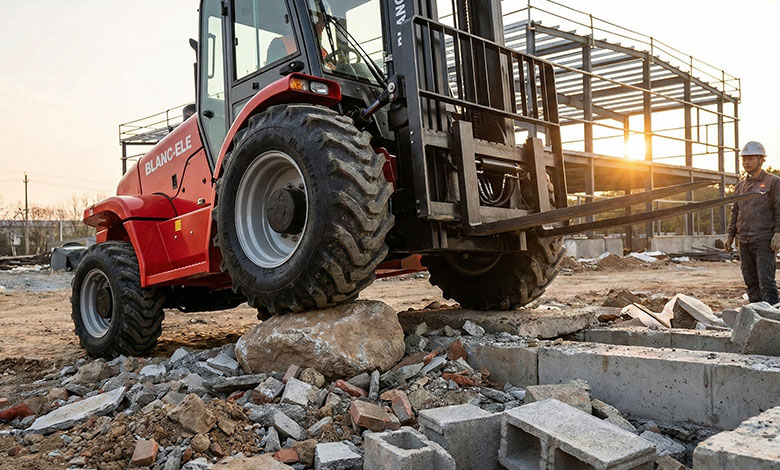
Construction sites often don’t have long slopes, but they do have sudden level changes and debris piles.
When ground clearance is insufficient, the result is not inconvenience — it’s damage:
- The chassis hits the ground (high-centering).
- Steering components get bent on rocks.
- Hydraulic lines get torn.
BLANC-ELE rough terrain forklifts5 are designed with high clearance specifically to step over these obstacles, not crash into them.
6. Construction Work Is High-Frequency, Short-Distance Stress
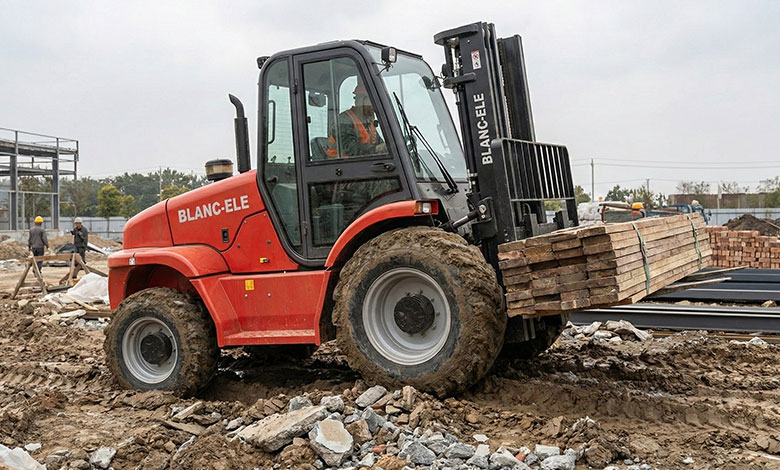
Bricks, blocks, cement bags, steel — construction-site handling usually means short distances and continuous cycles.
This quickly exposes weaknesses in:
- Braking systems: Dust and mud destroy standard drum brakes.
- Hydraulic temperature: Constant lifting overheats weak systems.
- Mast rigidity: Heavy loads on uneven ground cause masts to twist.
Many low-cost forklifts perform fine in light-duty applications. On construction sites, they fail much faster. That’s because job sites don’t test peak performance — they test durability under repetition.
7. My Practical Advice for Construction Site Buyers
If you ask me what matters most when choosing a forklift for construction sites, I won’t say “fancy electronics.”
I focus on the core specs that keep you moving:
- Traction: Go for 4WD if your budget allows.
- Ground Clearance: Ensure it clears your site's debris.
- Tires: Deep-tread agricultural or OTR tires6 are non-negotiable.
- Simplicity: You want a machine that is easy to fix in the field.
Price matters, of course. But on a construction site, the real cost is never the machine itself — it’s:
Downtime, delays, repairs, and replacing the wrong forklift twice.
Conclusion
The best forklift for a construction site isn’t necessarily the most advanced one. It’s the one that matches the reality of the job site.
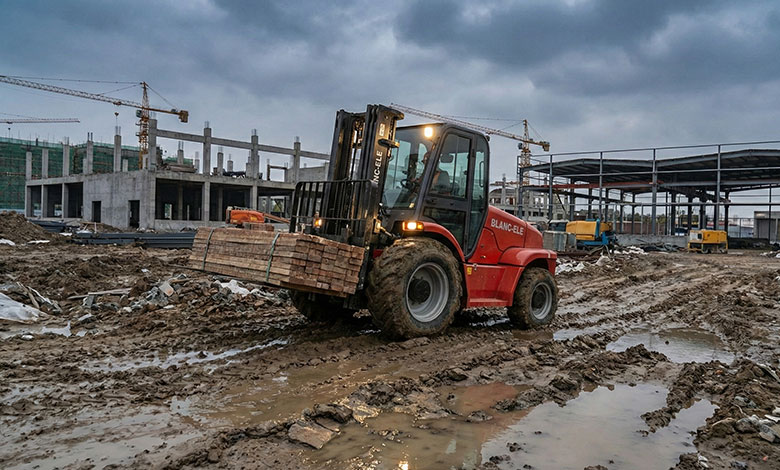
If you need a machine that keeps working in rain, mud, uneven ground, and slopes, you need a rough terrain forklift.
Don't let the wrong machine stall your project. [View the BLANC-ELE Construction Forklift Series] to see specs built for the toughest job sites.
Explore this link to find the top-rated forklifts specifically designed for construction sites. ↩
Learn why 4WD Rough Terrain Forklifts are essential for handling tough construction conditions. ↩
Discover how high ground clearance can prevent damage and improve performance on job sites. ↩
Find out how deep-tread tires enhance traction and stability on uneven surfaces. ↩
Explore this link to understand how BLANC-ELE forklifts enhance safety and efficiency on challenging job sites. ↩
Learn about the benefits of using specialized tires for construction site forklifts. ↩